
美元信用

Search documents
解构美国系列第二十篇:黄金VS美元:避险排序何时切换?
EBSCN· 2026-03-30 10:01
Group 1: Market Dynamics - The market's focus has shifted from "geopolitical conflict" to "dollar as a safe haven, inflationary pressures suppressing gold" due to the escalation of the US-Iran conflict[2] - The US dollar has gained strength as it is perceived to better accommodate global risk aversion, especially affecting non-US economies like Europe and Japan[2] - Gold prices have risen significantly since the beginning of the year, creating upward pressure on gold prices due to profit-taking[2] Group 2: Economic Indicators - The US fiscal situation has temporarily improved, with concerns over government shutdowns diminishing, leading to reduced worries about dollar credit risk[2] - The US fiscal deficit for FY 2026 is projected to rise to 7%-8% of GDP, an increase of 25%-29% compared to FY 2025, due to military spending and tax refunds[29] - The 10-year US Treasury yield has been fluctuating around 4.4%-4.5%, indicating liquidity pressures in the economy[26] Group 3: Gold Price Outlook - Short-term gold prices are likely to remain weak due to ongoing geopolitical tensions and inflationary concerns, but medium to long-term prospects are more optimistic[3] - Historical patterns show that gold typically rises before geopolitical conflicts escalate, rather than during prolonged standoffs[4] - The relationship between gold and the dollar has shifted, with gold increasingly seen as a hedge against US credit risk rather than just a commodity[5]
美元逆流的尾声:美伊冲突中的定价思考
SINOLINK SECURITIES· 2026-03-30 09:28
Group 1 - The core viewpoint of the report indicates that the recent strengthening of the US dollar is primarily due to the relatively lower impact of the Middle East conflict on the US economy, rather than changes in interest rate expectations [3][11][12] - The OECD's latest economic outlook predicts a downward revision of 0.2% for the Eurozone's economic growth in 2026, while the US growth forecast has been revised upward by 0.3% [3][12] - The report highlights that the US has a lower dependency on oil imports and a service-oriented economic structure, which contributes to its resilience compared to European countries that are more affected by rising oil prices [3][12] Group 2 - Following the Middle East conflict, there has been a notable return of funds to US dollar assets, with a decrease in the currency swap basis for major non-USD currencies [4][19] - Despite tightening global dollar liquidity, the report states that it has not reached a crisis level, as indicators of US market liquidity remain healthy [4][19][23] - The report notes that since March 23, the currency swap basis for major non-USD currencies has begun to normalize, suggesting that the most acute phase of dollar liquidity tightening may have passed [4][19] Group 3 - The narrative of a "weak dollar" has been challenged, as the market has seen a reversal in trends, with emerging markets underperforming compared to US stocks since the conflict began [4][29] - The report indicates that the performance of gold has been particularly weak during this liquidity tightening phase, contrasting with its historical resilience during previous crises [4][35][36] - The report suggests that the current environment may lead to a stabilization period for commodity pricing, as the monetary attributes of commodities are expected to fluctuate [5][48] Group 4 - The report emphasizes that the long-term pricing of gold is approaching levels seen before the collapse of the Bretton Woods system, with gold now comprising 25.2% of global official reserves [5][48][49] - It also highlights the potential for the US government to sell gold to finance deficits if fiscal pressures continue to mount, indicating a shift in the dynamics of commodity markets [5][48][50] - The report concludes that future supply and demand changes in industrial metals will become increasingly important to monitor [5]
黄金还能再创新高吗?
对冲研投· 2026-03-27 07:25
Core Viewpoint - The ongoing military conflict in the Middle East is seen as a significant indicator of the decline of U.S. comprehensive national power, which may lead to a new peak in gold prices as the market begins to price in the potential loss of the conflict [2][39]. Group 1: Gold Market Dynamics - Since March, gold prices have experienced a rapid correction, reminiscent of the "Wash trade" in January, driven by high market congestion and expectations of a reduction in the Federal Reserve's balance sheet [3]. - The initial adjustment in gold prices was triggered by the outbreak of the U.S.-Iran war, which led to a significant strengthening of oil and the dollar, creating liquidity tightening expectations [3]. - As of March 23, the overnight swap market began pricing in an expected 0.8 rate hikes by the Federal Reserve this year, with other central banks also expected to raise rates [3]. Group 2: Technical Indicators and Market Sentiment - Short-term technical indicators for gold show oversold conditions, but a clear reversal trend has not yet emerged, with the RSI dropping to an extreme value of 21.1 as of March 23 [8]. - The implied volatility of gold continues to rise, indicating increased uncertainty among options investors regarding future price movements, suggesting that the market still needs to digest recent changes [8]. - The gold-oil ratio has fallen to 41, approaching levels seen during previous significant corrections, indicating that gold may have overshot in the short term [8]. Group 3: Economic Context and Future Outlook - Historical data suggests that during periods of stagflation, gold tends to trend upwards despite rising policy rates, as seen during the oil crises of the 1970s [20]. - Current economic indicators show signs of stagnation in the U.S., with consumer spending growth slowing and unemployment risks increasing, which could accelerate the onset of recession [23]. - The potential for a recession may prompt the Federal Reserve to reassess liquidity risks, possibly leading to a return of some speculative investors to the gold market [23]. Group 4: Geopolitical Implications - The U.S. military's limited success in the Middle East could undermine the dollar's dominance, particularly if Iran's countermeasures disrupt the oil-dollar link [34]. - Rising interest rates may hinder U.S. fiscal strategies, leading to a gradual erosion of dollar credibility, which could be reflected in the market's pricing of gold [36]. - The ongoing military engagement in the Middle East is viewed as the fourth significant depletion of dollar credibility, with the market likely to respond by pushing gold prices higher as the situation evolves [39].

黄金跳水跌破4430美元,白银失守70美元
21世纪经济报道· 2026-03-26 06:14
Group 1 - Gold prices experienced a rapid decline, with spot gold dropping to $4433 per ounce, falling over 1.5% during the day, and briefly dipping below $4430 [1] - Silver prices also fell below the $70 mark, currently at $69.54 per ounce, with a daily drop exceeding 2% [1] - International oil prices continued to rise, with WTI crude oil increasing over 2% to surpass $92 per barrel, and ICE Brent crude nearing $99 per barrel [3] Group 2 - Major cryptocurrencies collectively declined, with Bitcoin falling below the $70,000 threshold, experiencing a drop of over 1.5%, and over 80,000 individuals globally facing liquidation in the last 24 hours [3] - The ongoing turmoil in the Middle East has led to significant military actions, including the Israeli Defense Forces targeting Iranian infrastructure, which may impact market stability [3] - Future gold prices are expected to be influenced by factors such as dollar credit and liquidity, with predictions of continued liquidity easing and weakened dollar credit potentially driving gold prices higher [3]
巨震之后,黄金还能创新高吗?(国金宏观陈瀚学)
雪涛宏观笔记· 2026-03-25 11:32
Group 1 - The core viewpoint of the article is that the ongoing military conflict in the Middle East represents a significant depletion of the dollar's credibility, marking a potential turning point for gold prices to reach new heights as the market begins to price in the implications of a U.S. defeat in the region [2][40]. Group 2 - The article discusses the impact of interest rate hikes on gold prices, indicating that the recent rapid adjustment in gold prices was influenced by the outbreak of the U.S.-Iran war, which led to a tightening of liquidity expectations due to rising oil and dollar values [4][24]. - As of March 23, the overnight swap market began pricing in an expected 0.8 rate hikes by the Federal Reserve within the year, while other central banks are also expected to raise rates multiple times [4][24]. - The article notes that the implied volatility of gold remains high, indicating that option investors are still anticipating significant price movements in the future [8][11]. Group 3 - The article suggests a cautious approach in the short term, as technical indicators show that gold is oversold, but a clear reversal trend has not yet emerged [8][11]. - The short-term and medium-term trading crowding metrics for gold were reported at 0% and 21.5% respectively as of March 23, indicating a potential for price adjustments [11][19]. - The article highlights that the current economic environment, characterized by high inflation and unemployment, could lead to a resurgence in gold demand as a safe haven asset [24][25]. Group 4 - The ongoing U.S.-Iran conflict is seen as a sign of the decline in U.S. comprehensive national power, which could lead to a new bull market for gold [36][40]. - The article emphasizes that the U.S. military's inability to achieve decisive victories in the Middle East could undermine the dollar's dominance and the "petrodollar" system, particularly if Iran's actions disrupt oil supply routes [36][38]. - The rising interest rates are also noted to complicate the U.S. government's debt management strategies, potentially leading to a loss of confidence in the dollar [36][40].
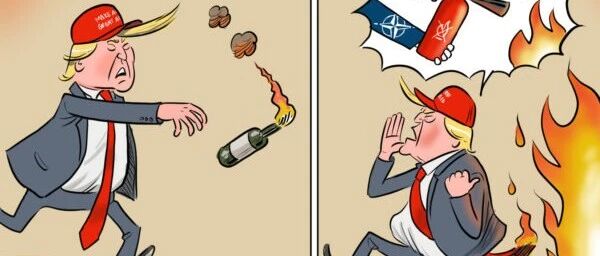
宏观专题研究报告:巨震后再看黄金:从胀到滞的宏观变局,美国国力换挡的长期机遇
SINOLINK SECURITIES· 2026-03-25 09:07
Group 1: Market Dynamics - Since March, international gold prices have rapidly adjusted, influenced by macroeconomic variables rather than previous high trading congestion and balance sheet reduction expectations[1] - The initial adjustment was triggered by the outbreak of the US-Iran war, leading to a liquidity crisis as oil and the dollar strengthened significantly[1] - As of March 23, the overnight swap market began pricing in an expected 0.8 rate hikes by the Federal Reserve this year, with other central banks also expected to raise rates[5] Group 2: Technical Indicators - Short-term technical indicators for gold show oversold conditions, with the London gold RSI dropping to an extreme value of 21.1, but a reversal trend remains unclear[2] - The gold-oil ratio has fallen to 41, nearing levels seen during the first significant correction in August 2020, indicating a return to long-term average levels[2] - Key support levels for gold are identified at 4300, 3900-4000, and 3400-3500 points, suggesting a cautious approach in the short term[2] Group 3: Economic Outlook - The US economy is showing signs of slowing growth, with private durable goods consumption growth decelerating to 1% in January[2] - The unemployment rate is projected to rise, with non-farm payroll additions nearing zero, indicating potential recession risks[2] - High oil prices may accelerate the onset of recession, prompting the Federal Reserve to reassess recession risks and possibly restart easing policies[2] Group 4: Long-term Implications - The prolonged US-Iran conflict poses multiple challenges to the credibility of the dollar, potentially weakening its dominance in global markets[3] - If the consensus shifts towards a decline in US comprehensive national power, gold may enter a new bull market phase[3] - Historical data suggests that gold performs well in stagflation environments, despite current market corrections focusing on inflation while neglecting economic stagnation pressures[2]
资产的信号(20260325):黄金被错杀
Western Securities· 2026-03-25 06:20
Core Conclusions - Gold has been mispriced and is likely in a "golden pit" during a long-term bull market. The recent drop of over 17% in London gold prices following the outbreak of the US-Iran conflict suggests that the "de-dollarization" logic supporting gold's rise has failed. However, the current adjustment is viewed as a mispricing, maintaining the judgment that the "petrodollar" may temporarily enhance the credibility of the dollar but cannot reverse the mid-term weakening trend of the dollar's credibility. Gold prices are expected to reach new highs [1]. Group 1: Gold Pricing Dynamics - The current pricing of gold is primarily based on its reserve value, reflecting the widening cracks in dollar credibility. Since October 2022, the US long-term real interest rates have remained high, yet gold prices have risen rapidly, indicating that the market is pricing gold based on its reserve value rather than its trading value. This shift is attributed to the exclusion of certain Russian banks from the SWIFT system following the Russia-Ukraine conflict, accelerating the erosion of dollar credibility. Historical data from the 1970s shows a similar pattern where gold prices surged significantly during periods of dollar credibility crises [1][2]. - The expansion of petrodollar trade has created a temporary constraint on gold prices. The US's control over Venezuela's oil regime and the rise in oil prices from around $70 to approximately $100 per barrel due to the US-Iran conflict have increased the scale of petrodollar trade, which is linked to dollar credibility. This recent oil price increase has siphoned liquidity and nominally repaired dollar credibility, leading to a more significant decline in gold prices compared to other assets [2]. Group 2: Geopolitical and Economic Implications - If Iran maintains control over the Strait of Hormuz, the credibility of the dollar will be weakened in the medium to long term. The Strait is a crucial energy transport route, with an estimated daily oil transport volume of about 19 million barrels, accounting for approximately 18% of global consumption. If Iran were to block the Strait or dominate the passage rights, the rules for dollar-denominated oil trade would be challenged, potentially leading to a significant reduction in dollar credibility and a resurgence in gold prices [3]. - In the event of liquidity pressures, if the Federal Reserve opts for quantitative easing (QE), the cracks in dollar credibility may widen further. If the new Fed chair, potentially Walsh, implements a policy framework that favors easing despite inflation not falling as expected, it could lead to a liquidity crisis. This scenario would compel the Fed to adopt QE, accelerating the expansion of dollar credibility cracks and potentially driving gold prices higher [4][5]. Group 3: Broader Market Context - The report indicates that the dollar's strength, bolstered by oil prices, is merely a temporary facade. The underlying dynamics suggest that the dollar's credibility may be permanently weakened due to geopolitical tensions, particularly if the US fails to secure control over the Strait of Hormuz or opts for QE under liquidity pressures. This would reinforce the long-term bullish outlook for gold [6]. - The report also highlights potential investment opportunities in Chinese assets, particularly in sectors that can withstand geopolitical uncertainties, such as A-shares and Hong Kong stocks. The report suggests that as liquidity conditions shift, US Treasury bonds may come under pressure, and the stock market may experience volatility, with a potential shift towards value stocks [6].

周周芝道-黄金在跌什么
2026-03-22 14:35
Summary of Conference Call on Gold Market Dynamics Industry Overview - The discussion centers around the gold market, focusing on the long-term and short-term price dynamics influenced by various factors, including central bank actions and geopolitical events [1][2][3][4][5]. Core Insights and Arguments - **Long-term Gold Price Trends**: The long-term gold market (5-10 years) is primarily driven by central bank buying/selling and physical gold transfers, rather than traditional macroeconomic indicators like the US dollar index or US Treasury yields [1]. - **Short-term Price Fluctuations**: Short-term volatility in gold prices is mainly influenced by private sector demand, which is driven by economic prosperity and liquidity expectations affecting ETF and bullion investment [1]. - **Recent Price Decline**: The recent drop in gold prices is attributed to liquidity pricing adjustments, triggered by rising oil prices due to the US-Iran conflict, leading to a sell-off of ETF positions accumulated in 2024-2025 [1][5]. - **2026 Price Forecast**: The forecast for 2026 suggests a "rise-fall-rise-fall" pattern, with a peak in sentiment in Q1, followed by a correction in Q2 due to tightening liquidity expectations, and a potential rebound driven by concerns over the US dollar's credibility and technological volatility [1][5]. Important but Overlooked Content - **Geopolitical Factors**: Geopolitical events, while they can cause short-term spikes in gold prices, do not fundamentally alter the long-term pricing logic of gold. Historical patterns show that most geopolitical conflicts have not significantly impacted the global economy or the US credit system [2][3]. - **Traditional Economic Indicators**: The relationship between gold prices and traditional economic indicators like the dollar index and inflation rates is inconsistent over the long term. Historical data indicates that these variables do not reliably predict gold price movements [3][4]. - **Central Bank Behavior**: The primary driver of gold's long-term price movements is the behavior of central banks, particularly their buying or selling of gold, which has a more significant impact than short-term market fluctuations driven by private demand [4]. Conclusion - The analysis indicates that while short-term gold price movements may be influenced by geopolitical tensions and economic indicators, the long-term trends are more closely tied to central bank actions and the overall credibility of fiat currencies. Future gold price movements will depend on the evolving dynamics of the global economic landscape and the potential rise of alternative currencies like the renminbi [1][5].
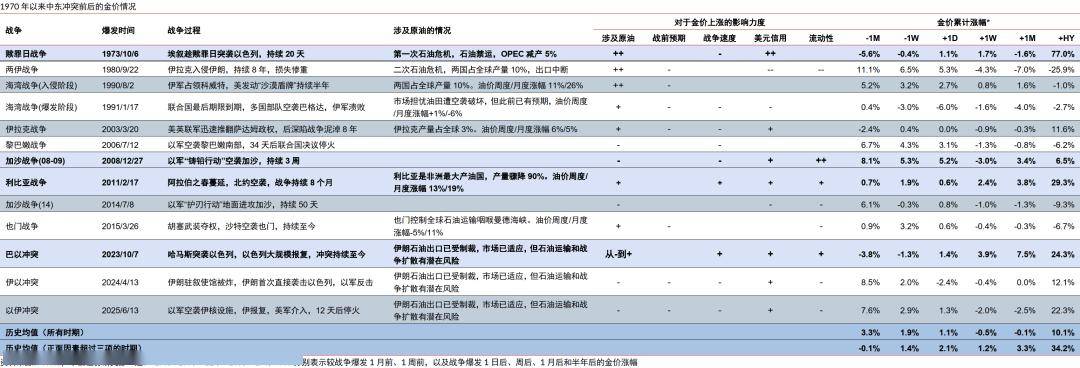
中信证券:历次中东冲突后的金价和黄金板块复盘
Sou Hu Cai Jing· 2026-03-19 05:35
Core Viewpoint - The mid-term trend of gold prices after conflicts in the Middle East is influenced by the factors of US dollar credit and liquidity, with expectations of continued liquidity easing and weakening dollar credit driving gold prices higher [1][4]. Group 1: Historical Performance of Gold Prices - Historically, the average increase in gold prices six months after major Middle Eastern conflicts is 10%, with a significant average increase of 34% when at least three of the five influencing factors are positive [2][4]. - The average half-year increase in gold prices during periods of favorable conditions has reached 26%, with excess returns of 16 percentage points [4][19]. Group 2: Current Market Conditions - The current trend of liquidity easing and weakening dollar credit is expected to continue, which will support gold prices [4][15]. - The US economy is facing "stagflation" risks, which historically correlate with higher probabilities and greater increases in gold prices [8][15]. Group 3: Valuation and Investment Opportunities - The valuation of leading gold companies has dropped to historical lows of 15-20 times PE, indicating a strong margin of safety for investments in the gold sector [28]. - The synchronization of stock prices with gold price peaks has been validated multiple times since 2020, suggesting that new highs in gold prices will likely lead to new highs in the stock prices of gold companies [28].

"洞见商品”系列之一:政府储备的变迁与影响
SINOLINK SECURITIES· 2026-03-12 14:57
Group 1: U.S. Strategic Resource Reserves History - The U.S. government has a history of strategic resource reserves dating back to 1939, which can be divided into four phases: expansion (1939-1960), initial reduction (1960s), policy entanglement (1970s-1980s), and significant reduction (1990s onwards) [2][13][14]. - The first phase saw a rapid expansion of strategic resource inventories due to geopolitical conflicts such as World War II and the Korean War, with the government authorizing $100 million for purchasing and storing critical strategic materials [14][31]. - In the second phase, the focus shifted from military confrontation to economic and technological competition, leading to a reduction in reserves and significant sales of strategic materials to address supply shortages [14][15]. Group 2: Global Official Gold Reserves Changes - The changes in global official gold reserves can be categorized into four stages: post-war decline until the early 1970s, an increase during the 1970s, a significant decline until the 2008 financial crisis, and a trend of increase post-crisis [3][38]. - Geopolitical risk trends have been a key factor in the fluctuations of gold's share in official reserves, with a notable decline in geopolitical risk correlating with a decrease in gold's proportion in reserves during the 1960s and 1980s [39][49]. - Concerns over U.S. dollar credibility have driven increases in gold reserves, particularly after the dollar decoupled from gold in the early 1970s and during the post-2008 financial crisis when the Federal Reserve expanded its balance sheet significantly [40][41]. Group 3: Opportunities and Risks in Commodities from a Government Reserve Perspective - The geopolitical risk index has been on the rise since 2020, suggesting that the U.S. may end the long-term decline in resource reserves, similar to the trend observed after the 1930s [4]. - The U.S. has proposed a $12 billion "Treasury Plan" for strategic resource reserves, marking the beginning of a global trend towards resource accumulation, focusing on supply chain security rather than solely defense [4][12]. - Strategic resources benefiting from high domestic production and AI development include copper, silicon, rare earths, gallium, and germanium, with China being the largest producer of these materials [4][23].