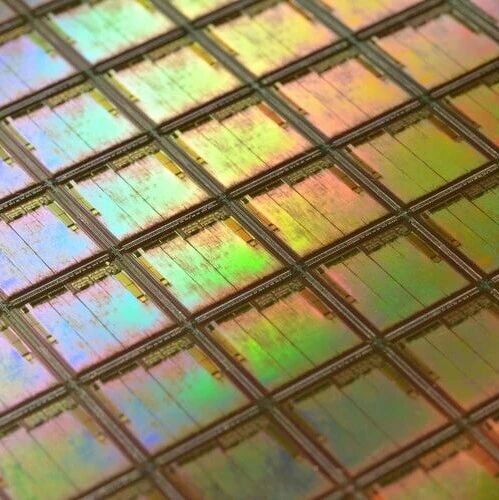
14A制程芯片

Search documents
华尔街评英特尔财报:供应限制压制短期表现,拐点可能最早等到下半年
Hua Er Jie Jian Wen· 2026-01-23 14:11
Core Viewpoint - Intel's latest earnings report shows a stark divide: while Q4 performance exceeded expectations, weak guidance for the current quarter triggered a sell-off in the market. Analysts attribute the disappointing guidance primarily to supply constraints, overshadowing strong market demand driven by artificial intelligence [1]. Financial Performance - In Q4, Intel reported an adjusted earnings per share of $0.15 and revenue of $13.7 billion, both surpassing LSEG consensus estimates of $0.08 and $13.4 billion respectively [1]. - For Q1, Intel expects revenue between $11.7 billion and $12.7 billion, with adjusted earnings per share projected to be breakeven, significantly below analyst expectations of $12.51 billion in revenue and $0.05 earnings per share [1]. Market Sentiment - Wall Street sentiment towards Intel remains cautious, with 33 out of 47 analysts rating the stock as "hold" and only 8 giving "buy" or "strong buy" ratings. The consensus is that key turning points, including improvements in foundry business commitments and product availability, may not materialize until the second half of 2026 [3]. Supply Constraints and AI Demand - Analysts highlight that Intel's current revenue pressures stem from supply-side limitations rather than insufficient demand. Citigroup analyst Atif Malik noted that sales would likely exceed seasonal levels if supply were not constrained, given the strong demand for AI-driven general server CPU upgrades [4]. - Intel's data center and AI (DCAI) segment saw a significant quarter-over-quarter revenue increase of 16%, indicating that AI data center customer demand is exceeding expectations [4]. Future Catalysts - Market focus is on when supply constraints will ease, with analysts suggesting that March may mark the bottom of supply limitations. Jefferies analyst Blayne Curtis believes that Q1 2026 will represent a low point, although Intel may still face constraints for a few quarters, potentially allowing some market share to shift to competitors [5]. - Stifel views the second half of 2026 to early 2027 as a potential "catalyst window," coinciding with Intel's first investor day, which could mark a turning point for long-term commitments to 14A process yields and advanced packaging capacity [6]. Foundry Business and 14A Timeline - Progress in Intel's foundry business remains a core aspect of its long-term valuation. Citigroup noted that the yield for the 18A process is improving, with a target to reach industry-standard yields by the second half of 2026. However, substantial revenue from the 14A process is not expected until late 2028 to 2029 [7]. - RBC Capital Markets expressed optimism regarding management's outlook on foundry progress, hinting at a potential announcement of 14A customers in the second half of 2026 [7]. Divergent Views on Short-Term Outlook - Despite potential long-term improvements, there is a notable divergence in short-term outlooks among firms. Jefferies maintains a "hold" rating, citing low guidance and delayed profit margin recovery, while Evercore ISI believes the risk-reward ratio is relatively balanced, setting a target price of $45 [8].


打不过台积电,怎么办?
半导体芯闻· 2025-12-22 10:17
Core Viewpoint - The global wafer foundry market is experiencing a clear structural shift, with TSMC solidifying its position as the dominant player, while competitors like Intel and Samsung are adjusting their strategies to find their niches in the market [2][3][43]. TSMC's Dominance - TSMC's revenue for Q3 2025 reached $33.063 billion, with a market share of 71%, reflecting its significant lead over competitors [2]. - The overall foundry market is projected to grow, but TSMC is capturing the majority of this growth, showcasing a "magnification effect" of its advantages in advanced processes and capital expenditures [2]. Competitors' Strategies - Other foundries, such as Samsung, are struggling to close the gap in market share, with Samsung's Q3 revenue at $3.184 billion and a market share decline to 6.8% [3]. - Intel is aggressively transforming its strategy, focusing on advanced technology and ecosystem restructuring to regain competitiveness in specific areas [4][43]. Intel's Advanced Process and Packaging - Intel's 14A process node is positioned as a competitive choice for external customers, utilizing High-NA EUV technology, which is expected to enhance power efficiency and chip density [5]. - Intel's EMIB technology is emerging as a viable alternative to TSMC's CoWoS packaging, with significant interest from major clients like Apple and Broadcom [7][9]. Samsung's 2nm Process - Samsung is betting heavily on its 2nm process, which is expected to turn its foundry division profitable by 2027, with a current yield improvement from 50% to a target of 70% [15][16][24]. - The company has secured significant contracts, including a $16.5 billion deal with Tesla for AI6 chips, indicating a strong market position in automotive semiconductors [17][19]. UMC's Differentiation Strategy - UMC is focusing on mature processes and high-value applications, avoiding the advanced process competition while establishing a foothold in advanced packaging and silicon photonics [25][27]. - The collaboration with Qualcomm on advanced packaging is expected to enhance UMC's position in high-performance computing markets [27]. GlobalFoundries' Focus on Specialty Processes - GlobalFoundries is concentrating on mature processes and specialty technologies, with a recent acquisition of AMF to strengthen its position in silicon photonics [34][36]. - The company is also enhancing its capabilities through the acquisition of MIPS, aiming to provide integrated solutions for clients in various high-growth markets [37]. Conclusion - The wafer foundry market is evolving, with companies like Intel, Samsung, UMC, and GlobalFoundries adopting differentiated strategies to navigate the competitive landscape, focusing on their unique strengths and market opportunities [43].