15年陈酿

Search documents
茅台经销商大会政策解读
2025-12-29 15:51
Summary of Moutai Conference Call Company Overview - The conference call discusses Moutai's strategic adjustments in product structure and pricing strategy to enhance market positioning and sales performance. Key Points Product Structure and Pricing Strategy - Moutai aims to create a pyramid-shaped product matrix with clear price bands: - Below 1,000 RMB: 1,935 series - 1,500-2,000 RMB: Flying Fairy series - 2,000-3,000 RMB: Boutique series - Above 4,000 RMB: 15-year series - This structure is designed to avoid product cannibalization and ensure reasonable price differences between products [1][2][3] - The company plans to reduce non-standard small packaging (e.g., 100ml, 200ml) to stabilize the market position of the 500ml Flying Fairy, aiming to increase market share and opening rates [1][4][5] - Moutai intends to position the Boutique Moutai as a major product with a target price above 2,000 RMB, potentially achieving over 50 billion RMB in sales by 2025 [1][9] Sales and Volume Adjustments - In 2026, Moutai will reduce the sales volume of certain products, including a 50% reduction for rare Moutai and a 30% reduction for 15-year and small packaging products [2][30] - The company plans to maintain a stable supply of the Flying Fairy at a retail price of 1,499 RMB, even during high demand periods like the Spring Festival [11][15] Market Dynamics and Consumer Behavior - Moutai recognizes that small packaging has a narrow audience and does not complement the Flying Fairy, leading to a decision to reduce these offerings [5][6] - The company will implement a strategy to control the market price of Flying Fairy by requiring additional purchases of Boutique or 15-year products [14] Future Product Development - Moutai is exploring two potential directions for Zodiac products: changing the volume to 700ml or 750ml and personalizing them based on consumer birthdays to enhance collectability [10] - The pricing strategy for major products is as follows: - 1,935 series: approximately 600 RMB - 500ml classic: around 1,600 RMB - Boutique Moutai: around 2,500 RMB - 15-year aged: above 4,000 RMB - This aims to create clear positioning and avoid price volatility [8] Distribution and Channel Strategy - Moutai plans to adopt a consignment model to expand e-commerce, retail, and dining channels, ensuring products reach consumers effectively [17][18] - The company will assess distributors based on task completion, market price control, and the ability to develop new channels [21][22] Financial Projections and Market Budget - Moutai's market expense budget for 2026 will remain the same as in 2025, aiming for a slight increase in sales (3%-5%) while controlling costs to improve profit margins [29] - The expected payment ratio for January 2026 is around 20%, with the first quarter projected to reach approximately 30% [27] Conclusion - Moutai's strategic adjustments focus on optimizing product offerings, stabilizing prices, and enhancing market presence while addressing consumer needs and distributor performance. The company aims to maintain a balanced approach to growth and profitability in a competitive market environment.

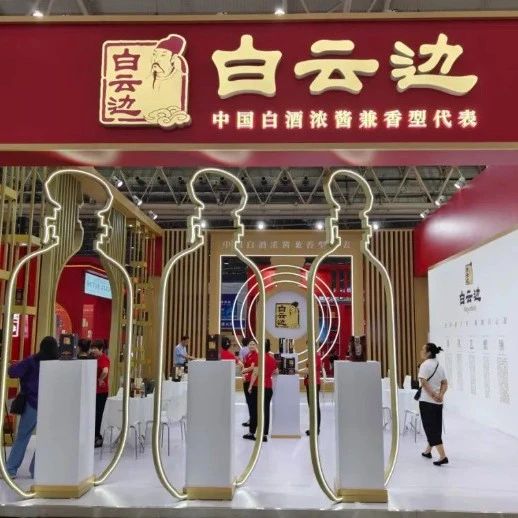
梅林掌舵的白云边:业绩连年失约、渠道利润微薄、何时兑现百亿豪言?| 酒业内参
新浪财经· 2025-04-07 01:08
Core Viewpoint - Hubei Baiyunbian Distillery is struggling to achieve its ambitious sales targets, with a 2024 revenue of 7.83 billion, falling short of the 8.2 billion goal, indicating a stagnation in growth and market penetration [1][3][16] Group 1: Sales Performance - Baiyunbian's 2024 sales revenue reached 7.83 billion, a 1% increase year-on-year, but only 95% of the planned target [1] - The company has not met its previous ambitious goal of reaching 10 billion in sales by 2017, with the highest revenue recorded at 4.414 billion in 2017 [1][14] - In the Guangdong market, Baiyunbian achieved sales of 120 million in 2024, completing 87.5% of its annual plan, with a year-on-year growth of 7.24% [4] Group 2: Market Challenges - Baiyunbian's growth is perceived to have entered a saturation phase, particularly in its home province, where competition from well-known brands is intensifying [1][5] - The brand struggles to cultivate new customer segments outside its traditional base, with a significant portion of sales reliant on Hubei migrants in Guangdong [5][9] - The company faces challenges in brand recognition and acceptance of its products in new markets, leading to low channel profitability [7][9] Group 3: Competitive Landscape - Baiyunbian is losing market share to competitors like Wuliangye and Yanghe, which maintain sales around 2 billion in Hubei, while Baiyunbian's high-end market presence is weak [9][10] - The company’s pricing strategy does not align well with consumer preferences, as many consumers opt for national brands over local offerings in the premium segment [10][12] - Baiyunbian's attempts to push high-end products have not resonated with the market, as evidenced by low sales of its higher-priced offerings [10][12] Group 4: Management and Strategic Issues - The management team is criticized for being outdated, with a lack of innovative marketing strategies and an inability to respond effectively to competitive pressures [12][14] - Baiyunbian's ambitious sales goals have been repeatedly postponed, with the next target set for 2025 requiring a significant increase in growth rate to achieve [16]