
18650圆柱电池

Search documents
松下、三星等动力电池巨头,为什么输给了中国人?
Sou Hu Cai Jing· 2026-02-26 02:28
Core Insights - The article discusses the evolution of the global lithium battery industry, highlighting the rise and fall of different players, particularly focusing on the dominance of Chinese companies in recent years [1][29]. Historical Context - In the 1990s, Japanese companies like Sony, Panasonic, and Sanyo dominated the lithium battery market, controlling nearly 90% of the global share [1]. - By the early 2000s, South Korean firms such as LG Chem, Samsung SDI, and SK On began to emerge, eventually surpassing Japan to become the largest lithium battery producers around 2011 [3]. Technological Shifts - The introduction of Tesla in 2003 marked a significant shift in battery technology, as the company sought high-performance batteries for electric vehicles, leading to a partnership with Panasonic for the 18650 cylindrical battery [5][7]. - Tesla's success propelled Panasonic's battery business, which at its peak held a 40% market share in the global battery market [9]. Emergence of Chinese Companies - The success of the 2008 Beijing Olympics and subsequent government initiatives, such as the "Ten Cities, Thousand Vehicles" program, catalyzed the growth of China's electric vehicle and battery industries [11][13]. - In 2011, CATL was established, focusing on power batteries, and began collaborations with major automakers like BMW, while BYD also entered the electric vehicle market [14][15]. Market Dynamics - By 2014, China's new energy vehicle sales surged by 320%, significantly increasing battery demand and allowing companies like CATL and BYD to scale production [15]. - The introduction of the "battery whitelist" policy in 2015 favored domestic manufacturers, providing a four-year period for local companies to strengthen their market position [17]. Competitive Landscape - In 2017, CATL surpassed Panasonic in battery shipments for the first time, achieving a 17% global market share, marking a pivotal moment in the battery industry's competitive landscape [17]. - By 2025, Chinese companies are projected to occupy six of the top ten positions in global battery installations, with a combined market share exceeding 70% [29]. Industry Structure - China has developed a comprehensive and competitive lithium battery supply chain, from raw materials to battery manufacturing, creating strong synergies [20]. - Chinese companies have significantly reduced battery costs to below 40 RMB per kWh, while South Korean and Japanese companies remain at higher costs, creating a competitive disadvantage [22]. Future Outlook - The article concludes that the shift in battery dominance is not only a result of technological competition but also reflects national strategies and industrial policies that have fostered innovation in China [30].




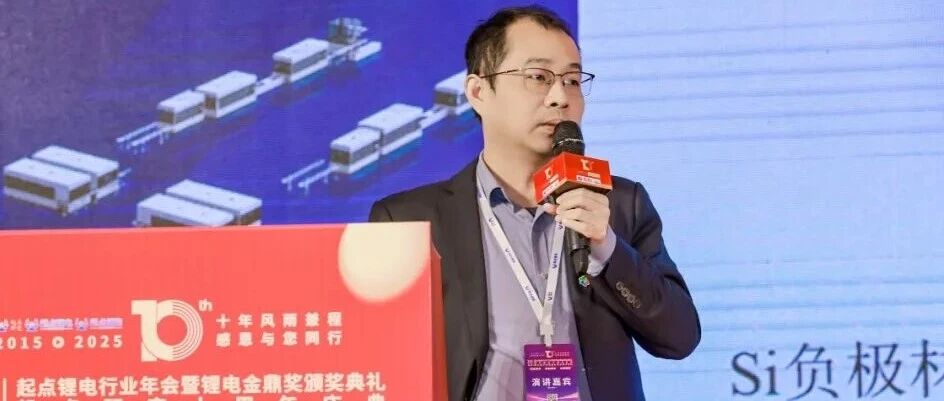
江西远东电池 总经理 相江峰:高比能圆柱电池开发领先,21700-6500mAh电芯率先量产
起点锂电· 2025-12-25 05:09
Core Viewpoint - The cylindrical battery technology in China is leading globally, with performance surpassing that of Japan and South Korea. Far East Battery has achieved global leadership in high-capacity cylindrical batteries, with the 21700-6500mAh cells set to be mass-produced by 2025 [1][14]. Market Overview - The cylindrical battery market is projected to reach 15 billion units in 2024, with foreign markets accounting for 60% and domestic markets for 30-40%. By 2025, the market is expected to exceed 16 billion units, representing a growth of 13% [6]. - The primary applications for cylindrical batteries include electric vehicles, power tools, and smart home devices, with significant growth expected in emerging fields such as low-altitude economy, AI applications, and humanoid robots [3][6]. Product Development and Technology - Far East Battery specializes in 18650 and 21700 cylindrical batteries, with a focus on high-capacity and fast-charging trends. The company has developed new technologies in silicon-based materials, achieving significant advancements in battery capacity [7][8]. - The company has successfully mass-produced 6000mAh cells for the 21700 model, outperforming competitors who have achieved a maximum of 5800mAh. The company’s cells have a cycle life of 800 cycles, while competitors typically achieve only 500 cycles [10][11]. Competitive Advantages - Far East Battery's cylindrical batteries have lower internal resistance (13.5mΩ) compared to competitors (14mΩ), contributing to better performance and reliability. The company claims that its capacity ratings are accurate and do not experience significant capacity drop [11][14]. - The company is also advancing towards all-solid-state batteries and full-tab technology, which are expected to enhance performance and longevity further [14]. Company Profile - Far East Battery, established in 2009, has an annual output value of nearly 60 billion yuan and employs around 10,000 staff. The company is headquartered in Yichun, with a parent company involved in cable manufacturing [14].
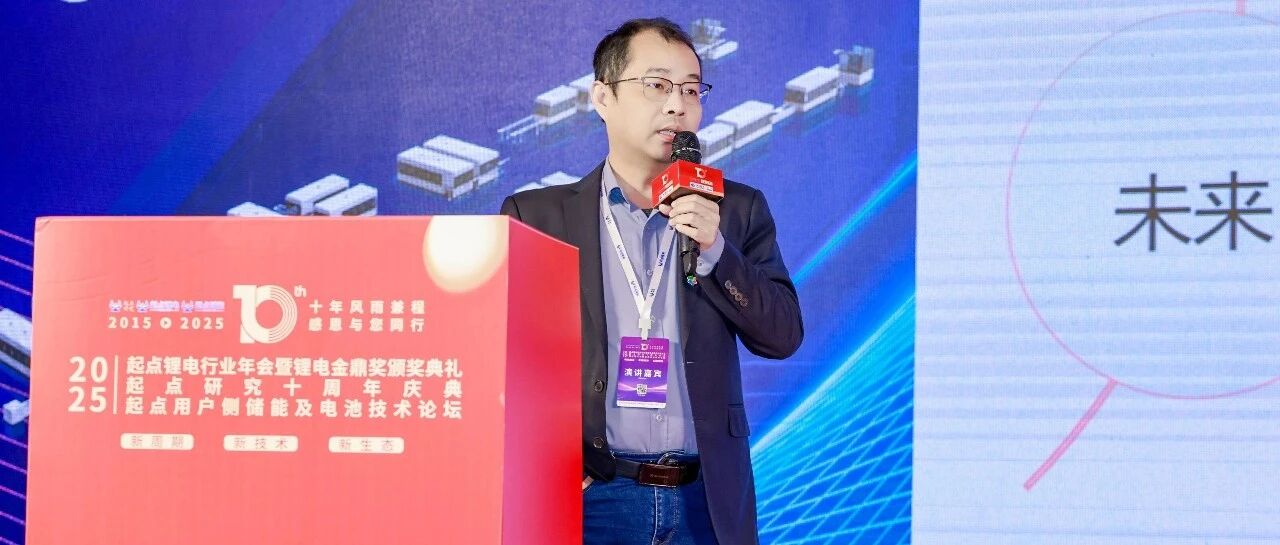
江西远东电池 总经理 相江峰:高比能圆柱电池开发进展
起点锂电· 2025-12-18 06:40
Core Viewpoint - The article discusses the advancements and market trends in cylindrical battery technology, highlighting the growth potential in various applications and the competitive edge of domestic manufacturers in China [1][2]. Group 1: Market Overview - The cylindrical battery market is projected to reach 15 billion units in 2024, with international markets accounting for 60% and domestic markets for 30% to 40%. By 2025, the market is expected to exceed 16 billion units, representing a growth of 13% [4]. - Key applications for cylindrical batteries include electric vehicles, power tools, and smart home devices, with significant growth anticipated in low-altitude economy and AI applications [4][5]. Group 2: Technological Advancements - China has made significant strides in battery technology, particularly in the use of silicon-based materials, which have a theoretical capacity of 4200 mAh. The industry has transitioned from traditional graphite to silicon-carbon composites [7][10]. - The latest advancements include the development of second and third-generation silicon-oxygen materials, which have improved initial efficiency but still face challenges in cycle performance [10]. Group 3: Competitive Positioning - Domestic manufacturers, such as Far East Battery, have achieved a production capacity of 6000 mAh for 21700 cells, surpassing international competitors who have reached 5800 mAh [14][17]. - The company claims to have a lower internal resistance of 13.5 mΩ compared to competitors, enhancing performance and longevity of their batteries [17]. Group 4: Future Trends - The future of battery technology is expected to focus on full-tab designs and solid-state batteries, with projections indicating that the company will lead in these innovations [19]. - The company has reported an annual output value of nearly 60 billion yuan and plans to mass-produce 6500 mAh cells by 2025 [19].
2GWh大圆柱电池项目落地贵州
起点锂电· 2025-08-05 10:36
Core Viewpoint - Guizhou Zhaoke Energy has officially started the construction of its lithium battery production base project, which is expected to enhance its production capacity and market presence in the lithium battery sector [2]. Group 1: Project Overview - The lithium battery production base project has a total investment of 250 million RMB and covers an area of 30,000 square meters, including a research and development center and an intelligent manufacturing workshop [2]. - The project aims to produce high-safety and high-performance cylindrical lithium batteries, primarily for two-wheeled vehicles and energy storage applications [2]. - The project is on track to be completed and put into production by December 2025, with an expected annual production capacity of 2 GWh and an estimated annual output value of approximately 650 million RMB [2]. Group 2: Company Background - Guizhou Zhaoke Energy holds 100% equity in Hunan Zhaoke Power New Energy Co., Ltd., which was established in December 2019 and focuses on the research, production, and sales of lithium batteries [2]. - Hunan Zhaoke Power achieved mass production in August 2020 with an initial investment of 150 million RMB, reaching an annual production capacity of 1 GWh and an annual output value exceeding 350 million RMB [3]. Group 3: Technological Advancements - Hunan Zhaoke Power has ventured into the sodium battery sector since September 2022, developing 18650 sodium-ion batteries with capacities of 1300mAh and 1500mAh, featuring a cycle life of 500 cycles [3]. - The company has introduced the ZK-INR18650 series high-rate batteries, designed for high-frequency battery swapping needs, achieving over 80% capacity retention after 800 cycles for the 2600mAh 3C model [3]. - Hunan Zhaoke Power is collaborating with Changsha Mining and Metallurgy Research Institute to accelerate the industrialization of sodium-ion and semi-solid-state batteries [3][4].
诚捷智能 董事长 呙德红:大圆柱电池的工艺发展与装备升级
起点锂电· 2025-02-28 12:35
2月28日,以"聚集新技术 探索新工艺"为主题的行业首届圆柱电池技术——2025起点锂电圆柱电池技术论坛暨圆柱电池20强排行榜发布会,在深 圳宝安登喜路国际酒店正式举办,现场超200+圆柱电芯及应用、300+电池材料设备配套企业齐聚盛会,携手共探新发展,共创新机遇。 在圆柱电池工艺及智能制造环节, 诚捷智能 董事长 呙德红 发表了《大圆柱电池的工艺发展与装备升级》主题演讲。 图:诚捷智能 董事长 呙德红 以下是速记整理内容: 尊敬的各位贵宾,各位行业的精英:大家下午好! 我今天就《大圆柱电池的工艺发展与装备升级》进行探讨。 谈到大圆柱电池的发展,就会谈到电容器,因为我是在电容器行业里从事了30多年智能装备的老兵,我就谈谈圆柱电容器的发展历史。 电容器的发展是从1745年到现在,它已经有将近四五百年历史,它也是由正负极,中间用绝缘体进行绝缘。 锂电池的发展是1976年开始,电容器的发展历程比锂电池的发展早200年,电容器这些年的演变与发展,它的路径值得锂电池行业的精英借鉴, 它的设备怎么演变、材料怎么演变、工艺的变化和升级是怎么做的,我们可以一起探讨。 | 1976年 | 1980-1986年 | 1987-1 ...