3CE

Search documents
安踏首投韩国潮牌,成败在中国
Xin Lang Cai Jing· 2025-12-16 03:41
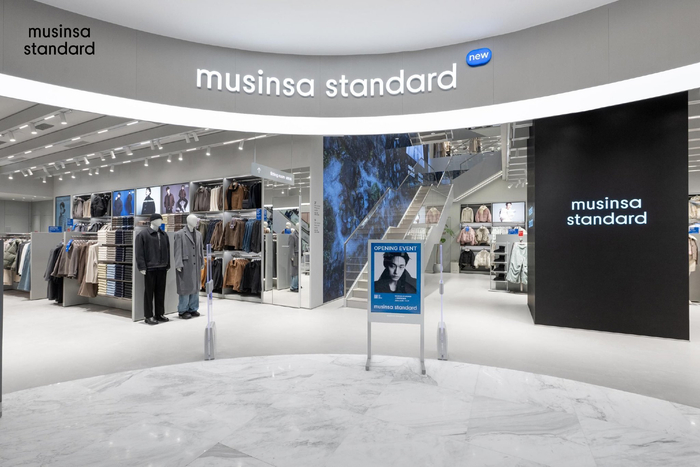
Core Viewpoint - Musinsa Group, a prominent South Korean fashion retailer, is expanding its presence in China with the opening of its first store, Musinsa Standard, in Shanghai, and plans to open over 100 stores in the next five years, aiming for significant revenue growth in the Chinese market [1][2]. Group 1: Company Expansion - Musinsa Standard opened its first store in Shanghai on December 15, occupying over 1,400 square meters [1]. - The second Musinsa Store is set to open in Nanjing East Road, with plans for further expansion in major Chinese cities [1][2]. - Musinsa Group aims to achieve over 1 trillion KRW (approximately 47.8 billion RMB) in overall revenue from the Chinese market by 2030 [2]. Group 2: Market Strategy - The company is leveraging a partnership with Anta Sports, which provides operational support and access to a vast retail network in China [5][6]. - Musinsa is adopting a dual-channel strategy, focusing on both online and offline sales, with flagship stores already established on major e-commerce platforms [6][10]. - The brand emphasizes a unique positioning that differentiates it from competitors like Uniqlo, focusing on aesthetics rather than just practicality [10][11]. Group 3: Competitive Landscape - The entry of Musinsa into the Chinese market comes at a time when other Korean brands have also opened stores in Shanghai, indicating a trend of Korean fashion gaining traction [4]. - The current market conditions, including lower rental prices in prime locations, present a favorable environment for new entrants like Musinsa [5]. - However, the company faces challenges in maintaining brand identity and customer experience, as seen in the struggles of similar brands like Stylenanda [8][12]. Group 4: Consumer Insights - Musinsa's product offerings include a wide range of items, with competitive pricing aimed at attracting young consumers [10]. - The brand's marketing strategy includes utilizing local social media platforms to engage with consumers and gather insights [11]. - Initial consumer feedback indicates a disparity between the brand's online image and in-store experience, which could impact customer retention [11][12].


欧莱雅巨变
3 6 Ke· 2025-09-26 00:10
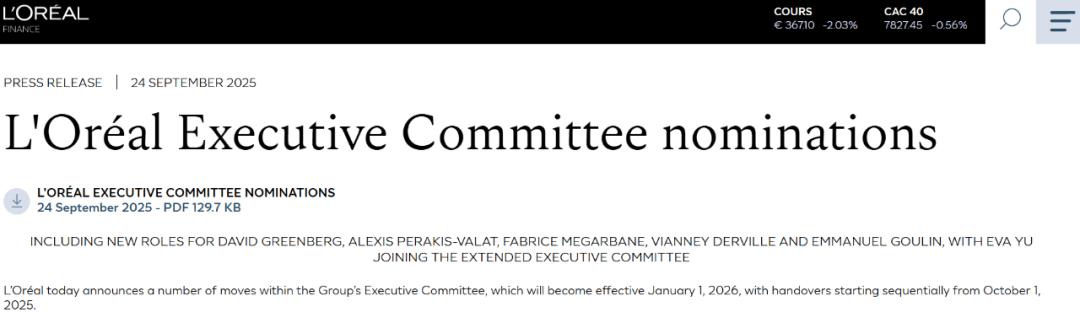
Core Insights - L'Oréal is undergoing significant executive changes aimed at strengthening its leadership in key markets, particularly the U.S. and Asia-Pacific, to sustain business growth and enhance digital transformation [1][3][26] Group 1: Executive Changes - L'Oréal announced multiple personnel changes within its executive committee, effective January 1, 2026, with transitions starting from October 1, 2025 [1][4] - The adjustments involve six key positions, primarily through internal promotions or cross-assignments, affecting regions such as North America, Europe, and Hong Kong [4][15] - David Greenberg has been appointed as the new Chairman of L'Oréal USA, emphasizing the importance of the U.S. market for future growth [7][10] Group 2: Market Focus - The company aims to enhance its leadership in the U.S. market through a dual management structure, with Greenberg collaborating with the CEO of L'Oréal USA [7][10] - L'Oréal is also focusing on expanding its travel retail business in the Asia-Pacific region, with Eva Yu appointed as the new Travel Retail President [19][21] Group 3: Performance Context - L'Oréal's sales for the first half of 2025 reached €22.473 billion (approximately ¥186.46 billion), showing a slight year-on-year increase of 1.6% [22][30] - The North American market, however, has shown slow growth, with a year-on-year increase of only 0.4%, indicating potential challenges in this key region [23][26] Group 4: Industry Trends - The executive reshuffling at L'Oréal reflects a broader trend in the beauty industry, with other major companies like Estée Lauder and Shiseido also announcing significant personnel changes amid ongoing market pressures [30]
欧莱雅关停彩妆品牌?
3 6 Ke· 2025-08-19 00:30
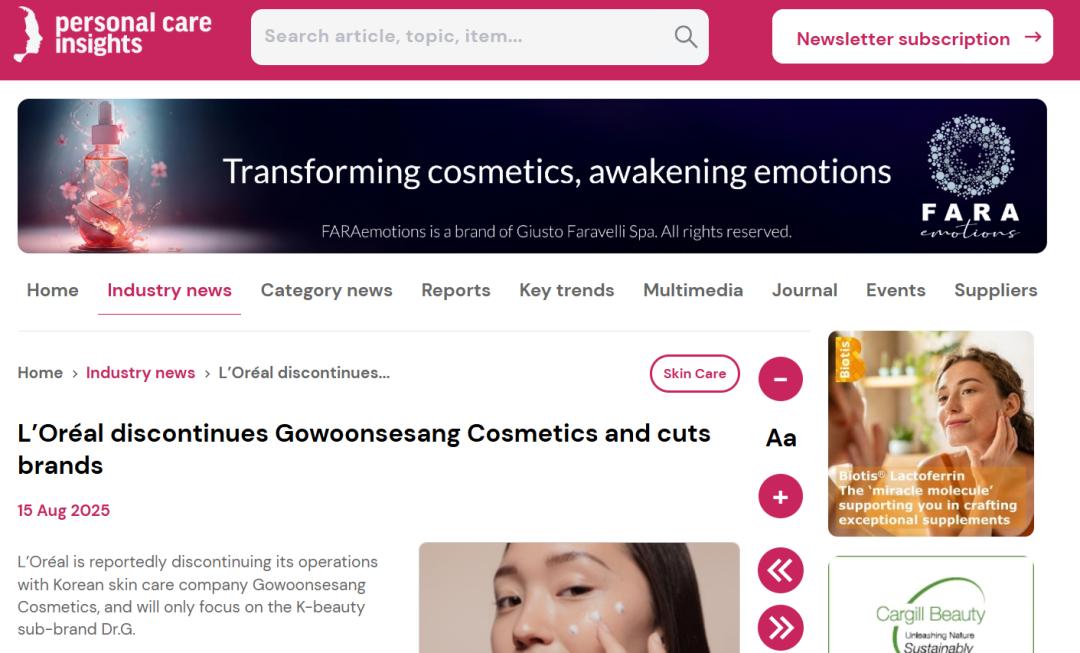
Core Insights - L'Oréal plans to discontinue the Gowoonsesang Cosmetics business acquired last year, focusing solely on the Dr.G brand [1][9] - The decision affects all Gowoonsesang brands except Dr.G, including the makeup brand Healus and the vegan brand Vivid Draw [3][9] Brand Focus - Healus, launched in February 2024, is a makeup brand that aimed to promote comfortable and healthy beauty [4][6] - The brand has been operational for less than two years before being discontinued [6] Acquisition Context - L'Oréal announced the acquisition of Gowoonsesang Cosmetics in December last year, and the focus on Dr.G comes less than a year after the acquisition [7][9] - The business line will be renamed to "L'Oréal Korea–Dr.G," simplifying the brand identity [9] Strategic Implications - L'Oréal's decision to focus on Dr.G aligns with its broader strategy of streamlining operations and concentrating on brands with the highest growth potential [10][13] - The company has previously shown a preference for Dr.G in its communications regarding the acquisition [10] Market Trends - The trend of discontinuing non-core brands is not unique to L'Oréal, as other major beauty companies like Unilever and Kao have also announced brand closures amid increasing competition and economic pressures [16]
欧莱雅旗下品牌被传裁员、退出?
3 6 Ke· 2025-05-23 00:13
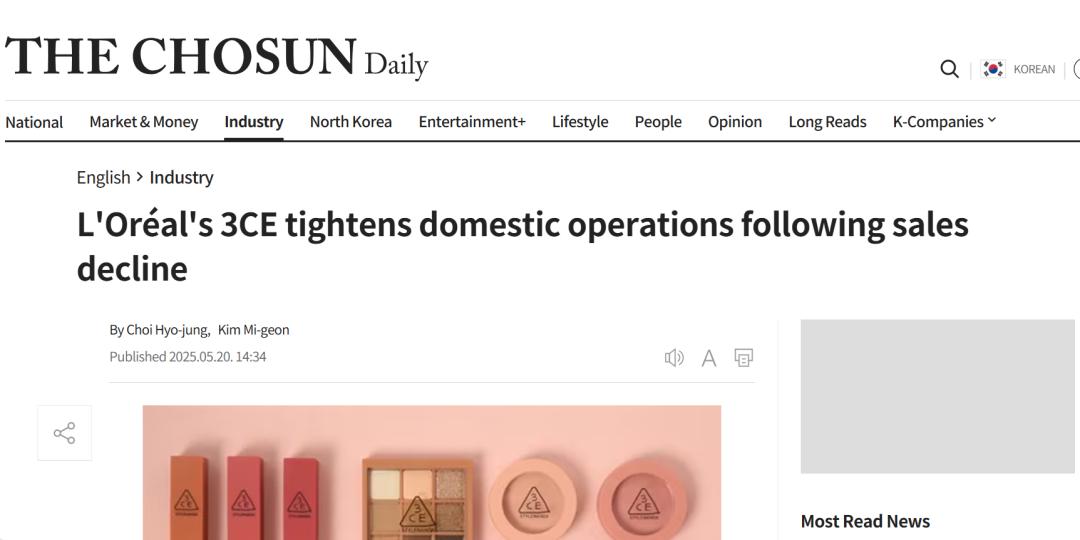
Core Viewpoint - The news reports that L'Oréal's acquisition of Stylenanda and its brand 3CE is facing challenges, including layoffs and speculation about exiting the South Korean market, although L'Oréal denies these claims [1][3][9]. Group 1: Company Performance and Strategy - Stylenanda initiated a voluntary retirement plan for employees related to the 3CE brand, indicating a contraction in its beauty segment after exiting the clothing business in 2024 [3][9]. - 3CE's revenue peaked in 2019 at 269.5 billion KRW (approximately 1.4 billion RMB), but has seen a steady decline in revenue from 2020 to 2024 [7][9]. - L'Oréal's official statement claims that 3CE has achieved double-digit growth in the South Korean market for three consecutive years, contradicting reports of its decline [9][23]. Group 2: Market Position and Competition - 3CE is reported to be the number one Korean beauty brand globally in 2023 and 2024, despite challenges in the South Korean market [10][23]. - The brand has expanded its presence in Southeast Asia and plans to re-enter the Japanese market in fall 2024, indicating a strategy to diversify its market presence [10][23]. - The competitive landscape in South Korea has intensified, with local brands gaining market share, which may impact 3CE's performance [20][23]. Group 3: Historical Context and Future Outlook - L'Oréal acquired Stylenanda in 2018 for approximately 400 billion KRW (about 2.1 billion RMB), but the exact ownership structure remains somewhat unclear [22][23]. - Previous exits of other L'Oréal brands from the South Korean market, such as Maybelline and Shu Uemura, raise concerns about the sustainability of international brands in this market [15][18]. - The future trajectory of 3CE will depend on L'Oréal's strategic decisions and its ability to adapt to changing consumer preferences and market dynamics [23].