555电池

Search documents
一颗电池的全球之旅
2 1 Shi Ji Jing Ji Bao Dao· 2025-12-28 23:19
Core Insights - Tiger Head Battery, a 97-year-old company, has successfully participated in the 138th Canton Fair, showcasing a new product rate of 8% and attracting numerous international clients [1][2] - Guangdong's foreign trade has shown resilience, with a total import and export value of 8.61 trillion yuan, a 4.2% increase year-on-year, surpassing the national average growth rate of 3.6% [2] - The company has established itself as the largest dry battery manufacturer in China, with a significant market share in over 100 countries [1][3] Company Development - Tiger Head Battery has evolved from domestic production to a global supply chain, adapting to international markets since the 1980s [3][4] - The company faced challenges in exporting to Africa, where environmental conditions led to product failures, prompting significant technological advancements in battery production [4][5] - The marketing strategy has been localized for different African regions, enhancing market penetration and brand recognition [5][6] Technological Advancements - The company has undergone three major technological upgrades in battery production, improving efficiency and product reliability [4][8] - A focus on high standards and compliance has led to a comprehensive upgrade of management and quality control systems, driven by the demands of European and American markets [7][8] Market Strategy - Tiger Head Battery is expanding its product matrix to include alkaline batteries, consumer lithium batteries, and energy storage systems, positioning itself for future growth in emerging markets [9][10] - The company is strategically targeting countries involved in the Belt and Road Initiative, with increased interest from international clients at trade fairs [10] Customer Engagement - The company emphasizes long-term partnerships with foreign clients, who are increasingly cautious in their supplier selection, focusing on product quality and operational support [10] - Recent client visits to the company's factory have fostered deeper relationships and cultural exchanges, enhancing the overall business collaboration experience [10]
一颗电池的全球之旅
21世纪经济报道· 2025-12-28 23:14
Core Viewpoint - The article highlights the success and growth of Tiger Head Battery Company, emphasizing its strong presence in both domestic and international markets, particularly in Africa and emerging markets, while adapting to changing consumer demands and technological advancements [3][4][5]. Group 1: Company Overview - Tiger Head Battery Company, established in 1928, is a leading battery manufacturer in China, with products sold in over 100 countries and regions, achieving a market share of over 80% in many areas [4][9]. - The company has a long history of participation in the Canton Fair, showcasing its commitment to international trade and customer relationships [7][9]. Group 2: Market Performance - In the first 11 months of the year, Guangdong's foreign trade reached 8.61 trillion yuan, a 4.2% increase year-on-year, with Tiger Head contributing significantly to this growth [5]. - The company has been actively expanding its product offerings, with an 8% new product rate at the recent Canton Fair, and is currently focused on securing orders for the upcoming year [4][5]. Group 3: Technological Advancements - Tiger Head has undergone significant technological upgrades, transitioning from manual processes to automated systems, enhancing product quality and reliability, particularly for international markets [8][12]. - The company has developed a comprehensive supply chain system that integrates research, production, quality control, and delivery, allowing for efficient responses to market demands [12]. Group 4: International Expansion - The company has successfully penetrated the African market, with annual sales exceeding 6 billion dry batteries, and has established a strong brand presence, with local consumers often requesting "Tiger" batteries directly [9][11]. - Tiger Head is focusing on expanding into emerging markets and countries involved in the Belt and Road Initiative, with increased interest from international buyers at trade shows [15]. Group 5: Future Outlook - The battery industry is shifting towards high-energy density and long-life products, with solid-state battery market size projected to reach $15.07 billion by 2030, indicating a significant growth opportunity for Tiger Head [14]. - The company is adapting its strategy to meet the evolving demands of international markets, emphasizing long-term partnerships and comprehensive support systems to attract foreign clients [15].


一颗电池的全球之旅:广货锚定出海新航标
2 1 Shi Ji Jing Ji Bao Dao· 2025-12-26 23:08
Core Viewpoint - Tiger Head Battery, a well-established battery manufacturer in Guangzhou, has successfully expanded its international presence, particularly in emerging markets, while maintaining strong sales performance during the recent Canton Fair [1][2]. Group 1: Company Overview - Tiger Head Battery, founded in 1928, is a leading battery manufacturer in China, with products sold in over 100 countries and regions [1]. - The company has a significant market share in many regions, achieving over 80% in some areas [1]. - The company’s product innovation rate reached 8% during the recent Canton Fair, indicating a focus on developing new products alongside expanding its customer base [1]. Group 2: Export Performance - In the first 11 months of the year, Guangdong's foreign trade reached 8.61 trillion yuan, a 4.2% increase year-on-year, with Tiger Head contributing significantly to this growth [2]. - The company exports over 60 billion dry batteries annually, with 80% of its sales directed towards international markets [5]. Group 3: Market Strategy - Tiger Head has tailored its marketing strategies to different regions in Africa, enhancing local engagement and maximizing marketing efficiency [4]. - The company has adopted a localized marketing approach, segmenting the African market into East, Central, West, and North Africa [4]. Group 4: Technological Advancements - The company has undergone significant technological upgrades, transitioning from manual processes to automated systems, which improved product quality and reliability [3][6]. - Tiger Head has developed a comprehensive supply chain system that integrates research, production, quality control, and delivery, enhancing operational efficiency [6][7]. Group 5: Challenges and Adaptations - The company faced challenges in meeting the stringent quality standards of the European and American markets, leading to a comprehensive upgrade of its management and quality control systems [6]. - Tiger Head has successfully navigated the complexities of international trade, adapting its operations to meet diverse market demands [7][8]. Group 6: Future Outlook - The company is focusing on emerging markets and countries involved in the Belt and Road Initiative, with increased confidence in expanding its market presence [8]. - The global battery market is evolving, with a shift towards high-energy density and long-life batteries, indicating potential growth areas for Tiger Head [7].
股权纠纷金额涨至10.23亿元,良品铺子何时寻到“白衣骑士”
Bei Ke Cai Jing· 2025-08-18 07:50
Core Viewpoint - The control rights of the leisure food company, Liangpinpuzi, are undergoing significant changes due to a lawsuit and the introduction of a new strategic investor, Changjiang Guomao, which may impact the company's future development and market position [1][2][3]. Group 1: Control Rights Change - Liangpinpuzi announced the introduction of Changjiang Guomao as a strategic investor, which will become the new controlling shareholder, with the share transfer price set at 12.42 yuan per share, totaling 1.046 billion yuan for 18.01% and 2.99% of shares [2][9]. - The lawsuit initiated by Guangzhou Light Industry against Ningbo Hanyi, Liangpinpuzi's controlling shareholder, has escalated, with the claimed amount increasing from 996 million yuan to 1.023 billion yuan [3][4]. - The lawsuit has led to the freezing of some shares, creating uncertainty around the share transfer to Changjiang Guomao [3][5]. Group 2: Financial Performance and Industry Context - Liangpinpuzi's financial performance has shown a decline, with revenues of 93.24 billion yuan in 2021, 94.4 billion yuan in 2022, and 80.46 billion yuan in 2023, alongside a net profit drop from 2.82 billion yuan in 2021 to a loss of 461.045 million yuan in 2024 [10]. - The leisure food industry is experiencing intensified competition, with a market share concentration (CR5) of less than 20%, leading to frequent price wars and a need for companies to innovate and differentiate their products [11]. - The introduction of Changjiang Guomao is seen as a strategic move to enhance Liangpinpuzi's supply chain efficiency and support its transition from a snack brand to a quality food operator, aligning with industry trends towards comprehensive value chain competition [9][11].

控股股东涉10.23亿元诉讼案,良品铺子控制权转让风波升级
Xin Lang Cai Jing· 2025-08-13 12:50
Core Viewpoint - The control transfer controversy of the high-end snack company, Liangpinpuzi, is escalating, with ongoing litigation affecting its major shareholder, Ningbo Hanyi, and potential changes in control to Wuhan Changjiang International Trade Group [1][2] Group 1: Shareholder Dispute - Ningbo Hanyi is involved in a lawsuit with Guangzhou Light Industry Group regarding a share transfer agreement, with the disputed amount increasing from 996 million yuan to 1.023 billion yuan [1] - The lawsuit may create uncertainty regarding the control transfer to Wuhan Changjiang International Trade Group, as the case has not yet been heard in court [1][2] - Ningbo Hanyi failed to sign a share transfer agreement with Guangzhou Light Industry by the agreed date, leading to Guangzhou Light Industry filing a lawsuit and freezing 79,763,962 shares held by Ningbo Hanyi [2][3] Group 2: Share Transfer Agreement - Following the agreement, Ningbo Hanyi and its concerted parties will see their shareholding in Liangpinpuzi drop from 38.22% to 17.22%, while Changjiang International Trade Group will hold 21.00% [2] - The transfer will result in a change of the controlling shareholder from Ningbo Hanyi to Changjiang International Trade Group, with the actual controller shifting to the State-owned Assets Supervision and Administration Commission of Wuhan [2] Group 3: Company Performance - Liangpinpuzi is currently facing performance pressure, with expected net losses for the first half of the year ranging from 10.5 million yuan to 7.5 million yuan, and a net profit excluding non-recurring items projected between -13 million yuan and -10 million yuan [4]
广东国资出手,拟收购迪卡侬代工企业
2 1 Shi Ji Jing Ji Bao Dao· 2025-06-12 03:29
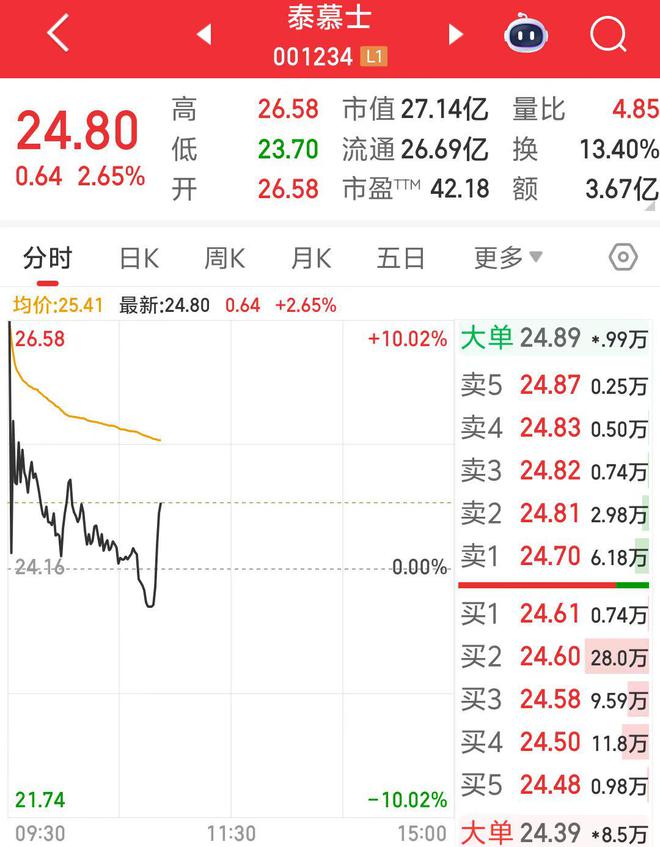
Core Viewpoint - The company Taimusi is set to transfer its controlling stake to Guangzhou Light Industry Group through a combination of share transfer and voting rights waiver, marking a significant change in ownership structure [1][4]. Group 1: Ownership Changes - Taimusi's controlling shareholder plans to transfer 29.99% of its shares at a total market value of 2.5 billion yuan, with the transfer price set between 90% of the closing price before the agreement and the limits set by regulatory authorities [3]. - After the transfer, the combined shareholding of the current actual controllers, Lu Biao and Yang Min, will decrease from 70.92% to 40.93%, and their voting rights will drop from 70.92% to 19.74%. Guangzhou Light Industry will hold 29.99% of shares and voting rights [4][5]. Group 2: Company Background - Guangzhou Light Industry is a large enterprise group that integrates industry and trade, recognized as one of China's top 100 light industry companies, with a history dating back to 1950 [6]. - Taimusi, established in August 1992 and listed on the Shenzhen Stock Exchange in January 2022, specializes in high-end fabric weaving, dyeing, and garment production, with an annual output of 6,000 tons of knitted fabrics and 20 million knitted garments [6]. - The company provides OEM services for well-known brands such as Decathlon, Anta, and Bosideng, but has not seen significant growth in revenue or profit since its listing, with 2022 revenue at 742 million yuan and a net profit of 76.84 million yuan [6]. Group 3: Stock Performance - Taimusi's stock experienced a notable surge, achieving a six-day consecutive increase from April 10 to April 17, with a total rise of over 100% from a low of 14.66 yuan to a high of 29.70 yuan [7].