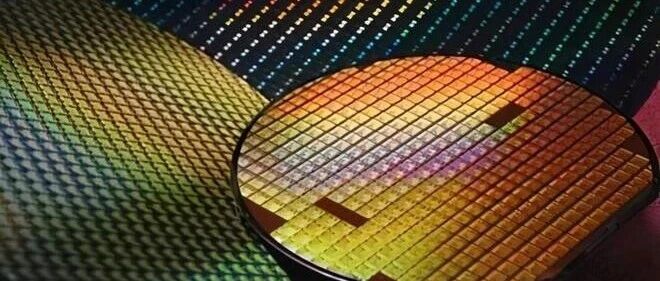
8英寸半导体硅片

Search documents
定制报告:全球半导体硅片产业“十五五”市场发展趋势研究及投资建议评估预测报告(2026版)
Sou Hu Cai Jing· 2026-01-07 01:37
Core Insights - The semiconductor silicon wafer industry is a critical component of the semiconductor supply chain, with applications in various sectors including mobile devices, IoT, automotive electronics, AI, and aerospace [2][5][6]. Industry Overview - The semiconductor silicon wafer market is experiencing a shift towards larger wafer sizes, with 12-inch wafers becoming the dominant product, accounting for 76.39% of the market share by 2024 [11][12]. - The demand for 8-inch wafers is projected to decline to 2,366 million square inches by 2024, but is expected to recover to 2,412 million square inches by 2025 [10]. Market Dynamics - The global semiconductor silicon wafer market size is forecasted to decrease by 7.50% to $11.5 billion in 2024 due to weak end-user demand and macroeconomic factors, but is expected to rebound in 2025 driven by sectors like new energy vehicles and 5G [12][15]. - The market for silicon epitaxial wafers is also growing, with a compound annual growth rate of 7.39% from $3.68 billion in 2015 to $6.06 billion in 2022 [16]. Product Classification - Silicon wafers can be classified by size (2-inch to 12-inch), manufacturing process (polished, epitaxial, annealed, SOI), doping type (P-type and N-type), and doping concentration (lightly doped and heavily doped) [5][7][8][9]. Future Trends - The industry is expected to see continued growth in the 8-inch and 12-inch wafer segments, which together will account for approximately 96.29% of the market by 2025 [11][12]. - The transition to larger wafer sizes is anticipated to enhance production efficiency and reduce costs, although it requires significant investment in technology and equipment [11][12].

半导体硅片行业全景图:从材料到芯片的底层密码
材料汇· 2025-11-16 14:08
Core Insights - The article emphasizes the critical role of semiconductor silicon wafers in modern technology, highlighting their importance in the global tech competition and national security [2][5][12] - It provides a comprehensive overview of the semiconductor industry, including market trends, technological barriers, and future opportunities driven by AI and self-sufficiency [8][12][61] Industry Overview - The semiconductor industry is foundational to the information industry, characterized by high production complexity, rapid technological iteration, and significant investment risks [5][7] - The global semiconductor market is projected to grow from $335.2 billion in 2015 to $627.6 billion by 2024, with a compound annual growth rate (CAGR) of 7.22% [10] - China's semiconductor market is expected to expand from $98.2 billion in 2015 to $182.2 billion by 2024, driven by national policies and increasing domestic demand [11][12] Semiconductor Materials Overview - The global semiconductor materials market is projected to grow from $43.3 billion in 2015 to $67.5 billion by 2024, with a CAGR of 5.06% [14] - China's semiconductor materials market is expected to grow from $6.8 billion in 2016 to $13.5 billion by 2024, outpacing global growth [19] Semiconductor Silicon Wafers - Semiconductor silicon wafers are essential for producing integrated circuits and sensors, with a complex manufacturing process involving multiple scientific disciplines [22][23] - The main types of silicon wafers include 2-inch, 3-inch, 4-inch, 6-inch, 8-inch, and 12-inch, with 12-inch wafers being the most prevalent due to cost advantages [26][28] - The demand for 12-inch wafers has increased significantly, with their market share rising from 1.69% in 2000 to 76.39% in 2024 [51] Market Dynamics - The global silicon wafer market is expected to experience a downturn in 2024, with a projected decline of 7.50% to $11.5 billion, but is anticipated to recover in 2025 due to demand from sectors like AI and electric vehicles [55][57] - The market for silicon epitaxial wafers is also growing, driven by applications in high-performance devices, with the market size increasing from $3.68 billion in 2015 to $6.06 billion in 2022, reflecting a CAGR of 7.39% [59] Challenges and Barriers - The semiconductor silicon wafer industry faces significant barriers, including customer onboarding challenges, technological complexities, talent shortages, and high capital investment requirements [41][45][46] - The industry is characterized by a high concentration of market share among a few key players, particularly in advanced wafer sizes [63] Future Outlook - The semiconductor industry is expected to enter a golden period of growth in the next decade, driven by advancements in 5G, AI, and other emerging technologies [12][67] - China's semiconductor industry is poised for rapid growth, with a projected market size increase from $0.5 billion in 2016 to $1.7 billion in 2023, indicating a robust development trajectory [62]