
半导体硅片

Search documents
AI驱动先进硅片需求高增,大硅片行业延续复苏势态
GOLDEN SUN SECURITIES· 2026-03-25 02:12
Investment Rating - Maintain "Buy" rating for the semiconductor silicon wafer industry [5] Core Insights - The silicon wafer industry is experiencing a recovery driven by AI demand, particularly for 12-inch wafers, which are expected to see significant growth due to their economic advantages and increased usage in advanced semiconductor applications [3][4][9] - The global semiconductor silicon wafer market is projected to exceed $20 billion by 2030, with a compound annual growth rate (CAGR) of approximately 5-6% [3][29] - The shift towards larger silicon wafer sizes, particularly 12-inch wafers, is driven by the need for higher efficiency and lower production costs in semiconductor manufacturing [2][17] Summary by Sections Section 1: Silicon Wafer Demand and Market Dynamics - Silicon wafers are fundamental to chip manufacturing, accounting for 30% of wafer manufacturing materials, with over 95% of semiconductor devices using silicon wafers as substrates [1][9] - The demand for 12-inch silicon wafers is significantly increasing, with AI servers requiring 3.8 times more 12-inch wafers compared to general servers [3][26] - The global market for silicon wafers is dominated by a few key players, with Shin-Etsu and SUMCO holding substantial market shares, indicating a high concentration in the industry [33][37] Section 2: Technological Advancements and Production Capacity - The transition to larger wafer sizes, particularly 12-inch, is driven by Moore's Law, which allows for more chips to be produced per wafer, thus reducing costs [2][17] - By 2026, the number of 12-inch wafer production facilities is expected to increase from 193 to 230 globally, with a corresponding rise in production capacity from 8.34 million wafers per month to 9.89 million [26] - Domestic manufacturers in China are rapidly expanding their production capabilities, with companies like Hu Silicon Industry and Xi'an Yicai leading the way in 12-inch wafer supply [61][62] Section 3: Future Outlook and Growth Drivers - The semiconductor industry is projected to recover in 2024, with a 5.06% increase in silicon wafer shipments anticipated [29] - AI technology is a significant growth driver for the silicon wafer market, with increasing demand for high-performance GPUs and HBM stacks in AI servers [3][54] - The overall demand for silicon wafers is expected to grow as the industry adapts to new technologies and applications, particularly in high-end markets such as AI and cloud computing [3][4][61]


西安奕材2025年度归母净亏损7.38亿元
Zhi Tong Cai Jing· 2026-02-26 09:25
Core Viewpoint - Xi'an Yichai (688783.SH) reported a revenue of 2.649 billion yuan for the fiscal year 2025, reflecting a year-on-year growth of 24.88%, but also recorded a net loss attributable to shareholders of 738 million yuan [1] Financial Performance - The company's revenue reached 2.649 billion yuan, marking a 24.88% increase compared to the previous year [1] - The net loss attributable to the parent company's shareholders was 738 million yuan [1] - The net loss after deducting non-recurring gains and losses was 809 million yuan [1] Operational Challenges - The company is facing challenges related to the pace of customer capacity release and the certification cycle for semiconductor silicon wafer products, indicating a need for further optimization of product structure [1] - The second factory is currently in the capacity ramp-up phase, and its capacity has not been fully released yet [1] - Fixed asset depreciation and other fixed costs have not been effectively diluted, leading to a lack of scale effects [1]
立昂微:预计2025年净亏损1.21亿元
Ge Long Hui A P P· 2026-01-21 09:30
Core Viewpoint - Lianmicro expects a net loss of approximately 121 million yuan for the fiscal year 2025, an improvement from a loss of 266 million yuan in the previous year, while projecting a revenue of around 3.595 billion yuan, representing a year-on-year growth of approximately 16.26% [1] Financial Performance - The anticipated net loss for 2025 is around 121 million yuan, compared to a loss of 266 million yuan in the same period last year [1] - Projected revenue for 2025 is approximately 3.595 billion yuan, indicating a year-on-year increase of about 16.26% [1] Business Drivers - The primary reason for the performance change is the recovery in profitability within the semiconductor wafer segment [1] - There is a shift towards high-end product structures, with significant growth in the production and sales volume of 12-inch wafers [1] - Improvements in gross margin are attributed to increased sales prices and decreased unit costs, along with an increase in non-recurring gains [1]
立昂微:预计2025年净利润亏损1.21亿元
Xin Lang Cai Jing· 2026-01-21 09:21
Core Viewpoint - Lian Micro (605358.SH) expects a net loss of approximately 121 million yuan for the fiscal year 2025, an improvement from a loss of 266 million yuan in the previous year, while projecting a revenue of around 3.595 billion yuan, representing a year-on-year growth of approximately 16.26% [1] Group 1 - The primary reason for the performance change is the recovery in profitability within the semiconductor wafer segment [1] - The company is upgrading its product structure towards high-end products, leading to significant growth in the production and sales volume of 12-inch wafers [1] - There has been an increase in sales prices and a decrease in unit costs, which have contributed to the improvement in gross margin [1] Group 2 - Additionally, there has been an increase in non-recurring gains, further supporting the expected financial performance [1]
立昂微:自2025年第一季度以来,公司平均出货价格环比逐季提升
Zheng Quan Ri Bao Wang· 2026-01-19 13:40
Group 1 - The core viewpoint of the article is that Lianang Micro (605358) has seen a sequential increase in average shipment prices since Q1 2025, indicating a positive trend in pricing for the company [1] - The current silicon wafer product prices have not yet returned to historical highs, suggesting potential for further price increases as the silicon wafer industry and related downstream applications improve [1]
A股收盘|沪指涨0.29% 特高压板块领涨
Di Yi Cai Jing· 2026-01-19 07:16
Market Performance - The three major stock indices closed mixed, with the Shanghai Composite Index rising by 0.29% and the Shenzhen Component Index increasing by 0.09%, while the ChiNext Index fell by 0.7% [1] - The Science and Technology Innovation Index decreased by 0.21% [1] Sector Performance - The sectors leading the gains included ultra-high voltage, smart grid, and general aviation [1] - Conversely, the sectors with the largest declines were CPO, OCS, semiconductor silicon wafers, and consumer electronics [1] Trading Volume - The total trading volume in the Shanghai and Shenzhen markets was 2.71 trillion yuan, which represents a decrease of 317.9 billion yuan compared to the previous trading day [1]
高低切换已成定局!下一个抱团方向,基本明牌了
Sou Hu Cai Jing· 2026-01-19 04:20
Core Viewpoint - The market is currently experiencing a typical oscillation and differentiation pattern, with a cautious balance between traditional stable growth and high-elasticity growth sectors, as evidenced by the performance of various indices [1] Market Performance - As of the midday close, the Shanghai Composite Index rose by 0.13% to 4107.18 points, while the Shenzhen Component Index remained nearly flat, and the ChiNext and STAR Market indices fell by 0.64% and 0.60%, respectively [1] - The half-day trading volume was 1.81 trillion yuan, indicating a significant decrease compared to the previous day, suggesting a temporary pause in market momentum as both bulls and bears adopt a wait-and-see approach [1] Sector Analysis - The leading sector, ultra-high voltage (UHV), surged over 5%, with a wave of stocks hitting the daily limit, followed by sectors like aviation and petrochemicals [1] - In contrast, the technology sector, including optical modules, optical circuit switches, and semiconductor silicon wafers, experienced collective pullbacks, indicating a clear divide in sector performance [1][2] Investment Drivers - The UHV sector is viewed as a "safe haven" in the current macro environment, characterized by high policy visibility and strong counter-cyclical attributes, making it a preferred investment destination amid uncertainties [2] - UHV is essential for China's energy revolution, addressing the challenges of power transmission and consumption from renewable energy sources, thus ensuring its long-term viability and demand [2] - The market is undergoing a structural rebalancing, with funds shifting from high-valuation growth sectors to high-prospect value sectors, reflecting a tactical migration in risk preferences [2] Market Outlook - The UHV sector's performance in both A-shares and Hong Kong stocks reinforces its status as a cross-market leader, indicating broader institutional recognition of its driving logic [3] - The structural market trend focusing on "certainty" and "prospect" is expected to dominate for some time, with limited systemic risks but potential for increased sector differentiation and rotation [3] - Investors are advised to focus on energy infrastructure themes represented by UHV, which may extend to related sectors like charging stations and smart grids, while remaining cautious of overvalued tech sectors [3]
国产硅片厂商冲刺IPO:300mm全球份额不到2%、亏损近40亿
Guan Cha Zhe Wang· 2026-01-15 10:27
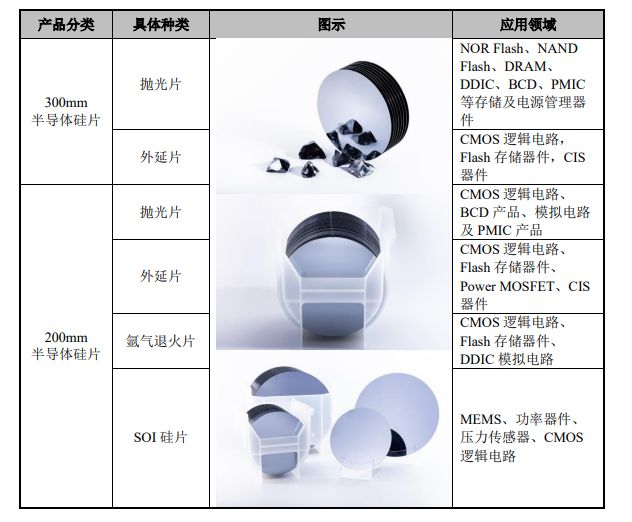
Core Viewpoint - The semiconductor industry in China is rapidly evolving, with companies like Shanghai Super Silicon Semiconductor Co., Ltd. (Shanghai Super Silicon) making strides towards an IPO on the Sci-Tech Innovation Board, highlighting the growing importance of the silicon wafer sector in the semiconductor supply chain [1] Company Overview - Shanghai Super Silicon was established in July 2008 and transitioned to a joint-stock company in May 2021, focusing on the R&D, production, and sales of 300mm and 200mm semiconductor silicon wafers, along with providing silicon wafer regeneration and processing services [1] - The company has completed eight rounds of financing since 2014, with a latest valuation of approximately 20 billion yuan [1] Market Dynamics - The global semiconductor silicon wafer market is shifting towards larger sizes, with 200mm and 300mm wafers being the mainstream specifications. The 300mm wafers are particularly significant for logic and memory chip markets, offering higher profit margins [2] - The 200mm wafers have a mature process system and are primarily used in automotive electronics and IoT, while the 300mm wafers are more advanced and profitable [2] Financial Performance - For the reporting periods of 2022 to 2025 (first half), the company's revenue figures were 921 million yuan, 928 million yuan, 1.327 billion yuan, and 756 million yuan, respectively. The net profits attributable to shareholders were -803 million yuan, -1.044 billion yuan, -1.299 billion yuan, and -736 million yuan, leading to a cumulative loss of 3.882 billion yuan [4] - The gross profit margins for the main business were -12.47%, -7.61%, -3.72%, and -3.27%, significantly lower than the industry average [4] Production Capacity and Challenges - Shanghai Super Silicon has invested over 16 billion yuan in its production lines for 300mm and 200mm wafers, with a designed capacity of 800,000 wafers per month for 300mm and 400,000 for 200mm. However, actual production as of June 2025 was only 320,000 and 387,600 wafers, respectively [7] - The company faces challenges in achieving profitability due to high production costs, significant R&D and management expenses, and inventory write-downs leading to over 1 billion yuan in losses [10][11] Future Outlook - Shanghai Super Silicon anticipates achieving profitability by 2029, contingent on meeting specific production and sales targets for its wafer products [10] - The company plans to raise 4.965 billion yuan through its IPO to fund expansion projects and supplement working capital, although there are concerns regarding the feasibility of this expansion given current operational challenges [11] Competitive Landscape - In the 300mm wafer market, the top five global manufacturers hold 82.65% of the market share, with Shanghai Super Silicon's share at approximately 1.36%, ranking it tenth globally [12] - The company claims to have competitive technology levels comparable to the top five manufacturers, but still faces challenges in yield and technology node coverage [12]

国产硅片厂商上海超硅冲刺IPO:300mm全球份额不到2%、亏损近40亿
Guan Cha Zhe Wang· 2026-01-15 10:25
Core Viewpoint - The semiconductor industry, particularly the silicon wafer sector, is gaining attention as domestic companies like Shanghai ChaoSilicon Semiconductor Co., Ltd. pursue IPOs amid a push for self-sufficiency in semiconductor manufacturing [1] Company Overview - Shanghai ChaoSilicon was established in July 2008 and transitioned to a joint-stock company in May 2021, focusing on the R&D, production, and sales of 300mm and 200mm semiconductor silicon wafers, along with related processing services [1] - The company has completed eight rounds of financing since 2014, with a current valuation of approximately 20 billion yuan [1] Market Context - The global semiconductor silicon wafer market is shifting towards larger sizes, with 200mm and 300mm wafers being the mainstream specifications, where larger wafers reduce edge loss and improve efficiency [2] - 200mm wafers are mature and widely used in automotive electronics and IoT, while 300mm wafers are more technically demanding and profitable, primarily serving logic and memory chip markets [2] Financial Performance - Revenue for the years 2022, 2023, 2024, and the first half of 2025 is reported as 921 million yuan, 928 million yuan, 1.327 billion yuan, and 756 million yuan respectively, with net losses of 803 million yuan, 1.044 billion yuan, 1.299 billion yuan, and 736 million yuan [4] - Cumulative losses over three and a half years amount to 3.882 billion yuan, with retained earnings as of mid-2025 at -4.708 billion yuan [4] Profitability Analysis - The company's gross margins for its main business are negative, with figures of -12.47%, -7.61%, -3.72%, and -3.27% for the respective periods, significantly lower than industry averages [4] - Specific gross margins for 300mm wafers are -42.91%, -24.16%, and -8.50%, while 200mm wafers show margins of 5.22%, -0.59%, and -2.80% [4] Pricing Trends - The average price of 300mm silicon wafers decreased from 388.03 yuan per piece in 2022 to 328.4 yuan in the first half of 2025, while 200mm wafers dropped from 204.19 yuan to 172.54 yuan [5] Challenges and Explanations for Losses - The company attributes its ongoing losses to several factors, including rising costs during capacity ramp-up, high R&D and management expenses, increased borrowing costs, and significant inventory write-downs [6] - Cumulative investments in 300mm and 200mm wafer production lines exceed 16 billion yuan, with actual production capacities falling short of designed capacities [6] Future Outlook - Shanghai ChaoSilicon anticipates achieving profitability by 2029, contingent on meeting specific production and sales targets for its silicon wafers [9] - The company acknowledges that delays in production line development or slower industry recovery could postpone profitability [9]

立昂微6英寸硅抛光片项目结项,12英寸外延片项目延期至2027年12月
Ju Chao Zi Xun· 2026-01-09 15:31
Core Viewpoint - The announcements from the company reveal the completion of the 6-inch silicon polishing wafer project and the second delay of the 12-inch semiconductor silicon epitaxial wafer project, highlighting challenges in the semiconductor industry and adjustments in project timelines. Group 1: 6-inch Silicon Polishing Wafer Project - The 6-inch silicon polishing wafer project has officially completed as of January 9, 2026, with a total investment of 124,739.68 million yuan against a promised amount of 125,000 million yuan, resulting in a surplus of 1,840.24 million yuan [2] - The surplus funds will be fully allocated to the 12-inch semiconductor silicon epitaxial wafer project, as the surplus is below 5% of the committed investment, thus not requiring board approval [2] Group 2: 12-inch Semiconductor Silicon Epitaxial Wafer Project - The timeline for the 12-inch semiconductor silicon epitaxial wafer project has been postponed from May 2026 to December 2027, marking the second delay after an initial postponement from April 2024 [3] - The project has a planned investment of 113,000 million yuan, with 62,263.61 million yuan already invested, reflecting a progress rate of 55.10% as of December 31, 2025 [3] - The delay is attributed to the downturn in the semiconductor silicon wafer industry, leading to underutilization of existing capacity and increased profitability pressure, prompting the company to slow down construction and equipment procurement [3] Group 3: Industry Environment and Future Outlook - Since the first quarter of 2025, the semiconductor silicon wafer industry has seen a recovery in demand, with significant increases in order volumes and shipment quantities, particularly for high-end power devices [4] - The company has accelerated the construction pace of its projects since the second half of 2025 and plans to adjust the construction schedule dynamically based on market conditions [4]