AEC线缆

Search documents
东山精密-2
2026-02-10 03:24
Summary of Dongshan Precision's Conference Call Company Overview - **Company**: Dongshan Precision - **Industry**: Optical Chip and PCB Manufacturing Key Points Partnerships and Collaborations - Dongshan Precision is successfully collaborating with major companies such as Meta, Microsoft, and XAI, and is in active discussions with Amazon, Google, and Nvidia [2][3] - Meta has secured an order for 100 million chips, accounting for one-third of next year's total production [4] Production Capacity and Financial Projections - The company aims to achieve a production capacity of 300 million chips by 2027, positioning itself as one of the largest optical chip manufacturers globally [2][3] - Expected profits for 2027 are projected to exceed 20 billion, with a market valuation surpassing 400 billion [3][29] Product Development and Market Demand - Dongshan Precision is developing a 400G single-wave product in collaboration with Nvidia and is focusing on emerging technologies like MBO [5] - The demand for 1.6T products is anticipated to be strong, with Meta and Microsoft placing significant orders [3][9] - The company plans to prepare 25 million related materials for 2027, indicating robust demand for optical modules [12] Financial Performance - In the first three quarters of 2025, profits reached over 1.2 billion, with the company having cleared underperforming LED business segments [11] - The company does not foresee any impact from past underperforming segments on future earnings [11] Competitive Advantages - Dongshan Precision has a competitive edge in the EML (Electro-absorption Modulated Laser) field, with few domestic competitors capable of mass production [6] - The company has unique advantages in PCB technology, being one of the few able to produce high-end soft boards, HDI, and rigid-flex boards simultaneously [7] Market Challenges - The optical chip industry is currently facing a chip shortage due to high global demand and the time required for production expansion [18] - Despite the industry's attractiveness, many companies are operating at a loss, and new entrants are unlikely due to the complexities involved in production [19] Future Outlook - Dongshan Precision is optimistic about the growth of the optical module market, predicting a ninefold increase in demand over the next few years [25] - The company is committed to expanding its production capabilities and adapting to market needs, with ongoing investments in new facilities [21][20] Strategic Initiatives - The company is planning to enhance its production capacity in Thailand and has already invested 10 billion in capacity construction [21] - Ongoing collaborations with Nvidia and other tech giants indicate a strong pipeline for future projects [30] Conclusion - Dongshan Precision is well-positioned for growth in the optical chip and PCB markets, with strong partnerships, a clear production strategy, and a focus on emerging technologies. The company anticipates significant financial performance improvements in the coming years, driven by robust market demand and strategic investments.

一文搞懂数据中心的线缆AOC、DAC、ACC、AEC
傅里叶的猫· 2025-08-10 14:34
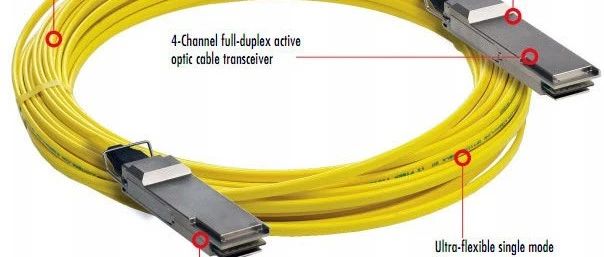
Core Viewpoint - The article discusses the different types of cables used in data centers, particularly focusing on Active Optical Cables (AOC) and their advantages over traditional copper cables, as well as the specific cable choices made in the GB200 architecture. Group 1: Active Optical Cables (AOC) - AOC is defined as a cable technology that uses optical fibers between connectors while maintaining compatibility with standard electrical interfaces, enhancing speed and transmission distance [2][10] - AOC components consist of four functional parts, including high-density connectors and embedded optical transceivers for optical-electrical and electrical-optical conversion [4][5] - AOC offers various types, such as 10G SFP AOC, 25G SFP28 AOC, and 100G QSFP28 AOC, catering to different data rates [8] - The advantages of AOC include longer transmission distances, higher bandwidth, lower electromagnetic interference, and reduced size and weight compared to copper cables [11][12] Group 2: Copper Cables - Direct-Attached Cables (DAC) are copper cables designed for direct connections between devices, available in both passive and active types [17] - Passive DACs are cost-effective and consume little power, making them suitable for short-distance connections, but have limited transmission distances [20][21] - The drawbacks of passive copper cables include limited transmission distance (typically under 7 meters), bulkiness, and sensitivity to electromagnetic interference [21][24] Group 3: GB200 Architecture - In the NVL72 interconnect scheme, NVIDIA opted for 5,184 copper cables instead of optical ones, which are more cost-effective and reliable [36] - Each GPU in the NVL72 has a unidirectional bandwidth of 900GB/s, requiring 72 differential pairs for bidirectional transmission, leading to the total of 5,184 cables [36] - The GB200 architecture utilizes optical connections for GPU-GPU inter-rack communication due to the distance limitations of copper cables, while copper cables are used for cost savings in certain deployments [38]