AI招聘系统

Search documents
亚马逊裁完1.6万又屠中国区!员工曝:咖啡杯的余温都还没散
Xin Lang Cai Jing· 2026-01-29 04:28
Group 1 - Amazon is set to lay off 16,000 employees in its second wave of layoffs, following a previous reduction of 14,000 employees in October 2025, indicating a shift in its workforce strategy [1][3] - The layoffs are affecting high-salary positions, particularly in HR and AWS administrative roles, as the company transitions to using AI for recruitment and performance tracking [5][6] - CEO Andy Jassy has indicated that the company is moving towards a model where AI applications will reduce the need for human employees, with a significant investment in AI expected to surpass $150 billion by 2025 [5][6] Group 2 - The trend of layoffs is not isolated to Amazon; the entire tech industry is undergoing a transformation, with 154,000 jobs cut in the U.S. tech sector in 2025, of which 50,000 were directly replaced by AI [8][9] - Other major companies like IBM, Microsoft, and Meta have also implemented significant layoffs, with AI technologies replacing various job functions [9] - In China, major internet companies are also reducing their workforce significantly, reallocating funds towards AI development while facing declining revenues in their core businesses [9] Group 3 - The types of jobs most at risk from AI include process-oriented roles (HR, administration), repetitive technical positions (junior programmers, data entry), and intermediary service roles (recruitment and real estate agents) [10] - New opportunities are emerging for hybrid talent that combines AI skills with industry knowledge, as well as roles focused on managing AI systems [10][12] - The future workplace will prioritize the ability to effectively utilize AI rather than simply avoiding replacement by it, indicating a fundamental shift in the skills required for employment [13][16]


AI招聘逆天研究:看照片预测一生职业成就
3 6 Ke· 2026-01-26 07:32
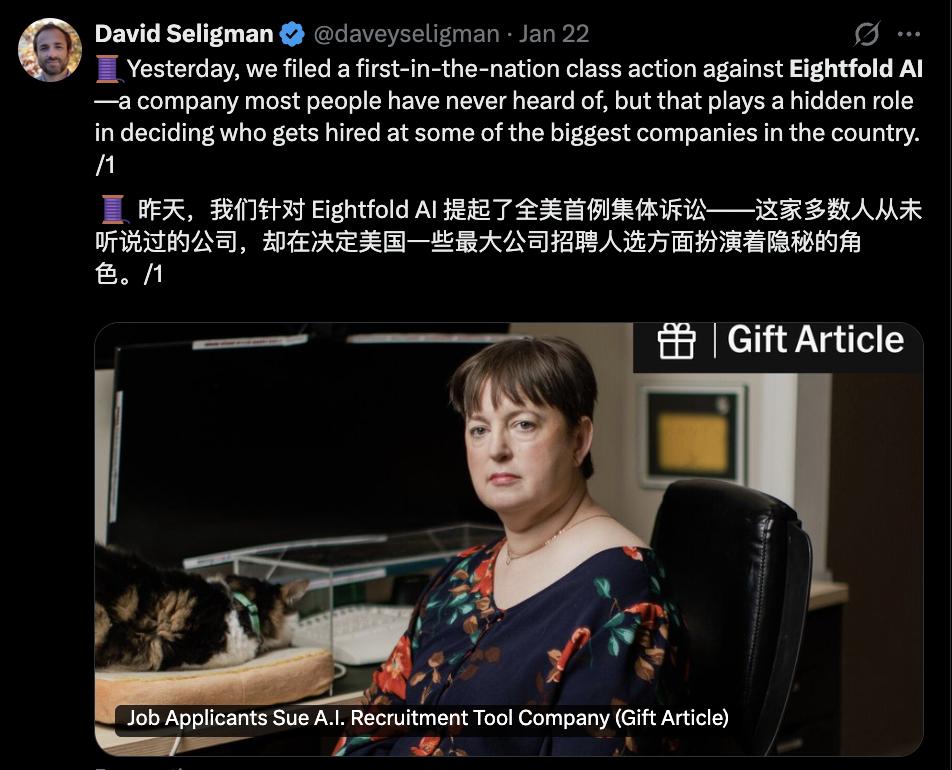
Group 1 - Eightfold AI, an AI recruitment system used by companies like Microsoft, Bayer, and PayPal, is facing a lawsuit from two job seekers who allege that its algorithms cause discrimination in hiring processes [1][11][13] - The lawsuit highlights the need for increased transparency in the recruitment process, particularly regarding the "black box" nature of AI algorithms [1][12][13] Group 2 - A recent study suggests that AI can predict career trajectories based on facial photographs, utilizing data from nearly 100,000 MBA graduates from top U.S. business schools [3][4] - The research involved training AI with over 12,000 selfies and personality questionnaires to convert faces into numerical signals, predicting five major personality traits [4][7] Group 3 - The study found correlations between AI-predicted personality traits and real-world career outcomes, such as initial salaries and salary growth rates, with conscientiousness and extraversion positively impacting men's salaries [7][9] - For women, while extraversion positively influenced salaries, high conscientiousness may hinder salary growth [7][9] Group 4 - Concerns have been raised about the fairness of AI systems in recruitment and admissions, as biases in training data can amplify existing inequalities [11][18] - The reliance on AI for decision-making in both hiring and academic admissions has sparked debate among educators and industry professionals regarding the potential dangers of over-dependence on algorithms [16][19]
AI招聘逆天研究:看照片预测一生职业成就
量子位· 2026-01-26 06:51
Core Viewpoint - The article discusses the controversy surrounding AI recruitment systems, particularly focusing on Eightfold AI, which has been accused of discrimination in its hiring algorithms, leading to legal action from job seekers [2][3][26]. Group 1: AI Recruitment Controversy - Eightfold AI, used by major companies like Microsoft and PayPal, is facing lawsuits for allegedly discriminatory practices in its hiring algorithms [2][3]. - The plaintiffs are calling for increased transparency in the recruitment process, particularly regarding the "black box" nature of AI algorithms [4][26]. - The controversy highlights the potential for AI systems to perpetuate existing biases if the training data contains inherent prejudices [22][24]. Group 2: AI in Job Market Predictions - A separate study suggests that AI can predict career trajectories based on facial images, raising ethical concerns about fairness and accuracy [6][21]. - The research involved analyzing data from nearly 100,000 MBA graduates, correlating AI-predicted personality traits with real-world career outcomes [9][14]. - Findings indicate that certain personality traits, such as conscientiousness and agreeableness, significantly influence salary and job stability for both men and women [17][18][20]. Group 3: Broader Implications of AI in Education - The use of AI is not limited to recruitment; it is also being applied in educational settings, such as Virginia Tech's AI-driven admissions process, which has improved efficiency [29][30]. - However, there are concerns that reliance on AI for admissions could lead to unfair advantages for applicants who tailor their submissions to fit algorithmic preferences [31][32]. - The overarching theme is that while AI can enhance efficiency, critical decisions should not be solely entrusted to machine learning systems due to potential biases [33].

企业文化转型升级:包容性、技术性与归属感
3 6 Ke· 2025-07-14 04:14
Group 1 - Amazon's AI recruitment tool exhibited gender bias, favoring male candidates due to historical data skewed towards male applicants [1] - The tool was developed to streamline the hiring process but was ultimately disbanded after revealing its discriminatory tendencies [1] - The incident highlights the potential risks of AI in recruitment, emphasizing the need for careful oversight and modification of algorithms to prevent bias [1] Group 2 - The integration of AI into organizations is reshaping workplace culture, with a focus on the importance of inclusivity and diversity [2][3] - A report by Mercer indicates that only 33% of employees foresee positive changes in their workload due to AI and automation, suggesting a disconnect between technology adoption and workplace processes [2] - Companies are encouraged to create inclusive AI and technology to foster a positive workplace culture and address inherent biases [2] Group 3 - DEI (Diversity, Equity, Inclusion) principles are becoming critical indicators of corporate social responsibility, with companies like Yum China implementing initiatives to support diverse employees [4][5] - Recent trends show a decline in DEI momentum, with major companies like Microsoft and Boeing disbanding their DEI departments, raising concerns about the future of inclusivity in corporate environments [5][6] - The effectiveness of DEI initiatives is questioned, with calls for a deeper understanding of how workforce composition reflects customer needs [6][8] Group 4 - The concept of "belonging" is emerging as a crucial aspect of DEI, emphasizing meaningful connections between employees and organizations [16][17] - A Gallup study indicates that 59% of the global workforce engages in "quiet quitting," highlighting the impact of a lack of belonging on employee engagement and productivity [17] - Companies are urged to maintain a focus on human elements even as they embrace AI technologies, ensuring that employees feel valued and connected [19]