AICHEM云平台

Search documents
突破想象!AI机器人成为实验室“主力军
Xin Hua Wang· 2025-12-11 03:41
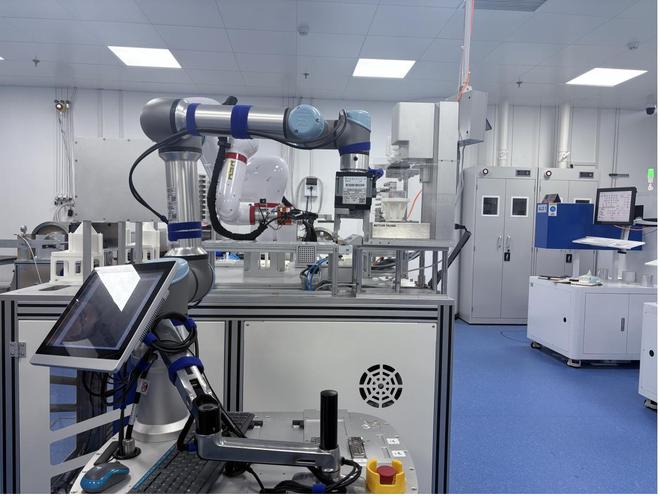
Core Viewpoint - The integration of AI and robotics in chemical research is revolutionizing the traditional trial-and-error method, significantly reducing the time and cost associated with the development of new materials [1][2]. Group 1: AI and Robotics in Research - The "smart scientist" can autonomously design experimental plans and conduct experiments continuously, showcasing the potential of AI in transforming research paradigms [1][2]. - The laboratory houses 110 "smart scientists" across 19 distributed labs, capable of performing a series of operations such as reagent configuration and sample synthesis, with real-time data synchronization [1][2]. Group 2: Development of the AI Platform - The AI platform, initially designed to solve chemical problems, took three years to compile over one million chemical data points from textbooks, papers, and patents, along with expert knowledge [3]. - The "smart brain" of the AI was developed to understand complex chemical knowledge, enhancing its capabilities in research [3]. Group 3: Achievements and Innovations - The "machine chemist" named "Xiao Lai" was created in 2021, capable of performing 2,000 precise operations daily, equivalent to the work of five to six researchers [5]. - "Xiao Lai" successfully identified the optimal formula for a Mars oxygen catalyst in six weeks, a task that would take human researchers 2,000 years to validate [5]. - The second-generation "machine chemist," named "Xiao Lin," was developed by integrating a robotic arm and multiple generative models, further enhancing its research capabilities [5]. Group 4: Future Directions and Applications - In 2024, the "smart scientist" created phase change thermal insulation and flame-retardant materials, which have been tested for mass production and are being applied in industries [6]. - The "AICHEM cloud platform" allows remote experimentation, enabling collaboration across different universities and research institutions [9]. - The ultimate goal is to achieve "fully autonomous research" where the AI can discover new research directions and create materials independently, even for non-chemistry professionals [9].


突破想象!AI机器人成为实验室“主力军”
Xin Hua She· 2025-12-11 02:23
Core Insights - The article discusses the transformation of chemical research through the use of AI-driven "smart scientists" that can autonomously design and conduct experiments, significantly reducing the time and cost associated with material development [1][2]. Group 1: AI Integration in Research - The "smart scientists" in the Precision Intelligent Chemistry National Key Laboratory consist of 110 units that can perform various laboratory tasks autonomously, including reagent preparation and sample synthesis, while synchronizing data in real-time [1]. - These AI systems can analyze scientific papers, generate experimental designs, and learn from existing research, effectively functioning as a "scientist's brain" [2]. Group 2: Development and Capabilities - The development of the AI platform took three years, during which the research team compiled over one million chemical data points and integrated expert knowledge to enhance the AI's understanding of complex chemistry [3]. - The first iteration, named "Xiao Lai," was capable of performing 2,000 precise operations daily, equivalent to the work of five to six researchers, and successfully identified optimal formulations for Mars oxygen catalysts in just six weeks [3]. Group 3: Future Applications and Goals - The latest iteration of the AI, referred to as "Xiao Lin," aims to achieve complete autonomous research capabilities, potentially discovering new research directions and enabling non-chemistry professionals to create new materials [4]. - The "smart scientists" are expected to produce innovative materials, such as phase-change thermal insulation and flame-retardant materials, which have already undergone industrial testing and are being applied in various sectors [4].
四中全会精神在基层丨突破想象!AI机器人成为实验室“主力军”
Xin Hua She· 2025-12-10 13:57
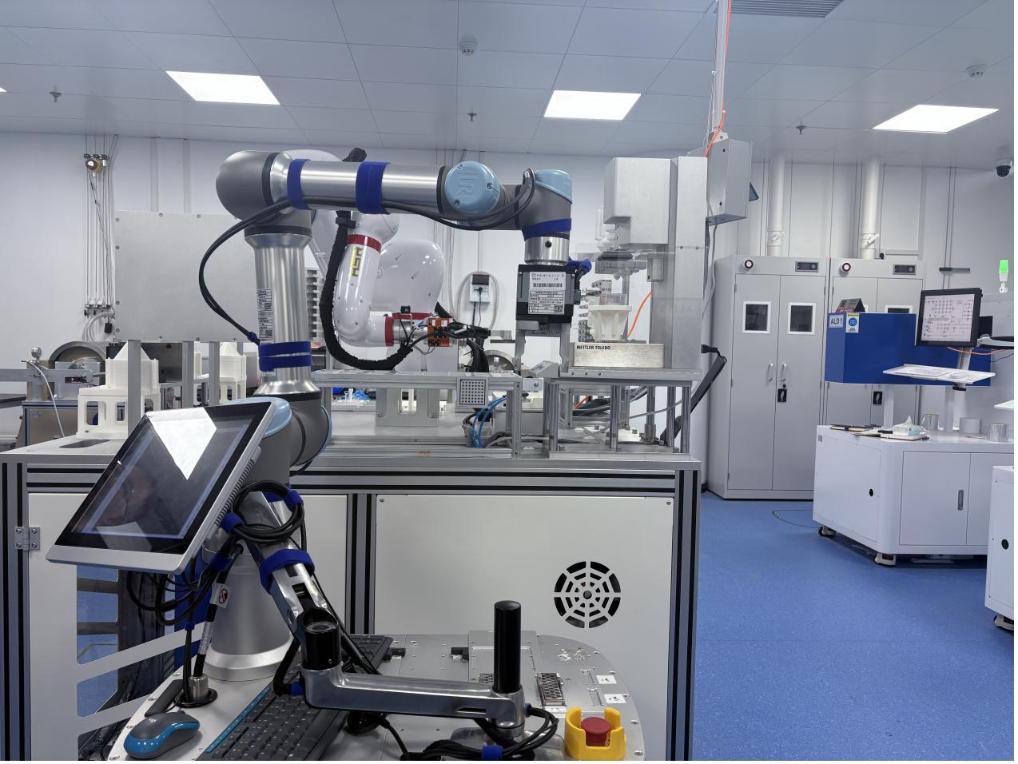
Core Insights - AI robots are becoming the main force in laboratories, transforming traditional research methods and addressing challenges such as long production cycles and high costs in material creation [1][5] - The "smart scientist" can autonomously design experiments and operate continuously, representing a significant shift in research paradigms driven by artificial intelligence [1][5] Group 1: AI Integration in Research - The "smart scientist" can conduct experiments 24/7, analyze papers, generate solutions, and learn from experiences, functioning like a scientist's brain [2][3] - The development of this AI platform took three years, compiling over one million chemical data points from textbooks, papers, and patents, and integrating expert knowledge [3] Group 2: Achievements and Innovations - The "machine chemist" named "Xiao Lai" was created in 2021, capable of performing 2,000 precise operations daily, equivalent to the work of five to six researchers [3] - "Xiao Lai" identified the optimal formula for a Mars oxygen catalyst in six weeks, a task that would take human researchers 2,000 years to validate [3] Group 3: Future Developments - The "smart scientist" is undergoing continuous upgrades to master more scientific disciplines, with plans to create phase-change thermal insulation materials for applications in new energy batteries and fireproof clothing by 2024 [5] - The goal is to achieve "fully autonomous research," allowing the AI to discover new research directions and enabling non-chemistry professionals to create new materials [6]
四中全会精神在基层|突破想象!AI机器人成为实验室“主力军”
Xin Hua She· 2025-12-10 12:35
Core Insights - The article discusses the transformation of chemical research through the use of AI-powered "smart scientists" that can autonomously design and conduct experiments, significantly reducing the time and cost associated with material development [1][3][4]. Group 1: AI Integration in Research - The "smart scientists" in the Precision Intelligent Chemistry National Key Laboratory consist of 110 units that can perform tasks such as reagent configuration, sample synthesis, and performance characterization autonomously [1][3]. - These AI systems can continuously conduct experiments and analyze scientific literature, generating experimental designs based on user queries through the AICHEM cloud platform [3][4]. Group 2: Development and Capabilities - The development of the AI platform took three years, compiling over one million chemical data points from textbooks, papers, and patents, along with expert knowledge [3][4]. - The initial version, "Xiao Lai," was capable of performing 2,000 precise operations daily, equivalent to the work of five to six researchers [3][4]. Group 3: Achievements and Future Goals - "Xiao Lai" successfully identified the optimal formulation for a Mars oxygen catalyst in just six weeks, a task that would take human researchers 2,000 years to validate [4]. - The laboratory aims for complete autonomous research capabilities, allowing the AI to discover new research directions and enabling non-chemistry professionals to create new materials [6].