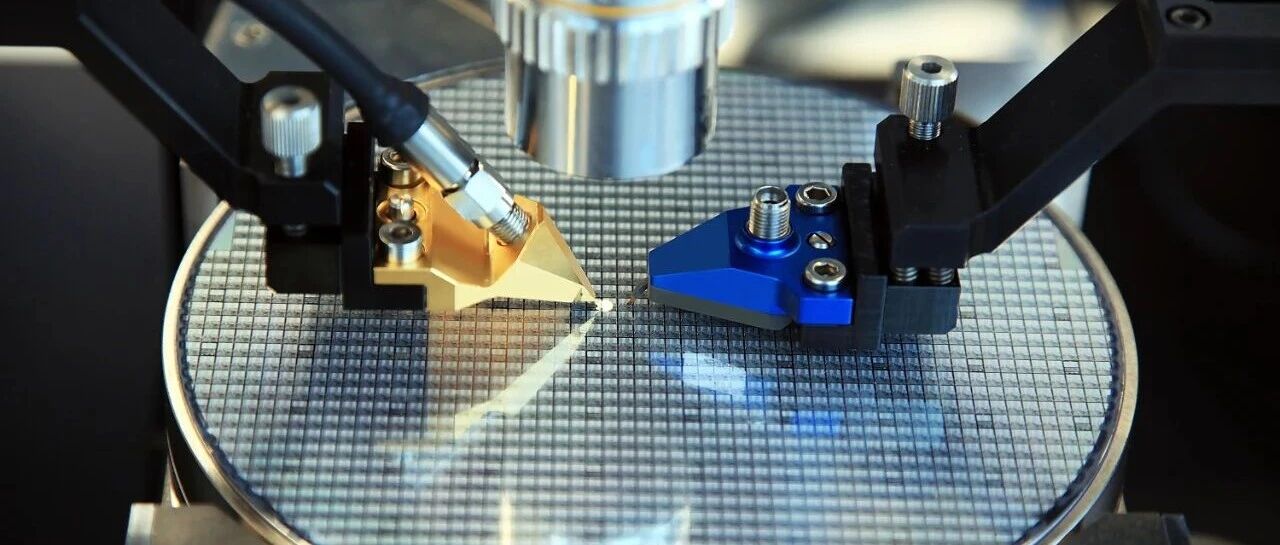
Aqara导体蚀刻系统

Search documents
半导体设备厂商,卖爆了
3 6 Ke· 2026-02-04 02:11
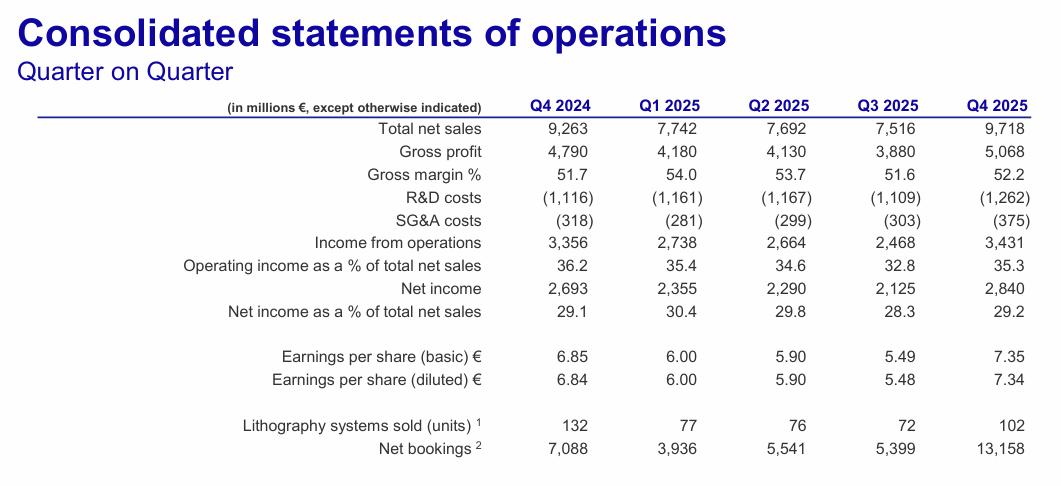
Core Insights - The Japanese semiconductor manufacturing equipment market is projected to grow by 14% to 5.59 trillion yen in 2025, marking the first time sales exceed 5 trillion yen and reflecting a robust growth trend in the global semiconductor equipment industry [1] - The growth is driven by two main factors: the explosion of AI chip demand and the recovery of the storage supercycle [2] Group 1: Semiconductor Equipment Market Growth - Japan's semiconductor equipment market is the second largest globally, with a market share of approximately 30% [1] - The sales forecast for 2025 significantly surpasses the 2024 figure of 4.44 trillion yen, indicating strong momentum in the sector [1] - Major semiconductor equipment manufacturers like ASML, Lam Research, KLA, and DISCO have reported strong financial results, highlighting the industry's growth potential [1] Group 2: AI and Storage Demand - The demand for semiconductor equipment is primarily driven by advancements in AI chips and a resurgence in storage technology [2] - The performance enhancement of chips relies on two main technological paths: advancing process technology (e.g., 3nm, 2nm) and adopting complex packaging techniques [3] - The competition among industry giants like TSMC, Intel, and Samsung for advanced nodes is translating into a rigid demand for high-end semiconductor equipment [3] Group 3: Financial Performance of Key Players - ASML reported a net sales increase of 4.92% year-on-year for Q4 2025, with logic orders reaching 5.8 billion euros, reflecting seasonal demand fluctuations [4] - Lam Research achieved record revenue of $20.6 billion in 2025, a 27% increase year-on-year, driven by strong market demand [6] - KLA's revenue for Q2 FY2026 reached $3.3 billion, exceeding market expectations, supported by robust demand for inspection equipment [13] Group 4: Equipment Demand Dynamics - The demand for advanced semiconductor equipment is expected to continue growing, driven by AI technology and the ongoing evolution of storage technologies [18][19] - The structure of orders is shifting, with storage orders now accounting for 56% of ASML's new orders, surpassing logic orders for the first time [19] - The transition to advanced DRAM architectures and NAND stacking technologies is expected to further increase the demand for high-end equipment [21][22] Group 5: Capital Expenditure Trends - Major semiconductor manufacturers are significantly increasing their capital expenditures, with TSMC planning to invest $52-56 billion in 2026, a 28-37% increase year-on-year [26] - Micron and SK Hynix are also ramping up their capital expenditures, focusing on HBM and advanced DRAM production lines [27] - The overall capital expenditure growth for storage manufacturers is projected to be around 40% in 2026, indicating a strong demand for semiconductor equipment [27] Group 6: Future Outlook - The semiconductor equipment market is expected to maintain high growth rates, with ASML projecting revenues between €34 billion and €39 billion for FY 2026 [29] - The introduction of High-NA EUV technology is anticipated to drive significant growth in the coming years, particularly as the industry moves towards 2nm and below processes [32] - The ongoing AI-driven demand and technological advancements are expected to support a long-term growth cycle in the semiconductor equipment industry [33]


半导体设备厂商,卖爆了
半导体行业观察· 2026-02-04 01:38
Core Viewpoint - The semiconductor equipment market in Japan is projected to grow significantly, with sales expected to reach 5.59 trillion yen in 2025, marking a 14% increase and surpassing the 5 trillion yen threshold for the first time, driven by strong demand from AI and storage sectors [2][25]. Group 1: Semiconductor Equipment Market Growth - Japan's semiconductor equipment market holds a global market share of approximately 30%, indicating robust growth and reflecting the vitality of the global semiconductor equipment industry [2][25]. - The growth is primarily fueled by two key drivers: the explosion of AI chip demand and the recovery of the storage supercycle [4][25]. Group 2: AI Chip Demand - The rapid development of AI technology serves as a core engine for growth, with AI chips requiring advanced manufacturing processes such as 3nm and 2nm nodes, leading to increased demand for sophisticated semiconductor equipment [5][6]. - Major players like TSMC, Intel, and Samsung are engaged in intense competition around advanced nodes, translating into a rigid demand for high-end semiconductor equipment [6][9]. Group 3: Financial Performance of Equipment Manufacturers - ASML reported a net sales increase to €9.72 billion in Q4 2025, with logic orders reaching €5.8 billion, reflecting seasonal demand fluctuations due to chip process upgrades [7][8]. - Lam Research achieved a record revenue of $20.6 billion in 2025, a 27% year-over-year increase, driven by strong market demand and a gross margin of 49.9%, the highest since its merger in 2012 [9][11]. - KLA's revenue for Q2 FY2026 reached $3.3 billion, exceeding market expectations, supported by the strong demand for inspection equipment driven by AI chip production [21][24]. Group 4: Storage Supercycle - The storage chip industry is experiencing a supercycle characterized by explosive demand and deep technological changes, driven by AI servers' need for HBM, advanced DRAM, and NAND flash [25][26]. - The shift in order structure indicates that storage orders now account for 56% of ASML's new orders, surpassing logic orders for the first time, highlighting storage's role as a core driver of equipment demand [25][26]. Group 5: Capital Expenditure Trends - Major semiconductor manufacturers are significantly increasing their capital expenditures, with TSMC planning to invest $52-56 billion in 2026, focusing on advanced processes and packaging capacity [33][34]. - Micron and SK Hynix are also ramping up their capital expenditures, with Micron increasing its 2026 spending to $20 billion, reflecting a strong focus on HBM and advanced DRAM production [35][36]. Group 6: Future Outlook - The semiconductor equipment market is expected to maintain high growth rates, with projections indicating that the current supercycle will last until at least 2027, driven by AI and storage technology advancements [27][41]. - ASML's CEO has reiterated a long-term vision of achieving annual revenues of €44-60 billion by 2030, supported by sustained demand for AI-driven semiconductor solutions [43][51].
"美版ASML"业绩狂飙!Lam Research电话会:预计2026年全球晶圆厂设备市场将冲刺1350亿美元
Hua Er Jie Jian Wen· 2026-01-29 06:49
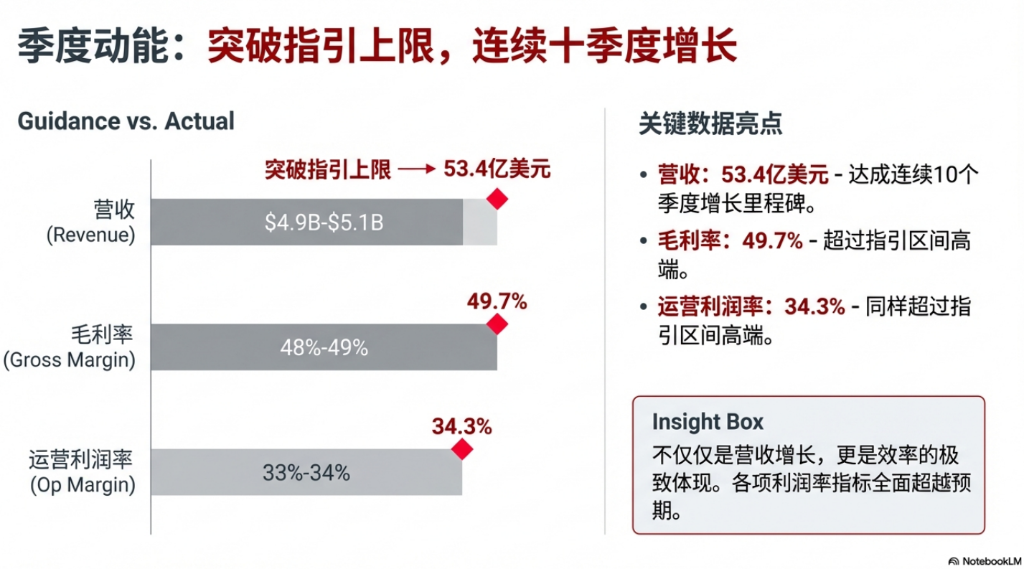
在AI强劲需求的驱动下,"美版ASML"、全球半导体设备巨头Lam Research交出了一份极其亮眼的成绩单。公司CEO Tim Archer表示2025年是"创 纪录的一年"。 1月28日,Lam Research公布2026财年第二财季(截至2025年12月28日)业绩报告显示,12月季度营收达到53.4亿美元,不仅实现了连续十个季度的 增长,其毛利率和运营利润率更是双双突破指引上限。12月季度毛利率为49.7%,超过了指引区间的高端,营业利润率达到34.3%,同样超过指引 区间的高端。 2025年全年营收高达206亿美元,同比增长27%,每股收益(EPS)同比激增49%,显示出公司在行业上升周期的强大盈利爆发力。全年毛利率为 49.9%,这是自2012年Novelis合并以来,作为合并公司全年的最高成绩。营业利润率也创下34.1%的纪录,营业利润达到70亿美元,同比增长 41%。 | | | 新产品线持续获得市场认可,其中Aqara导体蚀刻系统在过去一年装机量翻了一番,在先进DRAM和代工逻辑的EUV和高纵横比蚀刻应用中赢得了 量产工具记录。 在股东回报方面,Lam Research延续了其一贯的慷慨 ...