BOOBOO

Search documents
00后辍学造“全球首款会飞的AI宠物”,小红书押注万亿孤独赛道
机器人大讲堂· 2026-02-27 10:34
Core Viewpoint - The article discusses the emergence of a multi-billion dollar "emotional business" in an era where loneliness is prevalent, exemplified by the flying robot BOOBOO, which aims to provide companionship and emotional support through advanced technology and human-like interactions [1][5][26]. Group 1: Product Overview - BOOBOO is introduced as the world's first flying AI pet, designed to recognize and respond to human emotions, providing companionship and support [5][13]. - The robot features a unique flapping wing design that allows for quiet indoor operation and a sense of life-like interaction, distinguishing it from traditional drones [10][11]. - BOOBOO incorporates a "multi-modal emotional engine" that enables it to actively engage with users, responding to their emotional states and providing reminders and information [13][14][15]. Group 2: Founder's Background - The founder, Zhang Yuno, has a notable background, having previously developed robots for NASA and winning a hardware robotics competition before dropping out of Cornell University to pursue this venture [7][22]. - The team behind BOOBOO consists of around 30 members, many of whom are Ivy League dropouts, indicating a strong commitment to innovative hardware development [7][22]. Group 3: Strategic Investment - Xiaohongshu (Little Red Book) invested 12 million yuan in BOOBOO, recognizing the potential of the "loneliness economy" and the alignment of BOOBOO with its user base, primarily young women who value emotional connection [22][24]. - The investment is part of Xiaohongshu's strategy to enhance its content ecosystem and drive transactions on its platform, creating a value loop from investment to content to commerce [24][25]. Group 4: Market Potential and Challenges - The global AI companion market is projected to reach $140.7 billion by 2030, indicating significant growth potential [26]. - Despite the market's promise, many AI pets face high return rates and user dissatisfaction due to lack of meaningful interaction, posing a challenge for BOOBOO to establish long-term user engagement [30][31]. - BOOBOO's price point of over $400 positions it as a premium product, necessitating a compelling value proposition to avoid being perceived as a novelty item [30][31]. Group 5: Conclusion - The article concludes that BOOBOO's unique flying capability and proactive emotional engagement could allow it to stand out in the competitive landscape of emotional robots [31][33]. - The underlying need for companionship and understanding in technology is emphasized, suggesting that success will depend on the robot's ability to resonate with users on a deeper emotional level [33].


00后天才辍学创业,AI宠物有人买单吗?
Tai Mei Ti A P P· 2026-01-13 07:12
Core Insights - The article discusses the emergence of BOOBOO, the world's first flying AI companion hardware, created by a young entrepreneur, Zhang Yuno, backed by Xiaohongshu's investment of 12 million yuan [2][17]. Company Overview - Skyris AI, founded by Zhang Yuno, is a startup focused on developing innovative AI hardware, specifically targeting the emotional companionship market [7][8]. - The team consists of Ivy League graduates and industry veterans, emphasizing a strong background in technology and entrepreneurship [7]. Product Features - BOOBOO is designed as a flying pet that utilizes biomimetic wing design, allowing it to fly quietly indoors and interact with users in a more lifelike manner [10][11]. - The product incorporates a "multi-modal emotional engine" that enables it to recognize and respond to human emotions, enhancing user interaction [11][12]. Market Potential - The global companionship robot market is projected to grow at an annual rate of 17.62%, reaching over $6 billion by 2034, indicating significant growth potential for products like BOOBOO [8]. - The emotional value of companionship robots is becoming increasingly important, as consumers seek products that address feelings of loneliness [18]. Investment Strategy - Xiaohongshu's investment in Skyris AI is part of a strategic move to engage its user base of over 350 million, primarily young women, who are sensitive to emotional value and lifestyle products [15][16]. - The investment aligns with Xiaohongshu's goal to transition from a social media platform to a provider of tangible experiences, enhancing its market position ahead of a potential IPO [17][18].

CES变成中国科技秀:机器人跳舞、熊猫获奖
3 6 Ke· 2026-01-09 08:24
Group 1: Core Themes of CES 2026 - The main theme of CES 2026 is "human-centered" AI applications, marking a shift from traditional consumer electronics to AI-centric technological transformations [1] - Chinese companies are increasingly taking center stage at CES, with 942 exhibitors, accounting for approximately 22% of the total, maintaining their position as the second-largest exhibiting nation [1] - In specific sectors, Chinese firms dominate, with 55% of humanoid robot exhibitors and nearly 70% of AI glasses brands coming from China [1] Group 2: Robotics and AI Innovations - Chinese manufacturers are expected to continue leading in cost reduction and efficiency improvements in humanoid robots, showcasing their capabilities in unstructured environments [2] - Notable products include the Unitree H1 humanoid robot with advanced sensing capabilities and the latest generation of the "绝影" series robotic dogs, which excel in indoor navigation [4][11] - The "Care-bot" humanoid robot by Fourier demonstrates embodied intelligence in real-life interaction scenarios [7] Group 3: Consumer Electronics and Smart Devices - Over 80% of global smart glasses supply chain manufacturers are from China, with 16 Chinese companies showcasing their products at CES [15] - Innovations in smart home devices include the AI-driven "安安" companion robot designed for elderly and cognitively impaired individuals [16] - Companies like Alibaba and XREAL are launching advanced AI glasses, with features such as ultra-lightweight designs and integration with various AI services [19][20] Group 4: Automotive and AI Integration - The automotive industry is transitioning from "software-defined" to "AI-defined" vehicles, with companies like Geely and Great Wall showcasing new technologies [28] - Geely's G-ASD smart driving solution and Great Wall's focus on new energy technologies highlight the industry's shift towards AI integration [30][32] - New products like the AI-driven logistics solutions from New Stone and advanced lidar technology from Hesai demonstrate the growing importance of AI in transportation [34][35] Group 5: Home Appliances and AI - Hisense introduced new RGB-Mini LED display technology and AI-controlled smart refrigerators, showcasing the integration of AI in home appliances [41] - TCL's innovations in display technology, including the world's first printed OLED car screen, reflect advancements in consumer electronics [43][44] - Companies are increasingly focusing on AI capabilities in home security and smart home management systems [51][49] Group 6: Overall Impact of AI - CES 2026 emphasizes the profound impact of AI on the consumer electronics industry, with expectations for AI user numbers to grow significantly [59] - The event serves as a platform for global tech companies to set the foundation for future technological development and transformation [59] - The integration of AI into various sectors, including robotics, automotive, and consumer electronics, indicates a trend towards deeper AI adoption in everyday life [59]




18家中国公司,在CES上给出消费级AI机器人新解
3 6 Ke· 2026-01-08 03:48
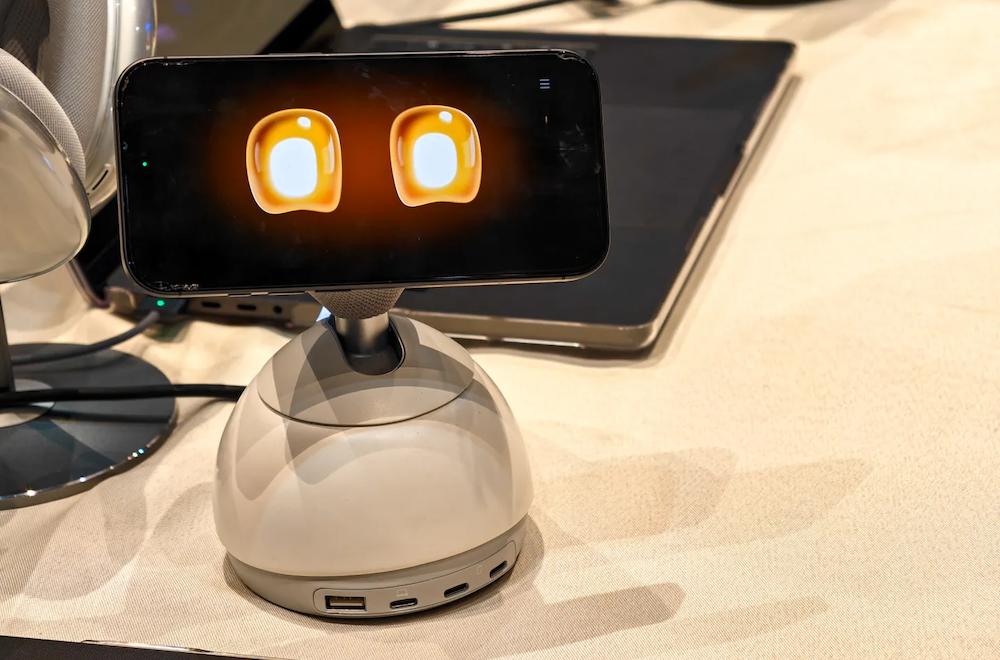
Core Insights - The article highlights the emergence of AI as a companion in daily life, showcased at CES 2026, with products designed to engage users emotionally and socially [1] Group 1: Product Innovations - Loona DeskMate is a new product that integrates with an iPhone to activate AI companionship features without built-in screens or cameras [2] - The DeskMate also includes an emotional interaction model and functions as a 180W fast-charging desktop power source [4] - Robie, a desktop pet, can recognize faces and emotions, enabling continuous dialogue and interaction [6] - Yonbo X1 is a growth-oriented family robot that adapts its content based on the child's age and features a personality system for role customization [8] - Enabot serves as an AI housekeeper that can interact with pets, conduct video calls, and monitor home security [9] - AiMe, developed by TCL, is a mobile home smart hub that recognizes user emotions and performs monitoring tasks [12] Group 2: Diverse AI Companions - Luka, a reading robot, can recognize and read from a vast library of over 70,000 bilingual picture books [14] - Ollobot's product line includes Ollo and OlloNi, which adapt their behavior based on user interactions and environmental changes [17][21] - BOOBOO is a flying emotional companion robot that uses AI to establish emotional connections with users [22][24] - Cocomo and Inu are robotic pets that interact through non-verbal communication and physical responses [25][27] - The product "话话糖" is a portable AI pet that can accompany users anywhere and engage in social interactions [28] - Eggi turns movement into a part of pet care, allowing children to learn responsibility through interaction [30] - W1, an interactive robot resembling Wall-E, supports emotional interaction and outdoor activities [36] Group 3: Market Trends - The presence of 18 Chinese companies at CES 2026 indicates a growing trend in AI companionship and educational robots, utilizing advanced technologies like AI interaction and multi-modal perception [1] - These products aim to create more natural interactions between humans and AI, with applications in education, caregiving, and emotional support [39]