BioEmu

Search documents
AI for Science,走到哪一步了?
3 6 Ke· 2025-12-03 09:15
Core Insights - Google DeepMind's AlphaFold has significantly impacted protein structure prediction, driving advancements in scientific research over the past five years [1][4] - AI is reshaping scientific research, particularly in life sciences and biomedicine, due to rich data availability and urgent societal needs [1][3] Group 1: AI in Scientific Research - AI models and tools have achieved breakthroughs in basic research, including protein structure prediction and the discovery of new biological pathways [1][3] - The paradigm of "foundation models + research agents + autonomous laboratories" is emerging in AI-driven scientific research [3][13] Group 2: Advancements in Biology - DeepMind's AlphaFold has solved the protein structure prediction problem, earning the 2024 Nobel Prize in Chemistry and establishing itself as a digital infrastructure for modern biology [4] - The C2S-Scale model, developed by Google and Yale University, has generated new hypotheses about cancer cell behavior, showcasing AI's potential in formulating original scientific hypotheses [8] Group 3: AI in Drug Development - AI-assisted pathology detection has expanded to new disease scenarios, with the DeepGEM model achieving a prediction accuracy of 78% to 99% for lung cancer gene mutations [10] - The AI-optimized drug MTS-004 has completed Phase III clinical trials, marking a significant milestone in AI-driven drug discovery [10] Group 4: AI in Other Scientific Fields - AI applications in materials science are gaining momentum, with startups like Periodic Labs and CuspAI focusing on discovering new materials [11] - DeepMind's WeatherNext 2 model has surpassed traditional physical models in accuracy and efficiency for weather predictions [5] Group 5: Future of AI in Science - The evolution of scientific intelligence technologies is expected to accelerate, with AI foundational models and robotics enhancing research efficiency [19] - The integration of AI into scientific discovery is anticipated to lead to significant breakthroughs, with predictions of achieving near-relativistic level discoveries by 2028 [19]


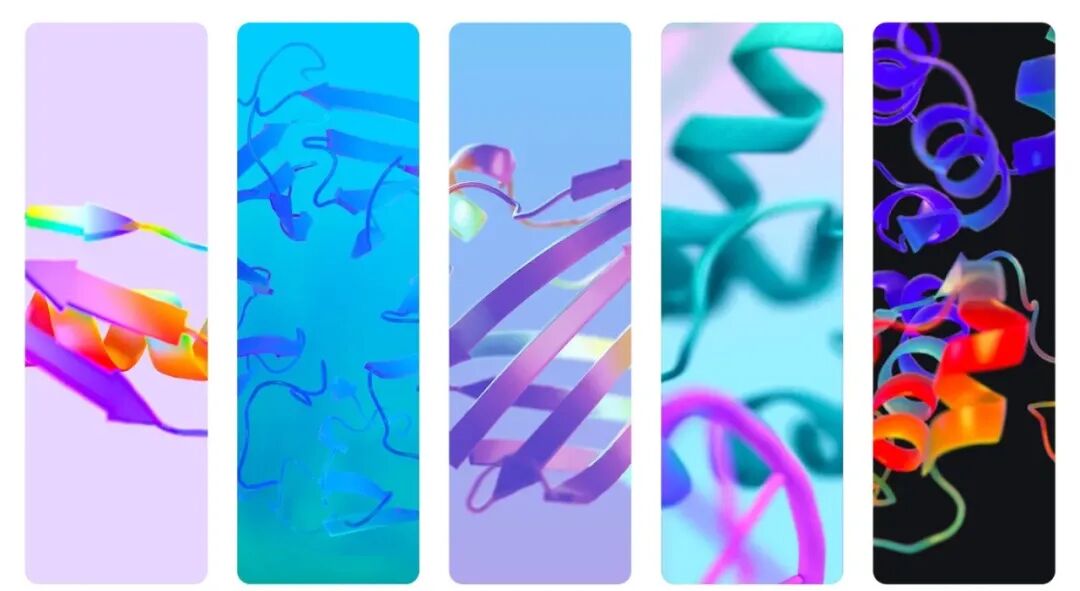
字节Seed发布PXDesign:蛋白设计效率提升十倍,进入实用新阶段
量子位· 2025-10-01 03:03
Core Insights - The article discusses the advancements in AI protein design, particularly through the introduction of the PXDesign method by ByteDance's Seed team, which significantly enhances the efficiency and success rates of protein design tasks [1][3][10]. Summary by Sections Introduction to PXDesign - PXDesign is a scalable protein design method that allows for the generation of hundreds of high-quality candidate proteins within 24 hours, achieving a generation efficiency approximately 10 times higher than mainstream methods [3][10]. - The method has demonstrated a wet lab success rate of 20%–73% across multiple targets, surpassing the success rates of existing models like DeepMind's AlphaProteo, which ranges from 9% to 33% [3][10]. Background and Significance - Proteins are fundamental to life processes, and recent Nobel Prizes in Chemistry highlight the importance of both protein structure prediction and design [6]. - The challenge lies not only in predicting structures but also in reverse designing proteins based on functional requirements, which is crucial for developing new therapies for diseases like cancer and infections [7][8]. Methodology of PXDesign - PXDesign employs a "generation + filtering" approach, where a large number of candidate designs are generated quickly, followed by a filtering process to identify the most promising candidates [13][21]. - The team explored two main technical routes: Hallucination and Diffusion, with PXDesign-d (Diffusion) showing superior performance in generating high-quality, diverse structures [15][16]. Advantages of PXDesign - PXDesign-d utilizes a DiT network structure, allowing for efficient training on larger datasets, which enhances generation speed and quality compared to other methods [17]. - The filtering process uses structural prediction models to select the most viable candidates, with Protenix outperforming AlphaFold 2 in accuracy and efficiency [25][26]. Tools and Services - The Protenix team has developed the PXDesign Server, a user-friendly web service that allows researchers to design and evaluate binder candidates without needing complex setups [28][29]. - The server offers two modes: Preview for quick debugging and Extended for in-depth research, significantly reducing the design cycle compared to traditional methods [30][32]. Evaluation Standards - To address the lack of unified evaluation standards in the field, the Protenix team introduced PXDesignBench, a comprehensive evaluation toolbox that integrates various assessment metrics and processes [32]. Industry Context - Other tech giants like Microsoft and Apple are also making strides in the biological field, indicating a growing trend of AI applications in biotechnology and pharmaceuticals [33].
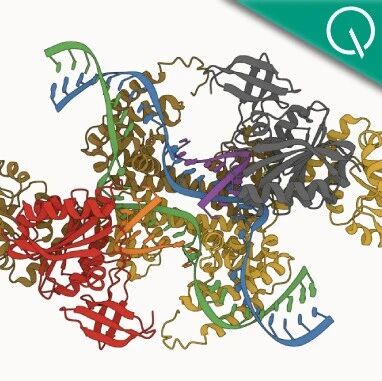
微软研究院BioEmu登上Science,用生成式AI重塑蛋白质功能研究
机器之心· 2025-07-11 08:27
Core Insights - The article discusses a groundbreaking research achievement by Microsoft's AI for Science team, which introduced a generative deep learning model named BioEmu for simulating protein conformational changes with unprecedented efficiency and accuracy [6][21]. Group 1: Research Overview - BioEmu is designed to address the limitations of existing models like AlphaFold, which typically predict static protein structures and struggle to capture dynamic conformational changes essential for protein function [8]. - The model integrates static structures from the AlphaFold database, over 200 milliseconds of molecular dynamics (MD) simulation data, and 500,000 experimental stability data points to generate thousands of independent protein structures per hour on a single GPU [8][12]. Group 2: Model Performance - BioEmu achieves a free energy prediction error of 1 kcal/mol, aligning closely with millisecond-level MD simulations and experimental data, representing several orders of magnitude acceleration compared to traditional molecular dynamics simulations [14]. - The model demonstrates excellent performance in predicting stability changes (ΔΔG) for mutants, with an average absolute error below 1 kcal/mol and a Spearman correlation coefficient exceeding 0.6 [16]. Group 3: Open Source and Future Directions - The research team has made the model parameters and code available on GitHub and HuggingFace, along with over 100 milliseconds of MD simulation data covering thousands of protein systems and tens of thousands of mutants, providing valuable resources for future research [19]. - Future plans include extending BioEmu's capabilities to more complex biological systems, such as protein complexes and protein-ligand interactions, while enhancing the model's generalization and interpretability through experimental data integration [21].