
C2000中型货运飞船

Search documents
商业航天“起飞”在即 绵阳如何登上这趟火箭
Xin Lang Cai Jing· 2026-02-26 22:50
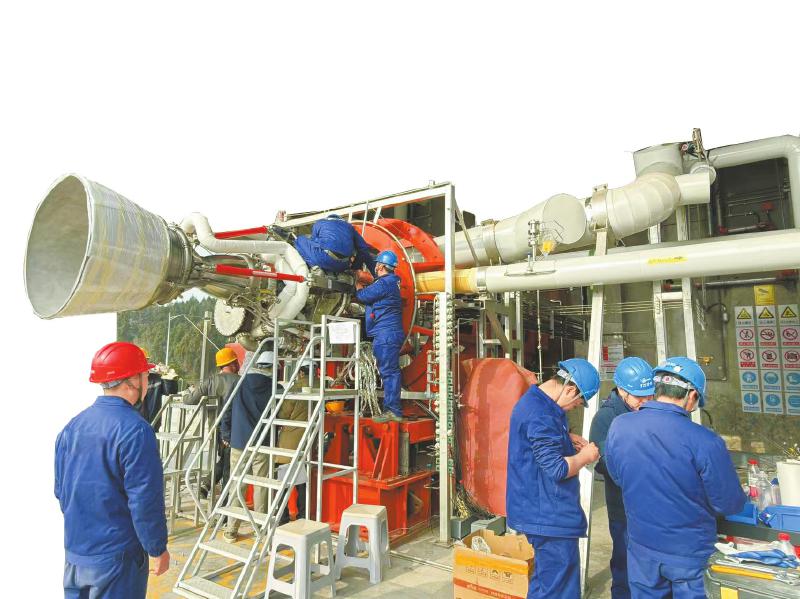
Core Viewpoint - The article discusses the rapid development of the commercial aerospace industry in Mianyang, Sichuan, highlighting the establishment of a comprehensive "arrow-star-device-number" industrial ecosystem, with a current scale exceeding 3 billion yuan and a target of over 20 billion yuan by 2030 [3][4]. Group 1: Industry Development - Mianyang has gathered nearly 30 key enterprises in the commercial aerospace industry chain, including Jiuzhou Beidou and Interstellar Glory, with an industrial scale exceeding 3 billion yuan, showing a year-on-year growth of over 50% [3][4]. - By 2026, Mianyang aims to have a complete industrial chain for commercial aerospace, focusing on key areas such as rocket engines, manned spacecraft, general aviation, satellite applications, and aviation electronic components [3]. - The first "Mianyang-made" rocket engine, a 100-ton thrust liquid oxygen-methane engine, is set to undergo flight tests in the second half of 2026, marking a significant milestone for the local aerospace industry [3]. Group 2: Strategic Initiatives - Mianyang plans to integrate the commercial aerospace industry into the "587+" industrial system, with city-level leaders overseeing the industry chain to ensure clear direction and focus on development [3]. - The city is establishing a commercial aerospace sub-fund under the "587+" industrial mother fund to attract quality projects through collaboration with private funds [3]. - Aiming to enhance resource integration, Mianyang is developing an integrated satellite application center to facilitate data sharing among various satellite functions, thus unlocking a significant market potential [3]. Group 3: Innovation and Collaboration - Mianyang is focusing on creating innovative application scenarios in the satellite industry, targeting a market demand of over 1 billion yuan annually in areas such as forest fire prevention and urban disaster monitoring [3]. - The establishment of a low-altitude equipment inspection and certification center aims to attract more low-altitude companies to Mianyang, enhancing the region's appeal for aerospace testing and certification [3]. - A commercial aerospace supply-demand matching event was held, where 27 upstream and downstream enterprises participated, indicating a proactive approach to fostering collaboration within the industry [4].

商业航天从“敢想”向“敢为”跨越
Zheng Quan Ri Bao Zhi Sheng· 2026-01-25 17:09
Core Viewpoint - The 2026 Beijing International Commercial Aerospace Exhibition showcases the rapid development and industrialization of China's commercial aerospace sector, highlighting its transition from technology validation to practical application [1][2]. Group 1: Industry Development - The commercial aerospace industry encompasses various sectors, including rocket launches, satellite applications, and space tourism, marking a shift from customized production to mass production [1][2]. - Since 2015, policies have encouraged social capital to enter the aerospace field, leading to the accelerated maturity of the commercial aerospace industry [2]. - By 2025, China is expected to complete 50 rocket launches, accounting for 54% of the total annual launches, indicating robust growth in the commercial aerospace sector [2]. Group 2: Technological Advancements - Companies like Yidong Aerospace have made significant technological breakthroughs, such as the development of the Hall electric propulsion system, which has successfully operated in space [3]. - The focus of commercial aerospace companies has shifted from single-point technological breakthroughs to building autonomous and scalable manufacturing capabilities across the entire industry chain [3]. Group 3: Financial Support and Investment - The integration of financial capital with the aerospace industry is crucial for companies to navigate the pre-mass production phase, as evidenced by the establishment of a dedicated financial services area at the exhibition [4]. - The China Securities Regulatory Commission has expanded the applicability of the fifth set of standards to support emerging industries, including commercial aerospace, facilitating access to capital markets for companies in this sector [5]. - Several commercial aerospace companies have initiated A-share IPO processes, indicating a trend towards increased funding and support from the capital market [5]. Group 4: Industry Challenges and Collaboration - Despite rapid growth, the commercial aerospace industry faces challenges, such as the need for sustained investment to build complete satellite internet constellations and the engineering validation of reusable rocket technology [6]. - Companies emphasize the importance of strategic investments and resource integration to enhance operational efficiency and achieve standardized production [6][7]. - Collaborative efforts among industry players, such as the partnership between Zhongke Xingtou and Juntian Aerospace, aim to optimize resource allocation and improve production efficiency within the complex commercial aerospace supply chain [7].
政策聚力 为民间投资蓄能提质
Zheng Quan Ri Bao· 2026-01-11 17:08
Group 1 - Private investment is a crucial support for stabilizing growth, adjusting structure, and promoting employment, with policies aimed at expanding the scale and improving the quality of private investment by 2026 [1][2] - The State Council's meeting on January 9 proposed several measures to support private investment, including interest subsidies for small and micro enterprises, a special guarantee plan for private investment, and mechanisms to reduce financing costs [1][4] - Local governments, such as Jiangxi and Guizhou, have introduced policies to promote high-quality development of private investment, aligning with the State Council's measures to stimulate private investment vitality [1][2] Group 2 - Data from the National Development and Reform Commission indicates that private project investment, excluding real estate, grew by 2.1% year-on-year in the first three quarters of 2025, with infrastructure and manufacturing investments increasing by 7% and 3.2% respectively [2][6] - The "Several Measures" aim to enhance private investment by addressing entry barriers, unblocking obstacles, and strengthening guarantees, particularly in innovation and infrastructure [2][4] - The financial sector plays a key role in promoting private investment, with policies facilitating financing for technology companies and encouraging the issuance of real estate investment trusts (REITs) in infrastructure [6][7] Group 3 - The commercial aerospace sector is experiencing rapid development, with private companies like Beijing Ziwei Yutong Technology achieving significant milestones, including successful rocket launches and financing rounds [3][4] - The government is encouraging private capital participation in key areas such as smart transportation and infrastructure, aiming to break down industry barriers and enhance innovation [4][6] - Financial mechanisms, including zero-interest loans and local government subsidies, are being utilized to leverage private capital for industrialization and infrastructure projects [7][8]
民营太空飞船,新突破
Shang Hai Zheng Quan Bao· 2025-12-13 05:35
Core Insights - The successful launch of the Di'er No. 5 - China Science and Technology City spacecraft marks a new phase in China's private spaceflight industry, enabling broader space scientific research and technology validation [1][2] - The spacecraft is designed for a year-long mission to conduct various scientific studies in microgravity, life sciences, materials science, and aerospace medicine, carrying 34 experimental payloads from various clients [1][2] Company Overview - Ziwei Technology, established in 2019, focuses on spacecraft and space tourism, including the design, manufacturing, and operation of spacecraft [2] - The company is developing multiple spacecraft models, including A10 (10 kg capacity), B300 (300 kg capacity), and C2000 (2000 kg capacity), as well as suborbital and orbital crewed spacecraft [2] Recent Developments - Ziwei Technology has successfully completed a Series B financing round, led by Sichuan Science and Technology Investment Group, with funds aimed at the development and manufacturing of the C2000 medium cargo spacecraft [2] - A project investment cooperation agreement was signed with Chengdu Economic and Technological Development Zone to establish a research and manufacturing base for space transport vehicles, focusing on the C2000 and an orbital transfer vehicle [3] Technical Capabilities - The C2000 medium cargo spacecraft is designed for long-term orbital operations and can support the construction of commercial space stations, integrating ground experiments with space applications [3] - The recent launch validated key technologies for rapid payload integration and reliable long-term operation, which will support the development of the C2000 spacecraft [3]
科博会签约55个项目 协议投资额275.35亿元
Xin Hua Cai Jing· 2025-09-27 10:33
Group 1 - The 13th China (Mianyang) International Science and Technology Expo opened in Mianyang, Sichuan, attracting over 180 well-known enterprises and business associations, resulting in 55 signed projects with a total investment of 27.535 billion yuan [1] - The rapid project implementation, taking only 40 days from initial contact to project landing, highlights Mianyang's efficient business environment and Sichuan's commitment to investment attraction [1] - The expo showcased Mianyang's potential in the aerospace sector, with projects like the C2000 medium cargo spacecraft and commercial space station, addressing gaps in Mianyang's space services and spacecraft industry [1] Group 2 - The event also featured investment opportunities from Luzhou and Aba Prefecture, demonstrating Sichuan's multi-regional and multi-level industrial layout, which will accelerate the optimization of industrial distribution and regional coordinated development [2]