CRE Embedding模型

Search documents
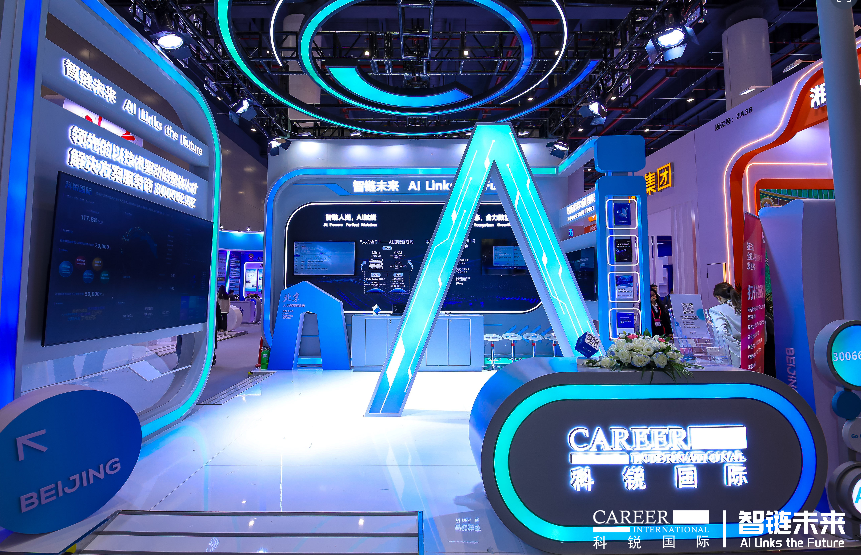
科锐国际:AI驱动人才服务进入“智链时代”
Jing Ji Wang· 2025-11-28 08:57
Core Insights - The conference highlighted the theme "AI Links the Future," showcasing the latest practices in the "AI × Global × Ecology" domain, emphasizing the role of AI in enhancing efficiency and connecting talent globally [1] - The event was organized by the Ministry of Human Resources and Social Security and the Hubei Provincial Government, focusing on modernizing human resources to promote high-quality employment [3] Group 1: AI Integration - The new intelligent visual system presented by the company demonstrates its core capabilities in talent acquisition, global intelligence, industry navigation, and insights, visualizing national talent supply and demand dynamics [4] - The company has developed the CRE Embedding model and MatchSystem, creating a comprehensive data foundation that covers various dimensions of talent, positions, enterprises, and consultant behaviors, leading to a new paradigm of AI-assisted recruitment [4] - AI is utilized in key business processes such as resume screening and candidate communication, enhancing collaboration between humans and machines, thereby improving efficiency and quality [4] Group 2: Global Service Network - Since initiating its international strategy in 2004, the company has established a presence in 11 countries, forming a professional team of over 400 local consultants to support Chinese enterprises in their global endeavors [5] - The company's global service capabilities extend beyond talent recruitment to include cross-cultural communication, compliance system establishment, localized execution, and multinational staffing strategy consulting [5] - The company promotes an open and win-win philosophy, actively developing the HeWa platform, which has gathered over 180,000 professional recruitment consultants and more than 30,000 HR service agencies, facilitating talent recommendations exceeding 400,000 in the past year [5] Group 3: Future Outlook - The company aims to leverage its core advantages in AI, global service networks, and open industry ecosystems to drive the evolution of human resource services towards specialization, digitization, globalization, and ecological integration [5]


从“老场景”的“新解法”下手,突破Agent落地难题| 2025 ITValue Summit前瞻WAIC现场版:AI落地指南系列
Tai Mei Ti A P P· 2025-08-01 06:39
Core Insights - The industrialization of artificial intelligence (AI) has surpassed conceptual exploration, fundamentally restructuring various industries through the paradigm of "old scenarios, new solutions" [1] - The focus in the human resources sector is on practical strategies that return to core business processes while seeking disruptive solutions through small-scale validations before scaling [1][4] - The application of generative AI in business is evolving through three distinct stages: knowledge acquisition, multimodal integration, and the agent phase, which emphasizes autonomous execution [2][3] Group 1: AI Application Stages - The first stage involves the ChatGPT phase, which reshapes knowledge acquisition methods, significantly enhancing the efficiency of knowledge-intensive recruitment processes [2][8] - The second stage is the multimodal phase, focusing on the integration of voice and text modalities to optimize communication in recruitment [2][10] - The third stage is the agent phase, where the capabilities of agents in reasoning, long-term planning, and tool utilization are enhanced, transforming short process businesses from assisted decision-making to autonomous execution [2][10] Group 2: Demand Management and Product Design - The introduction of agents fundamentally alters the definition of technical demands and product design logic, emphasizing the need for understanding the essence of demands and their applicability [3][15] - The "problem-solution chain" method proposed by the company clarifies the involved parties, specific issues, and corresponding solutions, ensuring that new solutions can deliver significant improvements [3][15] - In the agent era, product design shifts focus from rigid process nodes to observing the perception and decision-making processes of excellent consultants, necessitating greater involvement from consultants in product development [3][16] Group 3: Future Goals and Innovations - The company aims to enhance its MatchSystem to transition from semantic-level matching to application-level matching by 2025, integrating it with recruitment scenarios to develop a SearchAgent [4][30] - The company is currently testing a more powerful agent product, with applications in automation and self-service label definitions, alongside the development of contextualized applications [4][30] - Innovations in reasoning technology and the CRE-T1 model are being developed to improve the agent's reasoning capabilities, allowing for more effective problem-solving and generalization [13][23] Group 4: AI's Impact on Management and Collaboration - The current wave of AI is reshaping the division of labor and collaboration across all functions, emphasizing the need for interdisciplinary integration among product, data, and engineering teams [18][19] - The management revolution driven by AI is expected to increase standardization and automation in service industries, potentially leading to the reduction or elimination of middle management roles [21][36] - The acceptance and willingness to pay for AI technologies among clients have significantly increased, with many clients seeking to understand AI implementation in recruitment [26][27]

猎头也上AI:新算法使人岗匹配准确率提升60% | 创新场景
Tai Mei Ti A P P· 2025-07-11 14:50
Core Insights - AI is accelerating its implementation across various industries, including the recruitment sector, significantly enhancing candidate screening and client acquisition efficiency [2][5]. Candidate Matching Efficiency - The introduction of AI technology has transformed the candidate tracking process from manual to automated, allowing recruiters to instantly access candidate histories and match new applicants without manual input [3][4]. - The new Candidate Tracking System (CTS) at the company enables real-time updates on candidate activity and generates customized recommendation reports based on job descriptions and candidate profiles [3][4]. Client Acquisition Efficiency - The integration of AI into the company's CRM system has drastically improved client acquisition efficiency, allowing for real-time data retrieval and analysis of job postings across various platforms [5][6]. - The CRM system can now automatically monitor client recruitment needs and send notifications, turning passive client engagement into proactive outreach [6][7]. Technological Advancements - The company is testing an Agent prototype system aimed at enhancing frontline business efficiency rather than merely serving management reporting needs [8]. - Significant improvements have been made in the MatchSystem and CRE model, with the accuracy of job matching increasing by 60% due to the latest updates [8][9]. Future Developments - The company plans to continue advancing Agent technology and reasoning-based embedding models to address complex recruitment tasks, moving beyond traditional semantic embedding [9]. - The ongoing development of the CRE T1 model aims to create a reasoning embedding model that can handle structured reasoning challenges in recruitment scenarios [9].