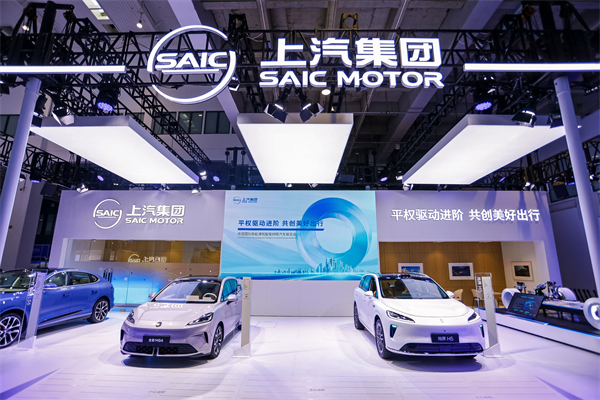
MG4

Search documents
目标重回销量第一!上汽再放大招?
电动车公社· 2026-03-24 23:10
Core Viewpoint - The automotive industry is facing significant challenges in Q1 due to subsidy policy adjustments, early consumer spending, and the impact of the longest Spring Festival holiday, leading to a noticeable slowdown in sales growth [1]. Group 1: Sales Performance - In January-February, the wholesale sales of passenger cars reached 3.524 million units, a year-on-year decrease of 19.7% [1]. - Exports totaled 1.174 million units, showing a year-on-year increase of 53.3% [1]. - Retail sales were 2.35 million units, down 26.2% year-on-year [1]. - March retail sales are expected to be around 1.7 million units, reflecting a year-on-year decline of 12.4% [2]. Group 2: Company Highlights - SAIC Motor Corporation achieved sales of 597,000 units in January-February, marking a year-on-year increase of 6.8% and regaining its leading position [3]. - The market share of domestic brands has increased to 67.2%, with Roewe and MG achieving a high growth rate of 44.8% and sales of 139,000 units [5]. Group 3: Product Strategy and Innovation - Roewe and MG have announced ambitious product plans, with Roewe set to launch the world's first AI-native SUV on April 21, aiming to enhance user experience through AI integration [28]. - MG plans to invest 10 billion yuan over the next two years to launch 13 new models, including pure electric, plug-in hybrid, and extended-range vehicles [49]. - The MG4 family will introduce a new member, the MG4X, which is expected to be a competitive A-class pure electric SUV [50]. Group 4: Industry Trends and Future Outlook - The Chinese automotive industry benefits from a large user base, which drives the need for continuous technological iteration to meet consumer demands [59]. - SAIC's strategy includes deep collaboration with leading suppliers and significant R&D investment exceeding 150 billion yuan over the past decade [72].


车市上演“三国杀”:谁将登上2026年“一哥”宝座?
经济观察报· 2026-03-09 10:30
Core Viewpoint - The competition among leading Chinese automakers has entered a new phase, with BYD defending its position while SAIC and Geely are aggressively pursuing market share, creating a suspenseful race for the title of the top seller in the domestic market [2][14]. Group 1: Market Dynamics - In early 2026, both SAIC and Geely surpassed BYD in monthly sales for January and February, breaking the previous two-year trend where BYD led the market [2]. - SAIC's sales in 2025 reached 4.387 million units, narrowly losing to BYD's 4.602 million units, indicating a strong competitive resurgence [2]. - Geely's sales in January and February 2026 were 27,000 and 20,600 units respectively, outpacing BYD's 21,000 and 19,000 units, showing a significant recovery in its market position [4]. Group 2: Geely's Performance - Geely's growth is attributed to its strong performance in the new energy vehicle (NEV) sector, with a 19% year-on-year increase in February sales, reaching 117,000 units [4]. - The company's NEV penetration rate exceeded 50% in the first two months of 2026, marking a transition to a "NEV-led" phase [4]. - Geely's overseas exports also surged, with a 138% increase in February, highlighting its strategic expansion in international markets [5]. Group 3: SAIC's Recovery - After a significant decline in 2024, SAIC implemented comprehensive reforms, including restructuring and launching new models, which led to a recovery in sales [8][9]. - In January and February 2026, SAIC sold 32,700 and 26,900 units respectively, achieving a total of 59,700 units, a 6.8% increase year-on-year [9]. - The company aims to regain its position as the market leader through a combination of domestic and international growth strategies [9]. Group 4: BYD's Challenges - BYD, which transitioned to an all-electric model in 2022, has seen its growth rate slow, with a 7.7% increase in 2025 compared to previous years [11]. - In early 2026, BYD faced declining sales, prompting the need for strategic adjustments to maintain its market position [11][12]. - The introduction of new technologies, such as the second-generation blade battery and fast-charging technology, is part of BYD's strategy to counteract competitive pressures [12]. Group 5: Competitive Landscape - The competition among BYD, SAIC, and Geely is characterized by aggressive product launches and international expansion plans, with each company setting ambitious overseas sales targets for 2026 [14]. - BYD aims for 1.3 million units in overseas sales with a growth rate of 24.3%, while SAIC targets 1.5 million units with a 40% growth rate [14]. - Despite their strengths, each company faces challenges, such as BYD's reliance on low-end models and Geely's high-end market struggles, which could impact their competitive positions [15].



上汽集团:整体销量逆市增长,自主品牌及出口表现较好-20260307
Orient Securities· 2026-03-07 13:25
Investment Rating - The report maintains a "Buy" rating for the company with a target price of 17.1 CNY [3][6] Core Views - The company is expected to see EPS of 0.91, 1.14, and 1.28 CNY for the years 2025-2027, with slight adjustments made to gross margin and expense ratios [3] - The company has shown resilience with overall sales growth of 6.8% year-on-year in the first two months, outperforming the industry average [9] - The company is focusing on expanding its presence in overseas markets, with significant growth in export sales, particularly in Europe [9] Financial Information Summary - Revenue for 2023 is projected at 726,199 million CNY, with a slight growth of 0.7% year-on-year, followed by a decline of 15.4% in 2024 [5] - Operating profit is expected to drop significantly to 10,376 million CNY in 2024, before rebounding to 17,234 million CNY in 2025, reflecting a growth of 66.1% [5] - Net profit attributable to the parent company is forecasted to be 14,106 million CNY in 2023, with a substantial recovery to 10,492 million CNY in 2025, marking a growth of 529.6% [5] - The gross margin is expected to improve from 9.5% in 2023 to 11.4% by 2027 [5] - The company’s PE ratio is projected to be 15.5 for 2025, decreasing to 11.1 by 2027 [5][10]
上汽集团(600104):整体销量逆市增长,自主品牌及出口表现较好
Orient Securities· 2026-03-07 12:39
Investment Rating - The report maintains a "Buy" rating for the company with a target price of 17.1 CNY, based on an average PE valuation of 15 times for comparable companies in 2026 [3][6]. Core Insights - The company has shown resilience with overall sales growth of 6.8% year-on-year in the first two months, outperforming the industry average during a period of consumer hesitation [9]. - The company is expected to benefit from new vehicle launches, which are anticipated to drive sales and market share for its self-owned brands [9]. - The export performance has been strong, with significant year-on-year growth in overseas sales, indicating that international markets will be a key growth driver moving forward [9]. Financial Forecasts - The earnings per share (EPS) are projected to be 0.91 CNY, 1.14 CNY, and 1.28 CNY for the years 2025, 2026, and 2027 respectively, with slight adjustments made to gross margin and expense ratios [3]. - Revenue is forecasted to reach 726.199 billion CNY in 2023, with a decline to 614.074 billion CNY in 2024, followed by a gradual recovery to 742.172 billion CNY by 2027 [5][12]. - The net profit attributable to the parent company is expected to rebound significantly from 1.666 billion CNY in 2024 to 14.698 billion CNY in 2027, reflecting a growth rate of 529.6% in 2025 [5][12]. Key Financial Metrics - The company’s gross margin is projected to improve from 9.5% in 2023 to 11.4% by 2027, while the net profit margin is expected to increase from 1.9% to 2.0% over the same period [5][12]. - The return on equity (ROE) is anticipated to rise from 5.0% in 2023 to 4.6% in 2027, indicating a gradual recovery in profitability [5][12]. - The price-to-earnings (PE) ratio is forecasted to decrease from 11.5 in 2023 to 11.1 in 2027, suggesting a more favorable valuation over time [5][12].
上汽集团(600104):自主占比提升,新能源与出口贡献增量
Shanghai Aijian Securities· 2026-03-03 05:42
Investment Rating - The report maintains a "Buy" rating for the company [6] Core Insights - The company experienced a decline in February sales due to the Spring Festival holiday, but cumulative sales for January and February showed a 6.8% year-on-year increase [6] - The contribution from self-owned brands is significant, with a 14% year-on-year increase in sales, accounting for 67.2% of total sales [6] - The company plans to launch several new models in 2026, which is expected to drive growth [6] - The company aims for a sales target of 4.5 million vehicles in 2025, achieving a completion rate of 100.2% in 2025 [6] - The report forecasts net profits of 10.8 billion, 13.3 billion, and 16.2 billion for 2025, 2026, and 2027 respectively, with corresponding P/E ratios of 15, 12, and 10 [6] Financial Data and Profit Forecast - Total revenue for 2023 is projected at 744.7 billion, with a slight year-on-year growth of 0.1% [4] - Net profit for 2023 is estimated at 14.1 billion, reflecting a year-on-year decrease of 12.5% [4] - Earnings per share for 2023 is expected to be 1.23 [4] - The gross margin is projected to improve from 1.7% in 2023 to 11.1% by 2027 [4] - The return on equity (ROE) is expected to increase from 4.9% in 2023 to 4.9% in 2027 [4]
被遗忘的角落,烧起车市最猛的一把火
汽车商业评论· 2026-02-24 23:06
Core Viewpoint - The article discusses the revival of the small car market in China, highlighting a shift in consumer preferences towards smaller, more affordable vehicles that offer practicality and modern features, driven by technological advancements and policy support [7][28][58]. Group 1: Market Dynamics - In 2025, the retail volume of A0-class cars reached 1.13 million units, with a cumulative increase of 59%, making it one of the fastest-growing segments in the domestic car market [8]. - The return of the QQ brand and the rapid blind booking of the new QQ3, which received over 27,000 orders in just three hours, indicates a strong consumer interest in small cars [7][8]. - The shift from a focus on larger vehicles to smaller ones is attributed to changing market dynamics, where consumers are increasingly valuing practicality and affordability [7][10]. Group 2: Historical Context - The history of small cars in China reflects the evolution of consumer needs, where early models like the QQ addressed the demand for affordable vehicles among low-income families [10][11]. - The market saw a decline in small cars as consumer preferences shifted towards larger vehicles, driven by economic growth and urbanization, leading to a perception that bigger cars are more desirable [13][14][16]. Group 3: Technological and Policy Influences - The revival of the small car market is significantly influenced by favorable government policies, including subsidies that apply equally to low-cost and mid-range vehicles, enhancing affordability for consumers [28][49]. - Technological advancements in electric vehicle platforms have allowed small cars to offer better space utilization and features, breaking the stereotype that small cars are cramped [29][33]. Group 4: Consumer Behavior and Preferences - Modern consumers, particularly younger generations, are looking for vehicles that reflect their lifestyle and personal aesthetics rather than merely serving as utilitarian transport [39][40]. - The perception of small cars is changing, with consumers no longer viewing them as inferior options but as stylish and practical choices for urban living [40][58]. Group 5: Competitive Landscape - The competition in the small car market is intensifying, with both domestic and international brands recognizing the growth potential and investing in new models [51][57]. - Future competition will likely focus on value rather than price, with brands needing to enhance the emotional and experiential value of small cars to attract consumers [57][58].

汽车视点 | 上汽实现高质量“开门红” 1月销量同比增长超两成
Zhong Guo Jin Rong Xin Xi Wang· 2026-02-12 05:04
Core Insights - SAIC Motor Corporation achieved significant sales growth in January, with wholesale vehicle sales reaching 327,000 units, a year-on-year increase of 23.9%, and retail sales hitting 363,000 units, leading the domestic automotive industry [1][2] - The company is the only automaker in China to surpass 300,000 units in sales for January, indicating a strong start to 2026 and confirming the success of its strategic transformation [1][2] Sales Performance - The sales data for January shows that SAIC's self-owned brands and new energy vehicles are the main drivers of growth, with self-owned brands accounting for 65.3% of total sales, a 7.3 percentage point increase from the same period in 2025 [5][7] - New energy vehicle sales reached 85,000 units, marking a 39.7% year-on-year increase, solidifying SAIC's position in the top tier of the industry [5][7] Strategic Initiatives - SAIC has been focusing on a multi-faceted strategy that includes deepening reforms, technological innovation, cross-industry collaboration, and overseas operations, which has led to a clear technical label for its vehicle matrix [1][8] - The company has invested over 180 billion yuan since 2021 in emerging sectors like AI and high-end manufacturing, fostering a collaborative ecosystem that enhances its core automotive business [12][10] Product Development - SAIC's MG brand has seen significant success, with the MG4 model achieving sales of over 10,000 units monthly, supported by advanced technologies like semi-solid batteries and integrated battery chassis [8][10] - Upcoming models include the LS9 Hyper from the high-end brand Zhiji, which features industry-first four-wheel steering technology, aiming to set new benchmarks in vehicle handling [12][13] Market Expansion - The overseas market has shown robust growth, with January sales exceeding 105,000 units, a year-on-year increase of over 50%, particularly in Europe where the MG brand has maintained its position as the top-selling Chinese brand for eleven consecutive years [7][8] - SAIC's "Glocal" strategy emphasizes transitioning from merely exporting products to exporting value chains, enhancing its global competitiveness [7][8] Customer Engagement - SAIC is enhancing customer experience through initiatives like the "Understanding Cars Better" campaign, which offers comprehensive services across its brands, aiming to build long-term trust with customers [14][17]

MG在国内外都吃香,这波“中国智造”很提气
Yang Zi Wan Bao Wang· 2026-02-06 03:54
Core Insights - MG brand is experiencing a resurgence, achieving significant sales growth and technological advancements in a competitive automotive market [3][6][9] Group 1: Sales Performance - In 2025, MG's sales in the European market surpassed 300,000 units, maintaining its position as the top-selling Chinese automotive brand in Europe for 11 consecutive years [3] - In the domestic market, MG's sales from January to November exceeded the total sales for 2024, with the new MG4 model selling over 10,000 units monthly within four months of its launch [6] - In January 2026, SAIC Group reported a total vehicle sales of 327,000 units, a year-on-year increase of 23.9%, with MG contributing significantly to this growth [14] Group 2: Technological Advancements - MG is focusing on integrating advanced technologies such as semi-solid-state batteries and high-performance chips into more affordable models, redefining the value of electric vehicles [11][16] - The introduction of the MG4 semi-solid-state battery model marks a significant milestone, showcasing MG's commitment to innovation and user-centric design [16] - MG aims to enhance user experience and safety, achieving a five-star safety rating in stringent EU E-NCAP tests [11] Group 3: Strategic Vision - MG's strategy emphasizes "technological equality" and "value reconstruction," aiming to position itself as a leader in the electric vehicle market [14][18] - The brand is set to enter a product "explosion period" in 2026, with over ten new energy products planned for release, focusing on smart driving and AI integration [16] - MG's approach is not merely about increasing sales volume but optimizing user experience to achieve both volume and profit [18]
全世界都在抢的车,中国却开始嫌弃
汽车商业评论· 2026-02-04 23:06
Core Viewpoint - The article discusses the significant decline in the growth rate of plug-in hybrid vehicles (PHEVs) in the Chinese automotive market, highlighting the competitive pressure from pure electric vehicles (EVs) and the changing consumer preferences that have led to this shift [4][6][7]. Group 1: Market Trends - In 2025, the growth rate of PHEVs dropped to 8.8%, with range-extended vehicles seeing a mere 6% increase, marking the first instance of consecutive monthly declines in this segment [6][7]. - The penetration rate of PHEVs in the new energy vehicle market surged from 17% in 2021 to 40% in 2024, but the market dynamics shifted dramatically in 2025 [4][6]. - The average price of pure electric vehicles fell by 15% from 168,000 yuan in 2024 to 143,000 yuan in 2025, while mainstream PHEVs remained in the 150,000 to 180,000 yuan range, erasing the price advantage previously held by PHEVs [11]. Group 2: Consumer Behavior - The average range of pure electric vehicles exceeded 528 kilometers in 2025, with many mainstream models surpassing 600 kilometers, significantly reducing consumer anxiety regarding range [15]. - The rapid development of charging infrastructure, with a car-to-charging station ratio of 2.5:1 and a total of 20.09 million charging facilities by the end of 2025, has made pure electric vehicles a more reliable choice for consumers [15]. - Consumers are increasingly viewing pure electric vehicles as a dependable option, leading to a decline in the perceived necessity of PHEVs, which were initially chosen to alleviate range anxiety [15][19]. Group 3: Technological Shifts - PHEVs are experiencing a shift towards larger battery capacities and faster charging solutions, with many manufacturers adopting battery sizes exceeding 60 kWh to enhance their appeal [27][29]. - The introduction of 800V high-voltage platforms and ultra-fast charging technologies is becoming standard, allowing for significant improvements in charging efficiency [15][27]. - The trend of integrating larger batteries into PHEVs is raising production costs, which could undermine their competitive pricing advantage [32][35]. Group 4: Regulatory Environment - New regulations set to take effect in 2026 will tighten the eligibility criteria for tax exemptions for PHEVs, making it more challenging for lower-end models to compete [39][40]. - The shift from a "universal" tax exemption policy to one that favors stronger models will further complicate the market landscape for PHEVs [37][41]. Group 5: Future Outlook - Despite the current challenges, the article suggests that PHEVs will maintain a significant market share, with a projected penetration rate of 36% in 2025, corresponding to 4.669 million units [51]. - The global market for PHEVs is expected to grow, with predictions indicating that their growth rates will surpass those of pure electric vehicles in the coming years [60][66]. - The unique energy structure and market conditions in China suggest that PHEVs will continue to play a crucial role in the automotive landscape, particularly in regions with less developed charging infrastructure [52][54].


上汽1月“开门红”背后的质变:自主品牌占比超六成,新能源双线爆发
Guan Cha Zhe Wang· 2026-02-04 01:36
Core Insights - SAIC Motor Corporation reported a total vehicle wholesale of 327,000 units in January, representing a year-on-year increase of 23.9%, with retail sales reaching 363,000 units [1] - The main highlights of SAIC's performance in January include the rise in sales of its own brands, stable growth in new energy vehicle (NEV) sales, and continued expansion in overseas markets [1] Domestic Sales Performance - In January, SAIC's own brand sales (including SAIC-GM-Wuling) reached 214,000 units, up 39.6% year-on-year [3] - SAIC Passenger Vehicles (including Roewe and MG brands) sold 77,000 units, marking a 53.8% increase; SAIC Maxus sold 18,000 units, up 18.2%; and SAIC-GM-Wuling sold 105,000 units, an increase of 37% [3] Joint Venture Performance - SAIC-GM's sales in January were 44,000 units, reflecting a year-on-year increase of 29.3%, while SAIC Volkswagen's sales were 68,000 units, showing a decline of 9% [4] Commercial Vehicle Sales - SAIC's commercial vehicle sales reached 20,400 units, up 21% year-on-year, with domestic sales at 11,100 units (up 28%) and overseas sales at 9,373 units (up 14%) [5] Market Share and Brand Performance - The share of SAIC's own brands (including SAIC-GM-Wuling) accounted for 65.3% of total sales, an increase of 7.3 percentage points compared to the same period last year, making it the main growth driver for the company [5] - SAIC-GM-Wuling's sales nearly accounted for half of the own brand sales, indicating strong penetration in the mainstream market [5] New Energy Vehicle Sales - SAIC's NEV sales reached 85,000 units in January, a year-on-year increase of 39.7% [9] - New models such as MG4, the new generation Zhiji LS6, and others were launched in the second half of last year, contributing to the growth in NEV sales [9] Overseas Market Expansion - The overseas market has become a new growth driver for SAIC, with sales reaching 105,000 units in January, up 51.7% year-on-year [10] - MG delivered nearly 26,000 units in Europe in January, reflecting a growth of approximately 15% [10] Global Strategy - SAIC announced its "Glocal 3.0" strategy, focusing on value creation and standard output, aiming for a full industry chain overseas [13] - The company has established multiple innovation and design centers globally, along with extensive marketing and service networks [13] Future Product Launches - Looking ahead to 2026, SAIC plans to continue launching new products across its brands, covering a wide range of market segments from mainstream sedans to luxury vehicles [14][15] - The company aims to focus on electrification, intelligence, and high-end technology to reclaim its position as the top seller in the Chinese automotive market by 2025 [18]