DRIVE AGX Thor

Search documents
英伟达 CES 主题演讲:对美国汽车行业的启示-NVIDIA CES Keynote - Takeaways for US Autos
2026-01-08 02:43
Summary of NVIDIA CES Keynote - Takeaways for US Autos Industry Overview - The focus of the conference was on **Physical AI**, particularly in the context of **Autonomous Vehicles (AV)** and **Humanoids** as the future of AI technology [2][7]. Key Company Insights NVIDIA - **Alpamayo**: A vision language action (VLA) model aimed at addressing the "long tail" of AV edge cases, supported by **AlpaSim** (open-source AV simulation) and **Physical AI Open Datasets** (1,700+ hours of driving data) [2]. - **Isaac GR00T N1.6**: A reasoning VLA model specifically designed for humanoid robotics [2]. Tesla (TSLA) - Despite increased competition in AVs and humanoids, Tesla is viewed as being **years ahead** due to its vertical integration, data, scale, and cost advantages [7]. - The introduction of NVIDIA's technology may help other OEMs accelerate their autonomy programs, but the time required to fully develop and integrate AV technology is expected to be **years, not months** [8]. Rivian (RIVN) - Rivian's own AI and autonomy strategy, including a custom silicon chip, may face competitive pressure from NVIDIA if Rivian decides to sell its technology externally [8]. Lucid Motors (LCID) - Lucid has partnered with NVIDIA to develop hands-off driving technology, with a focus on capital efficiency [8]. General Motors (GM) - GM is leveraging its existing collaboration with NVIDIA to enhance its AV speed-to-market, utilizing digital-twin workflows and NVIDIA DRIVE AGX for advanced ADAS [8]. Ford (F) - Ford is seen as having potential opportunities to advance its L2+ offerings in a capital-light manner, aligning with its recent strategic pivot towards capital discipline [8]. Mobileye (MBLY) - Mobileye's market share may be at risk due to NVIDIA's strong position in high-performance SoCs and compute platforms, which could increase pricing pressure [8][9]. Market Dynamics - The competitive landscape is shifting, with traditional OEMs needing to adapt quickly to maintain relevance as L2+/L3 autonomy becomes a consumer expectation [3]. - The integration of advanced autonomy technologies is expected to compress development cycles and reduce upfront capital expenditures for OEMs [8]. Financial Projections - General Motors has a DCF-derived price target of **$90**, implying a **7.5x** multiple on 2026 EPS of **$12.25** [11]. - Tesla's price target is set at **$425**, with various components contributing to this valuation, including core auto business and network services [12]. Risks and Considerations - Potential risks include execution challenges in EV/AV strategies, regulatory hurdles, and increased competition from both legacy OEMs and new entrants in the market [14][15]. - The need for greater financial transparency and strategic partnerships is emphasized as critical for navigating the evolving automotive landscape [14]. Conclusion - The advancements in AI and autonomy showcased by NVIDIA at CES highlight significant opportunities and challenges for automotive OEMs. Companies like Tesla, GM, and Lucid are positioned to leverage these technologies, while others may face increased competitive pressures. The market dynamics are shifting rapidly, necessitating strategic adaptations from all players involved.

Tesla Rival Lucid Unveils Prototype Robotaxi In Collaboration With Uber Amid Strong Q4 Deliveries
Yahoo Finance· 2026-01-07 20:31
Core Insights - Lucid Group Inc. has unveiled a prototype of its new Robotaxi, developed in collaboration with Uber and Nuro, at CES 2026 [1][2] Group 1: Robotaxi Prototype - The Robotaxi prototype is based on Lucid's Gravity SUV and features advanced sensors including cameras, radars, and LiDAR, arranged in a "halo" structure similar to Waymo's autonomous vehicles [2] - Production of the Robotaxi is set to begin at Lucid's Arizona facility later this year, with a targeted launch in the San Francisco Bay Area in 2026 [3] Group 2: Production and Deliveries - In 2025, Lucid delivered over 15,841 vehicles, marking a 55% increase in deliveries compared to 2024 [4] - The company produced 18,378 vehicles in 2025, which represents a 104% increase year-over-year [4] Group 3: Future Plans - Lucid plans to deploy over 20,000 Gravity Robotaxis across multiple U.S. cities within the next five years, with availability through the Uber app [5]

Magna to Offer DRIVE Hyperion-Compatible ECUs and Tier-1 Integration Services for NVIDIA DRIVE AV
Globenewswire· 2026-01-05 23:00
Core Insights - Magna has expanded its strategic collaboration with NVIDIA to enhance OEM deployments on the NVIDIA DRIVE Hyperion platform, offering a comprehensive portfolio of system integration, validation, and vehicle launch services for NVIDIA's DRIVE AV stack [1][4] - This collaboration positions Magna as a leader in the automotive industry, combining NVIDIA's AI compute capabilities with Magna's expertise in system engineering and integration [2][4] Collaboration Details - Magna will provide platform launch and execution services for various levels of autonomy, specifically L2++, L3, and L4 systems, facilitating seamless deployment across these levels [1][11] - The partnership aims to accelerate the development and deployment of advanced assisted and automated driving systems, leveraging Hyperion-compatible hardware and deep system integration [4][11] System Integration Capabilities - Magna's role includes a flexible range of system responsibilities, such as system integration, verification, validation, safety approval, and deployment, particularly for high-performance compute ECUs and sensors [2][12] - The collaboration emphasizes thorough testing and global rollout support to ensure quality and safety expectations are met during the introduction of the platform [12] Industry Positioning - Magna's extensive global manufacturing and engineering footprint positions it well to support OEMs in launching advanced vehicle technologies [2][6] - The initiative reflects the growing ecosystem around AI-defined vehicles, highlighting the importance of advanced compute and perception technologies in enabling software-defined vehicle architectures [3][4]


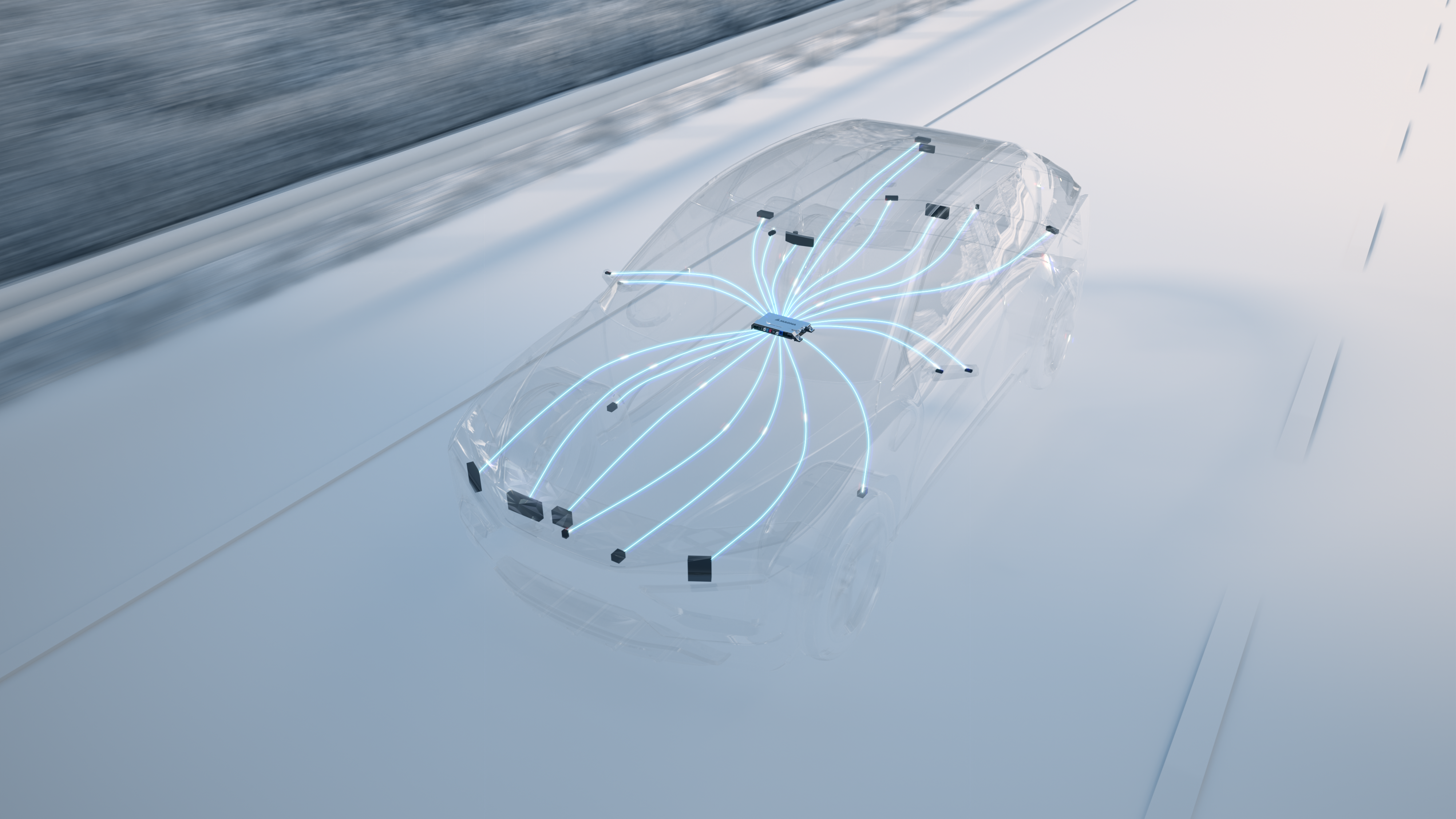
Magna to Offer DRIVE Hyperion-Compatible ECUs and Tier-1 Integration Services for NVIDIA DRIVE AV
Globenewswire· 2026-01-05 23:00
Core Insights - Magna has announced an expansion of its strategic collaboration with NVIDIA to enhance OEM deployments on the NVIDIA DRIVE Hyperion platform, offering a comprehensive portfolio of system integration, validation, and vehicle launch services for NVIDIA's DRIVE AV stack [1][2] Group 1: Collaboration and Services - The collaboration aims to support OEMs in deploying L2++, L3, and L4 autonomy systems, facilitating seamless integration across various levels of vehicle autonomy [1][6] - Magna's expertise in system engineering and integration, combined with NVIDIA's AI compute capabilities, positions the company as a leader in the automotive industry [2][4] - The partnership will enable automakers to achieve complete, integrated systems at scale, accelerating the development and deployment of advanced assisted and automated driving systems [2][4] Group 2: System Integration and Validation - Magna will provide a flexible range of system responsibilities, including system integration, verification, validation, safety approval, and deployment, particularly for high-performance compute ECUs and sensors [3][7] - The collaboration emphasizes the importance of thorough testing and global rollout support to ensure quality and safety expectations are met [7] Group 3: Industry Position and Future Plans - Magna's expanded support for NVIDIA DRIVE Hyperion reflects the growing ecosystem around AI-defined vehicles, highlighting the need for advanced compute and perception technologies in software-defined vehicle architectures [4][3] - Both companies plan to continue their collaboration to support future vehicle platforms and advance automotive technologies [4]

International And PlusAI Adopt NVIDIA’s DRIVE Hyperion For AV Launch
Forbes· 2025-10-28 18:30
Core Insights - International Motors and PlusAI are advancing the commercialization of Level 4 autonomous trucks using NVIDIA's DRIVE AGX Hyperion platform [1][2] - The collaboration aims to produce factory-built autonomous trucks for large-scale freight operations, combining manufacturing expertise, AI technology, and advanced computing [2][4] Company Collaboration - International Motors has nearly 200 years of manufacturing experience and a deep understanding of fleet operations, which will support the deployment of autonomous solutions [2] - PlusAI contributes its SuperDriveTM AI-based autonomous driving software, which has been refined over six million miles of real-world driving [2][5] - NVIDIA provides the DRIVE AGX Thor platform, designed for the complex AI workloads necessary for safe autonomous driving [4][5] Technology Integration - The autonomous trucks will feature lidar, radar, and cameras for 360-degree awareness, integrated with PlusAI's SuperDriveTM and NVIDIA's computing platform [5] - This combination ensures redundancy, sensor fusion, and high-speed AI inference for safe driverless operation in complex long-haul trucking environments [5] Future Plans - International and PlusAI are targeting a commercial launch of driverless trucks in 2027 [7] - PlusAI is planning to go public through a merger with Churchill Capital Corp IX, expected to close early next year [8]
英伟达机器人新“大脑”来了!Jetson Thor AI算力提高6.5倍,解锁物理AI实时推理
美股IPO· 2025-08-26 00:31
Core Viewpoint - Nvidia's Jetson Thor platform significantly enhances AI computing power and efficiency, enabling real-time processing for robotics and physical AI applications [1][3][5]. Group 1: Product Features and Specifications - Jetson Thor offers up to 2070 FP4 TFLOPS of AI computing power with a power consumption of 130 watts, and features 128GB of memory [1][3]. - The platform's AI computing performance is 7.5 times greater than its predecessor, Jetson Orin, while CPU performance has increased by 3.1 times [5][7]. - The developer kit, Jetson AGX Thor, is priced at $3499, with a bulk purchase price of $2999 for orders over 1000 units [1][3]. Group 2: Applications and Industry Adoption - Jetson Thor is designed to support various generative AI models, enabling real-time processing of high-speed sensor data and visual reasoning in dynamic environments [7][12]. - Major industry players such as Agility Robotics, Amazon Robotics, and Boston Dynamics have adopted Jetson Thor for their next-generation robotics [3][12]. - The platform is expected to enhance the agility, decision-making speed, and autonomy of robots, making it crucial for navigation and interaction in real-world scenarios [13]. Group 3: Ecosystem and Support - Jetson Thor is supported by a complete Nvidia Jetson software platform, compatible with major AI frameworks and generative AI models [11]. - The platform has attracted over 2 million developers and more than 150 hardware and software partners since its launch in 2014 [11]. - Research institutions like Stanford University and Carnegie Mellon University are leveraging Jetson Thor to advance capabilities in perception, planning, and navigation models [11]. Group 4: Autonomous Driving Applications - Nvidia has also launched the DRIVE AGX Thor developer kit for autonomous vehicles, which is now available for pre-order and expected to ship in September [4][14]. - Leading automotive companies, including BYD and Volvo, are developing solutions based on the DRIVE AGX Thor platform [14][15].