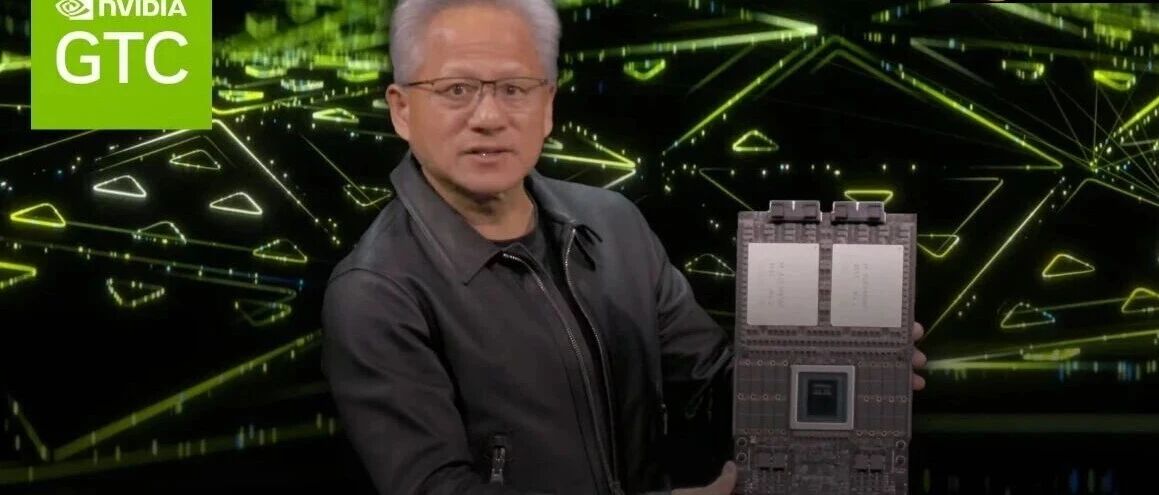
DRIVE Hyperion平台

Search documents
黄仁勋的下一个万亿生意
汽车商业评论· 2026-03-17 23:07
Core Insights - NVIDIA and Uber are expanding their partnership in autonomous driving, with plans to launch self-driving taxis equipped with NVIDIA's technology in Los Angeles and the San Francisco Bay Area by mid-2027, aiming for deployment in 28 markets across four continents by the end of 2028 [3][10] - The collaboration signifies NVIDIA's shift from being a chip supplier to a full-stack autonomous driving software provider, while Uber is transitioning from a technology owner to a platform integrator [26][10] Group 1: Partnership Expansion - The new plan involves NVIDIA providing a complete Level 4 (L4) autonomous driving software stack, utilizing the DRIVE Hyperion platform and the Alpamayo inference model [8] - Uber's deployment strategy includes three phases: starting with data collection vehicles, moving to operations with human drivers, and finally transitioning to fully autonomous L4 operations [9] - The partnership aims to integrate NVIDIA's end-to-end autonomous driving stack with Uber's global ride-hailing network, enhancing the scalability of robotaxi services [9][26] Group 2: Industry Context - In the past week, Uber has announced new robotaxi developments with Zoox, Nissan, Wayve, and Motional, indicating a competitive landscape in the autonomous taxi sector [4][12] - NVIDIA's GTC conference showcased its automotive business, with several companies, including BYD and Nissan, adopting the DRIVE Hyperion platform for L4 autonomous vehicles [16][17] - The DRIVE Hyperion platform is designed to integrate computing, sensors, networks, and safety systems, aiming to simplify global deployment and reduce validation cycles [17] Group 3: Future Projections - Jensen Huang, NVIDIA's CEO, predicts that by 2027, the total procurement orders for the Blackwell and Vera Rubin chip series will reach $1 trillion, reflecting the growing demand for computing power in the autonomous driving sector [4][28] - The collaboration with Uber is part of a broader strategy to position NVIDIA as a leader in the AI infrastructure for autonomous driving, with a focus on enhancing the efficiency of AI factories and the overall ecosystem [28][27]


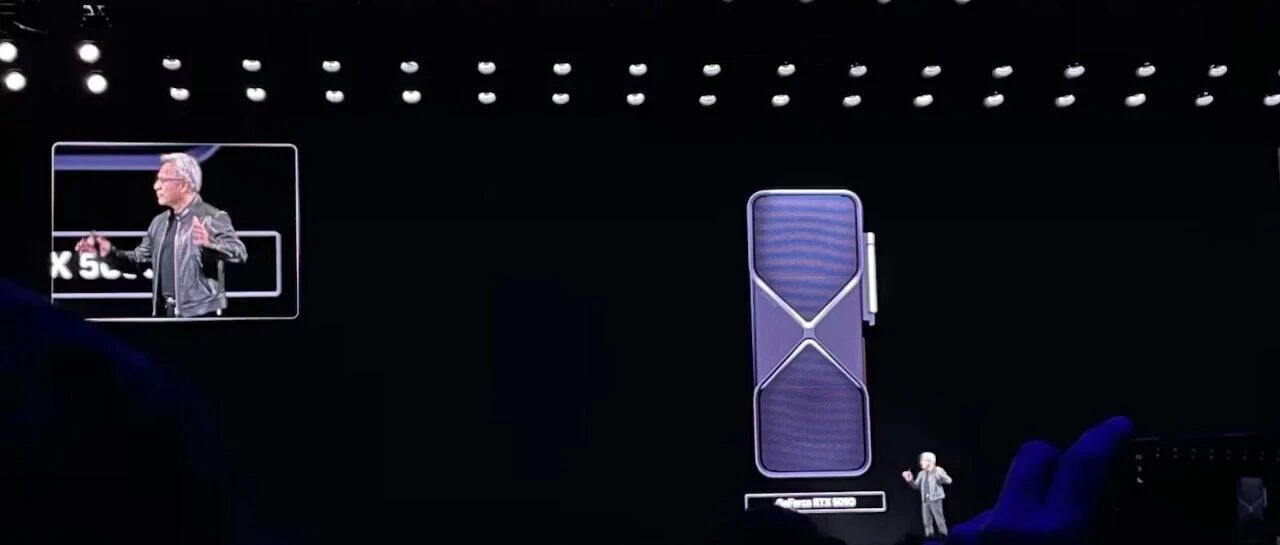
黄仁勋亲测英伟达Alpamayo辅助驾驶系统,全程无人工接管
Huan Qiu Wang Zi Xun· 2026-03-12 03:10
Core Insights - Nvidia's CEO Jensen Huang recently tested the company's developed driver assistance system, Alpamayo, in a Mercedes vehicle, demonstrating the company's advancements in autonomous driving technology [1][3] - The test journey from Woodside to downtown San Francisco showcased the vehicle's ability to handle various road conditions without human intervention, highlighting Nvidia's technical capabilities in the autonomous driving sector [1][3] Group 1: Technology and Development - Nvidia has been deeply involved in the autonomous driving sector, providing core chip products to companies like Tesla and developing AI driving functions for partners such as Mercedes and Lucid [3] - The Alpamayo solution integrates AI models, simulation blueprints, and datasets to support Level 4 autonomous driving under specific conditions, which Huang referred to as a "ChatGPT moment for physical AI" [3] - Nvidia combines end-to-end AI models with traditional engineering techniques to enhance safety verification and create a robust safety framework for its autonomous driving systems [3][4] Group 2: Sensor Fusion and Cost Management - Nvidia employs a multi-sensor fusion approach, integrating cameras, radar, ultrasonic sensors, and optional lidar for higher-end models, which is crucial for handling extreme driving scenarios [4] - The company aims to reduce R&D and production costs through vertical integration, offering a basic version focused on cost-effectiveness and a high-end version with lidar for advanced driving needs [4] Group 3: Simulation Technology - To compete with companies like Tesla and Waymo, Nvidia focuses on simulation technology as a core infrastructure for autonomous driving development, utilizing neural reconstruction and data augmentation to enhance training [5] - The goal is to create an autonomous driving system with reasoning capabilities that minimizes reliance on extensive real-world driving data, with ongoing development of a visual-language-action model to integrate various learning aspects [5]
中金:英伟达(NVDA.US)扩大智驾软硬件生态圈 国内头部智驾供应商迎来出海机遇
智通财经网· 2026-01-07 06:43
Group 1 - Nvidia expands its DRIVE Hyperion ecosystem, incorporating major Tier 1 suppliers and sensor partners like Bosch and Hesai-W (02525) [1][2] - The DRIVE Hyperion platform integrates computing, sensors, and safety features, aiming to facilitate mass production for automotive manufacturers and autonomous driving software ecosystems [2] - Domestic autonomous driving suppliers have accumulated R&D and large-scale production experience in the Chinese market, which may accelerate their entry into the global market through Nvidia's ecosystem [1][2] Group 2 - The global pace of autonomous driving development is accelerating, with leading companies speeding up their layouts in the field [3] - Nvidia introduced the open-source Alpamayo VLA AI algorithm at CES and plans to launch L4 Robotaxi by 2027, while Tesla aims to commercialize Robotaxi operations in Austin by late 2025 [3] - Domestic companies like Pony.ai-W (02026) and WeRide-W (00800) are also expanding their autonomous driving efforts, indicating a growing global market for autonomous driving [3] Group 3 - The penetration rate of advanced autonomous driving in China has crossed a critical point, with expectations for growth in the autonomous driving industry chain [4] - As the penetration rates of L3 and L4 autonomous driving increase, the value of software and hardware integration per vehicle is expected to rise, benefiting leading suppliers [4] - Domestic leaders in the smart driving sector are anticipated to experience a cycle of volume and price increases as they accelerate their entry into overseas markets [4]
「美队」老黄深夜扔出地表最强GPU!算力百倍狂飙,下次改演雷神
猿大侠· 2025-10-29 04:42
Core Insights - The core message of the article emphasizes the significant advancements in NVIDIA's GPU technology, particularly the introduction of the Vera Rubin chip, which boasts a performance increase of 100 times compared to previous models, and the potential for substantial revenue growth in the coming years [5][8][20]. Group 1: NVIDIA's Technological Advancements - The Vera Rubin chip is set to enter production next year and is expected to achieve a performance of 100 Petaflops, which is 100 times that of the DGX-1 supercomputer delivered to OpenAI nine years ago [5][20]. - NVIDIA's Blackwell chips have already begun mass production in Arizona, with a projected revenue of $500 billion by the end of 2026 from the combination of Blackwell and Rubin [14][72]. - The introduction of a new "Context Processor" allows AI models to handle over 1 million tokens, enhancing their ability to process and remember vast amounts of information [24]. Group 2: AI and Industry Insights - NVIDIA's CEO highlighted that AI is not merely a tool but a "worker" that utilizes tools, marking a fundamental shift in how AI is perceived and integrated into industries [3][41]. - The company is focusing on creating an "AI factory" that operates with high efficiency, producing valuable tokens at unprecedented speeds [44][72]. - The article discusses the transition from traditional computing to accelerated and intelligent computing, with NVIDIA's GPUs being central to this evolution [68][70]. Group 3: Strategic Collaborations and Market Position - NVIDIA has announced collaborations, including a partnership with the U.S. Department of Energy to build seven new AI supercomputers, reinforcing its position as a leader in AI infrastructure [68]. - The company is also investing $1 billion in Nokia to develop AI-native 6G technology, which is expected to enhance connectivity and computational capabilities [92]. - NVIDIA's commitment to open-source AI is evident, with significant contributions across various models, establishing it as a core player in the AI ecosystem [75][76]. Group 4: Future Projections and Market Impact - The anticipated revenue from Blackwell and Rubin chips is projected to reach $500 billion by 2026, with a significant increase in GPU shipments expected [72]. - The article notes that the global capital expenditure for cloud giants is rising rapidly, indicating a growing demand for advanced computing solutions [66]. - The introduction of NVQLink technology aims to bridge the gap between quantum computing and AI supercomputers, marking a significant milestone in computational capabilities [100][101].