Eliza 2.0

Search documents
The Bank of New York Mellon(BK) - 2025 Q4 - Earnings Call Presentation
2026-01-13 16:00
Financial Performance - 2025 - Revenue reached $2008 billion, up 8% year-over-year[5, 27] - Pre-tax income increased to $71 billion, a 21% increase year-over-year[5, 27] - Net income was $53 billion, up 22% year-over-year[5, 27] - EPS increased by 28% to $740, or 24% excluding notable items[5] - The ROTCE was 261%, up 33%-pts year-over-year[5] Q4 2025 Financial Highlights - Revenue increased by 7% year-over-year to $5179 billion[24, 25] - Expenses increased by 4% year-over-year, excluding notable items[24] - Adjusted pre-tax margin was 37%, up 3%-pts year-over-year[24] - EPS increased by 31% year-over-year to $202, or 21% excluding notable items[24] Strategic Initiatives & Efficiency - Efficiency savings of approximately $550 million were generated[6] - Approximately $500 million was invested in new client solutions, technology, and personnel[6] - Operating leverage was 507 bps for the full year[3, 27] - The company returned $14 billion to common shareholders, including $377 million in dividends and $10 billion in share repurchases[24] Segment Performance - 2025 - Securities Services total revenue was $97 billion, up 9% year-over-year[67] - Market and Wealth Services total revenue was $70 billion, up 12% year-over-year[71] - Investment and Wealth Management total revenue was $33 billion, down 4% year-over-year[75] Outlook - The company aims to deliver its fourth consecutive year of positive operating leverage in 2026, targeting over 100 bps[56, 57] - Revenue is expected to increase by 5% year-over-year[57]

高盛推出“2026年最重要交易”:AI生产力受益组合
美股IPO· 2025-11-26 04:45
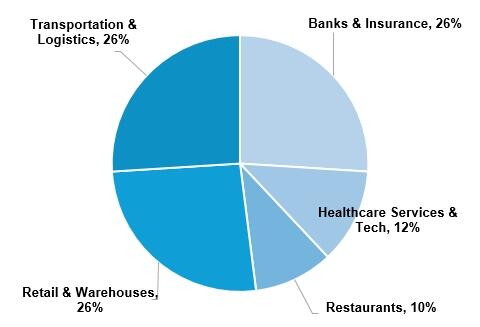
Core Viewpoint - Goldman Sachs has launched a new investment portfolio, GSXUPROD, consisting of non-tech companies that have integrated AI into their workflows to reduce costs and improve profit margins. The firm believes that this portfolio has the potential for higher earnings per share changes compared to the Russell 1000 and S&P 500 indices due to AI adoption and productivity enhancements [1][3][7]. Group 1: AI Adoption in Various Industries - The adoption rate of AI in enterprises has reached 37%, with large companies showing a 13% adoption rate based on stricter definitions [5]. - Financial institutions are deploying AI to enhance operational efficiency across various applications, including fraud detection and customer interaction [8]. - Retailers and warehouse operators are utilizing AI for optimizing customer experiences, supply chain logistics, and internal operations, leading to significant productivity improvements [14][15]. Group 2: Specific Company Initiatives - JPMorgan Chase emphasizes its pre-existing AI expertise and uses AI to control workforce growth while maintaining cost discipline [9]. - Bank of America views AI as "augmented intelligence," with its Erica platform handling 2 million customer interactions daily [11]. - Amazon is heavily investing in AI across multiple domains, including AWS AI services and custom chips [14]. - HCA Healthcare is implementing AI to improve revenue cycle management and enhance clinical documentation [25]. - Yum Brands has deployed AI in over 28,000 restaurants to provide operational guidance and improve efficiency [27]. Group 3: Performance and Market Outlook - The GSXUPROD portfolio has underperformed the market this year, even when excluding the seven tech giants, but still shows potential for higher earnings per share changes due to AI integration [7]. - Goldman Sachs believes that the long-term investment opportunity lies in AI productivity beneficiaries, which will be crucial in 2026 [3].


高盛推出“2026年最重要交易”:AI生产力受益组合
Hua Er Jie Jian Wen· 2025-11-26 02:02
Core Insights - The core viewpoint of the articles is that AI applications in enterprises are transitioning from concept to reality, with Goldman Sachs identifying a long position in AI productivity beneficiaries as a key trading opportunity for 2026 [1] Financial Sector - Goldman Sachs has launched a new investment portfolio (GSXUPROD) that includes non-tech companies across various sectors such as finance, retail, logistics, healthcare, and dining, all of which are integrating AI into their workflows to reduce costs and improve profit margins [1] - A recent survey by Goldman Sachs indicates that the corporate AI adoption rate has reached 37%, while the U.S. Census Bureau reports a 13% adoption rate among large enterprises, reflecting stricter definitions [3] - Financial institutions are deploying AI extensively to enhance operational efficiency, with applications in coding, fraud detection, credit, collections, marketing, and underwriting [6] - Notable examples include JPMorgan Chase leveraging AI to control workforce growth, Bank of New York Mellon implementing 117 AI solutions, and Rocket Companies achieving a 63% increase in loan processing efficiency through AI [6][7] Retail and Warehousing - Retailers and warehouse operators are deploying AI across multiple functions, enhancing customer experience through personalized shopping and optimizing supply chain logistics [9][10] - Amazon is heavily investing in AI services and custom chips, while Walmart is building four super agents to streamline operations [10] - Best Buy and Target are utilizing AI to improve customer service and operational efficiency, with Target deploying over 10,000 AI licenses [11] Transportation and Logistics - The transportation and logistics sectors are seeing significant productivity improvements through AI applications in automation, route optimization, and customer service [13][14] - UPS is using AI to digitize over 90% of cross-border transactions, while FedEx is creating smart digital twin systems for real-time route optimization [14] Healthcare - The healthcare sector is leveraging AI for patient stratification, care management, and administrative task automation, aiming to improve affordability and accessibility [17][18] - HCA Healthcare is focusing on revenue cycle management to combat payment denials, while Elevance Health is deploying AI to enhance member experiences [18] Dining Industry - The dining industry is integrating AI to automate ordering processes and improve operational efficiency, with companies like Yum Brands and Chipotle investing in AI-driven solutions [19][20] - Sweetgreen's Infinite Kitchen technology is enhancing throughput and food quality, while Starbucks is implementing systems to improve operational flow and customer wait times [20]