GeForce 3

Search documents
这颗GPU,改变了行业
半导体行业观察· 2026-03-02 01:41
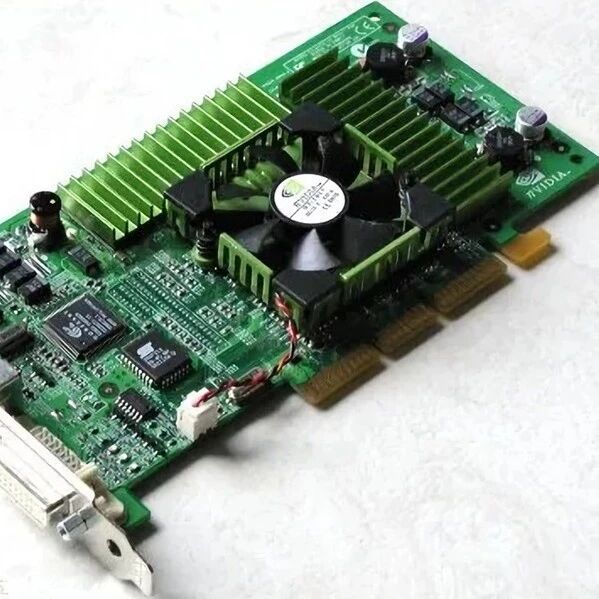
Core Insights - GeForce 3, released in February 2001, marked a pivotal moment in GPU history as the first truly programmable GPU supporting DirectX 8.0 pixel and vertex shaders, allowing graphics programmers to write programs that run on the GPU [4][11] - Prior to GeForce 3, most GPUs were fixed-function accelerators, requiring the CPU to handle all special graphics effects, which limited the capabilities of early graphics processing [3][4] - GeForce 3's architecture included a "light-speed memory architecture" that significantly improved effective memory bandwidth, providing advantages at higher resolutions despite similar rasterization performance to its predecessor, GeForce 2 Pro [6][8] Product Evolution - The introduction of GeForce 3 Ti500 in 2001 addressed some performance shortcomings and established the "Ti" suffix, which continues to be used in NVIDIA's graphics cards today [7] - The original Xbox, released in late 2001, solidified GeForce 3's role as a foundational technology for future gaming consoles, showcasing NVIDIA's contributions beyond just graphics to include audio hardware and memory controllers [8] - Although GeForce 3 was not an immediate commercial success, it laid the groundwork for the more popular GeForce 4 series, which enhanced Direct3D support and introduced new features like 3D textures and improved shader capabilities [9][10] Long-term Impact - The evolution from GeForce 3 to the GeForce 8 series, which introduced the Tesla microarchitecture and unified shader design, reflects a significant shift towards fully programmable GPUs, enabling broader applications beyond gaming [10][11] - The rise of general-purpose GPU (GPGPU) computing, initially used for scientific calculations and later for cryptography and AI, can be traced back to the programmability established by GeForce 3 [10][11] - GeForce 3's legacy is evident in the current dominance of NVIDIA in the AI data center market, demonstrating how early innovations in gaming graphics have had far-reaching implications across various industries [11]


开年连获三个人工智能IPO,对话启明创投周志峰:遵循幂律法则,坚定布局长雪坡、大赛道里的科技标的
IPO早知道· 2026-02-11 03:12
Core Viewpoint - The article emphasizes that IPOs are not the end but a starting point for companies, serving as a gathering place for resources and strength to face greater challenges ahead [4][8]. Group 1: Recent IPOs and Market Context - In the first 40 days of 2026, five AI-related hard tech companies completed their IPOs through the Hong Kong Stock Exchange's "Special Line for Science and Technology Enterprises" [3]. - Qiming Venture Partners, a prominent investor in the AI sector, has invested in more than half of these IPO projects, highlighting its role in supporting these companies from early stages [3][5]. - The success of these IPOs is attributed to a combination of favorable policies, market conditions, and the growing interest in AI technology [5][6]. Group 2: Investment Philosophy and Strategy - Qiming Venture Partners adheres to the Power Law principle in venture capital, believing that a few high-quality projects can generate significant returns, which are essential for the fund's overall value [7]. - The firm focuses on investing in core sectors of the AI ecosystem, such as cloud GPUs, large models, and AI inference chips, which are characterized by substantial market demand and technological depth [7]. - The investment strategy includes early intervention and comprehensive support for companies, from technology development to commercialization and IPO [6][7]. Group 3: Future Outlook and Challenges - The article suggests that companies should focus on their core value creation capabilities to achieve sustainable growth and maintain a reasonable market valuation post-IPO [8]. - The IPO is viewed as a milestone rather than a celebration, with the real challenge being the journey towards long-term success and innovation after going public [4][8]. - Historical examples, such as NVIDIA's post-IPO innovations, are cited to illustrate the potential for companies to leverage IPOs for further growth and market leadership [9].