Google Drive

Search documents
X @Tesla Owners Silicon Valley
Tesla Owners Silicon Valley· 2026-03-21 11:04
RT Tesla Owners Silicon Valley (@teslaownersSV)Grok FeatureYou can now upload from Google Drive in Grok Imagine templates. https://t.co/tm6T6x9xzc ...

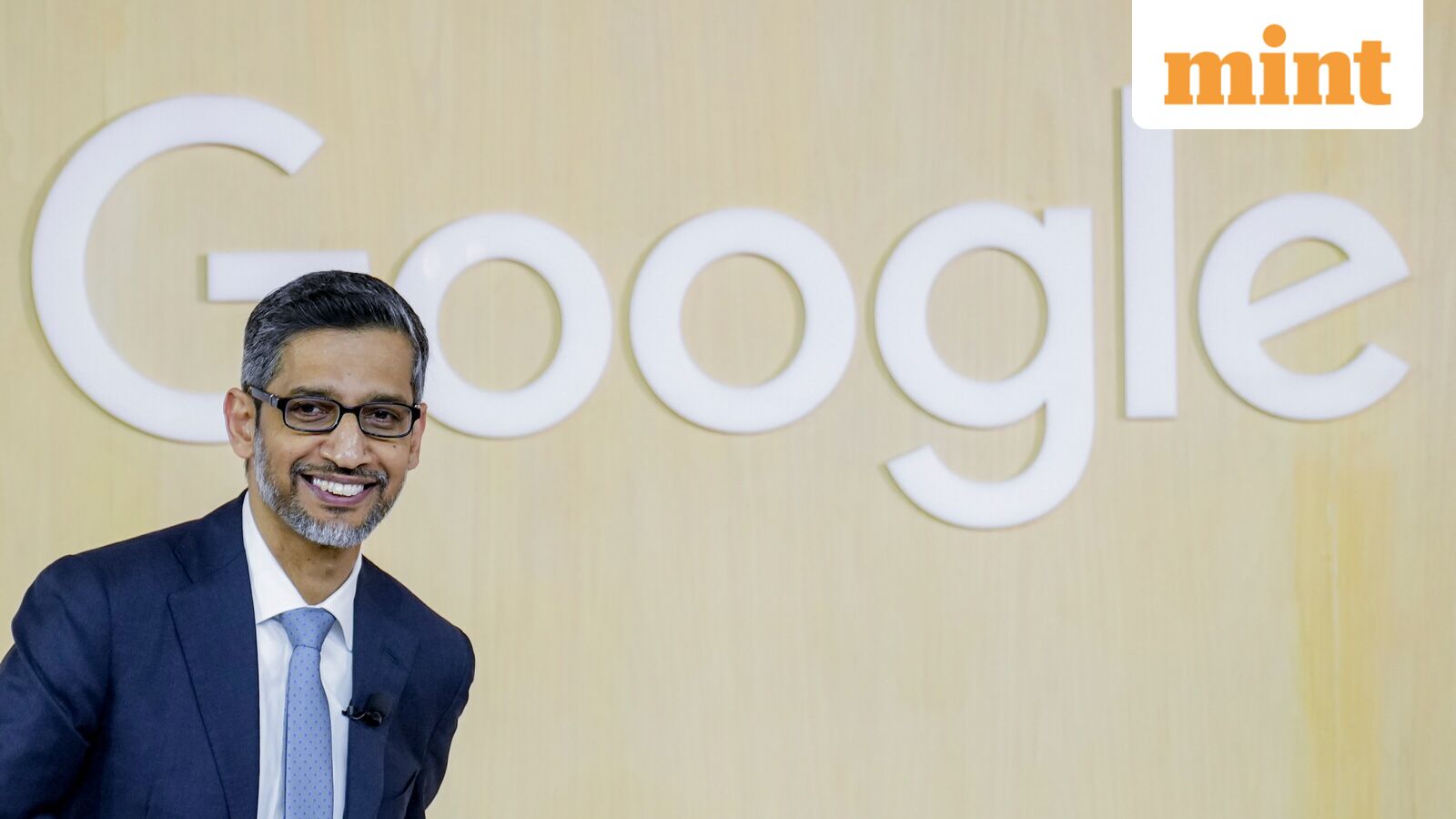
Quote of the Day by Sundar Pichai: 'Wear your failure as a badge of honor'
MINT· 2026-03-15 09:58
Core Insights - Sundar Pichai advocates for a corporate culture that embraces failure as a necessary component of innovation, challenging the traditional notion of perfection in the workplace [1][2][5] - Pichai's leadership philosophy emphasizes that a sanitized record often indicates stagnation, and that organizations should normalize the friction inherent in discovery [3][4][6] Leadership Philosophy - Pichai's directive to "wear your failure as a badge of honor" signifies a shift from defensive management to offensive innovation, fostering psychological safety within teams [2][5][22] - This approach encourages professionals to decouple their identity from project outcomes, allowing for objective analysis of failures without defensive bias [12][22] Organizational Culture - Companies that penalize risk-taking create a culture of mediocrity, while Pichai's doctrine promotes a mindset where encountering failures is seen as a sign of ambition [6][16] - The concept of "intelligent failure" is crucial, where teams are encouraged to test bold hypotheses and share findings from failures across departments [13][22] Historical Context - Pichai's journey from Chennai to CEO of Alphabet illustrates the importance of navigating high-stakes environments and embracing the potential for failure [8][11] - His successful pitch for Google Chrome, despite initial skepticism, exemplifies the value of treating setbacks as navigational markers rather than existential threats [9][10][21] Practical Applications - Organizations should institutionalize frameworks for intelligent failure, allowing for controlled testing and sharing of insights from failures [13][22] - Continuous iteration and the release of minimum viable products are recommended to accelerate development cycles and embrace market feedback [15] Industry Implications - Pichai's philosophy is particularly relevant in the fast-paced artificial intelligence sector, where rapid deployment and iteration are essential for progress [16][23] - The treatment of public stumbles as calibration metrics rather than failures enables sustained momentum in a competitive technological landscape [17][24]


软件巨头被恐慌抛售,SaaS的黄昏来了?
投中网· 2026-02-27 08:19
Core Viewpoint - The software industry is undergoing a significant transformation driven by AI technologies, which are reshaping the definition and functionality of SaaS products, leading to a potential decline in traditional software value and pricing [6][12][21]. Group 1: Impact of AI on Software Development - OpenClaw and Anthropic's Claude 3.5 have triggered a panic sell-off in the software and SaaS sectors, with OpenClaw allowing software development to bypass traditional coding processes, resulting in a rapid increase in user engagement [6][9]. - A report by Citrini Research predicts that by 2027, the development of complex software will require significantly fewer resources, with costs potentially dropping by 85% within 18 months due to AI advancements [9][21]. - The software ETF IGV saw a nearly 4.8% decline, with major companies like Applovin and CrowdStrike experiencing drops exceeding 9% [9][10]. Group 2: Transformation of SaaS Business Models - The traditional SaaS model, which relies on subscription fees, may shift towards a "Results as a Service" (RaaS) model, emphasizing payment based on outcomes rather than tasks [21][25]. - Companies like DingTalk and Feishu are attempting to evolve from mere tools to "Agent operating systems" to adapt to the changing landscape [21][22]. Group 3: Future of Software and AI Integration - The integration of AI into workflows is expected to redefine software's role, with traditional applications potentially becoming backend capabilities rather than standalone products [17][18]. - The emergence of AI-driven development models, where AI autonomously generates code, is expected to drastically reduce production costs and timelines [18][19]. - Companies must embrace AI to enhance product experiences, moving from providing software to offering API and AI-native experiences [24][25]. Group 4: Strategic Recommendations for SaaS Companies - SaaS companies need to develop clear and stable APIs to remain competitive, as users will gravitate towards services that can be easily integrated with AI [24]. - A proactive strategy involves embedding AI deeply into products to create unique user experiences, such as integrating AI sales coaches into CRM systems [24][25]. - Ultimately, SaaS companies should aim to become the AI entry point in their respective verticals, evolving from software providers to comprehensive workflow operating systems [25].

I Played with Clawdbot all Weekend - it's insane.
Matthew Berman· 2026-01-26 00:19
This is Claudebot, the ultimate personal AI assistant that is open-source, runs locally, and can basically do everything. It is what Siri should have been. I'm going to break down everything you need to know about it. I'm going to show you how to use it. And by the end of this video, you are also going to be beyond impressed with Claudebot. It actually helped me researching and preparing for this video. I connected it to my ASA. I connected it to Grock. So, it has all current information, current tweets, cu ...

Google is rolling out a new feature allowing users to change their Gmail address
CNBC· 2025-12-26 08:58
Core Viewpoint - Google has introduced a new feature allowing Gmail users to change their email addresses while retaining all data and services, addressing a long-standing user request [1][4]. Group 1: Feature Details - Users can replace their existing @gmail.com address with a new one, and the original address will remain as an alias, ensuring emails sent to the old address still arrive in the inbox [4]. - The feature is gradually rolling out, with initial indications suggesting it may first be available in India or Hindi-speaking markets [2]. - Existing data, including photos, messages, and emails, will remain unchanged after the address update [5]. Group 2: Limitations and Conditions - Users who change their Gmail address will not be able to create another new Gmail address for the next 12 months and cannot delete the newly chosen address [5]. - The English-language support page still states that @gmail.com addresses "usually cannot be changed," indicating a potential discrepancy in communication [3]. - The change was first noted in user forums and tech communities, with no formal announcement from Google [6].

Google Rolling Out Gmail Address Change Feature: Here Is How It Works - Citigroup (NYSE:C), Alphabet (NASDAQ:GOOG)
Benzinga· 2025-12-26 05:15
Group 1 - Google has begun allowing users to change their @gmail.com addresses, marking a significant change in its email service [1] - The feature is currently being rolled out primarily in India, as indicated by the support page appearing in Hindi [2] - Users can replace their existing @gmail.com address with a new one, while retaining access to all account data and services [3] Group 2 - The old Gmail address can be reused at any time, but the new address cannot be used for another Google account for 12 months [4] - Analysts remain optimistic about Alphabet's stock, with Citigroup maintaining a Buy rating and a target price of $350, while JPMorgan has an Overweight rating with a $385 target [5] - Alphabet has a market capitalization of $3.8 trillion, with a 52-week trading range of $142.66 to $328.67 [5] Group 3 - GOOG stock has increased by 60.16% over the past 12 months, indicating strong upward momentum [6] - The stock is currently trading at approximately 93% of its 52-week range, suggesting it is near its highs and well-positioned for growth [6] - Benzinga's Edge Stock Rankings show strong momentum in the 92nd percentile and a Quality score of 93.23 for GOOG, indicating a positive price trend [6]

微软CEO纳德拉亲自抓AI产品:每周开会、反复问进展、施压负责人
Sou Hu Cai Jing· 2025-12-22 15:25
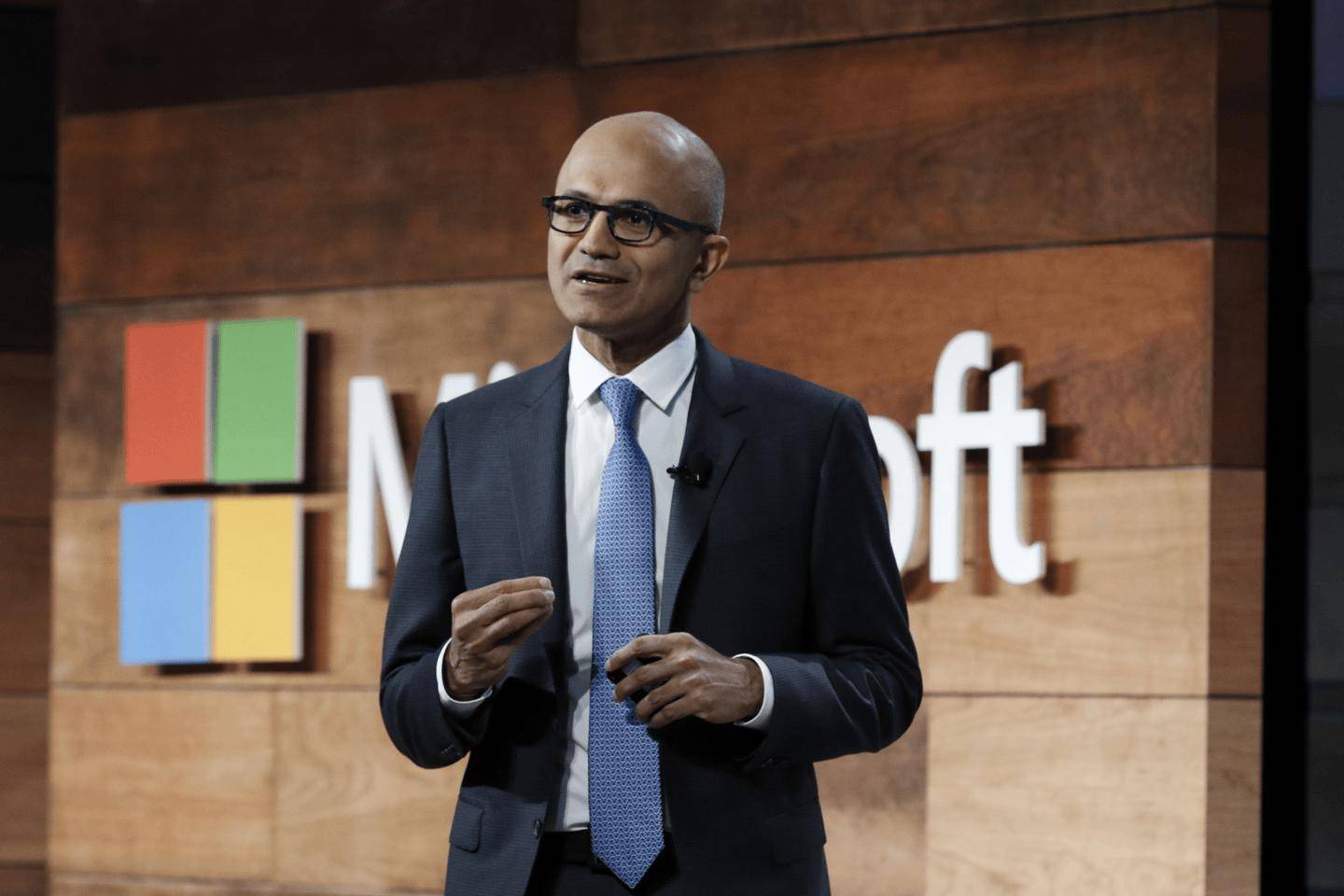
Core Insights - Microsoft CEO Satya Nadella has been actively engaging with a core team of about 100 technical personnel in a Teams channel, expressing dissatisfaction whenever AI product performance is deemed unsatisfactory [1][3] - Nadella holds weekly meetings with these technical staff to inquire about project progress and issue specific adjustment directives, such as integrating different teams' work during the post-training phase of AI models [1] - Recently, Nadella criticized Microsoft's Copilot functionality in comparison to Google's Gemini, stating that Microsoft's integration with Gmail and Outlook often fails to work properly and lacks intelligence [3] Group 1 - Nadella has become the most influential product leader within Microsoft, having shifted some management responsibilities to focus more on AI product development [3] - The pressure on tech CEOs is increasing due to fierce market competition and concerns that AI product revenues may not cover the costs of investment [3] - Nadella emphasizes that this is a critical phase for the company's success or failure in the AI sector [3] Group 2 - Nadella has intensified his involvement in AI talent recruitment, personally reaching out to candidates and approving competitive compensation packages to attract top researchers from organizations like OpenAI and Google DeepMind [3]

X @Elon Musk
Elon Musk· 2025-12-19 06:39
Product Updates - Grok Business now supports Google Drive, Slack, Notion integration within the xAI API Console [1]
Warren Buffett's Biggest Artificial Intelligence Bets in 2026: 23% of Berkshire Hathaway's $311 Billion Stock Portfolio Is in These 2 AI Stocks
The Motley Fool· 2025-12-13 10:30
Core Insights - Berkshire Hathaway, led by Warren Buffett, has transitioned from being tech-adverse to becoming a significant institutional investor in technology stocks, particularly in AI-related companies like Apple and Alphabet [1][2] Group 1: Apple - Apple has not effectively leveraged its resources to establish AI leadership, despite being a major tech company [3] - The rollout of Apple Intelligence has been perceived as haphazard, limited to newer products and enhancing select apps, running mostly in the background [5][6] - The company has not developed a standout AI software, including its digital assistant Siri, which is expected to receive an AI upgrade [6][8] - Corporate culture may contribute to Apple's AI lag, as it prefers in-house development and selective partnerships, aiming for a smooth and stable iOS ecosystem [9][10] Group 2: Alphabet - Alphabet has fully embraced AI and aims to be a leader in the technology, with its deep-learning efforts dating back to the Google Brain project in 2011 [11] - AI is integrated into many of Alphabet's products, enhancing user experience in search functions and Google Docs [13][14] - The company has developed specialized AI hardware, such as tensor processing units (TPUs), and offers these as a service via Google Cloud [16] - Alphabet's Google Cloud unit saw a 34% year-over-year revenue increase to over $15 billion in Q3, driven by strong demand for AI tools and services [17][18]


Here's Why Alphabet Is the Best-Performing "Magnificent Seven" Stock in 2025 (and Why It Has Room to Run in 2026)
The Motley Fool· 2025-12-07 22:00
Core Viewpoint - Alphabet has transformed from a market underperformer to a leading player, now valued at nearly $4 trillion, demonstrating significant growth potential and market recognition in the AI sector [1][2][18] Group 1: Stock Performance - Alphabet's stock has increased by 67% year to date, more than doubling from its 52-week low, and has surpassed Microsoft to become the third-most valuable company globally [2][18] - The company was previously undervalued, trading at a discount to the S&P 500, despite strong fundamentals such as substantial free cash flow and high-margin growth [5][11] Group 2: Market Perception and Strategy - Wall Street initially mispriced Alphabet, viewing it as an AI loser, but the company has successfully integrated AI into its services, particularly Google Search, through its Gemini model [6][10] - The integration of AI features has led to continued growth in Google Search, countering fears of losing market share to large language models [11][14] Group 3: Business Diversification and Revenue Streams - Alphabet's diversified business model includes Google Search, Google Cloud, YouTube, and other services, with Google Search still accounting for over half of its revenue [8][12] - The company is exploring new revenue streams, such as selling its Tensor Processing Unit (TPU) chips, which are recognized as a leading solution for AI model training [13][14] Group 4: Future Outlook - Alphabet's valuation remains reasonable at 30 times forward earnings, indicating potential for further growth in 2026 [18] - The recent positive market response is attributed to advancements in AI and strategic partnerships, positioning Alphabet favorably against competitors [16][19]