Helios机架系统

Search documents
黄仁勋新年首场采访,谈了做CEO的秘诀
第一财经· 2026-01-07 10:47
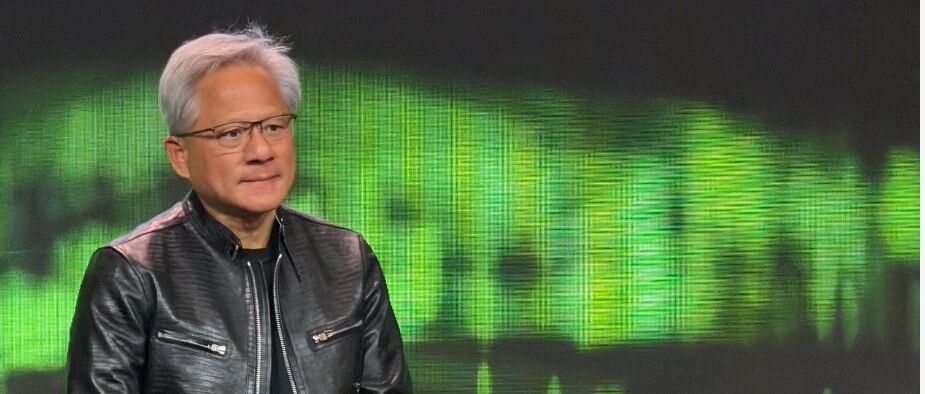
Core Insights - The article discusses the increasing demand for computing power in the AI sector, with predictions that global computing capacity needs to increase by 100 times in the coming years [3][4] - NVIDIA's CEO Jensen Huang emphasizes the necessity for significant advancements in chip performance and energy efficiency to meet this demand, indicating a shift from traditional semiconductor improvements to a more holistic approach involving entire computing systems [4][8] Group 1: AI Demand and Chip Performance - AMD and NVIDIA executives highlight the exponential growth in model sizes and inference outputs, with NVIDIA's chips achieving 10 times the throughput of previous generations [3][4] - Huang mentions that the performance improvements are becoming increasingly difficult to achieve solely through chip manufacturing processes, necessitating a focus on system-level optimizations [4][8] - The introduction of new architectures like Blackwell and Rubin aims to enhance throughput while reducing costs, with Huang stating that each generation should ideally see a 10-fold increase in throughput and a 10-fold decrease in costs [6][8] Group 2: Energy Efficiency and System Design - Huang points out that energy efficiency is critical for supporting AI development, with a need for sustainable energy sources to power the growing demand [6][7] - The concept of a new "Moore's Law" is introduced, where improved energy efficiency leads to higher revenue through increased token generation without additional power consumption [7][8] - NVIDIA is focusing on collaborative designs that encompass the entire data center, including CPUs, GPUs, and storage systems, to ensure scalability and efficiency [9][10] Group 3: Storage and Ecosystem Investments - Huang discusses the revolutionary changes needed in storage systems to accommodate AI workloads, indicating that NVIDIA may become a leading storage company through partnerships rather than direct manufacturing [11][14] - The company is actively investing in its supply chain, including memory suppliers and ecosystem partners, to ensure a robust infrastructure for AI applications [14][15] - NVIDIA's strategy includes investing in both foundational technologies and emerging startups to enhance its ecosystem and maintain a competitive edge [14][15] Group 4: AI Applications and Future Outlook - The article highlights NVIDIA's expansion into various sectors, including autonomous driving and robotics, with expectations for significant advancements in these areas within the next few years [18][19] - Huang predicts that robots will achieve human-like capabilities this year, addressing labor shortages and driving economic growth through increased automation [20] - The potential for AI to transform gaming is also discussed, with expectations for more realistic character interactions and enhanced gaming experiences [19][20]


苏姿丰对话李飞飞:少量图片生成一个世界,是AI下一章的开始
YOUNG财经 漾财经· 2026-01-06 10:45
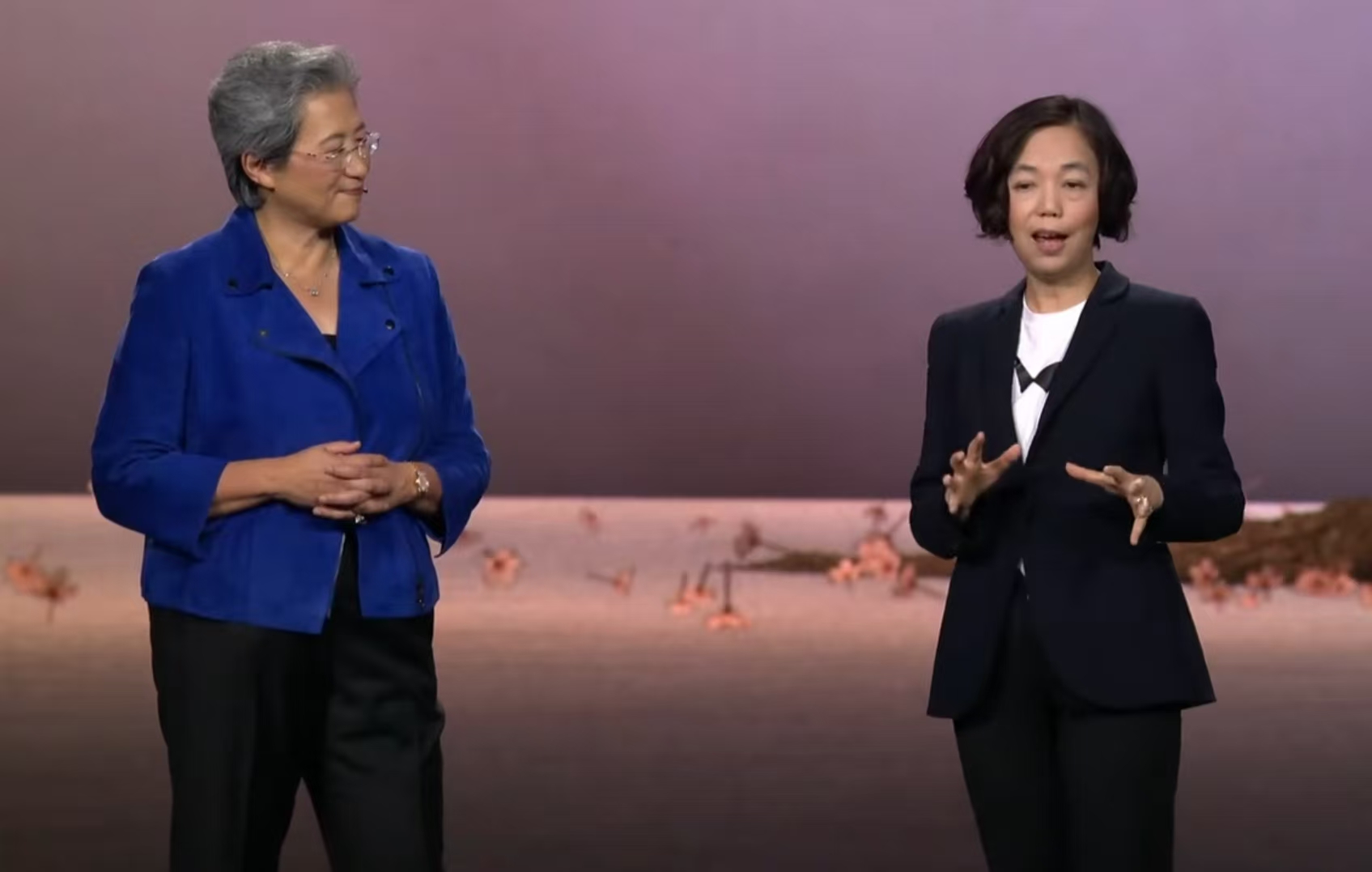
Core Insights - The dialogue between AMD CEO Lisa Su and Stanford professor Fei-Fei Li at CES highlighted the transformative potential of AI in creating immersive 3D worlds from minimal input images, marking a significant shift in how AI interacts with the physical world [1][4][5] - The demand for AI computational power is rapidly increasing, with active AI users growing from 1 million to 1 billion since the launch of ChatGPT, and projections suggest this could reach 5 billion by 2030 [8] Group 1: AI and Spatial Intelligence - Fei-Fei Li emphasized that spatial intelligence allows for a more interactive experience with the world, enabling creators to visualize their ideas before physical construction, thus enhancing safety and efficiency in various fields like robotics and architecture [4][5] - The ability of AI to generate detailed 3D environments from a few images can drastically reduce project timelines from months to minutes, showcasing the potential applications in gaming and simulation [4][5] Group 2: Computational Demand and Innovations - The conversation underscored the immense computational requirements for spatial intelligence, necessitating significant advancements in processing power to maintain real-time interactions and coherent experiences [5][6] - AMD's new Helios rack system boasts an AI computing capability of 2.9 exaflops and is designed to scale with advanced components, while the next-generation MI455 GPU is expected to enhance AI performance by tenfold compared to its predecessor [10][11] - NVIDIA's new Rubin GPU demonstrates substantial performance improvements, with inference and training capabilities reaching 50 PFLOPS and 35 PFLOPS respectively, significantly outperforming previous models [9]


苏姿丰对话李飞飞:少量图片生成一个世界,是AI下一章的开始
Di Yi Cai Jing· 2026-01-06 07:58
Core Insights - The competition between AI chip manufacturers, particularly AMD and NVIDIA, is intensifying as they showcase their advancements in AI computing capabilities at CES [1][7]. Group 1: AI Computing Demand - The active user base for AI has surged from 1 million to 1 billion since the launch of ChatGPT, with projections estimating 5 billion users by 2030, necessitating a 100-fold increase in global computing power in the coming years [6]. - Greg Brockman emphasized the critical need for more computational power, highlighting the balance of resources on GPUs as essential for AI development [5]. Group 2: Space Intelligence - Li Fei-Fei discussed the transformative potential of spatial intelligence, enabling creators to visualize their ideas in a virtual environment before physical construction, enhancing safety and efficiency [3]. - The computational demands of spatial intelligence are significant, requiring vast memory and parallel processing capabilities to ensure real-time responsiveness [3]. Group 3: AMD's Technological Advancements - AMD introduced the Helios rack system, boasting 2.9 exaflops of AI computing power and featuring advanced components like the Instinct MI455X accelerator and EPYC Venice CPU [7][8]. - The next-generation MI455 GPU is set to achieve a 10-fold performance increase over its predecessor, with plans for the MI500 series to enhance AI performance by 1000 times by 2027 [8]. - AMD's Ryzen AI 400 series processors, designed for AI PCs, will deliver 60 NPU TOPS of computing power, with initial systems expected to ship in January [9].