
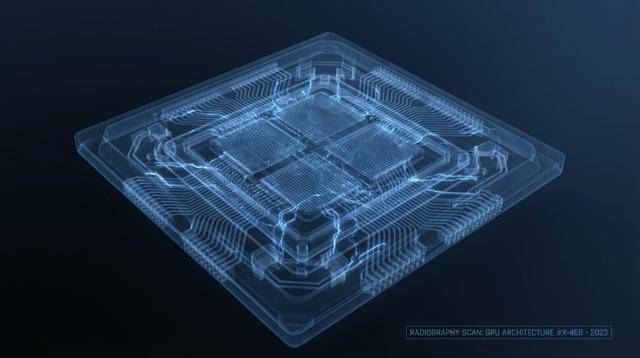
Rubin芯片架构

Search documents
英伟达今年不推GPU 30年来首见
Jing Ji Ri Bao· 2026-02-07 23:07
Core Insights - NVIDIA will not release new gaming GPUs this year due to a global shortage of storage chips caused by the AI boom, marking the first time in 30 years that the company has skipped a new GPU launch [1][2] - The planned upgrade for the GeForce RTX50 series, codenamed "Kicker," has been postponed indefinitely, with no new timeline provided for its release [1] - The delay in the Kicker launch will also push back the release of the next-generation gaming GPU, potentially named the RTX60 series, which was originally set to begin production by the end of 2027 [1] Industry Impact - The shortage of storage chips has led to increased prices and has forced NVIDIA to prioritize the supply of these chips for AI products over gaming GPUs [1] - The gaming GPU market has already seen significant price increases, with flagship models like the GeForce RTX 5080 and RTX 5090 experiencing substantial price hikes since Q4 of last year [2] - Major graphics card manufacturers, including ASUS, MSI, and Gigabyte, are on alert due to ongoing supply constraints and price surges in the gaming GPU market [2] Supply Chain Dynamics - Both gaming and AI chips utilize similar raw materials sourced from major suppliers such as Samsung, SK Hynix, and Micron, despite differences in the types of storage chips used [2] - NVIDIA's spokesperson confirmed strong demand for GeForce RTX GPUs but acknowledged the limitations in storage supply, emphasizing ongoing collaboration with suppliers to secure necessary components [2]

英伟达20亿美元投资CoreWeave助其扩建5GW AI计算中心
Sou Hu Cai Jing· 2026-01-27 13:51
Core Viewpoint - Nvidia announced a $2 billion investment in CoreWeave to accelerate the company's plan to add over 5GW of AI computing capacity by 2030 [2] Investment Details - Nvidia purchased Class A shares of CoreWeave at $87.20 per share and plans to jointly build "AI factories" using Nvidia products [2] - CoreWeave will fully integrate Nvidia's products, including the new Rubin chip architecture, Bluefield storage systems, and the new CPU product line Vera [2] Financial Overview - CoreWeave's total debt is projected to reach $18.81 billion by September 2025, with third-quarter revenue reported at $1.36 billion [2][4] - The company has faced scrutiny for its high-debt model, which involves using GPUs as collateral to raise funds for operations [4] Company Background - CoreWeave transitioned from a cryptocurrency mining company to an AI training and inference data center service provider [3] - Since its IPO in March of last year, CoreWeave has made several acquisitions to enhance its technology stack, including Weights & Biases and OpenPipe [3] - Current clients include major cloud service providers such as OpenAI, Meta, and Microsoft [3] Strategic Collaboration - Nvidia will assist CoreWeave in acquiring data center land and power, and collaborate to integrate AI software and architecture into Nvidia's reference architecture for sales to cloud and enterprise customers [3]

黄仁勋新年首场采访,谈了做CEO的秘诀
第一财经· 2026-01-07 10:47
Core Insights - The article discusses the increasing demand for computing power in the AI sector, with predictions that global computing capacity needs to increase by 100 times in the coming years [3][4] - NVIDIA's CEO Jensen Huang emphasizes the necessity for significant advancements in chip performance and energy efficiency to meet this demand, indicating a shift from traditional semiconductor improvements to a more holistic approach involving entire computing systems [4][8] Group 1: AI Demand and Chip Performance - AMD and NVIDIA executives highlight the exponential growth in model sizes and inference outputs, with NVIDIA's chips achieving 10 times the throughput of previous generations [3][4] - Huang mentions that the performance improvements are becoming increasingly difficult to achieve solely through chip manufacturing processes, necessitating a focus on system-level optimizations [4][8] - The introduction of new architectures like Blackwell and Rubin aims to enhance throughput while reducing costs, with Huang stating that each generation should ideally see a 10-fold increase in throughput and a 10-fold decrease in costs [6][8] Group 2: Energy Efficiency and System Design - Huang points out that energy efficiency is critical for supporting AI development, with a need for sustainable energy sources to power the growing demand [6][7] - The concept of a new "Moore's Law" is introduced, where improved energy efficiency leads to higher revenue through increased token generation without additional power consumption [7][8] - NVIDIA is focusing on collaborative designs that encompass the entire data center, including CPUs, GPUs, and storage systems, to ensure scalability and efficiency [9][10] Group 3: Storage and Ecosystem Investments - Huang discusses the revolutionary changes needed in storage systems to accommodate AI workloads, indicating that NVIDIA may become a leading storage company through partnerships rather than direct manufacturing [11][14] - The company is actively investing in its supply chain, including memory suppliers and ecosystem partners, to ensure a robust infrastructure for AI applications [14][15] - NVIDIA's strategy includes investing in both foundational technologies and emerging startups to enhance its ecosystem and maintain a competitive edge [14][15] Group 4: AI Applications and Future Outlook - The article highlights NVIDIA's expansion into various sectors, including autonomous driving and robotics, with expectations for significant advancements in these areas within the next few years [18][19] - Huang predicts that robots will achieve human-like capabilities this year, addressing labor shortages and driving economic growth through increased automation [20] - The potential for AI to transform gaming is also discussed, with expectations for more realistic character interactions and enhanced gaming experiences [19][20]
英伟达Vera Rubin芯片首秀,AI算力爆炸背后的产业链分析
DT新材料· 2025-11-02 14:42
Core Insights - The article discusses the significant advancements in AI chip architecture by NVIDIA, particularly the introduction of the Rubin architecture, which is expected to revolutionize AI computing power and thermal management solutions [4][5][7]. Group 1: NVIDIA's Rubin Architecture - NVIDIA's next-generation AI chip architecture, Rubin, is set to deliver a performance increase of 3.3 times compared to the current GB300 model, enabling the training of trillion-parameter models in just two weeks instead of three months [5][8]. - The Rubin architecture will feature CPU-GPU heterogeneous integration and utilize HBM4 memory along with the sixth generation of NVLink, targeting high-end AI infrastructure [5][8]. - The expected market share for Rubin in 2026 is projected to reach 20%-30%, positioning it as a leader in the trillion-parameter model training market [5]. Group 2: Liquid Cooling Technology - The Rubin platform will push the power of a single rack to 600kW, making traditional air cooling inadequate and necessitating the widespread adoption of liquid cooling solutions [7][10]. - The liquid cooling system market, driven by NVIDIA's ecosystem, is estimated to reach 200 billion RMB to meet the cooling demands of 20 million GPUs [10]. Group 3: Key Component Suppliers - Siquan New Materials has upgraded from a cold plate manufacturer to a core materials supplier, with expected revenue from related businesses to exceed 1 billion RMB by 2025 [11]. - Dow Chemical is a key partner for NVIDIA's GB300 liquid metal interface technology, with a monthly production capacity of 50 tons, covering 60% of global demand [12]. - 3M's phase change material (PCM) series plays a crucial role in cooling GB300 memory modules, achieving a temperature reduction of 12°C compared to traditional thermal pads [13]. Group 4: Industry Players and Market Dynamics - Inspur Information has captured over 30% of the market share in liquid-cooled servers, showcasing strong competitiveness in the field [19]. - Industrial Fulian, as the exclusive supplier of GB200 liquid-cooled cabinets, is projected to contribute approximately 12 billion USD in revenue by 2025 [20]. - Vertiv has developed a hybrid cooling system that combines liquid cooling and immersion cooling, capable of cooling data centers with IT power up to 200kW [21].

富国银行看好英伟达(NVDA.US)H20芯片需求支撑Q2业绩 上调目标价至220美元
智通财经网· 2025-08-11 13:42
Core Viewpoint - Wells Fargo raised Nvidia's target price from $185 to $220, maintaining an "overweight" rating due to strong demand data and positive reports regarding the restoration of H20 chip sales licenses to China [1] Group 1: Earnings Expectations - Wells Fargo increased its Q2 earnings forecast for Nvidia to $48.2 billion (EPS of $1.06), surpassing Nvidia's previous guidance of $45 billion (±2%) and the bank's earlier estimate of $45.8 billion (EPS of $1.00) [1] - The revision reflects a significant increase in data center revenue expectations, raised from $40.7 billion to $43.1 billion, exceeding both Wells Fargo's prior forecast and Wall Street's consensus of $41.1 billion [1] Group 2: Market Insights - The potential breakthrough in the Chinese market is seen as an additional support for Nvidia's growth amid the expanding demand for AI computing power [1] - Goldman Sachs analyst James Schneider believes Nvidia is likely to deliver "better-than-expected results and raise guidance," raising the target price from $185 to $200 while maintaining a "buy" rating [1] Group 3: Key Focus Areas - Investors should focus on performance guidance, particularly the progress of the Blackwell chip production in the second half of the year and the development of the next-generation Rubin chip architecture planned for 2026 [2] - The timeline for the H20 chip, which complies with U.S. export control requirements, is crucial for assessing Nvidia's resilience in the Chinese market [2] - The trend in gross margins is another key area of interest, especially regarding the company's ability to release profit margins by managing H20 chip inventory [2]


英伟达(NVDA.US)目标价冲200美元!高盛押注超预期财报,三大谜题待解
智通财经网· 2025-08-08 02:52
Core Viewpoint - Goldman Sachs raised Nvidia's target price from $185 to $200 while maintaining a "buy" rating, indicating expectations for the company to deliver "better-than-expected results and guidance" despite high market expectations [1] Group 1: Key Focus Areas for Earnings Call - The first focus is on the production progress of the Blackwell chip in the second half of the year and the development of the next-generation Rubin chip architecture planned for 2026 [2] - The second focus is on the timeline for the H20 chip aimed at the Chinese market, which complies with U.S. export control requirements, as its launch progress and expected revenue contribution will be crucial indicators of Nvidia's resilience in China [2] - The third focus is on gross margin trends, particularly whether the company can release profit space by digesting H20 chip inventory [2] Group 2: Market Expectations - Analysts expect Nvidia to achieve $45.7 billion in revenue and earnings per share of $1, reflecting high market anticipation for the upcoming earnings report [2]
【兴证计算机】从英伟达GTC及大厂开支看算力产业机会
兴业计算机团队· 2025-03-23 10:51
Group 1 - The article emphasizes the upcoming earnings report season and suggests focusing on leading companies with strong earnings performance [2][4] - It highlights the importance of Q1 earnings expectations as a significant factor influencing stock prices, recommending the identification of core sectors and leading companies with potential earnings surprises [2][3] - The article notes a potential decline in market risk appetite due to earnings disclosures, suggesting that investors may consider increasing positions in high-quality leading stocks during market dips [2][3] Group 2 - Major companies are significantly increasing their capital expenditures, with Tencent planning a capital expenditure of 36.578 billion yuan for Q4 2024, a 386% year-on-year increase, and China Mobile announcing a 37.3 billion yuan investment in computing power for 2025 [2][3] - The article discusses the high growth prospects of the computing power industry, particularly following Nvidia's announcement of a new chip architecture at the GTC conference, which is expected to drive demand for AI model inference [2][3] - It recommends continuous monitoring of developments in the computing power industry and suggests positioning in core leading companies within this sector [2][3]

【兴证计算机】从英伟达GTC及大厂开支看算力产业机会
兴业计算机团队· 2025-03-23 10:51
点击上方"公众号"可订阅哦! 兴业证券计算机小组 蒋佳霖/孙乾/陈鑫/杨本鸿/张旭光/杨海盟/桂杨 本周观点聚焦 1、本周 观 点: 财报密集披露期临近,优选业绩强兑现龙头 2、深度跟 踪 : 从英伟达GTC及大厂开支看算力产业机会 周观点 财报密集披露期临近,优选业绩强兑现龙头 财报密集披露期临近,优选业绩强兑现龙头。 目前已进入 3 月下旬,财报密集披露期临近。当前,市场对 Q1 基本面预期正逐渐成为股价的重要影响因素。建议积极挖 掘 Q1 业绩存在超预期可能的核心赛道及龙头公司,同时观察控费带来的利润端变化,有望成为近期的重要阿尔法来源。此外,在财报披露的影响下,市场风险偏好存 在下降的可能性,可逢低加仓核心的质优龙头。 大厂资本开支高增, AI 算力产业保持高景气。 腾讯最新财报显示,公司 2024Q4 资本开支 365.78 亿元,同比增长 386% , 2025 年计划进一步增加资本开支;中国 移动宣布 2025 年在算力领域投入 373 亿元。本周英伟达在 GTC 大会发布新一代芯片架构 Rubin ,并表示未来 AI 模型推理需求会推动算力保持高增长。算力产业作 为财报端具有强兑现潜力的赛道, ...