
Janumet XR

Search documents
Deutsche Bank Upgrades Merck (MRK) to Buy, Sees “Clear Path” Beyond Keytruda Patent Cliff
Yahoo Finance· 2026-02-20 23:31
Core Viewpoint - Merck & Co., Inc. is seen as undervalued by the market due to concerns over the upcoming patent expiration of Keytruda, but analysts believe there is a clear path for the company to manage this transition and continue to grow [2][3]. Group 1: Analyst Upgrades and Price Target - Deutsche Bank analyst James Shin upgraded Merck from Hold to Buy and raised the price target from $115 to $150, indicating confidence in the company's future despite patent concerns [2]. - The analyst's note suggests that the market is not fully recognizing Merck's potential growth drivers beyond Keytruda [2]. Group 2: Financial Forecasts and Challenges - Merck expects 2026 revenue to be between $65.5 billion and $67.0 billion, which is below the average analyst estimate of $67.6 billion [3]. - The company anticipates a $2.5 billion headwind in 2023 due to generic competition, Medicare price negotiations, and reduced sales of its COVID-19 treatment, Lagevrio [3]. - CEO Rob Davis highlighted that legacy products, particularly Januvia and related treatments, may underperform compared to analyst expectations due to their impending patent expirations [3]. Group 3: Company Overview - Merck operates as a global healthcare company, focusing on prescription medicines, biologic therapies, vaccines, and animal health products, with a significant emphasis on human health treatments [4].

The Trump Market: A Rollercoaster of Tweets, Tariffs, and Unexpected Fusion
Stock Market News· 2025-12-21 18:00
Group 1: Market Volatility and Reactions - The year 2025 has been marked by significant market volatility, heavily influenced by presidential announcements, particularly from Donald Trump, leading to rapid fluctuations in market values [1] - Following the announcement of a 10% universal tariff on all US imports, the S&P 500 dropped over 10%, erasing approximately $5 trillion from global markets [5] - A subsequent 90-day pause on new reciprocal tariffs resulted in a market rebound, with the S&P 500 surging 9.52% [5][6] Group 2: Trump Media & Technology Group (DJT) - Trump Media & Technology Group (DJT) saw its stock surge 13.03% after announcing a merger with TAE Technologies, a nuclear fusion company, indicating a pivot from social media to energy [3] - DJT stock closed at $16.80 before the merger announcement, marking a significant rise, and trading volume reached 99.5 million shares, 1,265% above its three-month average [3] - Despite the recent surge, DJT stock remains down 58% over the past year, highlighting ongoing volatility [3] Group 3: Pharmaceutical Industry Developments - Trump announced new drug pricing deals with nine major pharmaceutical companies, including Merck and Pfizer, aimed at lowering Medicaid drug prices [7] - Merck committed to approximately 70% discounts on diabetes treatments, while Pfizer agreed to significant price cuts and a $70 billion investment in U.S. research [8] - These deals included a three-year exemption from Section 232 tariffs for the pharmaceutical companies, creating a win-win scenario for both the industry and consumers [8] Group 4: Nvidia and Geopolitical Dynamics - The U.S. government approved the export of Nvidia's H200 chips to select Chinese customers, with a 25% revenue cut going to the government, reflecting complex geopolitical dynamics [9][10] - Nvidia's stock saw a positive reaction, closing at $176.29 and rising to $183.40 following the announcement, despite ongoing investor caution regarding China exposure [10] Group 5: Economic Overview - Despite stock market gains of 13% to 20% year-to-date, public sentiment regarding the economy remains low, with 70% of Americans describing it as "poor" [11] - Trump's approval rating on economic performance has dropped to between 31-39%, indicating a disconnect between market performance and public perception [11] - The Federal Open Market Committee has been cutting interest rates to stimulate the economy, reflecting concerns about rising prices and unemployment [12]



默沙东(MRK.US)、施贵宝(BMY.US)等多家药企同意下调美国药价 以换取特朗普政府关税豁免和政策支持
智通财经网· 2025-12-19 23:18
Group 1 - The core point of the news is that several major pharmaceutical companies in the US and Europe have agreed to voluntarily lower drug prices in exchange for tariff exemptions and policy support from the Trump administration, which is reviving the "Most Favored Nation" pricing policy to reduce high prescription drug costs in the US [1][2] - Companies that signed the agreement include Merck (MRK.US), Bristol-Myers Squibb (BMY.US), Amgen (AMGN.US), Gilead Sciences (GILD.US), GlaxoSmithKline (GSK.US), Sanofi (SNY.US), Rogers (ROG.US), Boehringer Ingelheim, and Novartis (NVS.US), committing to increase domestic production and investment in the US over the next three years [1] - Bristol-Myers Squibb's commitment to provide its best-selling anticoagulant drug Eliquis for free to Medicaid patients is highlighted as one of the most significant measures in this price reduction initiative [1] Group 2 - Trump stated that out of 17 major pharmaceutical companies he contacted in July, 14 have agreed to significantly lower drug prices, marking a historic victory for patient affordability in the US [2] - Although the full terms of the agreements have not been disclosed, companies have agreed to various measures to lower drug prices, including selling existing drugs to Medicaid patients at "Most Favored Nation" prices and committing to pricing for future new drugs [2] - Gilead Sciences announced that patients will be able to obtain its hepatitis C treatment drug Epclusa at a discounted price, while Sanofi indicated discounts of nearly 70% on certain drugs in the fields of infection, cardiovascular, and diabetes [2] Group 3 - Merck's CEO expressed support for Trump's policy direction of lowering US drug prices while raising prices in overseas markets to end global free-riding [3] - Amgen announced an expansion of its existing direct sales program, including significant discounts on its migraine prevention drug Aimovig and autoimmune treatment drug Amjevita [3] - The average price of prescription drugs in the US is nearly three times that of overseas markets, with brand-name drug prices exceeding four times, highlighting the US market's importance to pharmaceutical companies, especially European firms [3]

Trump strikes deal with US drugmakers to cut Medicaid medicine costs
The Guardian· 2025-12-19 20:14
Core Insights - Donald Trump and nine major pharmaceutical companies have reached agreements to significantly reduce drug prices for the Medicaid program and cash payers, aiming to align US costs with those in other wealthy nations [1][2] Group 1: Price Reductions and Agreements - Drugmakers will cut prices on most drugs sold to Medicaid, promising "massive savings" on commonly used medicines, although specific figures were not disclosed [2] - The deals include agreements to lower cash-pay prices for select drugs, launch drugs in the US at prices equal to those in other wealthy nations, and increase manufacturing [3] - Merck plans to sell its diabetes drugs at approximately 70% off list prices directly to US consumers, with potential for its experimental cholesterol drug to be offered through direct channels [4] Group 2: Previous and Current Deals - Five companies had previously made agreements with the administration to control prices, while three companies have yet to announce deals [6] - Drugmakers committed to "most-favored-nation" pricing for all new US drug launches across various markets, including Medicare [7] Group 3: Financial Commitments and Investments - Companies pledged to invest over $150 billion in US research and development and manufacturing, with Merck contributing $70 billion of that total [8] - A portion of revenues from foreign sales will be remitted to the US to help offset costs [8] Group 4: Medicaid and Market Impact - Medicaid, which represents about 10% of US drug spending, already benefits from significant price discounts, sometimes exceeding 80% [9] - Pfizer indicated that Medicaid discounts would lead to price and margin compression in the upcoming year [9]



Trump secures agreements with Merck, Amgen, Novartis and others to cut drug prices under Medicaid
MINT· 2025-12-19 20:04
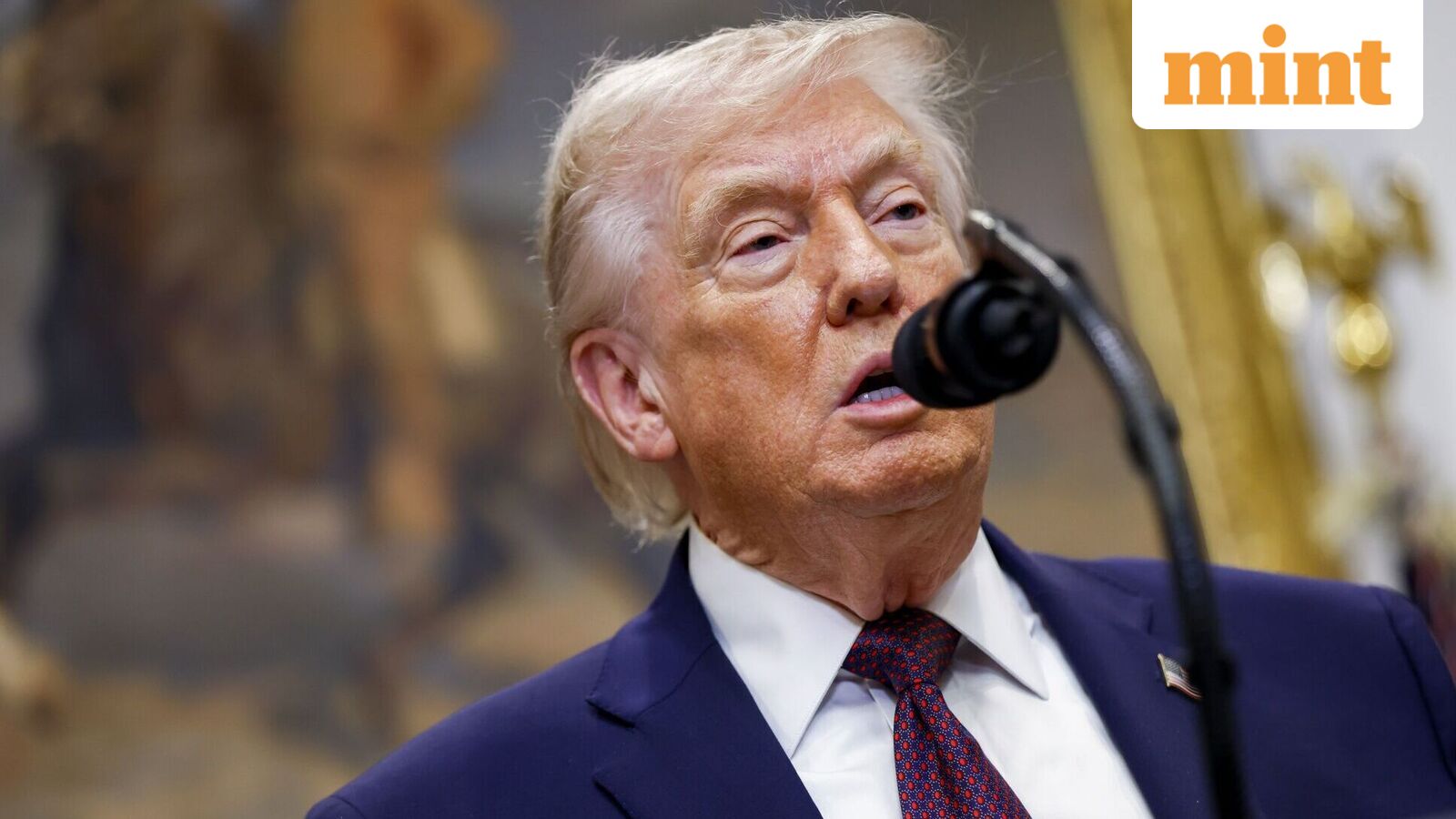
Core Points - US President Donald Trump announced agreements with nine major pharmaceutical companies to reduce drug prices for Medicaid and cash-paying consumers, aiming to align US drug costs with those in other wealthy nations [1][4] - Trump emphasized that the US was previously subsidizing global drug costs and will no longer do so [2] Group 1: Drugmakers Involved - Participating companies include Bristol Myers Squibb, Gilead Sciences, Novartis, Amgen, Boehringer Ingelheim, Sanofi, GSK, Merck, and Roche's US unit Genentech [3] - Additional companies like Regeneron, Johnson & Johnson, and AbbVie are expected to join after the holidays [3] Group 2: Price Reductions and Commitments - Drugmakers will reduce prices on most medicines sold to Medicaid, promising "massive savings" on widely used drugs, although specific figures were not disclosed [4] - The agreements also include commitments to cut cash prices for select medicines and to launch new drugs in the US at prices equal to those in other wealthy countries [5] Group 3: Specific Drug Pricing - Merck plans to sell diabetes drugs Januvia, Janumet, and Janumet XR at discounts of about 70% off list prices [7] - Amgen will price its migraine drug Aimovig and arthritis treatment Amjevita at $299 per month, which is nearly 60% and 80% below current US list prices, respectively [7] Group 4: Investment and Revenue Sharing - Companies pledged to invest over $150 billion in US research, development, and manufacturing, with Merck alone committing $70 billion [8] - A portion of each company's overseas revenue will be remitted to the US to help offset domestic drug costs, and several companies agreed to donate drug ingredients to the US strategic reserve [9] Group 5: Industry Reaction - Five drugmakers, including Pfizer and Eli Lilly, had already struck similar deals with the administration, and AbbVie is expected to announce its agreement soon [10]


九洲药业(603456.SH):控股子公司获得美国ANDA批准文号
Ge Long Hui A P P· 2025-11-27 08:12
Core Viewpoint - The company has received temporary approval from the FDA for its abbreviated new drug application (ANDA) for Sitagliptin Metformin Extended-Release Tablets, indicating progress in its product development and potential market entry in the U.S. [1] Company Summary - The company's subsidiary, Zhejiang Jiuzhou Biopharmaceutical Co., Ltd., submitted the ANDA for Sitagliptin Metformin Extended-Release Tablets to the FDA [1] - The drug is primarily used for treating type 2 diabetes patients who have inadequate blood sugar control with Metformin alone or are receiving combination therapy [1] - The original drug, Janumet XR, was developed by Merck and launched in the U.S. in February 2012, and it is currently under patent protection [1] Market Potential - The U.S. market sales for Sitagliptin Metformin Extended-Release Tablets are projected to be approximately $1.1 billion in 2024 [1] - The company has invested around RMB 14.73 million in the research and development of this product to date [1] Competitive Position - The FDA's approval signifies that the company's product has met safety and efficacy standards comparable to the original drug, enhancing its market competitiveness [1] - The product will only be eligible for sale in the U.S. market after the patent expires and the FDA grants final approval [1]

九洲药业:控股子公司九洲生物获得西格列汀二甲双胍缓释片ANDA批准文号
Xin Lang Cai Jing· 2025-11-27 08:05
Core Viewpoint - Jiuzhou Pharmaceutical's subsidiary, Jiuzhou Biotech, has received temporary approval from the FDA for the ANDA of Sitagliptin Metformin Extended-Release Tablets, which is primarily used for blood sugar control in type 2 diabetes patients [1] Group 1 - The drug is a generic version of Janumet XR, originally developed by Merck [1] - The total R&D investment by Jiuzhou Pharmaceutical in this drug amounts to approximately 14.73 million yuan [1] - The approval of the ANDA will enhance the company's market competitiveness, although the product must wait for patent expiration and final FDA approval to be eligible for sale in the U.S. market [1]