
K2主战坦克

Search documents
单日狂飙22%!军工狂潮席卷全球! 韩华航空航天引领亚洲军工!
美股IPO· 2026-03-03 04:44
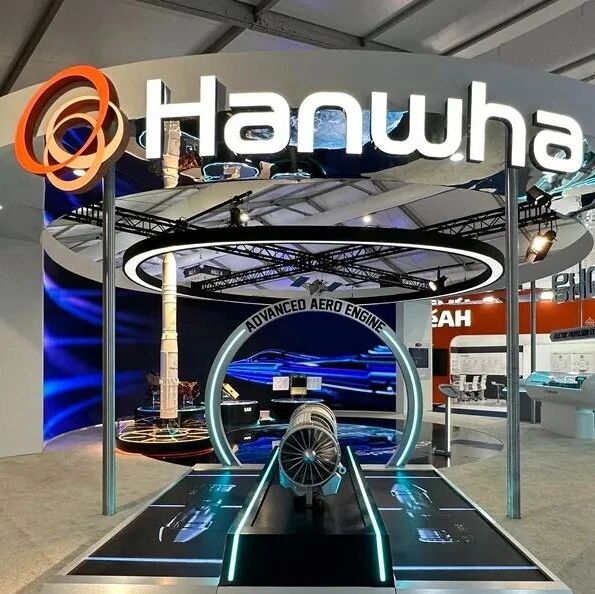
Core Viewpoint - The article highlights a significant surge in South Korean defense and military stocks following the escalation of conflict in the Middle East, driven by investor sentiment towards defense stocks amid geopolitical tensions [1][6]. Group 1: Stock Performance - South Korean defense stocks experienced substantial gains, with Hanwha Aerospace rising by 22%, Korea Aerospace Industries increasing by over 7%, and Lignex1 soaring by 30% [3]. - Other notable increases include Victek and Firstec, both rising over 20%, while Poongsan and Hyundai Rotem saw gains of 14% and over 18%, respectively [3]. - The performance of the South Korean military sector starkly contrasts with the broader Kospi index, which fell over 4% [3]. Group 2: Market Dynamics - The rise in South Korean military stocks is attributed to their relatively lower valuations, accelerated orders from Europe, and the push for domestic military autonomy in Asia [4]. - The Kospi index had previously surged by over 50% in 2026, marking it as one of the most volatile stock markets globally [4]. - The global stock market is witnessing a historical divergence, with Asian markets outperforming the U.S. and developed markets, driven by trends in AI and semiconductor industries [5]. Group 3: Geopolitical Factors - The ongoing military actions in the Middle East, including U.S. strikes against Iran, have prompted a renewed focus on defense spending and military stock investments [6]. - South Korean defense companies are increasingly recognized in the global defense sector, with ambitions to become the fourth-largest defense industry by 2030 [6]. - Orders from European countries have significantly contributed to the bullish trend in South Korean defense stocks since 2025 [6]. Group 4: Global Military Stock Trends - Global defense stocks have generally risen, with notable increases in European and U.S. military companies like Lockheed Martin and Northrop Grumman [7]. - The current military conflict emphasizes the importance of a comprehensive military capability, including intelligence, surveillance, reconnaissance, and advanced weaponry [7]. - The article suggests that the most beneficial sectors within military stocks are those addressing current warfare needs, such as missile systems, electronic warfare, and advanced drones [8].

韩推进下一代主战坦克研发
Ren Min Wang· 2025-07-28 01:22
Core Viewpoint - The development of the K3 main battle tank by South Korea's Hyundai Rotem marks a significant advancement in military technology, focusing on hydrogen power and modern warfare requirements [1][3]. Group 1: Development Stages - The K3 main battle tank's development follows a "progressive innovation" model, divided into three phases: technology verification, vehicle validation, and mass production [1]. - The technology verification phase includes testing of the main gun and hydrogen fuel cell system, while the vehicle validation phase (2026-2028) will involve testing the prototype during joint military exercises with the U.S. [1][2]. - Mass production is expected to begin after 2030, with the first prototypes delivered to the South Korean Army and full-scale production aimed for 2040 [1]. Group 2: Technical Features - The K3 tank will initially use a hybrid power system of hydrogen and diesel, transitioning to a pure hydrogen fuel cell [2]. - It will be equipped with a 130mm smoothbore gun, an automatic loading system, and anti-tank missiles with an 8 km range, all supported by artificial intelligence for networked operations [2]. - The tank's design includes advanced protection systems, modular composite armor, and a 360-degree virtual reality system for battlefield awareness [2]. Group 3: Strategic Implications - The K3 tank is designed to reduce South Korea's reliance on foreign power systems, addressing past delays in the K2 tank's production due to technology transfer restrictions [3]. - It aims to meet the demands of future warfare, serving as an "information node" to enhance joint operational capabilities of the South Korean Army [3]. - The global hydrogen tank market is projected to exceed $20 billion by 2040, positioning the K3 tank to capture a significant share of the defense market [3].