
Knorr

Search documents
McCormick & Company, Incorporated Q1 2026 Earnings Call Summary
Yahoo Finance· 2026-03-31 16:45
Core Insights - The merger creates a leader in flavor-focused categories by combining iconic brands such as Knorr, Hellmann's, and McCormick [1] - The rationale behind the deal is a 'strength plus strength' model, utilizing McCormick's North American retail execution alongside Unilever's infrastructure in high-growth emerging markets [1] - The transaction shifts the portfolio towards 'flavor calories,' aligning with consumer trends in health, wellness, and home cooking, where flavor drives purchasing decisions [1] Operational Synergies - Operational synergy is achieved through a dual-engine Food Service platform, merging McCormick's front-of-house presence with Unilever's back-of-house culinary expertise and operator relationships [1] - The combined entity benefits from a diversified geographic and channel footprint, enhancing durability across different economic cycles and market conditions [1] Financial Performance - McCormick's Q1 2026 performance, marked by organic growth and margin expansion, serves as a foundational proof point for the financial stability of the merged organization [1]


McCormick & Company, Incorporated Q1 Earnings Call Highlights
Yahoo Finance· 2026-03-31 15:20
Core Insights - The article discusses McCormick's strategic combination with Unilever Foods, emphasizing the creation of a "flavor-focused" company that aligns with health and wellness trends and consumer preferences for home cooking [1][3][4] Financial Performance - McCormick reported strong growth in sales, adjusted operating income, and adjusted earnings per share for Q1 fiscal 2026, driven by the acquisition of McCormick de México and organic growth across Consumer and Flavor Solutions [2] - The combined company is projected to have pro forma 2025 net sales of $20 billion and operating margins of 21% [13] Deal Structure - The transaction is structured as a Reverse Morris Trust, with Unilever receiving $15.7 billion in cash and a 65/35 ownership split favoring Unilever [10][11] - The deal implies an enterprise value of approximately $44.8 billion for Unilever Foods and about $21 billion for McCormick, reflecting an EBITDA multiple of roughly 13.8x [11] Growth Strategy - Management plans to pursue multiple growth levers, including expanded distribution, accelerated innovation, premiumization, and a scaled foodservice platform [2] - The combined brand lineup aims to create an "end-to-end flavor proposition," enhancing the reach of brands like McCormick and Knorr [5] Synergies and Cost Management - The combined company expects to realize $600 million in annual run-rate cost synergies by year three, with two-thirds captured by the end of year two [14] - About $100 million will be reinvested in brands, including marketing and innovation support [13] Market Position - The combined business is expected to have approximately $6 billion in pro forma annual sales in foodservice, positioning it among the largest global foodservice players [7] - McCormick holds a leading share in U.S. hot sauce with brands like Cholula and Frank's RedHot, with plans for further expansion in Europe and other regions [6] Leadership and Operations - McCormick's leadership will remain in place, with the company headquartered in Hunt Valley, Maryland, and an international headquarters established in the Netherlands [12] - Transitional service agreements are planned to ensure continuity during the transition [18]
Unilever Has Finally Managed to Shave off Its Food Business
Yahoo Finance· 2026-03-31 13:54
Core Insights - Unilever plans to spin off its food division and merge it with McCormick, creating a combined flavor business valued at $60 billion, with Unilever shareholders retaining majority ownership and receiving $15–16 billion in cash [2][3][4] Group 1: Transaction Details - The food business of Unilever is valued at $30–35 billion, and the merger with McCormick is expected to double the combined value to $60 billion, including some debt [3] - The transaction will utilize a Reverse Morris Trust structure, allowing Unilever to spin off its food division and merge it without incurring corporate tax on the sale, avoiding billions in capital gains tax [4] Group 2: Strategic Importance - Unilever has been divesting its food business over the past few years, aiming for approximately €800 million in cost savings by 2027, as the food segment has been underperforming with only 2.5% growth last year compared to beauty and personal care [5] - The pressure for change intensified in 2022 when activist investor Nelson Peltz acquired a stake in Unilever, leading to the exits of two CEOs as the board sought to address portfolio inefficiencies [6] Group 3: McCormick's Positioning - McCormick is motivated to pursue this merger after failed talks with Kraft Heinz, aiming to transform its brand from being primarily known for spices to a broader focus on higher-margin sauces, condiments, and taste enhancers [7] - The merger aligns with a shift in food culture, where consumers are increasingly seeking flavorful options as they adjust their diets [7]
Update – Unilever, McCormick strike “merger”
Yahoo Finance· 2026-03-31 13:40
Core Insights - Unilever and McCormick have finalized a deal to combine Unilever's food assets with McCormick, valuing the food business at approximately $44.8 billion [1] - The transaction will result in Unilever and its investors owning 65% of the combined business, with Unilever shareholders expected to hold 55.1% and McCormick shareholders 35% [2] - The deal is part of Unilever's strategy to reshape itself into a simpler and higher growth company, while McCormick aims to enhance its global reach and resources for innovation [3] Transaction Details - The deal excludes Unilever's food businesses in India, Nepal, and Portugal, as well as its life nutrition business, Buavita unit, and Lipton ready-to-drink operations [1] - Unilever will receive $15.7 billion in cash, subject to closing adjustments [2] - The combined company will be led by McCormick's CEO Brendan Foley and CFO Marcos Gabriel, with representation from Unilever's food business [4] Synergies and Growth Potential - The new business is expected to generate around $600 million in annual run-rate cost synergies over three years, with two-thirds of these synergies anticipated by the end of year two [4][5] - Approximately $100 million of incremental cost and revenue synergies will be reinvested to drive further growth [5] - The combination is expected to create a diversified flavor leader with a robust growth profile, focusing on flavoring calories [6]
McCormick buying Unilever food business $45 billion deal
Yahoo Finance· 2026-03-31 13:38
Core Viewpoint - McCormick and Unilever have agreed to combine McCormick with Unilever's foods business, with an enterprise value of approximately $44.8 billion for the Unilever unit [1] Financial Terms - Unilever and its shareholders will receive stock equating to 65% of the fully diluted combined company's equity, valued at $29.1 billion based on McCormick's one-month volume-weighted average stock price, along with $15.7 billion in cash [2] - Upon closing, Unilever shareholders are expected to own 55.1% of the combined company, while McCormick shareholders will own 35% and Unilever itself will hold 9.9% [2] Revenue and Brand Portfolio - The combined company is projected to generate approximately $20 billion in revenue for fiscal year 2025 [3] - Unilever Foods' portfolio includes major brands like Knorr and Hellmann's, which account for roughly 70% of the unit's sales, while McCormick's brands include French's, Frank's RedHot, Cholula, OLD BAY, and Lawry's [3] Financing and Leverage - McCormick will fund the $15.7 billion cash payment through cash on hand and new debt, with committed bridge financing from Citigroup, Goldman Sachs, and Morgan Stanley [4] - The combined company's net leverage is expected to be 4.0x or less at closing, with a target to return to 3.0x within two years [4] Cost Synergies and Structure - The companies expect to realize approximately $600 million in annual run-rate cost synergies by the end of year three post-close, with one-time costs to achieve these savings estimated at $300 million [5] - McCormick will retain its name, global headquarters in Hunt Valley, Maryland, and NYSE listing, while establishing an international headquarters in the Netherlands and planning a secondary stock listing in Europe [5] Leadership and Governance - Brendan Foley will remain chairman, president, and chief executive of McCormick, while Unilever will appoint four of the 12 members of the combined company's board of directors [6] Strategic Implications for Unilever - This transaction is part of Unilever's strategy to divest its food operations and focus on personal care and home care products, following its spinoff of the ice cream business [7] - After the separation, Unilever expects to operate as a personal care and home care company with approximately €39 billion in revenue [7] Tax Structure and Approval - The deal utilizes a Reverse Morris Trust structure, which should not create U.S. federal income tax for Unilever or its shareholders [8] - Both boards have approved the deal, which is expected to close by mid-2027, pending approval from McCormick shareholders and regulators [8]
How food shaped Unilever for nearly a century
Reuters· 2026-03-31 12:56
Core Insights - Unilever has agreed to separate its food unit, which includes brands like Knorr and Hellmann's, and merge it with McCormick in a cash-and-stock deal valued at approximately $44.8 billion [1][2] - This transaction signifies the end of an era for Unilever, which has roots in the food business dating back to 1860 [2] - Unilever will retain a 9% stake in the newly formed entity but plans to divest this stake one year after the deal closes [2] Company Evolution - The merger highlights Unilever's transformation from a soap-and-margarine company to the world's second-largest packaged food company, following Nestle [2]

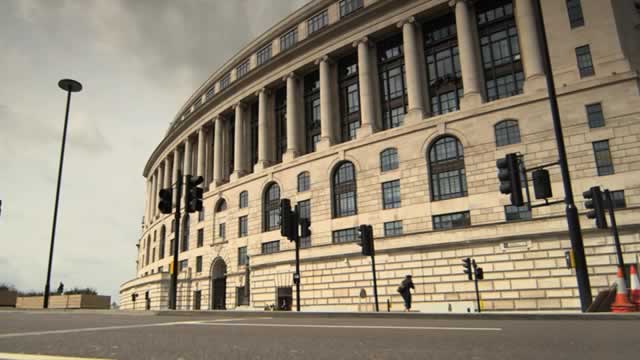
Spice maker McCormick is combining with Unilever's food division
Yahoo Finance· 2026-03-31 12:17
Core Viewpoint - McCormick is merging with Unilever's foods division, maintaining its name and leadership, while Unilever shareholders will hold a majority stake in the new entity [1][2] Group 1: Company Structure and Ownership - Upon closing, Unilever shareholders are expected to own 55.1% of the combined food company, with McCormick shareholders owning 35.0% [1] - The transaction will exclude Unilever's food business in India, Nepal, and Portugal [2] Group 2: Financial Overview - McCormick is valued at $15 billion, and the brands it is acquiring from Unilever are worth billions more [2] - The merger is part of Unilever's strategy to streamline its business and focus on beauty and personal care products [2]
Unilever and McCormick agree to food business deal
Reuters· 2026-03-31 12:01
Core Viewpoint - Unilever has agreed to separate its food unit, which includes brands like Knorr and Hellmann's, and merge it with McCormick in a deal valued at approximately $44.8 billion [1]. Group 1: Company Details - The merger involves Unilever's food business being combined with McCormick, a spice maker, in a cash-and-stock transaction [1]. - The valuation of Unilever's food business in this deal is around $44.8 billion [1].
Spice giant McCormick nears huge deal with Hellmann's maker Unilever
Yahoo Finance· 2026-03-30 22:37
Core Viewpoint - McCormick is nearing a deal to combine with Unilever's food business, which could be announced soon, potentially before the market opens on Tuesday [1] Group 1: Company Developments - McCormick is known for its seasoning and sauces, including brands like Cholula and French's, while Unilever's food brands include Knorr and Hellmann's [1] - Shares of both McCormick and Unilever rose nearly 2% after the news, despite their stocks being down 20% and 8% year to date, respectively, prior to the announcement [2] - McCormick has pursued a flavor-first acquisition strategy over the past decade, shifting focus from traditional spices to high-growth, high-margin condiments [5] Group 2: Industry Context - The packaged food industry is facing multiple challenges, including sticky inflation affecting margins and the impact of rising GLP-1 adoption on sales [2] - Deutsche Bank analyst Steve Powers noted that intensifying headwinds and emerging challenges could undermine historical assumptions about the US consumer packaged goods investment case [3] - Some industry dynamics may be temporary or cyclical, while others, such as demographic shifts and changes in the value chain, are likely to be more structural and long-lasting [4] Group 3: Recent Mergers and Acquisitions - McCormick's most transformative acquisition was the $4.2 billion purchase of Reckitt Benckiser's food division in 2017, which added brands like French's Mustard and Frank's Red Hot sauce to its portfolio [6] - In late 2020, McCormick further solidified its position in the hot sauce category with an $800 million acquisition of Cholula Hot Sauce [6] - Other notable industry acquisitions include Mars's acquisition of Kellanova for approximately $35.9 billion and Campbell Soup's acquisition of Sovos Brands for roughly $2.7 billion [7]
Unilever taps influencer agency for food biz as potential spinoff looms
Yahoo Finance· 2026-03-24 10:31
Core Insights - Unilever's food business, which includes brands like Frank's RedHot, French's, Hellmann's, and Knorr, has an estimated equity value of $33 billion and is currently under consideration for sale to McCormick & Co [3][8] - The company is shifting its marketing strategy to allocate half of its media spend to social media and is increasing its collaboration with influencers by 20 times [3][8] Marketing Strategy - Unilever aims to enhance brand growth by embedding its products authentically in culture, focusing on creator partnerships to make its marketing efforts more relatable and impactful [4] - The company has appointed the social-first agency Samy to develop a global influencer strategy for its food business, utilizing Samy's Maia platform to access over 120 million influencers and performance data [8] Operational Focus - Samy will implement a "glocal" approach, providing insights and intelligence to ensure Unilever's content remains culturally relevant across 13 key markets, including the U.S., U.K., and Brazil [6][7] - The strategy emphasizes not only the deployment of influencer marketing but also the measurement of its performance, addressing the challenges that arise as spending in this area increases [6]