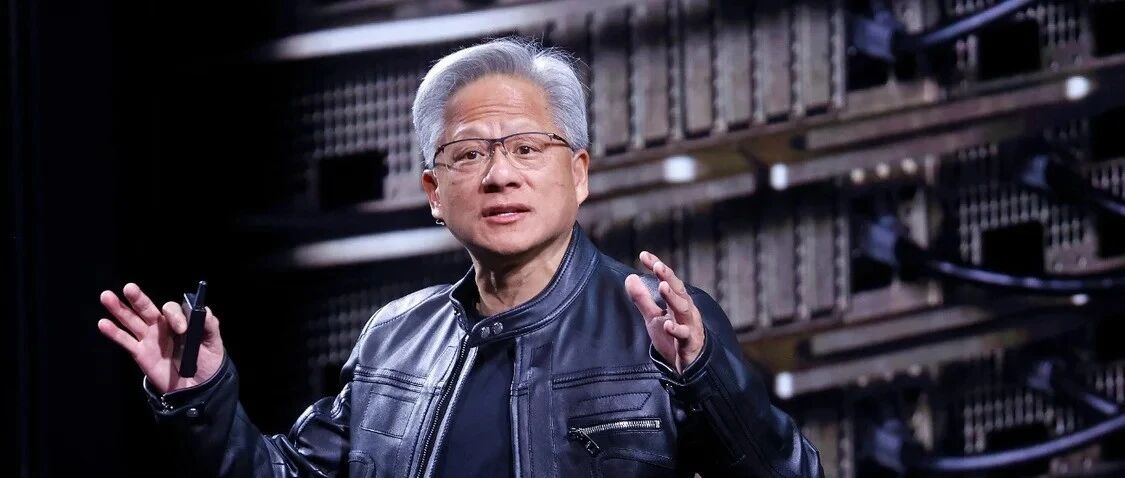
LPX推理机架

Search documents
关注GTC和OFC大会带来的投资机遇
Xinda Securities· 2026-03-22 13:04
Market Trends - The semiconductor sector has seen a year-to-date increase of +5.17%, while consumer electronics have decreased by -9.67%[3] - This week, the semiconductor sector declined by -1.78%, and consumer electronics fell by -4.69%[10] Key Company Performances - Notable stock performances include Apple (-0.85%), Tesla (-5.94%), and TSMC (-2.68%) this week[11] - Year-to-date, Micron Technology has increased by +48.17%, while Qualcomm has decreased by -24.06%[11] GTC 2026 Insights - NVIDIA's LPX inference rack was introduced, with expected orders for Blackwell + Rubin reaching $1 trillion by 2027, up from a previous estimate of $500 billion for 2026[3] - The Groq 3 LPU chip offers 150TB/s bandwidth, significantly surpassing HBM's 22TB/s[3] OFC 2026 Highlights - AI is reshaping optical network architecture, with CPO technology and high-performance optical chips becoming critical for the next generation of AI computing networks[3] - Strategic investments by NVIDIA in Lumentum and Coherent highlight the acceleration of the "opticalization" trend[3] Investment Recommendations - Suggested stocks to watch include overseas AI companies like Industrial Fulian and domestic AI firms like Cambricon and SMIC[4] - Focus on leading suppliers in silicon photonics and optoelectronic chips for potential growth[3] Risk Factors - Risks include underperformance of the electronics industry, macroeconomic fluctuations, and geopolitical uncertainties[4]
7位专家拆解GTC,结论让英伟达难堪
雷峰网· 2026-03-19 00:41
Core Viewpoint - NVIDIA acknowledges that GPUs are not the optimal solution for inference, indicating a shift in the AI computing narrative towards specialized architectures and the organization of computing power [1][8]. Group 1: Shift in AI Infrastructure - At GTC 2026, Jensen Huang demonstrated that NVIDIA's focus has shifted from "stronger GPUs" to "how to organize computing power" [2][3]. - The transition from a training-centric phase to an inference-centric phase is evident, with data centers being redefined as "AI factories" [3][4]. - The introduction of LPU (Low Power Unit) suggests that inference may no longer be the primary domain of GPUs, leading to questions about the coexistence of specialized architectures and general computing power [4][6]. Group 2: Token Economy and AI Factory - Huang stated that the AI factory is now focused on producing tokens, with the efficiency of token output becoming a critical measure of success [17][19]. - By 2027, AI chip revenue is projected to reach at least $1 trillion, driven by a massive increase in computing demand [18][19]. - The concept of "global lowest token cost" is positioned as a competitive advantage, suggesting that companies with efficient token production will dominate the market [19][20]. Group 3: Technological Developments and Challenges - NVIDIA's deployment of the sixth-generation NVLink architecture and the introduction of the first CPO (Co-packaged Optics) Ethernet switch indicate a push towards advanced interconnect technologies [25][26]. - The complexity of NVIDIA's product matrix raises concerns about its ability to compete with simpler architectures like Google's, which have demonstrated superior efficiency [26][29]. - The introduction of OpenClaw as a next-generation operating system aims to redefine "intelligent agent computers," indicating a significant shift in SaaS towards AaaS (Agent as a Service) [31][33]. Group 4: Market Dynamics and Future Outlook - The emergence of LPU and the focus on specialized inference tasks signal a potential restructuring of the AI computing landscape, with GPUs still playing a role in complex tasks [9][12]. - The competitive landscape is evolving, with companies like Alibaba and NVIDIA vying for control over token production and distribution, which will shape the future of the AI industry [20][22]. - The integration of CPU and GPU capabilities will be crucial for companies to gain a competitive edge in the AaaS transition [35][36].