AI推理时代

Search documents
亚马逊(AMZN):云计算进入AI推理时代,AWS有望后发先至
Shenwan Hongyuan Securities· 2026-03-23 11:09
Investment Rating - The report initiates coverage with a "Buy" rating for Amazon, setting a target price of $271.5 [10][11]. Core Insights - The cloud computing industry is entering the AI inference era, with a shift in value focus towards cloud vendors. The report highlights that the core technology trend is moving from reliance on Nvidia's GPU and InfiniBand hardware stack to diversified hardware technologies, including self-developed ASIC chips and AI cloud ecosystems [6][28]. - Amazon AWS is expected to gain a competitive advantage in the AI inference era due to its self-developed chips and strategic partnerships with leading AI model companies. The report notes that AWS's self-developed Trainium chip is improving profitability and that strategic investments in companies like Anthropic and OpenAI will significantly contribute to AWS's revenue growth [6][9]. - Amazon's e-commerce business is expected to maintain a competitive edge due to its robust logistics network and integration of AI capabilities into its platforms, enhancing user engagement and conversion efficiency [9][10]. Financial Data and Earnings Forecast - Revenue projections (in million USD) for Amazon are as follows: - 2024: $637,959 - 2025: $716,924 - 2026E: $808,186 - 2027E: $914,388 - 2028E: $1,034,176 - Year-over-year growth rates are projected at 11.0% for 2024, 12.4% for 2025, and 12.7% for 2026E [2]. - GAAP net profit projections (in million USD) are: - 2024: $59,248 - 2025: $77,670 - 2026E: $95,777 - 2027E: $115,312 - 2028E: $136,247 - Year-over-year growth rates for net profit are expected to be 94.7% for 2024 and gradually decline to 18.2% by 2028 [2]. Market Data - As of March 20, 2026, Amazon's closing price was $205.37, with a market capitalization of $220.46 billion and a P/E ratio of 36.3 [2][10]. - The report indicates that Amazon's AWS is projected to contribute 20% of total revenue and 57% of operating profit by 2026 [10]. Key Assumptions - The report anticipates stable growth for Amazon's 1P online self-operated business and 3P e-commerce platform, with growth rates of 9.0% and 8.0% respectively from 2026 to 2028 [12]. - AWS is expected to maintain high growth rates driven by demand from clients like Anthropic and OpenAI, with revenue growth rates projected at 28.0% for 2026 and gradually declining to 26.0% by 2028 [12]. Catalysts for Stock Performance - Key catalysts include AWS's revenue growth and profitability exceeding expectations, advancements in self-developed Trainium chip performance, and innovations in AI e-commerce products like Alexa+ and Rufus [13].

7位专家拆解GTC,结论让英伟达难堪
雷峰网· 2026-03-19 00:41
Core Viewpoint - NVIDIA acknowledges that GPUs are not the optimal solution for inference, indicating a shift in the AI computing narrative towards specialized architectures and the organization of computing power [1][8]. Group 1: Shift in AI Infrastructure - At GTC 2026, Jensen Huang demonstrated that NVIDIA's focus has shifted from "stronger GPUs" to "how to organize computing power" [2][3]. - The transition from a training-centric phase to an inference-centric phase is evident, with data centers being redefined as "AI factories" [3][4]. - The introduction of LPU (Low Power Unit) suggests that inference may no longer be the primary domain of GPUs, leading to questions about the coexistence of specialized architectures and general computing power [4][6]. Group 2: Token Economy and AI Factory - Huang stated that the AI factory is now focused on producing tokens, with the efficiency of token output becoming a critical measure of success [17][19]. - By 2027, AI chip revenue is projected to reach at least $1 trillion, driven by a massive increase in computing demand [18][19]. - The concept of "global lowest token cost" is positioned as a competitive advantage, suggesting that companies with efficient token production will dominate the market [19][20]. Group 3: Technological Developments and Challenges - NVIDIA's deployment of the sixth-generation NVLink architecture and the introduction of the first CPO (Co-packaged Optics) Ethernet switch indicate a push towards advanced interconnect technologies [25][26]. - The complexity of NVIDIA's product matrix raises concerns about its ability to compete with simpler architectures like Google's, which have demonstrated superior efficiency [26][29]. - The introduction of OpenClaw as a next-generation operating system aims to redefine "intelligent agent computers," indicating a significant shift in SaaS towards AaaS (Agent as a Service) [31][33]. Group 4: Market Dynamics and Future Outlook - The emergence of LPU and the focus on specialized inference tasks signal a potential restructuring of the AI computing landscape, with GPUs still playing a role in complex tasks [9][12]. - The competitive landscape is evolving, with companies like Alibaba and NVIDIA vying for control over token production and distribution, which will shape the future of the AI industry [20][22]. - The integration of CPU and GPU capabilities will be crucial for companies to gain a competitive edge in the AaaS transition [35][36].


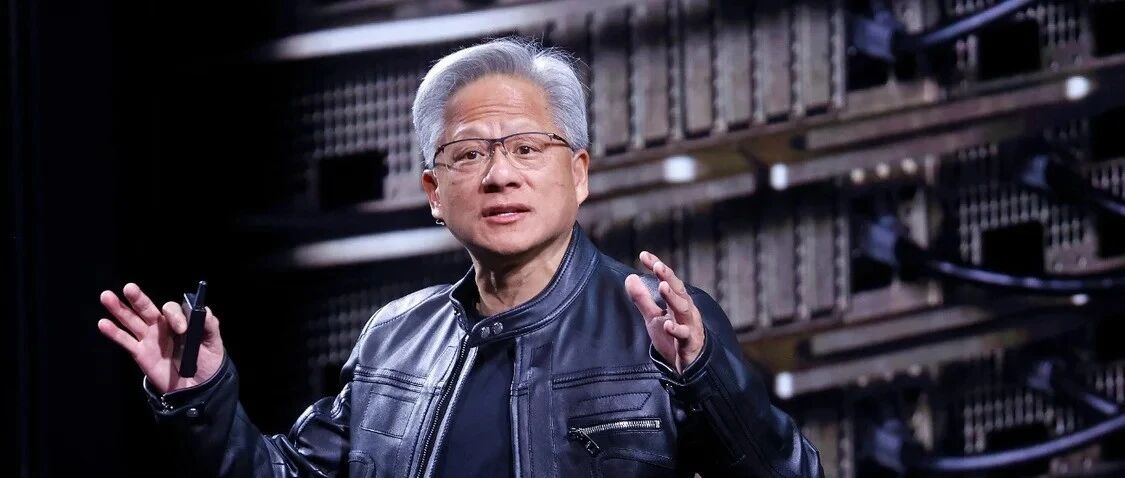
杨斌:确定token的中文译名,已经迫在眉睫了
腾讯研究院· 2026-03-18 09:03
Core Viewpoint - The article emphasizes the importance of the term "token" in the AI industry, proposing the Chinese translation "模元" (móyuán) to facilitate understanding and communication within the sector and among the general public [3][5][10]. Group 1: AI Industry Transformation - Huang Renxun's keynote at the 2026 GTC conference focused on the restructuring of industries in the AI inference era, highlighting the transition of data centers into "token factories" [2][4]. - The concept of "模元" (token) is presented as a new economic metric in the AI era, serving as a core unit of measurement for information, computing power, and currency [4][6]. - The global daily consumption of tokens has reached 30 trillion, with China surpassing the U.S. in model usage, accounting for over 60% of the global total [4][5]. Group 2: Importance of the Term "模元" - The term "模元" is deemed essential for bridging the gap between technical experts and the general public, facilitating the understanding of AI concepts [5][9]. - Previous translations of "token" were found inadequate, as they either limited the scope to specific fields or lacked clarity, making "模元" a more suitable choice for the AI context [7][8]. - The proposed term "模元" is user-friendly, practical for the industry, and adaptable for future developments in AI, making it a necessary step for the widespread adoption of AI technologies [8][9]. Group 3: Call to Action - The article encourages the adoption of "模元" in academic, industrial, and media contexts to foster a common understanding of AI concepts and promote the integration of AI into various sectors [10]. - The expectation is that using "模元" will help dismantle barriers between professionals and the public, enabling a smoother transition into the AI era [10].

中国资产大爆发,2026年A股能否迎来“开门红”?高手看好贵金属、人形机器人等行业
Sou Hu Cai Jing· 2026-01-04 08:01
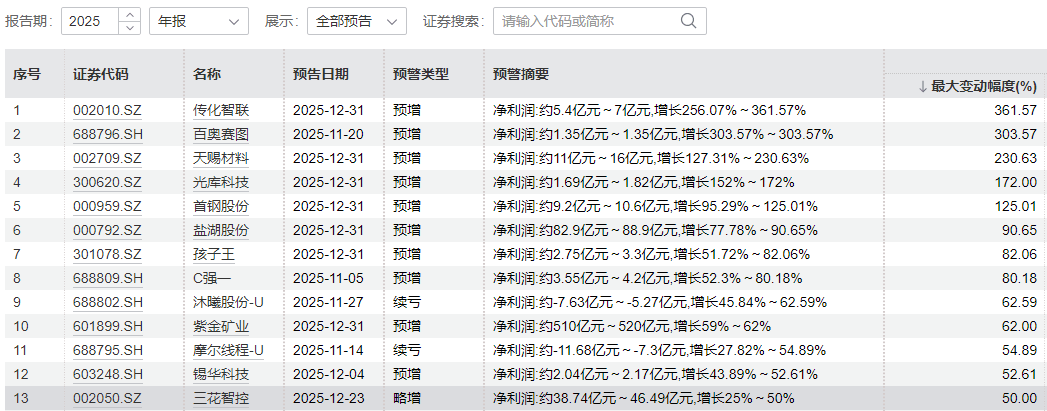
Group 1 - The Chinese asset market experienced a significant surge during the New Year period, with the Hang Seng Index rising by 2.76%, the Hang Seng Tech Index increasing by 4%, and the Nasdaq Golden Dragon China Index soaring by 4.38% [1][3] - A total of 12 companies have forecasted a net profit growth of over 50% for 2025, including notable firms such as Chuanhua Zhili, Baiaosaitu, and Zijin Mining [3][4] - The lithium carbonate, non-ferrous metals, and gold and silver industries are currently in a prosperous cycle, as indicated by the performance of companies in these sectors [5][6] Group 2 - The lithium carbonate futures prices doubled in the second half of 2025, with salt lake lithium extraction gaining market attention due to its cost advantages [6] - The upcoming 2026 International Consumer Electronics Show (CES) is expected to highlight advancements in AI, autonomous driving, and humanoid robots, with major tech companies like Nvidia and Apple participating [6] - The current market sentiment suggests a potential upward trend for A-shares before the Spring Festival, with analysts anticipating a new upward signal if the market volume increases [6]

盘前下跌超3%!英伟达遭史上最强阻击?谷歌TPU获Meta数十亿美元洽购!深度重磅拆解:性能硬刚Blackwell、能效怼GPU
美股IPO· 2025-11-25 10:17
Core Insights - The primary value of Google's TPU lies not only in its speed but also in its profit margins, allowing the company to bypass the "Nvidia tax" and significantly reduce computing costs [1][17][18] - Google's TPU v7 is positioned as a formidable competitor in the AI chip market, showcasing substantial advancements in performance and efficiency compared to Nvidia's offerings [5][14][20] Background and Development - The inception of TPU was driven by a critical need for enhanced computational capacity to support Google's services, leading to the decision to develop a custom ASIC chip tailored for TensorFlow [6][7][8] - The rapid development cycle of TPU, from concept to deployment in just 15 months, highlights Google's commitment to innovation in AI technology [8] Architectural Advantages - TPU's architecture is designed for efficiency, utilizing a "Systolic Array" that minimizes data movement and overcomes the "von Neumann bottleneck," resulting in superior energy efficiency compared to traditional GPUs [10][11][12] - The TPU v7 demonstrates a significant leap in performance metrics, achieving a BF16 computing power of 4,614 TFLOPS, a tenfold increase from its predecessor [15] Competitive Landscape - The TPU v7's specifications, including a single-chip HBM capacity of 192GB and a memory bandwidth of 7,370 GB/s, position it competitively against Nvidia's Blackwell series [16] - Google's strategic control over TPU design allows it to escape the high costs associated with Nvidia's GPUs, restoring higher profit margins for cloud services [17][18] Market Implications - As AI workloads shift from training to inference, the importance of Nvidia's CUDA may diminish, potentially benefiting Google's TPU ecosystem [19] - Analysts suggest that Google's dominance in large-scale computing and the performance of TPU v7 could redefine the competitive dynamics in the AI chip market, positioning Google as a key player capable of controlling its own destiny [20]