MPay

Search documents
亚博科技公布截至2025年9月30日止六个月中期业绩
Sou Hu Cai Jing· 2025-11-26 03:15
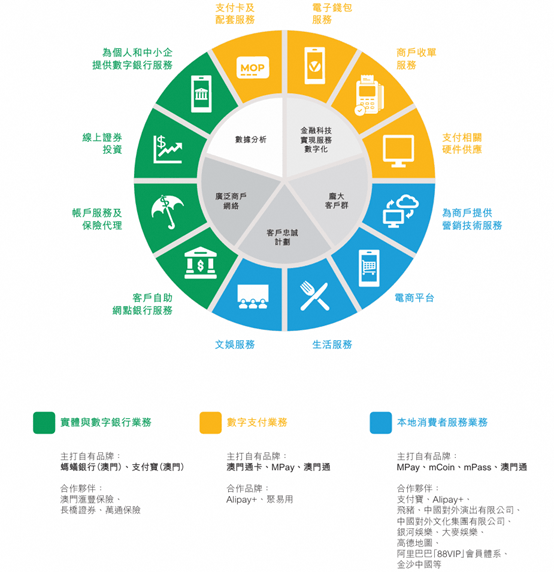
Core Viewpoint - The company reported a significant increase in revenue for the six months ending September 30, 2025, driven by its banking and digital payment services, despite incurring a larger loss compared to the previous period [2][5]. Financial Summary - Revenue for the six-month period was approximately HKD 369 million, a 36.1% increase from approximately HKD 271 million for the same period in 2024 [2]. - The company incurred a loss of approximately HKD 25.6 million, an increase of about HKD 24 million compared to a loss of approximately HKD 1.6 million in the previous period [2]. - The loss was primarily attributed to the company's banking operations, which recorded a loss of approximately HKD 24.4 million [2]. Business Review Banking Operations - The banking segment, operated by Ant Bank (Macau), saw revenue increase by approximately HKD 83.3 million to about HKD 90.1 million, largely due to the full consolidation of Ant Bank's financials for the entire six-month period [2][5]. - Interest income from loans and financial products contributed approximately HKD 70.8 million, up from HKD 5.4 million in the previous period [2]. - The total number of bank customers increased by approximately 97%, with deposits growing by about 290% and credit volume increasing by 101% [5]. Digital Payment and Related Services - Revenue from digital payment services rose by approximately HKD 10.1 million to about HKD 148 million, driven by increased local consumption and marketing activities [2]. - The company launched various promotional initiatives, including themed payment cards and enhanced services for mainland tourists [6][7]. Lottery Business - Revenue from the lottery segment increased by approximately HKD 4.6 million to about HKD 131 million, attributed to the resumption of instant lottery ticket supplies by Chinese regulatory authorities [2][9]. Business Outlook - The company aims to establish itself as a leading global fintech group, focusing on integrating banking, digital payments, and local consumer services into a comprehensive digital ecosystem [10][13]. - The company plans to deepen its strategic partnerships with Alibaba Group and Ant Group to enhance digital business applications and service experiences [13][14].

MPay正式上线"高德打车",一个APP畅行澳门与内地
Ge Long Hui· 2025-06-13 07:19
Core Viewpoint - MPay has officially launched "Gaode Taxi" to enhance smart travel services in Macau, aligning with national policies for transportation integration and smart city development [1][6]. Group 1: Service Expansion - The introduction of "Gaode Taxi" allows users in Macau to access taxi services and payments through the MPay app, eliminating the need for additional downloads [1]. - This service expansion addresses the increasing demand for convenient transportation options in Macau, particularly in response to the challenges of hailing taxis [3]. Group 2: User Experience Enhancement - Users can now enjoy instant taxi hailing and booking through MPay, benefiting from Gaode's intelligent route planning capabilities to avoid congested areas [3]. - The integration of a one-click payment feature streamlines the entire travel process from hailing a taxi to payment, enhancing user convenience [3]. Group 3: Comprehensive Travel Ecosystem - MPay has evolved into a super app that encompasses various services including dining, travel, entertainment, and cross-border payments, catering to diverse user needs [5]. - In addition to "Gaode Taxi," MPay integrates other travel-related services such as "Macau Airlines," ferry tickets, and "Hong Kong-Macau Express," covering all modes of transportation [5]. Group 4: Strategic Collaboration - The partnership with Gaode is a strategic move to enhance Macau's position as a key hub connecting mainland China and international markets, contributing to the development of a global transportation network [6]. - MPay aims to continue expanding its service offerings and deepen ecosystem cooperation to provide efficient and intelligent travel solutions for both residents and tourists [6].

澳门通二十年:数字创新赋能湾区建设,助力澳门融入国家发展大局
Ge Long Hui· 2025-05-22 08:14
Core Insights - The article highlights the significant advancements and innovations made by Macau Pass in the mobile payment sector, emphasizing its role as a leader in Macau's digital economy [3][5][7] Group 1: Innovations in Mobile Payment - Macau Pass has evolved from a public transport payment solution to a comprehensive mobile payment platform, covering nearly 30,000 consumption scenarios across Macau [5][9] - The introduction of the MPay platform has allowed Macau Pass to integrate various services, making it a Super App with approximately 1.5 million registered users [7][11] - The company has implemented NFC technology for dual recharge capabilities between electronic wallets and physical cards, enhancing user convenience [5][9] Group 2: Interconnectivity and Regional Integration - Macau Pass is actively participating in the Greater Bay Area's integration strategy, connecting with over 300 cities in mainland China and facilitating seamless travel for residents and tourists [9][11] - The launch of the "Macau Pass - National Universal Card" and the integration with Hong Kong's MTR system exemplifies its commitment to enhancing cross-border transportation [9][11] - The company has also established a cross-border consumption zone on the MPay platform, integrating popular mainland apps to facilitate spending for Macau residents traveling north [11][13] Group 3: Economic Contributions and Ecosystem Development - Macau Pass plays a crucial role in supporting local economic growth by providing a digital payment infrastructure that covers 90% of local merchants [13][15] - The company has partnered with various stakeholders, including Sands China and Alipay, to enhance payment efficiency and drive transaction volumes in the tourism sector [15][16] - By leveraging digital payment solutions, Macau Pass is contributing to the development of Macau as a world tourism and leisure city, facilitating a diverse economic landscape [18][19]