出行服务

Search documents
曹操出行:首次调整后单季度盈利,Robotaxi转型全面提速,2030年目标10万辆
证券时报· 2026-03-29 23:52
Core Viewpoint - The company has achieved significant financial and operational growth, marking a milestone with its first adjusted net profit in Q4 2025, indicating a shift towards sustainable profitability [1][2]. Financial Performance - In 2025, the company reported a total revenue of 20.2 billion RMB, representing a year-on-year increase of 38% [3]. - The gross margin improved from 8.1% in 2024 to 9.4%, an increase of 1.3 percentage points [3]. - The net loss was reduced by 50.8% year-on-year, and cash generated from operating activities increased by 60.3%, indicating enhanced financial health [3]. Business Metrics - The average monthly active users reached 41.3 million, a 43.9% increase year-on-year [3]. - The average monthly active drivers reached 631,000, up 35.4% year-on-year, showcasing the platform's growing scale [3]. Robotaxi Business Development - The company is accelerating its Robotaxi business, aiming to deploy 100,000 vehicles globally by 2030 [1][10]. - It has launched the Robotaxi 1.0 and 2.0 solutions, with over 100 Robotaxis already deployed [7][10]. - The company is developing fully customized Robotaxi models in collaboration with Geely, expected to debut by the end of 2026 [6][10]. AI and Operational Efficiency - The company utilizes AI technology through its "Caocao Brain" operational decision-making system to enhance dispatch efficiency and profitability [4]. - The "Caocao Intelligent RAS Remote Safety Service Platform" has been implemented to ensure passenger safety and improve the overall experience during Robotaxi rides [8]. International Expansion - The company's ride-hailing services are now available in 42 countries, covering thousands of cities [10]. - Strategic partnerships, including one with the Abu Dhabi Investment Office, are being formed to expand the Robotaxi business internationally [10].

【光大研究每日速递】20260325
光大证券研究· 2026-03-24 23:05
Group 1 - The core viewpoint of the article highlights the performance and outlook of various companies in different sectors, focusing on their revenue and profit changes in 2025 and early 2026 [5][6][7][8][9] Group 2 - Yun Tianhua (600096.SH) reported a revenue of 48.415 billion yuan in 2025, a decrease of 21.47% year-on-year, with a net profit of 5.156 billion yuan, down 3.40% year-on-year [5] - Xiaopeng Motors (XPEV.N) achieved a total revenue of 76.72 billion yuan in 2025, an increase of 87.7% year-on-year, with a Non-GAAP net loss of 460 million yuan, narrowing by 91.8% year-on-year [5] - Wen Yuan Zhi Xing-W (0800.HK) saw a significant revenue increase to 685 million yuan in 2025, up 89.6% year-on-year, driven by strong sales in robotaxi and related products [6] - Lao Pu Gold (6181.HK) reported a revenue of 27.3 billion yuan in 2025, a year-on-year increase of 221.0%, with a net profit of 4.87 billion yuan, up 230.5% year-on-year [7] - Shede Liquor (600702.SH) experienced a revenue decline to 4.419 billion yuan in 2025, down 17.51% year-on-year, with a net profit of 223 million yuan, down 35.51% year-on-year [8] - China Resources Beer (0291.HK) achieved a revenue of 37.99 billion yuan in 2025, a slight decrease of 1.7% year-on-year, with a net profit of 3.37 billion yuan, down 28.9% year-on-year due to goodwill impairment in the liquor business [8] - Tiantan Biological (600161.SH) continues to focus on innovation and has received a high-tech enterprise certificate, indicating ongoing advancements in product development and a strong market position [9]



用户使用滴滴AI叫车,最关心的问题是什么
Xin Lang Cai Jing· 2026-03-23 04:48
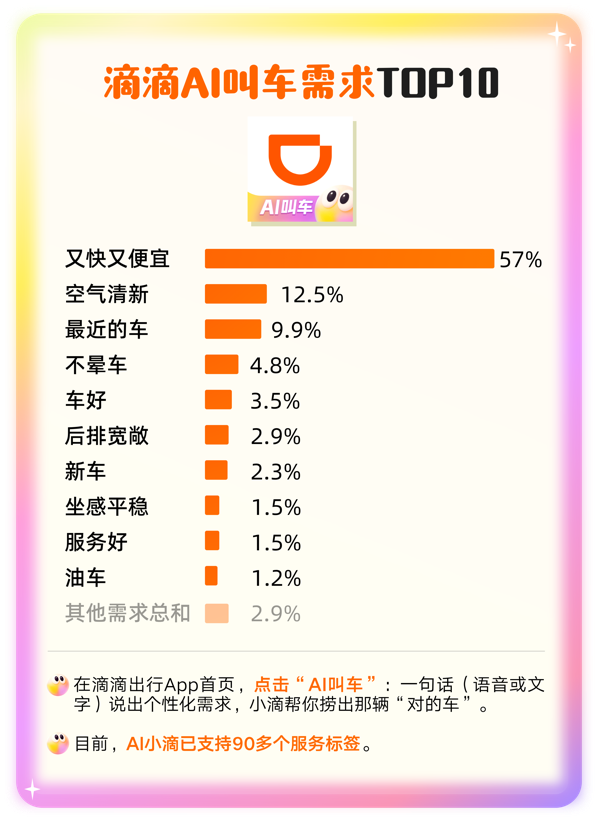
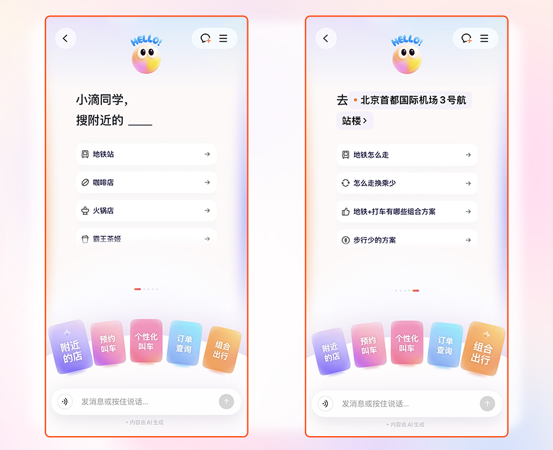
Core Insights - Didi's AI travel assistant, Xiao Di, has quickly gained popularity among users, evolving from "hailing a car" to "hailing the right car" [1][7] - The top three personalized ride requests are "fast and cheap" (57%), "fresh air" (12.5%), and "nearest car" (9.9%), indicating users' preferences for efficiency, cost, and comfort [1][7] - Xiao Di currently supports over 90 service tags, reflecting diverse user needs in various travel scenarios, especially for family, group, and business trips [1][7] User Behavior and Features - Users frequently utilize features such as searching nearby locations, booking rides, combining travel options, and order inquiries, showcasing a strong connection to daily life [3][9] - Popular search destinations include "subway stations," "coffee shops," and "charging stations," indicating a blend of commuting and leisure needs [3][9] - The data shows an increasing demand for planned and predictable travel, with users often scheduling rides for specific times or recurring weekly trips [3][9] AI's Role in Travel - The data highlights the potential of AI in creating innovative consumer experiences, as users seek a travel assistant that understands their needs and aids in decision-making [6][12] - Didi's extensive supply network and service advantages enable it to better meet personalized and diverse user demands through AI [6][12] - AI Xiao Di not only activates long-tail user needs but also connects users to nearby services, emphasizing a human-centered approach to technological innovation [6][12]

为什么是滴滴先把AI打车做出来?
Feng Huang Wang· 2026-03-21 10:09
Core Insights - The article discusses the evolution of AI in the transportation sector, particularly focusing on Didi's AI travel assistant "Xiao Di" and its capabilities to meet personalized user demands [2][6][16] - It highlights the importance of a robust supply system to effectively execute user requests, emphasizing that understanding user needs is not enough without the necessary data and operational infrastructure [8][12][15] Group 1: AI Implementation in Transportation - Didi's AI assistant "Xiao Di" allows users to make complex requests for rides, such as specifying vehicle comfort for pregnant passengers, showcasing a shift from traditional app functionalities [7][12] - The article contrasts the capabilities of different AI agents, noting that many struggle to execute user requests effectively due to a lack of underlying data and supply systems [8][15] Group 2: Supply Chain and User Experience - The effectiveness of an AI agent is heavily dependent on the depth of its supply pool, as more specific user requests can lead to fewer available options if the platform lacks scale [9][12] - Didi's extensive operational history and driver network provide a solid foundation for its AI capabilities, allowing for a more granular approach to fulfilling user needs [12][13] Group 3: Trust and Service Reliability - The article emphasizes that user trust in AI agents is built on the reliability of service delivery, rather than just the ability to understand complex requests [13][15] - Didi's operational model allows for better control over service quality, which is crucial for meeting user expectations in real-world scenarios [13][15] Group 4: Market Differentiation - Didi's approach with "Xiao Di" is presented as a practical example of how AI can enhance existing services without overhauling established processes, focusing on reliability and user satisfaction [16][18] - The article suggests that many current AI agents lack the basic delivery capabilities, which can lead to user frustration when they fail to meet expectations [18][19] Group 5: Future Directions - Didi's AI assistant is evolving to include additional features such as location queries and automated ride requests, indicating a move towards a more comprehensive travel assistant [18][19] - The article concludes that the true value of technology lies in its ability to seamlessly integrate into daily life and enhance user experiences consistently [19]
滴滴AI个性化叫车:支持90多个服务标签
Yang Guang Wang· 2026-03-18 03:56
Core Insights - The article discusses the launch of Didi's AI travel assistant, Xiao Di, which translates user requests into executable service tags, enhancing the ride-hailing experience [1][2]. Group 1: Product Features - Xiao Di supports over 90 service tags, addressing various travel scenarios such as family assistance and business receptions [1]. - Users can make requests through voice or text, allowing for personalized ride options based on specific needs like comfort and cleanliness [2]. - The AI can prioritize complex requests and plan routes for multiple pickups, streamlining the user experience [2]. Group 2: Competitive Advantage - Didi's success in implementing this AI solution is attributed to its extensive system capabilities, which include understanding human language and adapting to real-time conditions [4]. - The scale effect allows Didi to cater to detailed user demands, ensuring sufficient vehicle availability [5]. - Didi's self-operated model enhances service standardization and quality control, contributing to a better user experience [6]. Group 3: User Value Proposition - The AI aims to transform personalized needs into stable service options, enhancing safety, certainty, and overall user experience [7]. - By leveraging AI technology, Didi seeks to activate long-tail demands and improve supply matching, ultimately increasing passenger satisfaction and encouraging higher service quality from drivers [7].
优步与英伟达合作,在全球范围扩大自动驾驶出租车规模
Xin Lang Cai Jing· 2026-03-17 19:17
Core Insights - Uber Technologies Inc. shares rose 3.32% in pre-market trading following the announcement of a partnership with NVIDIA to launch software-driven autonomous taxis in the first half of 2027, with plans to expand to 28 cities globally by 2028 [1][2] - The initiative will utilize NVIDIA's Level 4 autonomous driving platform, marking a significant step for Uber in moving beyond its traditional ride-hailing model [1][2] - The technology will integrate AI models, simulation, and high-performance computing, allowing autonomous vehicles to operate alongside human drivers over time [1][2] Strategic Developments - This launch is part of a series of actions by Uber to expand its autonomous driving strategy, including a recent collaboration with Motional to introduce an autonomous taxi service in Las Vegas [1][2] - Uber has also announced partnerships with Wayve and Nissan, as well as a separate strategic partnership with Zoox, reinforcing its approach to build a broad network of partners rather than relying on a single supplier to scale its autonomous taxi fleet [1][2]


滴滴上线AI打车服务,用户将App更新至最新版本后,即可在首页体验“AI叫车”功能
Xin Lang Cai Jing· 2026-03-17 14:42
Group 1 - The core point of the article is the official launch of Didi's AI travel assistant, Xiao Di v1.0, which allows users to input complex ride requests through voice or text, and the system converts these into executable service tags to match suitable vehicles [1] Group 2 - Users can experience the "AI calling a car" feature by updating the app to the latest version [1]

透视滴滴2025年报:国际业务超预期,持续加码拉美市场
3 6 Ke· 2026-03-17 09:59
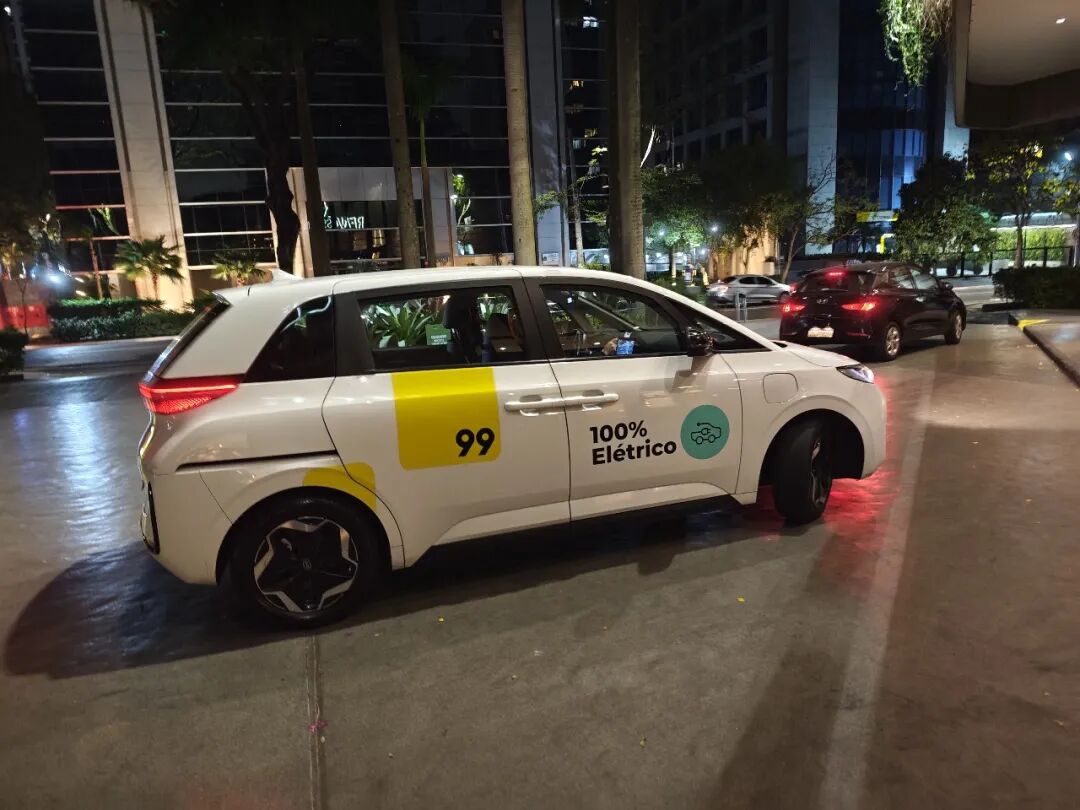
Core Insights - Didi's international business performance exceeded expectations in Q4 2025, with GTV growing by 47.1% year-on-year to 36.6 billion yuan and order volume increasing by 24.5% to 1.265 billion orders [1][3] - The company plans to enhance its investment in key overseas markets, particularly in Latin America, following the relaunch of its food delivery service in Brazil [1][3] Financial Performance - In Q4 2025, Didi's international business GTV reached 36.6 billion yuan, with a year-on-year growth of 47.1% and a total order volume of 1.265 billion, marking a 24.5% increase [1] - For the entire year of 2025, international business order volume grew by 24.7% to 4.505 billion orders, with a compound annual growth rate of 32% over the past three years [3] - The total GTV for international business in 2025 was 117 billion yuan, reflecting a year-on-year increase of 28.2% [3] Market Expansion - Didi's international ride-hailing business has been profitable for two consecutive years, serving over 100 million users across 14 countries, with a significant presence in Latin America [4] - In Brazil, Didi's ride-hailing service has captured approximately 40% market share, covering over 3,300 towns [4] - In Mexico, Didi has expanded from a ride-hailing platform to include financial and food delivery services, achieving the top market share in both sectors [5] Localized Operations - Didi's success in Latin America is attributed to its localized operational strategy, including the acquisition of the Brazilian 99 platform and maintaining its brand and core team [7] - The introduction of the 99Moto service in Latin America has seen significant growth, with a 30% increase in motorcycle drivers and a 60% rise in delivery orders [7] Service Diversification - Didi has expanded its service offerings in Latin America to include food delivery, financial services, and instant delivery, creating a one-stop service platform for users [9] - The company has successfully launched its food delivery service, 99Food, in over 60 cities in Brazil, with plans to expand to 100 cities by mid-2026 [10] Sustainability Initiatives - Didi has formed a "Sustainable Mobility Alliance" in Brazil and launched its electric vehicle service, 99electric-Pro, in major cities [11] - By November 2025, this service had served over 27 million passengers and reduced carbon emissions by approximately 31,200 tons [12]

全年45.05亿单 GTV增超28% 滴滴在海外不止于打车
Mei Ri Jing Ji Xin Wen· 2026-03-17 09:31
Core Insights - Didi's domestic business remains stable, with a total transaction volume of 13.735 billion orders in 2025, reflecting a year-on-year growth of 10.8% [1][13] - Didi's international business is entering a rapid growth phase, with international order volume reaching 4.505 billion in 2025, accounting for approximately one-third of the daily order volume of its Chinese operations [1][17] Domestic Business Performance - In Q4 2025, Didi's core platform (including both domestic and international businesses) saw a year-on-year order volume increase of 13.5%, totaling 4.844 billion orders, with a peak daily order volume exceeding 65 million [4][16] - Didi's domestic order volume grew by 10.1% year-on-year to 3.578 billion in Q4, with an average daily order volume of 38.9 million [4][16] - The company has maintained double-digit growth in domestic orders for 12 consecutive quarters since 2023, driven by increasing personalized travel demands and service quality expectations [4][16] International Business Growth - Didi's international business achieved a year-on-year order volume growth of 24.5% in Q4 2025, reaching 1.265 billion orders, with an average daily order volume of nearly 14 million [5][17] - The total order volume for international operations in 2025 was 4.505 billion, reflecting a year-on-year growth of 24.7% and a compound annual growth rate of 32% over the past three years [5][17] - Didi's international business has become profitable, particularly in key markets like Brazil and Mexico, demonstrating self-sustaining capabilities [7][19] Strategic Developments - Didi is focusing on strategic investments in Latin America, particularly in Brazil and Mexico, to create long-term value and sustainable growth [8][20] - The company is developing a one-stop service platform overseas, integrating ride-hailing, food delivery, and financial services to enhance user experience [9][21] - In Mexico, Didi has expanded from a ride-hailing platform to include financial and food delivery services, covering over 70 cities and serving more than 30 million users [10][22] Competitive Landscape - Didi's user base in Brazil has reached 55 million, with approximately 1.5 million drivers, covering over 3,300 towns [10][22] - Compared to competitors, Didi's brand recognition and traffic from ride-hailing services have reduced customer acquisition costs for its food delivery business [12][24] - The integration of motorcycle services into the delivery platform enhances operational efficiency, allowing for dual-use of drivers for both ride-hailing and delivery services [12][24]
国内稳底盘,海外拓增量,滴滴交出一份稳健答卷
凤凰网财经· 2026-03-13 14:08
Core Insights - Didi's Q4 2025 financial report shows a 13.5% year-on-year increase in core platform order volume, reaching 4.844 billion orders, with a peak daily order volume exceeding 65 million [1] - The total transaction value (GTV) for Q4 2025 increased by 19.9% year-on-year to 123.8 billion yuan, while the annual GTV reached 450.8 billion yuan, marking a 14.8% increase [1] - Didi's growth strategy focuses on deepening domestic operations while gradually expanding internationally, showcasing a clear development trajectory [1] Domestic Business Performance - In Q4 2025, Didi's domestic ride-hailing orders grew by 10.1% year-on-year to 3.578 billion, with an average daily order volume of 38.9 million [3] - The annual order volume for domestic ride-hailing reached 13.735 billion, reflecting a 10.8% year-on-year growth [3] - The GTV for domestic ride-hailing in Q4 increased by 11.2% to 87.2 billion yuan, with an annual GTV growth of 10.7% to 333.8 billion yuan [3] Growth Drivers - Didi's ability to achieve 10% year-on-year growth in a mature market is attributed to efficiency improvements and a focus on user needs, driver income, and user retention [5] - The company has diversified its service offerings, including options for group rides, pet transportation, and women-friendly services, enhancing user experience and driver earnings [5] - Didi's core membership has increased by over 15% year-on-year, with more than 20 member benefits launched, creating a comprehensive membership ecosystem [7] International Expansion - Didi's international business saw a 24.5% year-on-year increase in Q4 2025 order volume, totaling 1.265 billion orders, with a GTV growth of 47.1% to 36.6 billion yuan [8] - The annual international order volume reached 4.505 billion, reflecting a 24.7% year-on-year growth, with a three-year compound growth rate of 32% [8] - Didi's international strategy emphasizes technology export and deep localization, adapting to local markets rather than simply replicating the domestic model [9][12] Autonomous Driving Initiatives - Didi is strategically investing in autonomous driving, viewing it as a long-term growth area, with ongoing testing and development of Robotaxi services [17][20] - The company has partnered with GAC Aion to produce a new generation of Robotaxi vehicles and established a research lab with Tsinghua University to enhance AI applications in autonomous driving [22] - Didi's autonomous driving division is also developing capabilities for long-haul logistics, demonstrating a commitment to integrating advanced technology into its service offerings [22] Conclusion - Didi's domestic market remains robust with steady growth in orders and memberships, providing a solid foundation for future development [23] - The international business is in a phase of investment and expansion, with long-term growth potential becoming increasingly evident [23] - Continuous investment in autonomous driving positions Didi to leverage AI advancements, ensuring a broad scope for future growth [23][25]