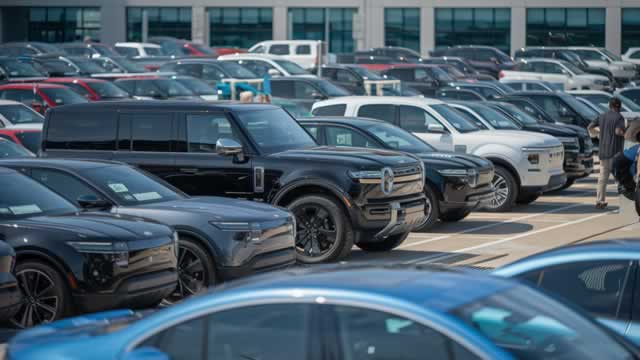
Model X SUV

Search documents
Tesla vs. Rivian: Which EV Maker's Stock Is the Better Buy?
The Motley Fool· 2026-03-26 07:05
Core Insights - Tesla remains the leading player in the electric vehicle (EV) market with a market capitalization exceeding $1 trillion, while Rivian is attempting to catch up [1] - Rivian has signed a significant contract with Uber to deploy up to 50,000 autonomous robotaxis by 2031, with Uber potentially investing up to $1.25 billion based on performance milestones [2] - Rivian's current market cap is $19 billion, and it holds less than 1% of the global market share, indicating substantial growth potential [3] Rivian Overview - Founded in 2009, Rivian initially aimed to create a hybrid sports car but has since focused on electric trucks and SUVs, including the R1S SUV and R1T pickup [4] - Rivian has a partnership with Amazon, having produced over 30,000 electric delivery vans for the company [6] - In 2025, Rivian delivered 42,247 vehicles, a decrease of 18% from the previous year, attributed to the expiration of federal EV tax credits and reduced demand [7] Tesla Overview - Tesla delivered 1.63 million vehicles in 2025, down from 1.78 million the previous year, facing challenges from competition and reduced profit margins [8] - Tesla's revenue for 2023 was $96.77 billion, with a net income of $14.99 billion and a gross margin of 15.4% [9] - The company is shifting focus towards robotics, discontinuing the Model S and Model X to allocate resources for the production of Optimus robots [10] Market Dynamics - The EV market is experiencing increased competition, leading to price cuts by Tesla, while revenue from its energy generation and storage segment has risen significantly [9] - Analysts predict a $9 trillion market for humanoid robots by 2050, with Tesla's Optimus potentially capturing $450 billion of that market [12] - The rising gasoline prices are expected to boost the popularity of EVs, especially if vehicle prices continue to decline [12] Investment Considerations - For investors seeking a pure-play EV stock, Rivian presents a compelling option due to its partnership with Uber, which enhances its visibility and capital for vehicle development [13] - Tesla's broader positioning in robotics and existing infrastructure offers a more extensive opportunity, making it an attractive investment in its own right [13]


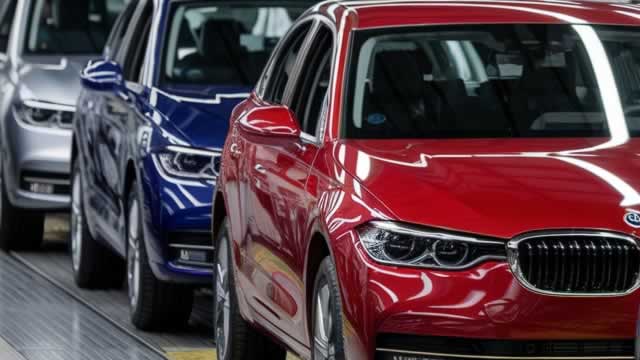
破釜沉舟!特斯拉斥资200亿美元将工厂改建机器人产线,马斯克:80%价值靠他它实现
Zhi Tong Cai Jing· 2026-01-30 03:37
Core Viewpoint - Tesla is shifting its focus from electric vehicles to robotics, planning to invest $20 billion this year to support this transformation, indicating a significant pivot in its business strategy [1][2]. Group 1: Financial Performance and Investment Plans - Tesla's capital expenditure decreased by 24% to $8.6 billion last year, but it is projected to more than double to over $20 billion by 2026 as the company transitions towards artificial intelligence and robotics [1][3]. - The automotive revenue, which constitutes about 70% of Tesla's business, is expected to decline by 10% in 2025 due to the lack of new electric vehicle models and increased competition, particularly from BYD in China and Volkswagen and BMW in Europe [2]. Group 2: Product Development and Future Vision - Tesla plans to end production of the Model S and Model X, which accounted for less than 3% of total deliveries last year, to repurpose the Fremont factory for producing the Optimus robot [2][4]. - Elon Musk envisions that Optimus could eventually make Tesla a $25 trillion company, with 80% of its value derived from robotics [2]. Group 3: Technological Challenges and Competition - The company faces significant competition in both robotics and autonomous driving, with rivals like Waymo and Baidu expanding their services [5]. - Tesla is also planning to establish a large-scale chip manufacturing facility, TeraFab, to ensure it can meet its hardware needs and mitigate geopolitical risks [6]. Group 4: Expansion of Services - Tesla aims to expand its Robotaxi fleet in the U.S. and is testing a fully autonomous ride-hailing service in Austin, Texas, with plans to extend this service to seven additional markets [4].

Tesla Plots $20 Billion Splurge to Support Musk’s AI Future
Yahoo Finance· 2026-01-29 14:42
Core Viewpoint - Tesla Inc. is set to invest over $20 billion in a significant restructuring of its factory lines, reflecting a strategic shift by CEO Elon Musk following a prolonged sales slump [1] Group 1: Capital Expenditures and Production Plans - The planned capital expenditures for 2026 will exceed last year's spending by more than double and are nearly twice Wall Street's expectations, aimed at increasing production of cars, batteries, and robots across multiple plants [2] - To accommodate the new Optimus humanoids, Tesla will phase out its two oldest models, the Model S sedan and Model X SUV [2] Group 2: Strategic Investments and AI Focus - Tesla announced a surprise agreement to invest approximately $2 billion into Musk's AI startup, xAI, and indicated plans to establish a semiconductor manufacturing facility, highlighting a shift towards AI and robotics at the potential expense of its traditional car business [4][7] - The investment in xAI is expected to strengthen Tesla's capabilities in developing and deploying AI products and services [7] Group 3: Market Reaction and Analyst Insights - Despite the significant investments and a better-than-expected quarterly earnings report, Tesla shares fell less than 1% at market opening, indicating a mixed market reaction [3] - Analysts suggest that this quarter marks a pivotal transition for Tesla from an electric vehicle company to a focus on robotaxi, energy, and AI technologies, with a potential shift away from the EV business [6]
Tesla, Rivian, and Lucid Will Have Their Fortunes Changed Forever Today, Sept. 30, Courtesy of President Donald Trump
The Motley Fool· 2025-09-30 07:06
Group 1: Impact of Trump's Legislation on the EV Industry - President Trump's "Big, Beautiful Bill" significantly alters the electric vehicle (EV) landscape, particularly affecting leading manufacturers like Tesla, Rivian, and Lucid [1][2] - The bill terminates the $7,500 tax credit for new EV purchases and the $4,000 credit for used EVs, which were previously available until 2032 [3][4] - This tax credit was crucial for making EVs more price-competitive against internal combustion engine (ICE) vehicles, especially given the current limitations in EV charging infrastructure [6][7] Group 2: Regulatory Changes and Financial Implications - The legislation also eliminates corporate average fuel economy (CAFE) fines, removing financial incentives for automakers to meet fuel efficiency standards [8][9] - The removal of CAFE penalties is expected to adversely affect the profitability of Tesla, Rivian, and Lucid, as it diminishes the market for automotive regulatory credits that these companies rely on [10][12] - Tesla has been generating a significant portion of its pre-tax income from selling regulatory credits, and the new law could expose the unsustainable nature of this revenue stream [11][12] Group 3: Long-term Viability of EV Manufacturers - The changes brought by Trump's bill may lead to a more challenging environment for pure-play EV manufacturers to compete with traditional ICE vehicles [14] - Rivian and Lucid, despite having substantial cash reserves and financial backing, face uncertainty regarding their long-term success as they continue to incur losses while scaling operations [13]

重挫7%
Zhong Guo Ji Jin Bao· 2025-06-24 00:28
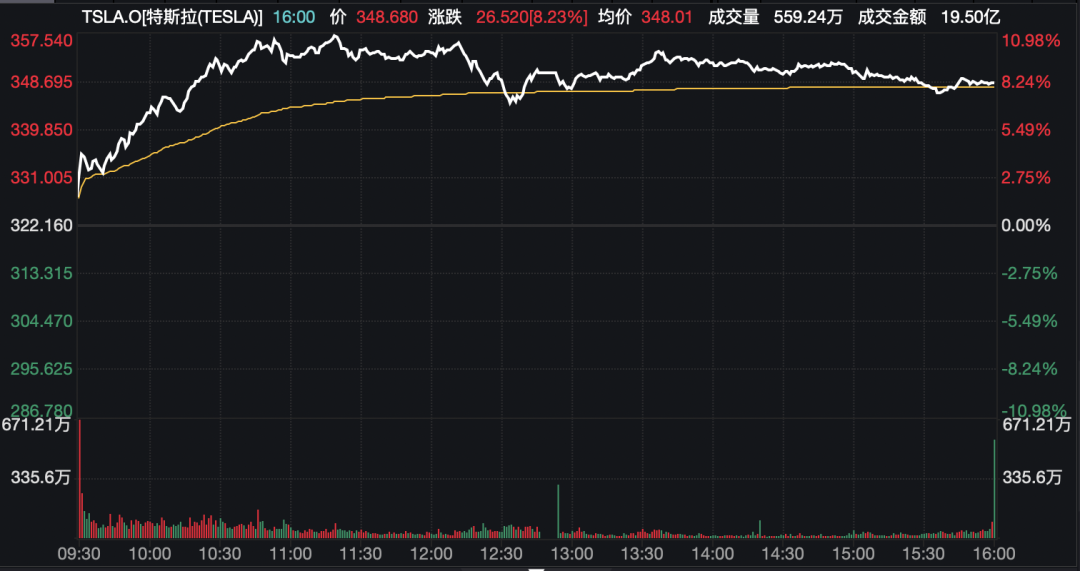
Group 1: Geopolitical Developments - Former President Trump announced that Israel and Iran have agreed to a "comprehensive and complete ceasefire," set to begin approximately six hours after his announcement [1] - The ceasefire involves two 12-hour periods, with Iran initiating the first and Israel following with the second, leading to an official end to hostilities after 24 hours [1] Group 2: Oil Market Reactions - International oil prices experienced significant volatility, initially rising over 6% before plummeting more than 7%, with WTI crude oil futures settling at $68.51 per barrel and Brent crude at $71.48 per barrel [2] - The fluctuations in oil prices are attributed to geopolitical tensions, particularly in the Middle East [11] Group 3: Stock Market Performance - U.S. stock markets saw gains, with the Dow Jones Industrial Average rising by 0.89%, the Nasdaq by 0.94%, and the S&P 500 by 0.96% [3] - Major tech stocks performed well, with Meta increasing over 2%, and other companies like Microsoft and Netflix also seeing gains [4] Group 4: Chinese Stocks and Tesla - The Nasdaq Golden Dragon China Index rose by 0.85%, with notable increases in stocks such as Sohu (up approximately 10%) and Li Auto (up nearly 8%) [5] - Tesla's stock surged by 8.23% following the launch of its RoboTaxi service in Austin, Texas, with a total transaction volume of $648.05 billion [7] - The initial RoboTaxi fleet consists of 10 to 20 Model X SUVs, and the fixed fare for rides is set at $4.20 [9][10] Group 5: European Market Trends - European stock markets faced declines, with the Stoxx Europe 600 index down by 0.3%, as concerns over inflation resurfaced due to rising oil prices [11] - Analysts predict that a closure of the Strait of Hormuz could lead to severe stagflation impacts, potentially causing stock markets to drop by 10% to 20% [12]
GM hires ex-Tesla, Aurora exec as chief product officer
CNBC· 2025-05-12 15:49
Core Insights - General Motors (GM) has appointed Sterling Anderson, a former Tesla executive and cofounder of Aurora Innovation, as its chief product officer to oversee the product lifecycle for both gas and electric vehicles [1][2][3] - Anderson will report to GM President Mark Reuss and is part of a trend of ex-Tesla executives joining GM to enhance its technology and electric vehicle offerings [2][3] - GM aims to balance the rollout of electric vehicles (EVs) with gas-powered models while advancing technologies like the Super Cruise driver-assistance system to compete with Tesla and emerging Chinese auto startups [3] Group 1 - Sterling Anderson will start his role at GM on June 2, overseeing hardware, software, services, and user experience for vehicles [1][2] - Anderson's previous experience includes leading teams for the Model X SUV and Tesla's Autopilot system [5] - GM's CEO Mary Barra emphasized that Anderson will help accelerate progress in creating high-performing, technology-forward vehicles [4] Group 2 - GM has previously hired other former Tesla executives, including Kurt Kelty for battery leadership and Jon McNeill for board membership, indicating a strategic move to leverage talent from Tesla [2][3] - The company is focused on competing against Tesla, the leader in EVs and software, as well as new entrants from China [3] - Anderson's leadership is expected to enhance GM's capabilities in automotive engineering and software innovation [3][4]