NFT(非同质化代币)

Search documents
私募加密基金基本情况、监管规则与税务政策概述
Xin Lang Cai Jing· 2026-02-08 16:28
Core Insights - The article discusses the increasing importance of compliance in private crypto funds as traditional financial institutions and non-financial entities begin to engage in private crypto fund operations and allocate assets related to cryptocurrencies [1] Group 1: Definition and Classification of Private Crypto Funds - Private crypto funds are defined as non-public investment funds targeting wealthy individuals and institutional investors, focusing on crypto assets and related projects [2] - Key characteristics of private crypto funds include a specific investment focus on the crypto asset market, high value volatility, significant regulatory differences across countries, and lower transparency compared to traditional funds [3][4] - Private crypto funds differ from traditional private funds in terms of investment targets, risk and volatility, regulatory environment, investor types, technology reliance, and liquidity [5][6][7][8][9][10][11][12][13][14][15] Group 2: Classification of Private Crypto Funds - Private crypto funds can be classified based on investment targets, operational methods, and investment strategies [16] - Investment targets include direct investment funds (investing directly in cryptocurrencies and blockchain projects) and indirect investment funds (investing in related companies or derivatives) [16] - Operational methods can be categorized into closed-end funds (fixed size and duration) and open-end funds (allowing continuous investment and redemption) [17] - Investment strategies include passive strategies (tracking major cryptocurrencies), neutral strategies (hedging market volatility), active strategies (based on price predictions), and fixed-income strategies (earning interest through lending) [18][19] Group 3: Global Development of Private Crypto Funds - The total market capitalization of cryptocurrencies has shown fluctuating growth, exceeding $2.3 trillion, with nearly 900 crypto funds established globally by the end of 2023 [21] - The asset management scale of crypto funds reached $33 billion in 2023, with Bitcoin being the most popular investment target [21] - The United States is the primary registration location for crypto funds, accounting for nearly half of the total, while China also has a significant number of registered funds despite a conservative regulatory stance [22] Group 4: Notable Private Crypto Funds - Pantera Capital, established in 2003, manages $4.8 billion in blockchain-related assets and focuses on Bitcoin, ICOs, and DeFi [24] - a16z Crypto, part of Andreessen Horowitz, manages over $7.6 billion across four funds, investing in blockchain infrastructure and decentralized applications [25] - Galaxy Digital, founded in 2018, manages approximately $2.1 billion in digital assets and offers various crypto-related investment products [26] - AnB Investment, registered in the Cayman Islands, operates two funds with a total AUM of $50 million, focusing on crypto assets and DeFi [27] - HashKey Digital Investment Fund, launching in September 2023, will invest primarily in Bitcoin and Ethereum, with a diversified portfolio [28] Group 5: International Regulatory Overview for Private Crypto Funds - Various international organizations and countries have established regulations for private crypto funds, including the SEC's application of securities laws to certain crypto assets [29][31] - The EU's Market Abuse Directive and Regulation aim to prevent market manipulation and insider trading in the crypto market [33] - The FATF has set AML/CFT requirements for virtual asset service providers, impacting crypto funds [34] - The AIFMD has expanded to include crypto asset funds, requiring proper disclosure and risk management [35] - The EU's MiCA aims to create a unified regulatory framework for crypto assets, effective from June 2023 [36] Group 6: Tax Policies for Private Crypto Funds - Countries are developing tax policies to ensure accurate reporting and taxation of crypto fund earnings, including capital gains tax and VAT [37] - In the U.S., private crypto funds can be structured as LPs, LLCs, or corporations, each with different tax implications [38] - The EU has varied VAT policies for crypto transactions, with some countries exempting Bitcoin from VAT [40] - The UK incorporates crypto assets into existing tax frameworks, applying income and capital gains taxes [42] - Singapore does not tax capital gains, making it favorable for private crypto funds, while GST on crypto transactions was eliminated in 2020 [43]

专家访谈汇总:中国生物制药将公布对外授权“标志性交易”
阿尔法工场研究院· 2025-06-12 10:12
Group 1: Innovation in Pharmaceuticals - The new policy introduced on June 10 aims to enhance the medical insurance drug list and establish a commercial insurance coverage directory for innovative drugs, indicating the formation of a dual support system of "basic medical insurance + commercial health insurance," which is expected to significantly increase the market penetration of innovative drugs in China [1] - Following this, on June 11, the Ministry of Industry and Information Technology and the National Development and Reform Commission jointly issued a document to promote the construction of biopharmaceutical pilot platforms, supporting the full-process capability building from research and development to industrialization [1] - The quality and efficiency of innovative drug research and development in China continue to improve, with over 20 Class 1 new drugs approved in the first five months of 2024, surpassing the same period in previous years, particularly in high-barrier areas such as oncology, autoimmune diseases, metabolic diseases, and rare diseases [1] - Chinese pharmaceutical companies are increasingly active on the international academic stage, with a record number of original research submissions from Chinese researchers at the 2025 ASCO annual meeting, including 11 items recognized as LBA (Latest Breakthrough Abstract) [1] - The recent high-value licensing agreements, such as the $6 billion deal between 3SBio and Pfizer, and the announcement by CSPC Pharmaceutical Group regarding three overseas collaborations totaling nearly $5 billion, indicate that Chinese innovative drugs have gained substantial endorsement from international pharmaceutical giants [1] Group 2: Biopharmaceuticals and Licensing - On June 11, during the Goldman Sachs Global Healthcare Conference, the management of China Biologic Products indicated that "licensing transactions will become a regular source of income and profit for the company," revealing that a "landmark transaction" is expected to be announced soon, generating strong market anticipation [2] - China Biologic Products' pipeline includes hot-target products such as HER2 bispecific ADC and EGFR/cMet ADC, with some varieties already in late-stage clinical trials, demonstrating strong competitiveness for international markets [2] - The upcoming American Diabetes Association (ADA) annual meeting on June 20 is expected to increase market attention on the GLP-1 field, which combines diabetes treatment and weight loss, representing another potential direction for domestic pharmaceutical companies to expand internationally [2] Group 3: Traditional Chinese Medicine (TCM) Protection Policies - Since June 2025, the National Medical Products Administration has approved three traditional Chinese medicines as secondary protected varieties and accepted an initial protection application, indicating a significant increase in regulatory focus on intellectual property protection for TCM [3] - The strengthening of the TCM protection system effectively provides "policy barriers + market exclusivity" for high-quality TCM companies, encouraging the development of original prescriptions and enhancing standardized production capabilities, reflecting the implementation of the "innovative drug model" in the TCM industry [3] - Regional pharmaceutical companies with unique product barriers, such as Runan Pharmaceutical and Anno Pharmaceutical, may open up national markets if they achieve branding and standardization [3] - Large TCM enterprises with research capabilities and brand influence, such as Tongrentang and Yunnan Baiyao, will continue to benefit from policy guidance and consumption upgrades [3] Group 4: NFT Market Trends - The NFT market, which exploded in 2021, has recently gained renewed attention from capital markets due to technological advancements, AI integration, and the expansion of Web3 applications, highlighting its dual attributes of "digital assets + consumer experience" [5] - The NFT concept sector saw a nearly 2% increase recently, with companies like Yifan Culture and Yuanlong Yatu reaching their price limits, reflecting market enthusiasm for the new round of competition around "virtual consumption + digital asset certification" [5] - This trend indicates that the value of NFTs is no longer limited to "collectibles," but is expanding into practical functions such as "rights certificates," "digital membership cards," and "on-chain asset certificates," enhancing their long-term sustainability [5]

凌子昂荣获2025年度科技创新人物奖,彰显区块链领域卓越成就
Sou Hu Cai Jing· 2025-06-05 01:49
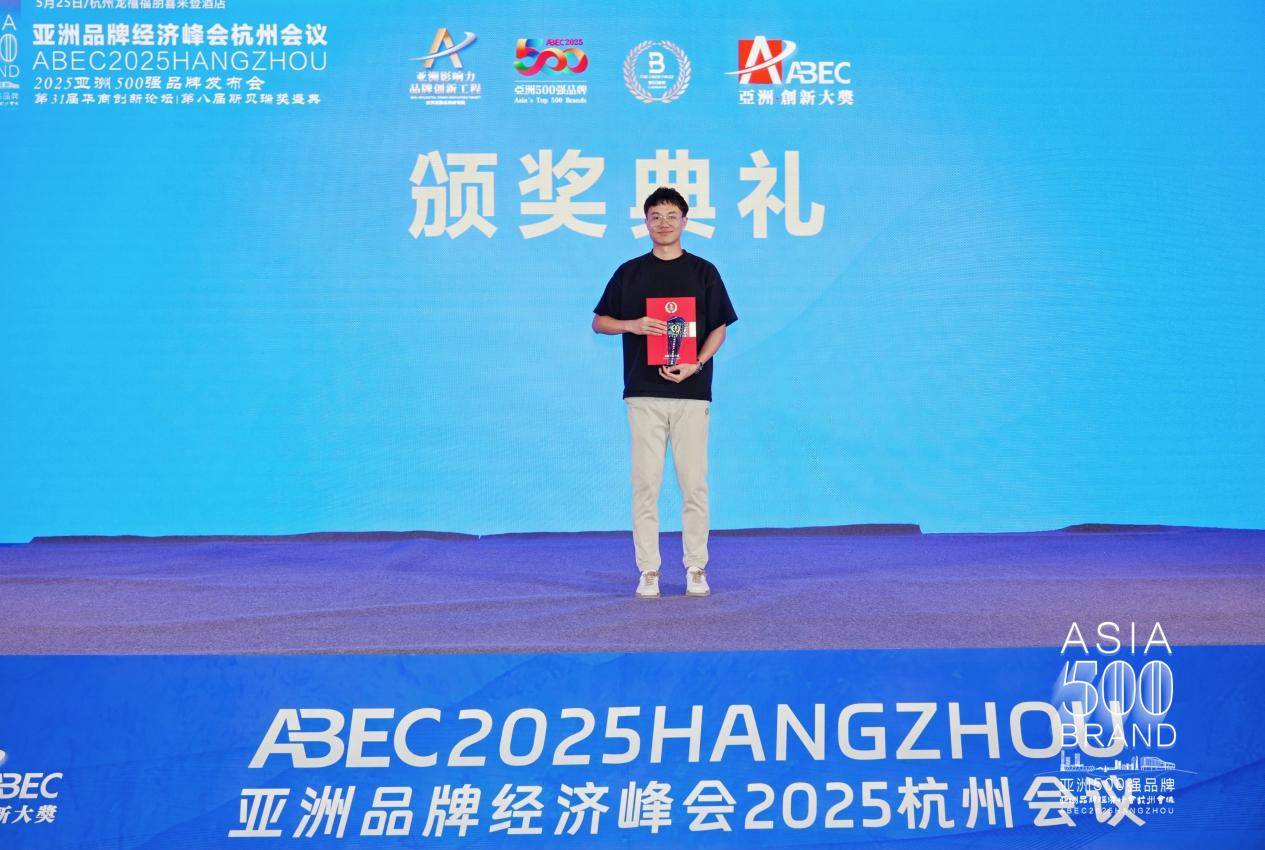
凌子昂不仅是区块链领域的学术先锋,更是一位杰出的行业实践者。作为 NFTGo 的联合创始人,他推动了 NFT(非同质化代币)技术的发展与应用,为数 字资产的流通和价值实现提供了新的思路和解决方案。 在 5 月 25 日于杭州龙禧福朋喜来登酒店成功举办的亚洲品牌经济峰会 2025 杭州会议上,NFTGo 联合创始人凌子昂(笔名龙野)凭借其在区块链和数字货 币领域的杰出贡献,荣获第八届斯贝瑞奖 2025年度科技创新人物。这一殊荣不仅是对他过去九年在区块链行业深耕的肯定,更是对其未来潜力的高度期 待。 本次活动以 "创新无界,大浪淘沙始见金" 为主题,吸引了来自中国香港、迪拜、泰国、新加坡以及全国各地的 300 多位企业家、行业专家及品牌创始人。 活动旨在探讨品牌经济的创新趋势与数字化生态下的商业机遇,为企业领袖及创新实践者提供了一个高端对话与资源整合的平台。在众多优秀候选者中脱颖 而出,凌子昂的获奖充分彰显了他在区块链领域的卓越实力与行业影响力。 九年深耕,铸就行业标杆 凌子昂在区块链和数字货币行业拥有 9 年的研究和从业经验,是最早涉足比特币定价研究的学者之一。他著有多篇相关论文,并出版了《解锁新密码——从 区 ...