
NVIDIA Rubin GPU

Search documents
AI算力行业周报:英伟达GTC 2026正式开幕,OFC 2026见证“互连爆发”
Huaxin Securities· 2026-03-23 05:24
证 券 研 究 报 告 行业周报 英伟达GTC 2026正式开幕, OFC 2026见证"互连爆发" AI算力行业周报 投资评级: ( ) 报告日期: 推荐 维持 2026年03月23日 ◼ 分析师:何鹏程 ◼ SAC编号:S1050525070002 投 资 要 点 英伟达GTC 2026正式开幕,从芯片供应商转型全栈AI基础设施平台 当地时间3月16日,英伟达GTC 2026正式开幕。面对市场高度关注的算力需求天花板与业绩持续性问题,黄仁勋 预期Blackwell与Rubin的AI芯片,到2027年的需求将达到至少1万亿美元,这较去年的预测已经翻倍。在硬件系 统层面,英伟达介绍了其有史以来最复杂的AI计算系统Vera Rubin,同时官宣七款新芯片现已全面投产。其中包 括:NVIDIA Vera CPU、NVIDIA Rubin GPU、NVIDIA NVLink 6交换机、NVIDIA ConnectX® -9 SuperNIC、 NVIDIA BlueField® -4 DPU和NVIDIA Spectrum -6以太网交换机,以及新纳入的 NVIDIA Groq 3 LPU。除了硬 件壁垒,黄仁勋将 ...

英伟达GTC2026正式开幕,OFC2026见证“互连爆发”
Huaxin Securities· 2026-03-23 03:00
证 券 研 究 报 告 行业周报 英伟达GTC 2026正式开幕, OFC 2026见证"互连爆发" AI算力行业周报 投资评级: ( ) 报告日期: 推荐 维持 2026年03月23日 ◼ 分析师:何鹏程 ◼ SAC编号:S1050525070002 投 资 要 点 诚信、专业、稳健、高效 请阅读最后一页重要免责声明 PAGE 2 重点关注公司及盈利预测 | 公司代码 | 名称 | 2026-03-20 股价 | | EPS | | | PE | | 投资评级 | | --- | --- | --- | --- | --- | --- | --- | --- | --- | --- | | | | | 2024 | 2025E | 2026E | 2024 | 2025E | 2026E | | | 002130.SZ | 沃尔核材 | 24.61 | 0.67 | 0.81 | 1.39 | 36.73 | 30.38 | 17.76 | 未评级 | | 002475.SZ | 立讯精密 | 48.22 | 1.86 | 2.33 | 3.00 | 25.92 | 20.68 | 16.06 | 未评级 ...


英伟达连发7款“王炸”芯片,目标从芯片商转向AI工厂!黄仁勋的思路变了?业内:一句话总结就是“卖标准”
Mei Ri Jing Ji Xin Wen· 2026-03-18 09:26
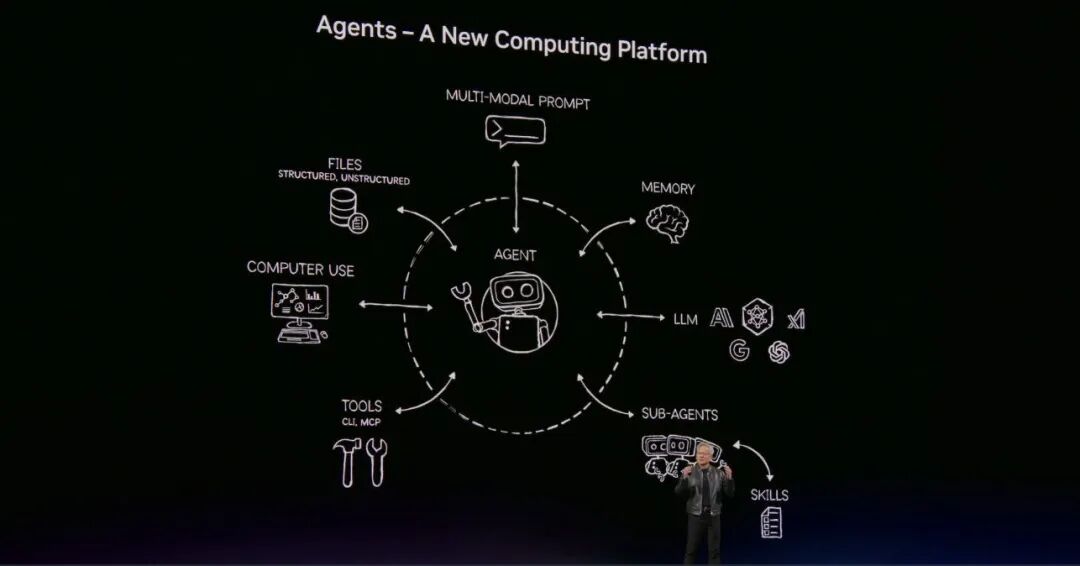
每经记者|杨卉 每经编辑|程鹏 董兴生 记者|杨卉 编辑|程鹏 董兴生 杜波 校对|陈柯名 当地时间3月16日,英伟达创始人、CEO黄仁勋时隔一年再次出现在圣何塞SAP中心的舞台,身穿标志性皮衣,开启了"GTC 2026"的主题演讲。 尽管开始前黄仁勋就提醒,"这是一场科技大会",但整场演讲下来,从人形机器人到智能驾驶,再到近期大火的"龙虾"以及7款"王炸"芯片,黄仁勋还是 将演讲开出了新品发布会的味道。 3月17日,现场参加GTC大会的至顶网总裁高飞告诉《每日经济新闻》记者,在他看来,黄仁勋的整个思路,其实是跟着"烧更多Token(AI将输入文本拆 解后的最小处理单位)"的模式走。此外,业内人士还总结了黄仁勋的三个"大招":构建系统生态,筑高门槛防止对手"抱走肥肉";提供"烧Token"的工 具,引入数字孪生仿真+Agent(智能体),方便用户多"烧";优化系统降低Token成本,吸引更多用户。 伴随着一系列新品,黄仁勋称,英伟达正在从一家芯片公司转向一家AI工厂、AI基础设施公司。不过,在独立国际策略研究员陈佳看来,此前英伟达表 面上是在卖算力,实际一直在卖算力生态,最近更是利用生成式大模型与英伟达3D图 ...

英伟达塑造“Token经济学”
2 1 Shi Ji Jing Ji Bao Dao· 2026-03-17 23:10
3月17日凌晨,被誉为AI"超级碗"与AI"春晚"的英伟达GTC开幕,"AI教主"、英伟达创始人兼CEO黄仁勋再次站在舞台中央,用一场技术风暴 刷新着物理极限。 英伟达宣布,Vera Rubin(最新芯片架构)目前已有七款新芯片全面投入生产,Vera Rubin平台正在开启 Agentic AI新时代,构建全球最大的AI 工厂。 具体而言,这些芯片产品包括:NVIDIA Vera CPU(英伟达已进军服务器CPU),NVIDIA Rubin GPU(GPU王牌产品),NVIDIA NVLink 6 (第六代NVLink交换机芯片,芯片内部互联),NVIDIA ConnectX-9 SuperNIC(超级网卡),NVIDIA BlueField-4 DPU (存储芯片), NVIDIA Spectrum-6 (以太网交换机芯片,支持CPO技术),以及新集成的 NVIDIA Groq 3 LPU(收编Groq后的首款芯片)。 可以看到,芯片家族中不仅有大家平常熟知的CPU、GPU产品,还包括来自Groq的LPU,以及存储芯片、交换机芯片等全系产品。这些芯片又 能够组成5款机架,在数据中心运行。 "Vera Rub ...
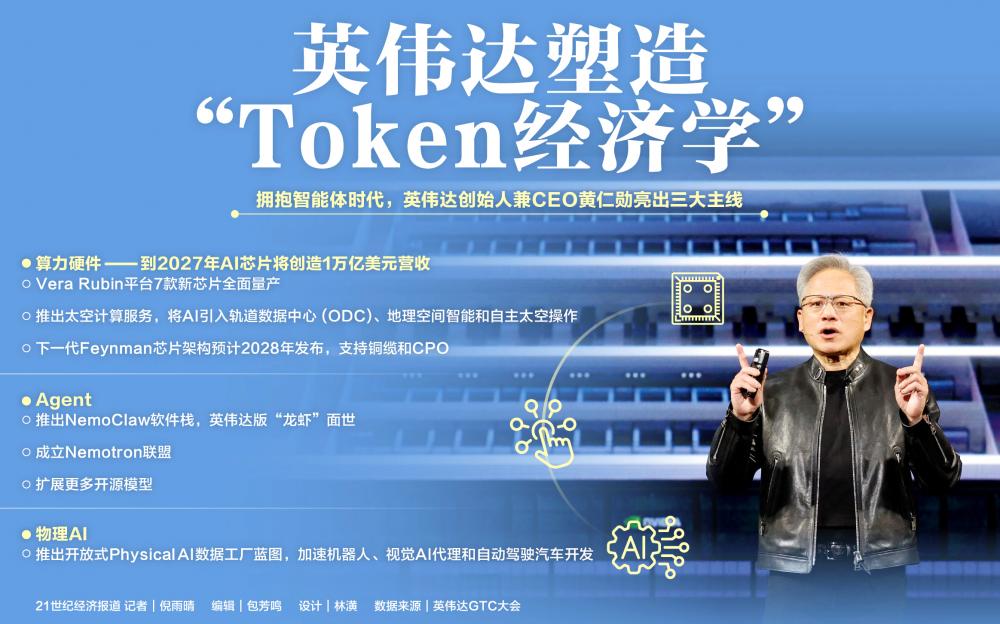
黄仁勋塑造“Token经济学” 英伟达拥抱智能体时代
2 1 Shi Ji Jing Ji Bao Dao· 2026-03-17 22:29
英伟达宣布,Vera Rubin(最新芯片架构)目前已有七款新芯片全面投入生产,Vera Rubin平台正在开 启 Agentic AI新时代,构建全球最大的AI工厂。 具体而言,这些芯片产品包括:NVIDIA Vera CPU(英伟达已进军服务器CPU),NVIDIA Rubin GPU (GPU王牌产品),NVIDIA NVLink 6(第六代NVLink交换机芯片,芯片内部互联),NVIDIA ConnectX-9 SuperNIC(超级网卡),NVIDIA BlueField-4 DPU (存储芯片),NVIDIA Spectrum-6 (以 太网交换机芯片,支持CPO技术),以及新集成的 NVIDIA Groq 3 LPU(收编Groq后的首款芯片)。 可以看到,芯片家族中不仅有大家平常熟知的CPU、GPU产品,还包括来自Groq的LPU,以及存储芯 片、交换机芯片等全系产品。这些芯片又能够组成5款机架,在数据中心运行。 "Vera Rubin是一次代际跃迁——七个突破性芯片、五种机架、一台巨型超级计算机——为AI的每一个 阶段提供动力,"黄仁勋表示,"随着Vera Rubin的推出,Agentic ...
到明年底,至少赚1万亿”!英伟达连发7款芯片,还推出自己的“龙虾
Guo Ji Jin Rong Bao· 2026-03-17 11:24
北京时间3月17日凌晨,英伟达GTC 2026大会在美国圣何塞正式开幕。公司创始人兼CEO黄仁勋身穿标志性皮夹克,发表了长达两个半小时的主题演讲。 黄仁勋不仅给出了到2027年AI芯片营收至少达到1万亿美元的激进预测,还一口气发布了七款新芯片、抛出了"Token工厂经济学"新概念,并表示发布 NemoClaw用于支持OpenClaw("龙虾")。 资本市场对此反应积极,英伟达股价在盘中一度上涨超过4%,尽管收盘时涨幅回落至1.6%,但这依然反映出市场对此次演讲内容的高度关注。 然而,A股算力板块在3月17日早盘遭遇大跌,光模块、光通信等赛道领跌市场,天孚通信(300394)、长光华芯等龙头股跌幅超过10%,显示出"利好兑 现"后的短期回调压力与资金对未来技术路径不确定性的担忧。 将创造万亿收入 就在市场对AI算力需求天花板存在普遍疑虑之际,黄仁勋用一组极具冲击力的数字打破了沉默。 他预测,英伟达新一代AI加速芯片架构Blackwell与下一代Rubin产品,到2027年底将创造至少1万亿美元收入。 这一数字相较于他在2025年10月给出的5000亿美元销售预测直接翻倍。 黄仁勋解释称,这一预期的提升源于计算需 ...
黄仁勋发表重磅演讲!称2027营收至少万亿美元,“龙虾”就是新操作系统!英伟达宣布:七款新芯片全面投产
Mei Ri Jing Ji Xin Wen· 2026-03-17 02:53
此外,他定义了"代币工厂(Token Factory)"概念,指出未来的数据中心将不再是存储中心,而是生产智能代币的工厂。 英伟达宣布七款新芯片投入生产 据媒体报道,在GTC大会上,英伟达宣布,Vera Rubin(最新芯片架构)目前已有七款新芯片全面投入生产,Vera Rubin平台正在开启 Agentic AI新时代, 构建全球最大的AI工厂。 具体而言,这些芯片产品包括: NVIDIA Vera CPU(没错,英伟达已进军服务器CPU) 2026年3月16日,英伟达GTC 2026大会正式开幕,英伟达创始人兼CEO黄仁勋发表了主题演讲。 黄仁勋预计英伟达新一代AI加速芯片架构Blackwell与下一代Rubin产品,到2027年底将创造至少1万亿美元收入。这一数字远超黄仁勋2025年10月给出的 5000亿美元销售预测,再次凸显AI基础设施投资浪潮仍在快速扩张。 而Vera Rubin平台把这些芯片全部汇聚在一起,可以形成一台强大的AI超级计算机。无论是大规模预训练、后训练和测试时扩展,还是实时智能推理,这 台算力性能巨兽都可以支持。 "Vera Rubin是一次代际跃迁——七个突破性芯片、五种机架、一 ...

王炸!英伟达连发7款芯片,黄仁勋演讲刷屏
2 1 Shi Ji Jing Ji Bao Dao· 2026-03-17 01:53
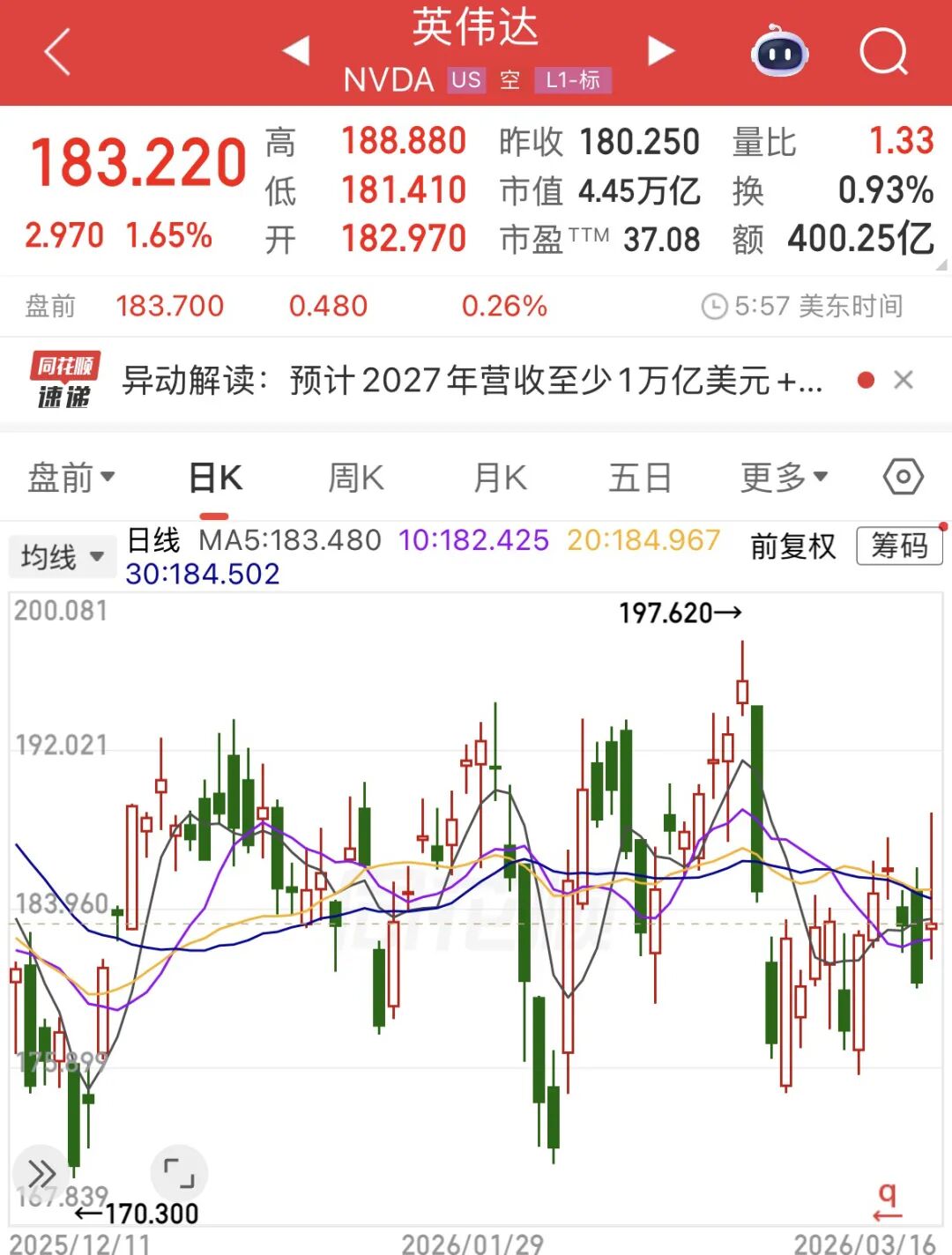
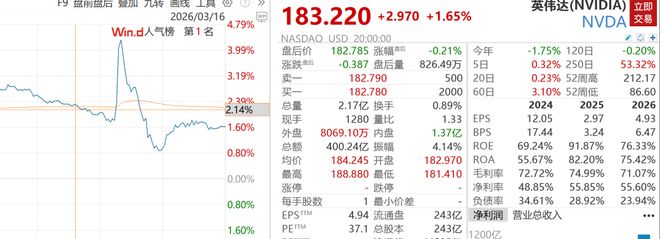
记者丨倪雨晴 编辑丨包芳鸣 江佩霞 视频|王学权 3月17日凌晨,英伟达年度GTC大会如期而至,"AI教主"、英伟达创始人兼CEO黄仁勋在主题演讲中宣 布多项重磅技术突破,并抛出新一代AI加速芯片架构等将至少创收1万亿美元的激进预测。 黄仁勋发表演讲后,英伟达股价应声大涨,盘中最高涨4.31%,截至收盘涨1.65%。 | Fy 盛舸盛后 盟川 几转 圆线 上具 (2) >> | 2026/03/16 4.79% | | 183.220 +2.970 +1.65% | | | 英伟达(NVIDIA) 立即 | NVDA 交易 | | --- | --- | --- | --- | --- | --- | --- | --- | | Win.d人气榜 第1名 | | | NASDAO USD 20:00:00 | | | | 10+ | | 3.99% | | 盘后价 | 182.785 涨幅 | -0.21% 今年 | -1.75% 120日 | | -0.20% | | | | 张壁明 | -0.387 盘后量 | 826.49万 5日 | 0.32% 250日 | | 53.32% | | 3.19% | ...
王炸!英伟达连发7款芯片,黄仁勋演讲刷屏
21世纪经济报道· 2026-03-17 01:44
记者丨倪雨晴 编辑丨包芳鸣 江佩霞 视频|王学权 3月17日凌晨,英伟达年度GTC大会如期而至,"AI教主"、英伟达创始人兼CEO黄仁勋在主题演讲中宣布多项重磅技术突破,并抛出新一代AI 加速芯片架构等将至少创收1万亿美元的激进预测。 黄仁勋发表演讲后,英伟达股价应声大涨,盘中最高涨4.31%,截至收盘涨1.65%。 | Fy 盛削盛后 營加 几转 圈线 工具 (2) | (3) » | | | | | 英伟达(NVIDIA) 立即 | | | | --- | --- | --- | --- | --- | --- | --- | --- | --- | | 2026/03/16 4,79% Wn.d人气榜 第1名 | | | 183.220 +2.970 +1.65% | | | | | NVDA 父易 | | | | | NASDAO USD 20:00:00 | | | | | 1 4 4 | | 3.99% | | 盘后价 | 182.785 涨幅幅 | -0.21% | 交生 | -1.75% 120日 | | -0.20% | | | | 涨跌幅 | -0.387 盘后量 | 826.49万 | ...

燃爆!英伟达连发7款芯片,黄仁勋剑指万亿AI芯片收入
2 1 Shi Ji Jing Ji Bao Dao· 2026-03-17 01:17
21世纪经济报道记者 倪雨晴 3月17日凌晨,被誉为AI"超级碗"与AI"春晚"的英伟达GTC开幕,"AI教主"、英伟达创始人兼CEO黄仁 勋再次站在舞台中央,用一场技术风暴刷新着物理极限。 英伟达宣布,Vera Rubin(最新芯片架构)目前已有七款新芯片全面投入生产,Vera Rubin平台正在开 启 Agentic AI新时代,构建全球最大的AI工厂。 具体而言,这些芯片产品包括: NVIDIA Vera CPU(没错,英伟达已进军服务器CPU) NVIDIA Rubin GPU (GPU王牌产品) NVIDIA NVLink 6(第六代NVLink交换机芯片,芯片内部互联) NVIDIA ConnectX-9 SuperNIC(超级网卡) NVIDIA BlueField-4 DPU (存储芯片) NVIDIA Spectrum-6 (以太网交换机芯片,支持CPO技术) 以及新集成的 NVIDIA Groq 3 LPU(收编Groq后的首款芯片) 可以看到,芯片家族中不仅有大家平常熟知的CPU、GPU产品,还包括来自Groq的LPU,以及存储芯 片、交换机芯片等全系产品。这些芯片又能够组成5款机架,在 ...