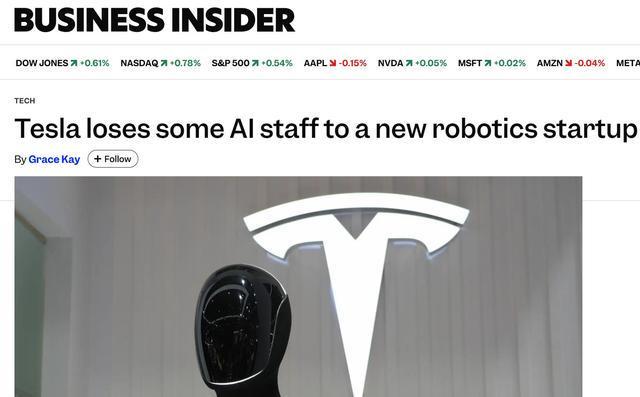
Neo家用机器人

Search documents
人工智能年度盘点:2025年十大核心趋势及2026年关注焦点
Xin Lang Cai Jing· 2025-12-30 15:15
Group 1: Meta's Acquisition - Meta announced the acquisition of Chinese AI startup Manus for over $2 billion, a significant increase from its previous valuation of $500 million during a funding round in April [1][16] - This acquisition marks a substantial return on investment for its backers, including Benchmark Capital, ZhenFund, and Redpoint Ventures, and continues Meta's trend of acquisitions aimed at restructuring its AI business [1][16] - The effectiveness of this acquisition in revitalizing Meta's AI business remains uncertain [1][16] Group 2: AI Industry Trends - The AI industry continues to attract venture capital and talent, but signs of market fatigue are emerging, including delays in data center construction [2][17] - OpenAI's previous dominance in the AI chatbot market has diminished, with leading companies like OpenAI, Anthropic, and Google now offering comparable models [2][17] - Major clients of AI models, such as Salesforce and Microsoft, are facing sales challenges for their AI-enabled products, raising concerns about an AI bubble [2][17] Group 3: Key Developments in AI - The launch of the DeepSeek model by a Chinese hedge fund in January 2025 created significant industry buzz, claiming to rival top models from OpenAI and others, although its actual training costs were later revealed to be much higher than initially stated [4][19] - Reinforcement learning technology has gained popularity, with major AI labs adopting it to enhance model performance across various applications [6][20] - Over 25 AI application startups have achieved annual revenues of at least $100 million, indicating a shift towards profitability in the sector [7][23] Group 4: Meta's Challenges - 2025 is a challenging year for Meta, with its new Llama 4 model receiving criticism and a significant investment of $14.3 billion in Scale AI yielding limited results [7][23] - Meta's new AI team has struggled to produce successful applications, leading to organizational changes and talent loss [7][23] Group 5: Google's Resurgence - Google has made a strong comeback in the AI space in 2025, releasing several well-received models, including Gemini 3.0, which achieved significant breakthroughs in code generation [8][24] - Despite still trailing behind ChatGPT in user numbers, Google's rapid progress is noteworthy [8][24] Group 6: Financing Trends - The trend of circular financing in the AI industry continues, with companies relying on funding from tech giants like Microsoft and Nvidia to purchase necessary computing resources [9][25] - This financing model has proven effective for AI labs in managing their substantial operational costs [9][25] Group 7: Regulatory Environment - The Trump administration has introduced favorable policies for the AI industry, including prohibiting state-level regulations and expediting data center project approvals [10][26] - These measures have been influenced by significant investments from tech companies to gain favor with the administration [10][26] Group 8: Robotics and AI - Despite substantial investments in robotics startups, the anticipated advancements in practical robots powered by AI have largely failed to materialize [11][27] - The high cost and operational limitations of new robotic products have raised questions about their viability in the market [11][27] Group 9: Research Directions - There is growing skepticism among AI researchers regarding the feasibility of achieving artificial general intelligence (AGI) with current technologies [12][28] - The concept of "continuous learning" is emerging as a new research direction, which could significantly impact the industry if successfully developed [12][28] Group 10: Market Movements - Leading AI companies like OpenAI and Anthropic are signaling intentions to go public in the coming years, driven by the capital-intensive nature of their businesses [13][29] - Successful IPOs could provide individual investors with opportunities to benefit from the AI sector's growth, but potential market corrections pose risks [13][29] Group 11: Industry Dynamics - André Karpathy's recent shift in perspective on AI programming tools highlights the evolving landscape of AI applications in software engineering [14][30] - His endorsement of AI tools suggests a significant transformation in the role of programmers, emphasizing the integration of AI technologies [14][30]





由特斯拉技术班底“组团”加盟,Sunday Robotics携家用机器人正式亮相
Huan Qiu Wang Zi Xun· 2025-12-01 06:36
Core Insights - Sunday Robotics has officially launched its first home robot product, "Memo," on November 19, 2023, after ending its secretive operational phase [1][4] - The core team of Sunday Robotics includes at least 10 former senior employees from Tesla's AI and robotics projects, indicating strong expertise in the field [1][4] Company Overview - Sunday Robotics was co-founded by Cheng Chi and Zhao Dongni in 2024, with a current workforce of approximately 50 employees, many of whom have significant experience at Tesla [4] - Key team members include Perry Jia, who worked at Tesla for nearly six years, and Nadeesha Amarasinghe, who served as the AI infrastructure engineering lead for over seven years [4] Product Features - The "Memo" robot is designed for practical household tasks, showcasing capabilities such as picking up wine glasses, loading dishwashers, and folding socks, emphasizing its utility in home environments [4] Industry Context - The home robotics sector is currently experiencing a wave of innovation, with another startup, 1X, having recently launched its Neo home robot and planning to deliver it to consumers by 2026 [5]