Memo机器人

Search documents
“非完全人形”机器人正在攻入家庭场景
Tai Mei Ti A P P· 2025-12-29 12:51
Core Insights - The year 2025 is expected to see significant growth in humanoid robotics, driven by capital and market forces, but technical bottlenecks remain a key challenge for large-scale deployment [1] - Companies are focusing on both humanoid and "non-humanoid" robots, with the latter gaining priority in consumer markets due to their faster commercialization potential [1][5] Industry Trends - Humanoid robots face high costs due to unresolved manufacturing challenges and limitations in their ability to operate in unstructured environments [1][3] - Quadruped robots, or "machine dogs," are becoming more accepted in consumer settings due to lower technical requirements and cost advantages compared to humanoid robots [2][3] - The quadruped robot market is growing at over 60% annually, indicating a strong demand and market acceptance [4] Company Developments - Key players in the quadruped robot sector include Yushu, Yundongchu, and Weilan, all of which initially launched their machine dog products to establish market presence [5] - The company Sunday has introduced a new household robot, Memo, which utilizes a wheeled design and a simplified gripper, avoiding the complexities faced by humanoid robots [6][8] - Sunday has developed a Skill Capture Glove to collect data for training Memo, achieving a 90% success rate in converting real-world data into usable training data for the robot [7] Market Dynamics - The cost of Memo is approximately $20,000, with potential reductions in future production, highlighting the importance of cost management in consumer robotics [8] - The development of robots like Memo illustrates the need for high adaptability in household environments and the ability to perform a variety of tasks [9] - The industry must overcome cost and production challenges to unlock the consumer market for humanoid robots, focusing on design and core technology advancements [9]

由特斯拉技术班底“组团”加盟,Sunday Robotics携家用机器人正式亮相
Huan Qiu Wang Zi Xun· 2025-12-01 06:36
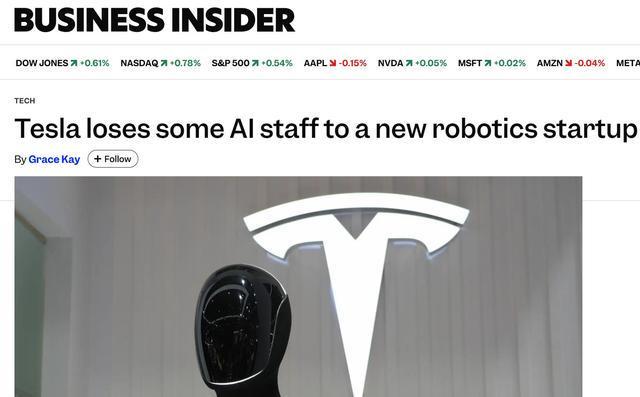
Core Insights - Sunday Robotics has officially launched its first home robot product, "Memo," on November 19, 2023, after ending its secretive operational phase [1][4] - The core team of Sunday Robotics includes at least 10 former senior employees from Tesla's AI and robotics projects, indicating strong expertise in the field [1][4] Company Overview - Sunday Robotics was co-founded by Cheng Chi and Zhao Dongni in 2024, with a current workforce of approximately 50 employees, many of whom have significant experience at Tesla [4] - Key team members include Perry Jia, who worked at Tesla for nearly six years, and Nadeesha Amarasinghe, who served as the AI infrastructure engineering lead for over seven years [4] Product Features - The "Memo" robot is designed for practical household tasks, showcasing capabilities such as picking up wine glasses, loading dishwashers, and folding socks, emphasizing its utility in home environments [4] Industry Context - The home robotics sector is currently experiencing a wave of innovation, with another startup, 1X, having recently launched its Neo home robot and planning to deliver it to consumers by 2026 [5]


14万一台家务机器人!斯坦福华人博士具身创业首款产品亮相,用户还能买回去自己教
量子位· 2025-11-20 09:01
Core Viewpoint - The article introduces Memo, a household robot developed by Stanford alumni, highlighting its capabilities in performing various domestic tasks and its innovative underlying technology [8][60]. Group 1: Product Features - Memo features a visually appealing design with a baseball cap and a white-orange color scheme, and it is capable of performing tasks such as loading dishes into a dishwasher, folding socks, and making coffee [3][4][10]. - The robot stands 1.7 meters tall, weighs 170 pounds (approximately 77.1 kg), and has a reach of 0.8 meters, with a vertical lift capability of up to 2.1 meters [43]. - Memo operates with a speed comparable to human walking, averaging 1 meter per second, and can run for 4 hours on a full charge, which takes about 1 hour [55][56]. Group 2: Technology and Innovation - The core technology behind Memo is the ACT-1 model, which integrates long-term control and map-based navigation, allowing it to perform tasks in unfamiliar environments [20][21]. - ACT-1 relies entirely on human data for training, utilizing a unique data collection hardware called skill capture gloves, which significantly reduces the cost of traditional data collection methods [29][31][36]. - The robot can learn new skills from users, enabling them to teach Memo tasks directly, which enhances its adaptability and functionality [41][42]. Group 3: Development and Future Plans - Memo is currently in the testing phase, with an expected official launch in 2026 [59]. - The founding team, consisting of Tony Zhao and Cheng Chi, aims to create a friendly, safe, practical, and affordable autonomous robot by integrating hardware, data, and algorithms [60].