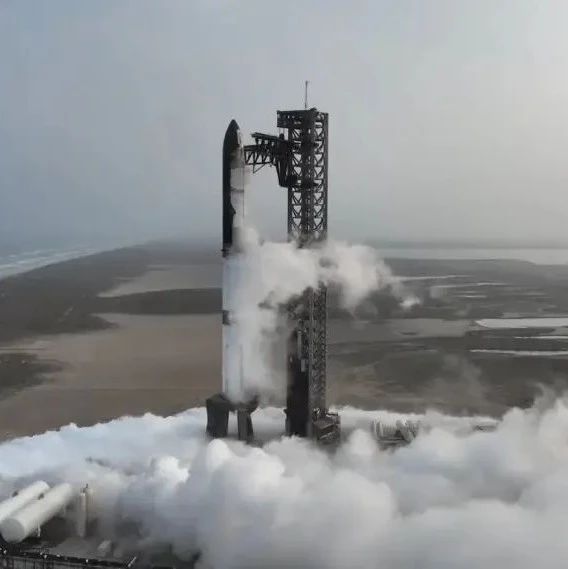
Neutron火箭

Search documents
海外科技周报(26/02/23-26/02/27):美伊冲突升级超预期看好黄金、VIX、人民币资产-20260302
Hua Yuan Zheng Quan· 2026-03-02 11:00
Investment Rating - The report does not provide a specific investment rating for the industry [4] Core Views - The uranium market is currently in a "structural tight balance + policy reinforcement" phase, with long-term growth expectations driven by nuclear power extensions, new reactor constructions, and small modular reactors (SMRs) [14] - The supply side is constrained by project approval cycles, capital expenditure restrictions, and geopolitical risks, leading to a slow release of new effective production capacity [14] - The report suggests that companies with quick production capacity, processing capabilities, and inventory adjustment abilities are more likely to achieve excess returns amid price fluctuations [14] - The rebuilding of the domestic nuclear fuel supply chain in the U.S. is accelerating, with policy support and strategic reserve mechanisms gradually being implemented, indicating a potential "volume and price increase" phase in the industry [14] - The report recommends focusing on UUUU, which is expected to benefit from increased sales and profit margin expansion in this environment [14] Summary by Sections 1. Uranium Industry - UUUU reported its Q4 2025 financial results, achieving over 170,000 pounds of new uranium production and over 100,000 pounds of U3O8 processed at White Mesa [11][12] - The company ended the year with over 200,000 pounds of uranium inventory, providing flexibility for 2026 deliveries [11] - UUUU's sales for 2025 reached 65,000 pounds at an average price of $74.20 per pound, with production costs at Pinyon Plain estimated between $23 and $30 per pound [12][13] - The weighted average cost of finished products is expected to decrease from $43 per pound by the end of 2025 to just above $30 per pound [13] - The company holds six long-term contracts covering about 50% of its capacity, with management emphasizing the importance of maintaining flexibility in the spot market [12][13] - For 2026, UUUU anticipates uranium mining volumes of 200,000 to 250,000 pounds and processing volumes of 250,000 pounds [13] - The report predicts that the gross margin for uranium business could rebound to over 50% as sales volumes increase and costs decrease [13] 2. Commercial Aerospace - The commercial aerospace sector showed relative stability, with Rocket Lab and Redwire's Q4 2025 financial reports being the main focus [20] - Rocket Lab reported a revenue of $601.8 million for the year, a 38% year-on-year increase, with a record Non-GAAP gross margin of 44.3% [20] - Redwire also showed strong growth, with Q4 revenue of $108.8 million, a 56.4% increase year-on-year, and a record backlog of $411.2 million [20] - However, development risks and delays in new medium-lift rockets like Neutron and Starship remain core issues for the industry [20] - The report indicates that the commercial aerospace sector has strong fundamental catalysts, with high-frequency launches and defense contracts driving revenue growth [20]
商业航天行业研究系列5:Rocket Lab:从小火箭之王到太空基建总包商,被低估的航天第二极
SINOLINK SECURITIES· 2026-01-23 05:28
Investment Rating - The report suggests an "overweight" investment rating for the commercial space industry, particularly focusing on companies with state-owned backgrounds and those positioned in the core supply chain of commercial rockets and satellites [4]. Core Insights - Rocket Lab is positioned as a leading end-to-end space company, redefining access to space and applications, with a vision to build a comprehensive infrastructure from launch vehicles to space applications [13][14]. - The company has successfully transitioned from a small rocket launch provider to a vertically integrated space systems giant, establishing a competitive moat second only to SpaceX [6]. - The report emphasizes the importance of the Neutron rocket, expected to launch in 2026, as a strategic tool to challenge SpaceX's dominance in the medium-lift market [6][62]. - The commercial space industry is undergoing structural changes akin to a new age of exploration, with significant growth expected in 2026, marking a pivotal year for China's commercial space sector [6][9]. Summary by Sections Company Positioning - Rocket Lab aims to redefine space access and applications, focusing on a full-spectrum capability from launch to operational services [13]. - The company has a rich history of engineering evolution, transitioning from a technology validation phase to a major player in the aerospace industry [14]. Vertical Integration - Rocket Lab's vertical integration strategy allows it to control costs and enhance supply chain resilience, making it a formidable competitor in the space industry [6][42]. - The company has made strategic acquisitions to bolster its capabilities in satellite manufacturing and components, enhancing its position in the supply chain [6][33]. Financial Analysis - Rocket Lab's revenue is projected to grow significantly, with a five-year compound annual growth rate (CAGR) of 88%, driven by its dual business model of launch services and space systems [34]. - The company has a robust order backlog of $1.1 billion, providing visibility into future revenue streams [34]. Launch Services - The Electron rocket is recognized as a leader in the small satellite launch market, with a successful track record of 79 launches and the deployment of 245 satellites [53]. - The report highlights the strategic value of the HASTE program, which serves U.S. defense needs and offers high profit margins compared to standard commercial launches [60]. Future Outlook - The introduction of the Neutron rocket is expected to expand Rocket Lab's service capabilities into the medium-lift market, directly competing with SpaceX's Falcon 9 [61]. - The report anticipates that the commercial space industry will accelerate in 2026, transitioning from speculative investments to fundamental performance-based investments [9].

?蹭上“太空轨道算力”风口的Rocket Lab(RKLB.US)开年“喜忧参半”:Neutron受挫 Electron高轨告捷
Zhi Tong Cai Jing· 2026-01-22 14:28
Core Viewpoint - Rocket Lab (RKLB.US) faces mixed results at the start of the year, with setbacks in the Neutron rocket development but successful launches of the Electron rocket, highlighting both challenges and achievements in its operations [1][2]. Group 1: Neutron Rocket Development - The Neutron rocket's first stage tank experienced a rupture during a static pressure test, which the company states is not uncommon during qualification testing [1]. - Despite the setback, Rocket Lab continues to advance the Neutron rocket's development, with the next first stage tank already in production [1]. - Analyst Andre Madrid from BTIG predicts that Neutron will complete a test launch and a paid launch in 2026, followed by multiple paid launches in subsequent years, although initial launches may be delayed depending on investigation results [2]. Group 2: Electron Rocket Success - Rocket Lab successfully launched its mission "The Cosmos Will See You Now," deploying two significant satellites into a near-circular Earth orbit at 1,050 kilometers, marking a successful milestone for its Electron rocket [2]. - The Electron rocket has established a reputation as a versatile and reliable small launch vehicle, capable of meeting diverse mission requirements [2]. Group 3: Financial Performance and Market Position - Rocket Lab's stock has seen significant growth, with a 26% increase in 2026 and a remarkable 175% rise in 2025, driven by both the company's fundamentals and the overall aerospace sector's valuation re-evaluation [3]. - The company secured an $816 million contract from the U.S. Space Development Agency to design and manufacture missile warning and tracking satellites, positioning Rocket Lab as a prime contractor in the defense aerospace sector [4]. - In Q3 2025, Rocket Lab reported $155 million in revenue, a 48% year-over-year increase, with a GAAP gross margin of 37%, and provided guidance for Q4 revenue between $170 million and $180 million [4]. Group 4: Competitive Landscape and Future Prospects - Rocket Lab is one of the few companies capable of posing substantial competition to SpaceX, offering both launch services and satellite manufacturing, which differentiates its business model from single-launch companies [7]. - The Neutron rocket is positioned as a competitor to SpaceX's Falcon 9, with its success dependent on achieving timely first flights and establishing a reuse rhythm [8]. - The ongoing trend of space-based AI data centers and computational capabilities is expected to drive further interest and investment in Rocket Lab's initiatives [5][6].
蹭上“太空轨道算力”风口的Rocket Lab(RKLB.US)开年“喜忧参半”:Neutron受挫 Electron高轨告捷
Zhi Tong Cai Jing· 2026-01-22 14:18
Core Viewpoint - Rocket Lab is facing challenges with its Neutron rocket development, as a static pressure test resulted in a failure, but the company remains committed to its development timeline and has successfully launched its first commercial mission in 2026 [1][2]. Group 1: Rocket Lab's Development and Launches - Rocket Lab's Neutron rocket experienced a failure during a static pressure test, which is not uncommon in qualification testing [1] - The company successfully launched its first commercial mission, "The Cosmos Will See You Now," deploying two satellites into a 1,050 km orbit for Open Cosmos [2] - The next Neutron rocket's first stage tank is already in production, and the development plan continues despite the recent test failure [1] Group 2: Financial Performance and Market Position - Rocket Lab's stock has seen significant growth, with a 175% increase in 2025 and a 26% rise in 2026 [3] - The company reported Q3 2025 revenues of $155 million, a 48% year-over-year increase, and provided Q4 revenue guidance of $170-180 million with a gross margin of 37-39% [4] - A major contract worth $816 million from the U.S. Space Development Agency positions Rocket Lab as a prime contractor, enhancing its growth narrative [4] Group 3: Competitive Landscape and Future Prospects - Rocket Lab is one of the few companies that can pose substantial competition to SpaceX, with its business model encompassing both launch services and satellite manufacturing [7] - The Neutron rocket aims to compete with SpaceX's Falcon 9, but its success will depend on achieving a reliable launch cadence and cost efficiency [8] - The ongoing AI and space data center trends, driven by SpaceX, may provide additional market opportunities for Rocket Lab [5]
蹭上“太空轨道算力”风口的Rocket Lab(RKLB.US)开年“喜忧参半”:Neutron受挫 Electron高轨告捷
智通财经网· 2026-01-22 14:16
Core Viewpoint - Rocket Lab is facing challenges with its Neutron rocket development, as a static pressure test resulted in a failure, but the company remains committed to advancing its research and development efforts while maintaining a positive outlook on its upcoming commercial launches in 2026 [1][2]. Group 1: Rocket Lab's Development and Launch Plans - Rocket Lab's Neutron rocket is expected to complete a test launch and a paid launch in 2026, followed by four paid launches in 2027, seven in 2028, and nine in 2029, although initial launches may be delayed depending on investigation results [2]. - The company successfully launched its mission "The Cosmos Will See You Now," deploying two important satellites into a near-circular Earth orbit at 1,050 kilometers, marking a significant achievement for its Electron rocket [2]. Group 2: Financial Performance and Market Position - Rocket Lab's stock has seen significant growth, with a 26% increase in 2026 and a remarkable 175% rise in 2025, driven by both the company's fundamentals and the overall revaluation of the aerospace sector [3]. - The company secured an $816 million contract from the U.S. Space Development Agency to design and manufacture 18 missile warning/tracking satellites, highlighting its transition from a small rocket company to a prime contractor in defense aerospace [4]. Group 3: Competitive Landscape and Future Prospects - Rocket Lab is positioned as a significant competitor to SpaceX, offering a comprehensive business model that includes launch services, satellite manufacturing, and mission capabilities, rather than solely focusing on rocket launches [7]. - The Neutron rocket is aimed at competing with SpaceX's Falcon 9, with its success dependent on timely first flights, reuse rates, and overall operational efficiency [8].
Neutron火箭开发风险难以低估 高盛给予Rocket Lab(RKLB.US)“中性”评级
Zhi Tong Cai Jing· 2025-08-11 07:53
Core Viewpoint - Goldman Sachs has issued a "Neutral" rating for Rocket Lab (RKLB.US) with a target price of $32, highlighting that the company's 2025 revenue exceeds expectations while adjusted EBITDA and EPS meet forecasts [1] Group 1: Financial Performance - Rocket Lab's 2025 revenue has surpassed expectations, indicating strong future growth potential [1] - Adjusted EBITDA and earnings per share (EPS) are in line with expectations, reflecting stable financial performance [1] Group 2: Product Development and Market Position - The company is expected to launch its medium rocket Neutron by the end of this year, although the timeline is challenging and dependent on limited factors [1] - Management provided positive updates regarding Neutron's manufacturing capabilities, progress, and demand [1] - The space systems business is experiencing rapid growth, with Neutron anticipated to further drive this sector [1] Group 3: Market Dynamics - The launch market is constrained in supply, positioning Rocket Lab favorably in both launch and space systems [1] - The company is currently in the development phase of Neutron, which presents significant risks that are difficult to underestimate [1]
Why Rocket Lab Stock Skyrocketed Last Week
The Motley Fool· 2025-07-21 08:48
Core Insights - Rocket Lab's stock experienced a significant increase of 31.7% over the past week, outperforming the S&P 500 index, which rose by 0.6% [1] - Analysts' bullish coverage has led to a substantial valuation expansion for Rocket Lab, reaching a new valuation high amid excitement in the space industry [2] Analyst Coverage and Price Targets - Citi maintained a buy rating on Rocket Lab and raised its one-year price target from $33 to $50 per share, reflecting strong momentum in the defense and aerospace sectors [4] - Bank of America also reiterated a buy rating and increased its one-year price target from $30 to $50 per share, highlighting opportunities with Rocket Lab's reusable Neutron rockets and satellite launch technologies [5] - Following these updates, Rocket Lab's stock closed above the $50 price target set by both Citi and Bank of America [6] Market Position and Growth Potential - The space commercialization trend is seen as a growth opportunity, with Rocket Lab well-positioned to capitalize on long-term growth in the space industry [7] - The company has achieved a market capitalization of $23.7 billion and is valued at approximately 41 times this year's expected sales, following a 102% increase in stock price this year [7] - Despite the growth-dependent valuation making the shares a risky investment, there is potential for explosive returns if Rocket Lab continues to succeed in launch services and related areas [8]


Rocket Lab(RKLB.US)股价火箭式升空! 获欧洲航天局订单+实现第67次Electron发射
智通财经网· 2025-06-27 00:03
Core Viewpoint - Rocket Lab's stock surged over 11% to a historic high after being selected by the European Space Agency (ESA) to deploy satellites, marking a significant milestone for the company in the competitive space industry [1] Group 1: Company Developments - Rocket Lab will use its Electron rocket to launch two Pathfinder A spacecraft for ESA, which are crucial for the future European large-scale navigation constellation, with the mission planned for December 2025 [1] - The company celebrated its 67th successful launch of the Electron rocket, deploying four satellites for geospatial analysis provider HawkEye 360 [1] - The next launch is scheduled within 48 hours, indicating a rapid turnaround for the Electron rocket from Launch Complex 1 [1] Group 2: Competitive Landscape - Rocket Lab, founded by Peter Beck, is known for its cost-effective launch services for small satellites and is now developing the Neutron rocket to enter the medium-lift market [2] - The company is attempting to penetrate SpaceX's core market by focusing on smaller, faster launches, while SpaceX dominates with its heavy and medium reusable rocket systems [2][3] - Rocket Lab's strengths lie in its focus and rapid iteration capabilities, as well as its experience in manufacturing and testing small rockets, which could help it fill the medium launch gap and increase competitiveness against SpaceX [3]
Should You Buy RKLB Stock At $33?
Forbes· 2025-06-24 13:30
Core Viewpoint - Rocket Lab USA has seen a significant stock price increase of approximately 600% over the past year, driven by successful rocket launches and new contracts, particularly for its Neutron rocket [2][3]. Financial Performance - Rocket Lab's revenues have grown at an average rate of 85.4% over the last three years, with a 65.0% increase from $282 million to $466 million in the last 12 months [7]. - Quarterly revenues rose by 32.1% to $123 million from $93 million year-over-year [7]. - The company's operating income over the last four quarters was -$206 million, resulting in an operating margin of -44.2% [15]. - Net income for the same period was -$207 million, indicating a net income margin of -44.3% [15]. Valuation Metrics - Rocket Lab's price-to-sales (P/S) ratio stands at 35.7, significantly higher than the S&P 500's ratio of 3.1, suggesting that the stock is expensive relative to its sales [6]. - The current valuation appears to have priced in positive news, trading at 35 times its trailing revenues [13]. Financial Stability - The company's balance sheet is strong, with a debt figure of $490 million against a market capitalization of $17 billion, resulting in a low debt-to-equity ratio of 3.4% [15]. - Cash and cash equivalents amount to $428 million, making up 34.1% of total assets of $1.3 billion, indicating a strong cash-to-assets ratio [15]. Growth and Profitability - Growth is categorized as extremely strong, while profitability is extremely weak, reflecting the challenges in achieving positive margins at this stage [16]. Market Resilience - Rocket Lab's stock has shown poor resilience during downturns, having dropped 82.8% during the 2022 inflation shock, compared to a 25.4% decline for the S&P 500 [11][13].

SpaceX“星舰”取消第八次试飞任务;3D打印“水凝胶”有望用于载人火星任务丨商业航天大事记
创业邦· 2025-03-04 10:43
Milestones - Firefly Aerospace's "Blue Ghost Mission 1" successfully landed on the Moon on March 2, 2025, carrying 10 scientific instruments for future lunar missions [4][5] - Rocket Lab reaffirmed its plan for the first launch of the Neutron rocket in the second half of 2025, despite previous reports suggesting a delay to 2027 [6][7] - Virgin Galactic plans to start assembling its new Delta-class suborbital spaceplane in March 2025, with test flights expected in spring 2026 [8][9] - Isar Aerospace completed the static fire test of its Spectrum rocket, with the first test flight expected to take place in Norway [10][11] - SpaceX canceled the eighth test flight of its Starship due to an unspecified technical issue [13][14] - China successfully launched the Long March 2C rocket, adding two SuperView remote sensing satellites to its constellation [15][16] - Kapta Space announced its goal to develop space-based radar systems using metasurface technology, having secured $5 million in seed funding [17][18] - 3D-printed hydrogels are being developed as radiation protection for astronauts on Mars missions, with plans for mass production by 2026 [19][20] - NASA's "Lunar Pioneers" and the private asteroid probe "Odin" encountered issues after the IM-2 mission launch [21][22] - Varda Space's capsule successfully landed in Australia, carrying critical data for hypersonic vehicle development [23][24] - Swissto12 signed a contract with SES for electronic control antennas, marking a significant milestone for the company [25][26][27] - SpaceX's Falcon 9 successfully launched Intuitive Machines' second lunar lander, "Athena," carrying various payloads for lunar exploration [28][29] - Blue Origin completed its tenth crewed suborbital flight of the New Shepard vehicle [30][31] Company Developments - The FAA is considering awarding a $2.4 billion telecommunications infrastructure contract to SpaceX's Starlink service instead of Verizon [32][33] - Airbus incurred an additional €300 million in costs for its space projects, totaling €1.3 billion for 2024 [34] Financing Activities - Skylo Technologies raised $30 million to expand its direct-to-smartphone satellite services [36][37] - Magdrive secured $10.5 million in seed funding to develop its electric propulsion systems and establish a U.S. office [38][39] - OQ Technology received up to €17.5 million in EU funding to accelerate its direct-to-smartphone satellite communication service development [40][41]