太空AI数据中心

Search documents
马斯克“芯片宏图”招聘启动:年薪233万,7×24小时on-call
量子位· 2026-03-28 06:33
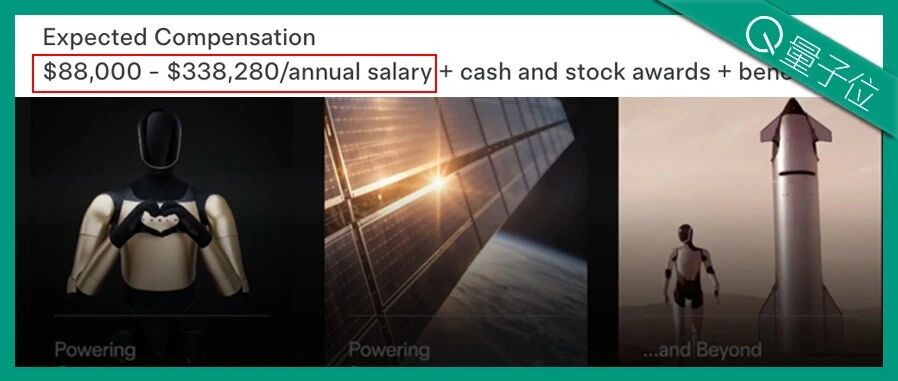
Core Viewpoint - Elon Musk's Terafab chip initiative aims to produce 1 terawatt of computing power annually, which is 50 times the current global AI computing output, indicating a significant ambition in the semiconductor industry [4][23]. Group 1: Recruitment and Job Positions - Tesla has posted job openings for various positions related to the Terafab project, including roles for lithography engineers in California and silicon engineers in Texas, with salaries reaching up to $338,280 per year (approximately 2.33 million RMB) [2][3][14]. - The job requirements emphasize extensive experience, with some positions requiring at least 10 years in semiconductor development, and a 24/7 on-call availability for production support [11][20]. - The recruitment strategy reflects Tesla's focus on hiring specialized talent in chip manufacturing, with positions specifically targeting expertise in advanced logic chip manufacturing processes [8][10]. Group 2: Terafab's Goals and Production Plans - Terafab's objective is to integrate the design and manufacturing of logic and memory chips under one roof, aiming for a process node of 2nm [27]. - The initiative plans to produce two types of chips: one optimized for edge computing and inference for Tesla's FSD and Optimus robot, and another high-performance chip designed for space applications for SpaceX and xAI [30]. - Approximately 80% of the computing power is intended for deployment in space, as Musk believes that terrestrial infrastructure cannot support such a high demand for computing power [31][32]. Group 3: Financial Aspects and Challenges - UBS analysts estimate that the total cost of the Terafab project could reach $300 billion, with SpaceX planning an IPO to raise $50 billion, potentially valuing the company at over $1.75 trillion [34][35]. - While funding may be addressed over time, the more pressing challenge lies in recruiting skilled talent in a highly competitive market, as the semiconductor industry faces a structural shortage of experienced workers [39][41]. - The project aims to build a comprehensive chip factory from scratch, which requires not only financial resources but also a deep pool of experienced professionals who understand the complexities of semiconductor production [38][42].


0301脱水研报
2026-03-01 17:21
Summary of Key Points from Conference Call Records Industry or Company Involved 1. **PVC Industry**: The PVC market is experiencing a recovery, leading to increased demand for additives. Key companies include Jianbang Co., Ruifeng High Materials, Rike Chemical, and Xinhua Pharmaceutical [1][3][4][7][13]. 2. **Glyphosate Industry**: The glyphosate market is influenced by U.S. government policies, with key companies being Yangnong Chemical and Xingfa Group [2][14][21]. 3. **Satellite Manufacturing and SpaceX**: SpaceX is planning to launch satellites from the Moon, impacting the satellite manufacturing and rocket launch industries. Relevant companies include Zhenlei Technology and Plitec [6][22][25]. 4. **Coal Industry**: The coal sector is expected to perform well due to supply constraints and geopolitical factors. Key companies include China Shenhua, Yancoal, and Huayang Co. [2][26][34]. Core Points and Arguments PVC Industry 1. **Price Recovery**: PVC prices have risen from 4,547 RMB/ton at the beginning of 2026, marking a 6.8% increase [5]. The price of acetylacetone has increased from 13,000 RMB/ton to 20,000 RMB/ton, indicating a recovery trend in the additives market [1][10]. 2. **Demand Growth**: The recovery in PVC prices is expected to enhance the procurement of high-performance additives, benefiting the entire additives industry [3][7][12]. 3. **Supply Chain Dynamics**: The supply of acetylacetone is tightening due to the exit of less efficient producers, leading to a structural improvement in the supply-demand balance [9][12]. Glyphosate Industry 1. **U.S. Policy Impact**: The U.S. has classified glyphosate as a critical defense material, which may limit domestic supply and increase reliance on imports from China [14][17]. 2. **Current Pricing**: Domestic glyphosate prices are at a historical low of approximately 23,000 RMB/ton, putting the industry at the breakeven point [19]. SpaceX and Satellite Manufacturing 1. **Moon Launch Plans**: SpaceX's plan to launch satellites from the Moon using a giant electromagnetic catapult is expected to accelerate technological validation in the satellite manufacturing sector [22][23]. 2. **Market Expansion**: The initiative could lead to a significant expansion in the commercial space sector, with implications for satellite manufacturing and rocket launch capabilities [24][25]. Coal Industry 1. **Price Trends**: Coal prices are expected to rise due to supply constraints from Indonesia and geopolitical tensions affecting global energy prices [26][34]. 2. **Investment Opportunities**: The coal sector is viewed as a strong investment opportunity, particularly for companies with high dividends and low valuations, such as China Shenhua and Yancoal [2][35]. Other Important but Possibly Overlooked Content 1. **Market Sentiment**: The overall sentiment in the PVC and coal markets is positive, with expectations of continued price increases and demand recovery [4][34]. 2. **Technological Advancements**: The advancements in rocket technology and satellite manufacturing driven by SpaceX's initiatives may lead to new investment opportunities in related sectors [22][25]. 3. **Regulatory Environment**: The regulatory landscape for glyphosate and PVC additives is evolving, with potential implications for production and pricing strategies [14][19]. This summary encapsulates the key insights from the conference call records, highlighting the dynamics within the PVC, glyphosate, satellite manufacturing, and coal industries.





国泰海通|机械:SpaceX计划在月球电磁弹射卫星,推动国内火箭技术加速迭代——商业航天事件点评
国泰海通证券研究· 2026-03-01 14:30
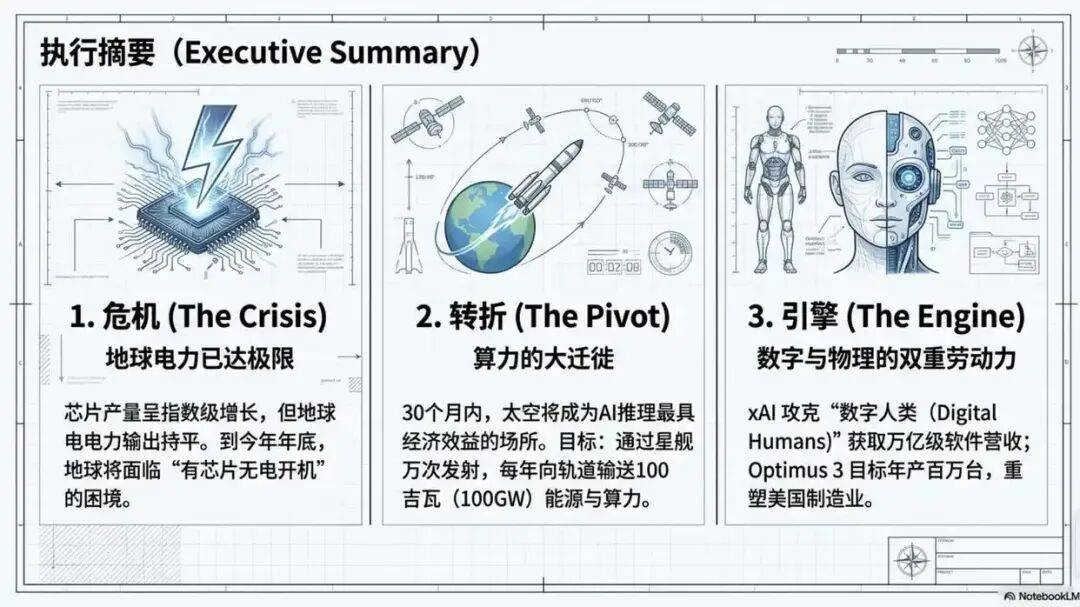
Core Viewpoint - SpaceX plans to launch satellites from the Moon using a giant electromagnetic catapult to establish a constellation of 1 million satellites for a space AI data center, which is expected to accelerate the iteration of domestic rocket technology and benefit the satellite manufacturing and rocket launch industries [1][2]. Group 1: SpaceX's Moon Launch Plans - SpaceX aims to build a factory on the Moon to assemble satellites equipped with high-performance AI processors, utilizing the Moon's low gravity, lack of atmosphere, and abundant solar energy for satellite launches via a multi-kilometer electromagnetic catapult [1][2]. - The U.S. Federal Communications Commission has accepted SpaceX's plan to launch up to 1 million satellites for a data center network in Earth orbit, which will operate at altitudes between 500-2,000 km and provide an additional 100 GW of space computing power annually, powered by solar energy [2]. Group 2: Integration with xAI and Future IPO - SpaceX has acquired xAI, a company owned by Elon Musk, to integrate technologies such as the Grok model, rocket launches, and satellite internet for its space data center strategy, with plans for an IPO in 2026 to fund Starship flight tests, data center networking, and lunar base construction [2]. Group 3: Lunar City and Global Space Competition - Elon Musk's lunar city construction plan may intensify global space competition, with a permanent lunar base providing advantageous conditions for SpaceX's satellite network [3]. - SpaceX's lunar missions align with the U.S. Artemis program and policies to ensure American space dominance, increasing competition in spacecraft, satellite internet, and space robotics, while expanding commercial space applications and industry scale [3]. Group 4: Investment Recommendations - Investors are advised to focus on satellite manufacturing companies capable of large-scale, low-cost production, as well as suppliers of key components like phased array antennas, onboard laser communication terminals, and Hall thrusters [4]. - The Starship flight tests are expected to boost confidence in reusable rocket manufacturing and launch, benefiting leading commercial rocket companies with "high payload + reusable" technology and related core component firms [4]. - Space photovoltaic technology is highlighted as a crucial energy supply method for the operation of space data center satellites and lunar base construction, with potential for increased application opportunities [4].

商业航天事件点评:SpaceX计划在月球电磁弹射卫星,推动国内火箭技术加速迭代
GUOTAI HAITONG SECURITIES· 2026-02-28 13:36
Investment Rating - The report assigns an "Overweight" rating for the industry [6]. Core Insights - SpaceX plans to launch satellites from the Moon using a giant electromagnetic launch system to create a constellation of 1 million satellites for a space AI data center network. This initiative is expected to benefit the satellite manufacturing and rocket launch industries due to advancements in domestic rocket technology [6]. - The Federal Communications Commission (FCC) has accepted SpaceX's plan to deploy up to 1 million satellites in low Earth orbit, aiming to provide an additional 100GW of space computing power annually, powered by solar energy [6]. - SpaceX's acquisition of xAI aims to integrate various technologies for its space data center strategy, with an IPO planned for 2026 to fund related projects [6]. - The construction of a permanent lunar base is expected to enhance SpaceX's satellite network capabilities and intensify global competition in space exploration [6]. Summary by Sections Satellite Manufacturing - Focus on companies with large-scale, low-cost production capabilities, including core component suppliers such as Zhener Technology, ST Chengchang, Guobo Electronics, and Aerospace Electronics [6]. Rocket Launch - The Starship flight tests are expected to boost confidence in reusable rocket manufacturing and launch, benefiting leading commercial rocket companies and their core component suppliers, with recommended stocks including Plitec and Aerospace Power [6]. Space Photovoltaics - Photovoltaics are crucial for the operation of space data center satellites and lunar base construction, with potential for increased application opportunities. Recommended stocks in this sector include Maiwei Technology, Jiejia Weichuang, Laplace, and Dier Laser [6].
“马斯克信仰”把SpaceX估值抬至天际 万亿美元叙事的“硬核压力测试”也将开启
智通财经网· 2026-02-26 09:45
Core Viewpoint - Investing in Elon Musk's companies, such as Tesla, SpaceX, and xAI, is more about betting on his vision for future growth rather than just financial fundamentals. The current example of "Musk faith" is SpaceX, where investors are not only looking at today's satellite broadband empire and rocket launch business but are also paying a premium for long-term visions like a million satellites and advanced AI systems in space [1]. Group 1: SpaceX's IPO and Valuation - SpaceX is considering an IPO in June, potentially raising up to $50 billion, which could be the largest IPO in history, with a valuation reaching $1.5 trillion, close to Tesla's $1.6 trillion [1]. - The merger of Tesla, SpaceX, and xAI is seen as creating a "super business empire" for Musk, which could significantly influence market perceptions and valuations [1][3]. Group 2: AI and Infrastructure Development - The bottleneck for global AI data centers is shifting from AI chips to power systems and deployment, with Musk's vision of placing data centers in space powered by solar energy entering an engineering trial phase [2]. - Musk's plan includes launching one million satellites, each with 100 kW of power, to add 100 GW of AI computing capacity annually, which could lead to a significant leap in AI capabilities [2]. Group 3: Market Position and Competition - SpaceX has established a profitable position in satellite communication and rocket launches, with an EBITDA of approximately $8 billion and total sales of around $15-16 billion, with Starlink contributing 50-80% of total sales [5]. - The market for satellite broadband is becoming crowded, with competitors like Amazon planning to launch thousands of satellites, which could challenge Starlink's market position [8][9]. Group 4: Financial Metrics and Valuation Challenges - Analysts estimate that Starlink could generate about $16 billion in sales and $11 billion in EBITDA this year, leading to a valuation of around $700 billion based on its revenue contribution [11]. - To support a $700 billion valuation, Starlink would need to achieve approximately $39 billion in EBITDA by 2030, which is significantly higher than some optimistic forecasts [12][15]. Group 5: Investor Sentiment and Future Outlook - The "Musk faith" allows for high valuations based on futuristic visions rather than current business metrics, but the sustainability of these valuations will depend on the realization of these visions and the company's ability to navigate competition and regulatory challenges [17]. - The upcoming IPO of SpaceX is likely to follow a pricing strategy that combines its current market position with long-term sci-fi narratives, but any delays in technology deployment or increased competition could lead to volatility in its valuation [17].
脑洞大开!马斯克提出大胆设想
Zhong Guo Ji Jin Bao· 2026-02-25 06:14
Core Viewpoint - Elon Musk envisions launching satellites from the Moon using electromagnetic catapults to create a dedicated AI data center satellite network in low Earth orbit [1][2]. Group 1: Project Overview - Musk plans to build a giant electromagnetic catapult and a satellite assembly plant on the Moon to facilitate satellite launches into Earth orbit [2]. - SpaceX has applied to the Federal Communications Commission to deploy a system of up to 1 million satellites to establish an in-orbit data center network supporting AI and high-performance computing needs [2]. Group 2: Theoretical Feasibility - Theoretically, launching satellites from the Moon is advantageous due to its low gravity, lack of atmosphere, and abundant solar energy, which could enhance launch efficiency and simplify the deployment of large satellite constellations [2]. - This approach could also help avoid congestion and debris in low Earth orbit [2]. Group 3: Practical Challenges - The construction of the electromagnetic catapult would require a structure several kilometers long, and the acceleration process must be smooth to prevent satellite damage during launch [2]. - The energy requirements for each launch would be immense, necessitating significant power resources [2]. - Establishing a permanent base on the Moon to support the construction of the catapult would involve transporting large amounts of equipment, a feat never accomplished beyond Earth [2]. Group 4: Expert Opinions - Musk stated that deploying AI data centers in space could be achievable within "two to three years" [3]. - However, Sam Altman, CEO of OpenAI, expressed skepticism about the feasibility of this plan within the next decade, citing high launch costs and operational challenges [3].
马斯克:仍将推进火星计划;此前宣布优先十年内建月球城市,五至七年启动火星计划
Sou Hu Cai Jing· 2026-02-15 04:05
Core Viewpoint - SpaceX is shifting its focus from Mars to the Moon, planning to establish a self-sustaining city on the Moon within ten years, while still pursuing its Mars ambitions, which may be accelerated by this shift [1][3][5]. Group 1: Strategic Shift - Elon Musk announced that the recent focus has shifted to building a self-expanding city on the Moon, which could be achieved in less than ten years, compared to over 20 years for Mars [3][5]. - The company will still work on the Mars city, with plans to initiate related work in 5 to 7 years [5][8]. Group 2: Technical Considerations - Musk highlighted that the launch window for Mars occurs every 26 months, requiring a 6-month journey, while lunar missions can be launched every 10 days with a 2-day travel time [5]. - This indicates that the iterative development speed for the lunar city will be significantly faster than for the Martian city [5]. Group 3: Business Developments - SpaceX has postponed its planned Mars mission to prioritize the long-awaited NASA lunar flight, aiming for an unmanned lunar landing in March 2027 [8]. - The company is also expanding its efforts in deploying AI data centers in space and has recently acquired Musk's startup xAI, raising the combined company's valuation to $1.25 trillion [8]. - SpaceX is considering an initial public offering (IPO) as early as this summer [8]. Group 4: NASA Collaboration - NASA has commissioned SpaceX to prepare a modified Starship vehicle for docking with its spacecraft near the Moon, which is a key part of NASA's Artemis program to land astronauts on the Moon [9]. - SpaceX has utilized billions in funding from NASA to assist in the development of the Starship, which is over 400 feet tall and fully reusable [9].
SpaceX被曝正考虑双重股权IPO:赋予马斯克超级投票权,或募资最高500亿美元
Jin Rong Jie· 2026-02-15 01:13
Core Viewpoint - SpaceX is considering a dual-class share structure for its upcoming IPO to allow founder Elon Musk to maintain control over company decisions [1] Group 1: IPO Plans - SpaceX plans to raise up to $50 billion through the IPO to fund the construction of a space AI data center and a lunar factory [1] - The company is expanding its board members to facilitate the IPO process and implement a broader space strategy [1] - Discussions regarding the IPO details are ongoing, and adjustments may occur [1] Group 2: Dual-Class Share Structure - The proposed dual-class share structure would grant certain shareholders additional voting rights, enabling them to dominate company decisions [1] - This approach mirrors Musk's previous proposal for Tesla, aimed at ensuring founders can pursue their strategic vision long-term [1] - Critics argue that such structures weaken accountability, while supporters believe it protects against activist shareholder interference [1] Group 3: Musk's Shareholding - Musk has publicly advocated for a tiered share structure, suggesting that he needs at least 25% voting rights to control the company [2] - Currently, Musk holds approximately 11% of Tesla's shares, but this could increase to over 25% in the next decade through a multi-billion dollar compensation plan [2]
中国商业航天报告2026:太空竞赛
泽平宏观· 2026-02-14 16:05
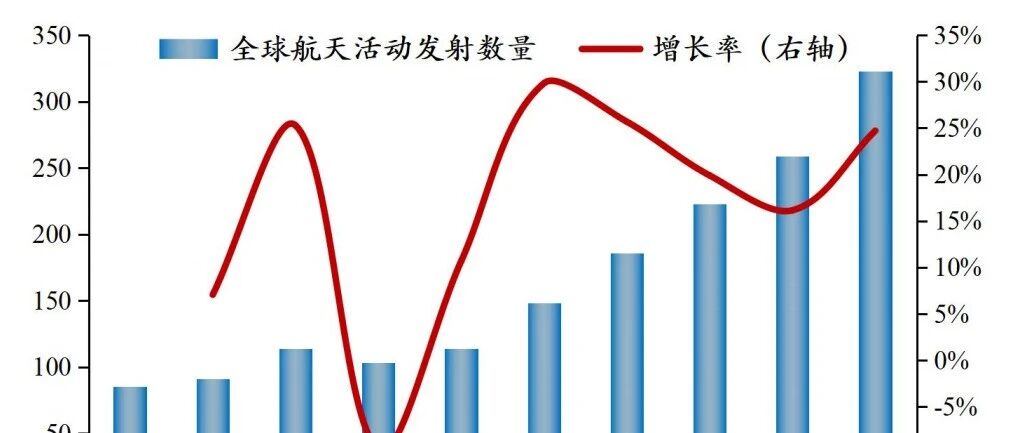
Group 1 - The core viewpoint of the article emphasizes the rapid development of China's commercial space industry, highlighting significant advancements in launch frequency, satellite internet, and government support [3][4][5][6]. - In 2025, global space launches reached a record high of 337, a 28% increase from 263 in 2024, with China and the U.S. accounting for 84% of total launches [9][11]. - The establishment of commercial space as a strategic emerging industry in China was marked by its inclusion in the government work report in March 2025 and the formation of the Commercial Space Administration in November 2025 [12][18]. Group 2 - China's commercial space sector is entering an accelerated development phase, with a notable increase in private sector participation and a shift towards commercialization since 2015 [15][16]. - The government has significantly increased policy support for commercial space, transitioning from encouragement to institutional establishment and relaxed access [17][19]. - The cost of satellite launches has decreased, with domestic launch costs dropping from 115,000 yuan/kg in 2020 to 75,000 yuan/kg in 2024, although still higher than SpaceX's Falcon 9 [20]. Group 3 - SpaceX is leading the global commercial space industry, conducting 165 launches in 2025, which is 49% of the total, and plans to go public in 2026 [21][22]. - The development model represented by SpaceX focuses on extreme scalability, cost reduction, and continuous innovation, transforming space technology into practical global services [22][23]. - Other companies like Blue Origin and Virgin Galactic are also entering the commercial space sector, focusing on space tourism [23]. Group 4 - The first major application of future commercial space is low-orbit satellite internet, which is expected to enter the consumer market with services like SpaceX's Starlink Direct to Cell [25][27]. - The market potential for low-orbit satellite internet is vast, with estimates suggesting it could reach trillions in scale, as it targets consumer markets rather than just B2B [28][29]. - The second major application is the deployment of AI data centers in space, leveraging the unique environmental advantages of space for energy efficiency and cooling [33][36].


深度解析马斯克最新访谈:无法忍受平庸带来的“慢性折磨”
Sou Hu Cai Jing· 2026-02-11 13:15
Group 1: Management Philosophy - Musk's management style is characterized by a sense of urgency and a high pain threshold, focusing on addressing acute pain rather than chronic bottlenecks in organizations [4][6][7] - He emphasizes "constraint analysis" to identify and eliminate inefficiencies, directly engaging with engineers to resolve issues without lengthy presentations [7][8] Group 2: AI and Human Intelligence - Musk predicts that within five years, AI intelligence will surpass the total human intelligence, potentially reducing human intelligence's share in the universe to less than 1% [8][10] - He argues that AI will not eliminate humanity but may find value in human irrationality and creativity, which are rare variables in the universe [10][11] Group 3: US-China Manufacturing Competition - Musk expresses a high regard for Chinese manufacturing capabilities, warning that without breakthrough innovations, the US risks losing dominance in the industrial chain [12][14] - He notes that China's electricity output is three times that of the US, indicating a significant gap in industrial capacity and manufacturing scale [14][15] - Musk highlights the US's loss of foundational smelting capabilities, relying on China for processing rare earth materials [15][16] Group 4: AI Infrastructure Challenges - Musk identifies a "hardware wall" for AI development, primarily due to limitations in electricity supply and the slow expansion of ground power plants [21][22] - He proposes a "space AI data center" plan to overcome these challenges, leveraging the efficiency of solar energy in space, which can be five times more effective than on Earth [23][25] Group 5: xAI and Digital Human Simulation - Musk outlines xAI's strategy focusing on Digital Human Simulation, aiming to create AI that can operate like a human by the end of 2026 [26][28] - He plans to bypass complex API integrations by enabling AI to learn to interact directly with screens and software [29] Group 6: Robotics and Recursive Manufacturing - The development of the Optimus humanoid robot is seen as a transformative force in labor dynamics, with a focus on creating dexterous hands for complex tasks [31][32] - Musk envisions a recursive manufacturing model where robots produce other robots, leading to exponential increases in productivity [33][34] Group 7: Future Outlook - Musk's vision intertwines various technological advancements, suggesting that the future will be shaped by the convergence of rocket capabilities, chip performance, robotic labor, and space energy [35]