
火箭发射

Search documents
0301脱水研报
2026-03-01 17:21
Summary of Key Points from Conference Call Records Industry or Company Involved 1. **PVC Industry**: The PVC market is experiencing a recovery, leading to increased demand for additives. Key companies include Jianbang Co., Ruifeng High Materials, Rike Chemical, and Xinhua Pharmaceutical [1][3][4][7][13]. 2. **Glyphosate Industry**: The glyphosate market is influenced by U.S. government policies, with key companies being Yangnong Chemical and Xingfa Group [2][14][21]. 3. **Satellite Manufacturing and SpaceX**: SpaceX is planning to launch satellites from the Moon, impacting the satellite manufacturing and rocket launch industries. Relevant companies include Zhenlei Technology and Plitec [6][22][25]. 4. **Coal Industry**: The coal sector is expected to perform well due to supply constraints and geopolitical factors. Key companies include China Shenhua, Yancoal, and Huayang Co. [2][26][34]. Core Points and Arguments PVC Industry 1. **Price Recovery**: PVC prices have risen from 4,547 RMB/ton at the beginning of 2026, marking a 6.8% increase [5]. The price of acetylacetone has increased from 13,000 RMB/ton to 20,000 RMB/ton, indicating a recovery trend in the additives market [1][10]. 2. **Demand Growth**: The recovery in PVC prices is expected to enhance the procurement of high-performance additives, benefiting the entire additives industry [3][7][12]. 3. **Supply Chain Dynamics**: The supply of acetylacetone is tightening due to the exit of less efficient producers, leading to a structural improvement in the supply-demand balance [9][12]. Glyphosate Industry 1. **U.S. Policy Impact**: The U.S. has classified glyphosate as a critical defense material, which may limit domestic supply and increase reliance on imports from China [14][17]. 2. **Current Pricing**: Domestic glyphosate prices are at a historical low of approximately 23,000 RMB/ton, putting the industry at the breakeven point [19]. SpaceX and Satellite Manufacturing 1. **Moon Launch Plans**: SpaceX's plan to launch satellites from the Moon using a giant electromagnetic catapult is expected to accelerate technological validation in the satellite manufacturing sector [22][23]. 2. **Market Expansion**: The initiative could lead to a significant expansion in the commercial space sector, with implications for satellite manufacturing and rocket launch capabilities [24][25]. Coal Industry 1. **Price Trends**: Coal prices are expected to rise due to supply constraints from Indonesia and geopolitical tensions affecting global energy prices [26][34]. 2. **Investment Opportunities**: The coal sector is viewed as a strong investment opportunity, particularly for companies with high dividends and low valuations, such as China Shenhua and Yancoal [2][35]. Other Important but Possibly Overlooked Content 1. **Market Sentiment**: The overall sentiment in the PVC and coal markets is positive, with expectations of continued price increases and demand recovery [4][34]. 2. **Technological Advancements**: The advancements in rocket technology and satellite manufacturing driven by SpaceX's initiatives may lead to new investment opportunities in related sectors [22][25]. 3. **Regulatory Environment**: The regulatory landscape for glyphosate and PVC additives is evolving, with potential implications for production and pricing strategies [14][19]. This summary encapsulates the key insights from the conference call records, highlighting the dynamics within the PVC, glyphosate, satellite manufacturing, and coal industries.





SpaceX拟最早3月秘密提交IPO文件,估值或超1.75万亿美元
Sou Hu Cai Jing· 2026-02-28 01:09
Group 1 - SpaceX is considering submitting its IPO documents as early as next month, which would be the largest listing plan for the company to date [2] - The company is expected to file the IPO registration draft with the SEC in March, aiming for a June listing, potentially becoming the first of three large IPOs this year [2] - SpaceX is seeking a valuation of over $1.75 trillion (approximately 11.7 trillion RMB) for the IPO, following a recent acquisition of Musk's AI startup xAI, which valued the combined entity at $1.25 trillion (approximately 8.4 trillion RMB) [2] Group 2 - SpaceX is preparing for a potential IPO in 2026 to fund projects such as the Starship rocket, AI data centers in space, and a lunar base [3] - The company has selected major banks including Bank of America, Goldman Sachs, JPMorgan, and Morgan Stanley for senior roles in the IPO [3] - SpaceX may adopt a dual-class share structure in the IPO, granting Musk and other insiders additional voting rights to influence decision-making [3]

马斯克“天地合一”野心:万亿帝国如何重塑AI未来
Sou Hu Cai Jing· 2026-02-03 06:05
Core Insights - The merger between SpaceX and xAI represents a strategic shift for Elon Musk, aiming to create a vertically integrated innovation engine that spans rocket launches, satellite deployment, space energy, and top-tier AI models [4][10]. Group 1: Merger Overview - SpaceX has evolved from a startup to a dominant player in the aerospace industry, securing numerous contracts with NASA and the Department of Defense, and operating a satellite network with over 9,600 satellites [3]. - xAI was founded by Musk in response to his departure from OpenAI, which has become a major competitor in the AI space following its transformation into a for-profit entity [3][4]. - The merger is set to create a company valued at $1.25 trillion, marking one of the largest IPOs in history [4][12]. Group 2: AI Energy Crisis - The merger addresses the critical issue of unsustainable energy costs associated with AI, as new AI models are projected to consume 100 times more energy than previous models [6]. - High infrastructure investments by tech giants, such as Microsoft and Meta, are driving up costs, with data center electricity prices in affected areas reportedly increasing by over 2.6 times in five years [6][7]. Group 3: Space-Based Solutions - Musk proposes building AI data centers in space to leverage unlimited solar energy, which could significantly reduce operational costs and eliminate the need for ground-based cooling systems [8]. - The plan includes launching a million satellites to create a solar-powered data center network, which could provide substantial AI computing power at lower costs [9]. Group 4: Financial Dynamics - SpaceX is characterized as a "cash cow," with projected revenues of $15-16 billion and profits around $8 billion by 2025, primarily from its Starlink business [11]. - In contrast, xAI is described as a "cash-burning beast," requiring significant capital for infrastructure and model training, having consumed approximately $9.5 billion in cash in the first nine months of 2025 [11]. - The merger is designed to combine SpaceX's strong cash flow with xAI's growth potential, facilitating a sustainable business model that could withstand competition from other AI firms [11]. Group 5: IPO Aspirations - Following the merger, SpaceX plans to proceed with an IPO in June, aiming to raise $50 billion, with a post-merger valuation potentially reaching $1.25 trillion, surpassing major companies like Berkshire Hathaway and Walmart [12]. Group 6: Future Implications - The merger is seen as a transformative move that could redefine the future of AI and space exploration, addressing fundamental challenges related to energy, cost, scale, and sustainability [13]. - If successful, the new SpaceX-xAI entity could dominate the market for space-based computing power, potentially marking the beginning of a new era in human civilization [13].
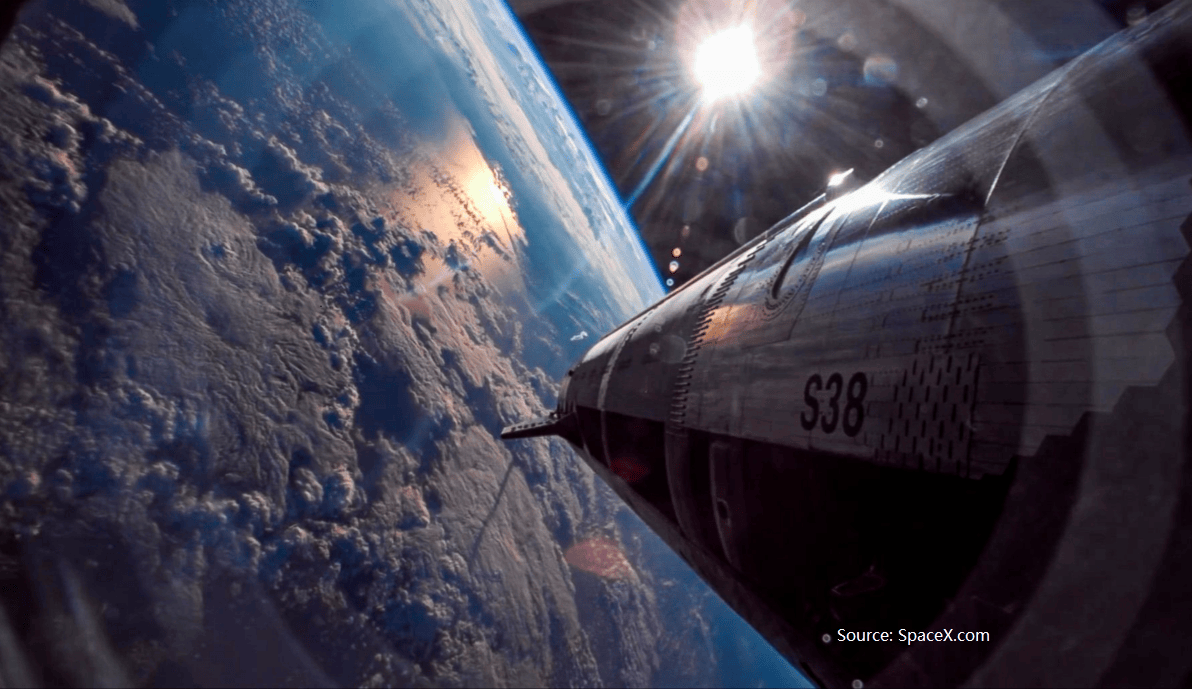
100万颗卫星,撑起马斯克的AI太空基建梦
Sou Hu Cai Jing· 2026-02-02 13:23
Core Insights - SpaceX is applying to the U.S. Federal Communications Commission (FCC) to launch up to 1 million satellites into Earth's orbit to create a data center in space to support complex AI computations [2][3] Group 1: Satellite Network and Data Center - The proposed satellite constellation will serve as an orbital data center, marking a step towards a "Type II civilization" that fully utilizes solar energy [4] - This system aims to provide AI-driven applications for billions of people and lay the groundwork for multi-planetary existence [4] - The network will utilize radiation cooling instead of water for cooling, and it will primarily rely on solar power, reducing dependence on batteries [4] Group 2: Communication and Operational Details - The satellites will communicate with each other via laser links and will operate at altitudes between 500 km and 2000 km, designed for continuous solar exposure [5] - SpaceX plans to launch these satellites using its reusable Starship rockets, potentially offering a cost-effective and environmentally friendly alternative to traditional ground data centers [4][5] Group 3: Strategic Partnerships and Future Plans - SpaceX is evaluating a potential merger with Elon Musk's AI company xAI and is planning for an IPO in June [5] - The merger could enhance cash flow and improve capabilities in AI, satellite manufacturing, and rocket launches [5] - Musk has emphasized the necessity of building data centers in space, stating that deploying AI in space will be the most cost-effective solution within the next two to three years [5][6]
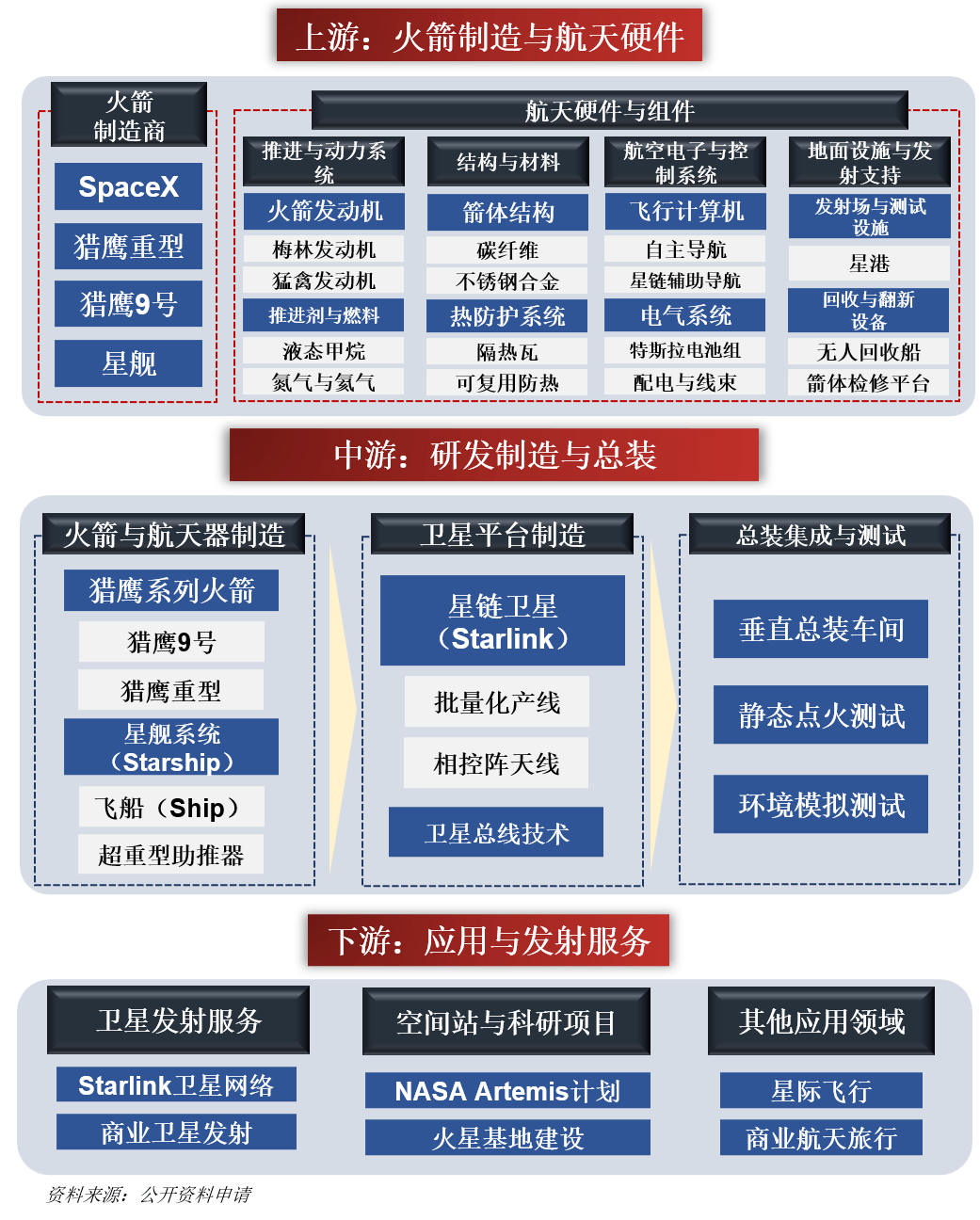
【Space X】全产业链!一天吃透马斯克的“商业帝国”
Sou Hu Cai Jing· 2026-01-30 12:30
Core Insights - SpaceX has evolved through four key stages: initial struggle, technological breakthroughs, ecosystem development, and mature expansion, leading to its current dominance in the space industry [3][4]. Stage Summaries - **Initial Stage (2002-2008)**: SpaceX faced bankruptcy after three failed Falcon 1 launches but secured a $1.6 billion contract with NASA after a successful fourth launch in 2008, marking a turnaround [3]. - **Technological Breakthrough Stage (2008-2015)**: The Falcon 9 became the main rocket, achieving land recovery of the first stage booster in 2015, significantly reducing launch costs to $15-20 million [4]. - **Ecosystem Development Stage (2015-2020)**: SpaceX initiated the Starlink and Starship projects, transitioning from a rocket service provider to a space infrastructure company, with Starlink becoming the largest low Earth orbit satellite constellation [4]. - **Mature Expansion Stage (2020-Present)**: By 2023, SpaceX captured nearly 90% of U.S. orbital launch tasks and confirmed plans for an IPO with a valuation exceeding $100 billion [4]. Revenue Breakdown - SpaceX's core business is divided into two main segments, with Starlink emerging as the primary growth driver. By 2025, Starlink is expected to add over 4.6 million active users, generating $13-15 billion in revenue, accounting for 60-65% of total revenue [7][8]. - The revenue forecast for 2024 and 2025 across different business segments is as follows: - Starlink: $7-11 billion (2024), $13-15 billion (2025) [12] - Launch Services: $2.5-4 billion (2024), $5-7 billion (2025) [12] - Government and Defense Contracts: $1.2-1.8 billion (2024), $2-2.3 billion (2025) [12] - Starship Early Ecosystem and New Business: $0.2-0.4 billion (2024), $0.5-0.8 billion (2025) [12] Core Business Operations - SpaceX possesses advanced production, testing, and launch facilities, maintaining control over critical processes unlike NASA's outsourcing model [4][13]. - The Falcon series includes Falcon 1, Falcon 9, and Falcon Heavy, with Falcon 9 being the most frequently launched rocket globally [13][15]. Competitive Advantages - SpaceX's engine technology, particularly the Raptor engine, has undergone three generations of improvements, enhancing reliability and reducing costs through 3D printing [18][21]. - The company holds a dominant position in the global launch market, with Falcon 9 expected to conduct 165 launches in 2025, representing 97% of its total launches [22]. Business Model - SpaceX's business model focuses on creating a self-sustaining ecosystem, where rocket launches serve as a strategic foundation for scaling space services and interstellar exploration [38]. - The company offers two pricing models for launches: a full launch package at $69.85 million and a rideshare option for small satellites starting at $325,000 [40][41]. Future Projections - Launch volume predictions indicate Falcon 9 will maintain high launch frequency, while Starship is expected to accelerate commercialization with projected launches increasing significantly from 5 in 2026 to 150 by 2028 [42].
港股开盘 | 恒指高开0.36% 医药股走强 三生制药(01530)涨超3%
智通财经网· 2026-01-27 01:35
Group 1 - The Hang Seng Index opened up 0.36% and the Hang Seng Tech Index rose by 0.16%, with strong performance in pharmaceutical stocks, particularly 3SBio which increased by over 3% [1] - Precious metals experienced a pullback, with Chifeng Jilong Gold Mining falling by over 2% [1] Group 2 - Galaxy Securities anticipates narrow fluctuations in the Hong Kong stock market due to reduced expectations for short-term interest rate cuts by the Federal Reserve and increased global geopolitical uncertainties [2] - The technology sector remains a long-term investment focus, benefiting from price increases in the supply chain, domestic substitution, and accelerated AI applications [2] - The consumer sector is expected to continue benefiting from policy support, with attention needed on the implementation of policies and improvements in consumer data [2] - Geopolitical tensions may benefit safe-haven assets like precious metals [2] Group 3 - According to招商证券, the price increase of storage chips in January exceeded expectations, driving market performance in the first half of the month, with upcoming earnings forecasts from domestic storage companies and quarterly reports from overseas storage manufacturers [2] - There is a potential for price increases in related chips if the trend in storage testing and packaging prices continues, which could lead to broader market opportunities [2] Group 4 - Dongxing Securities predicts a significant increase in the number of satellite launches in China by 2026, with private commercial rocket companies expected to play a crucial role in the national team, creating market opportunities in satellite manufacturing and rocket launching [2] Group 5 - GF Securities believes that space photovoltaics, as a key energy supply solution for spacecraft, will benefit from the global commercial space boom, with existing low-orbit satellite plans expected to create nearly 10GW of demand for space photovoltaics [3] - The industry is currently in an exploratory phase, with photovoltaic equipment manufacturers becoming direct beneficiaries by participating in the development of process routes [3]
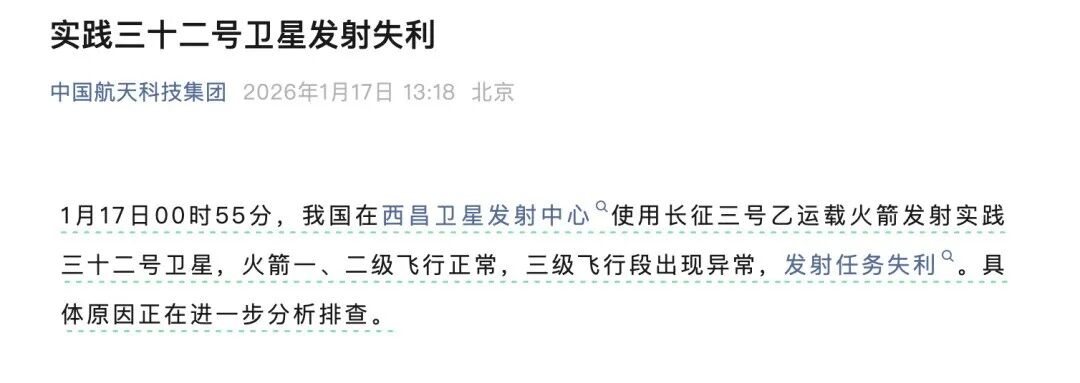
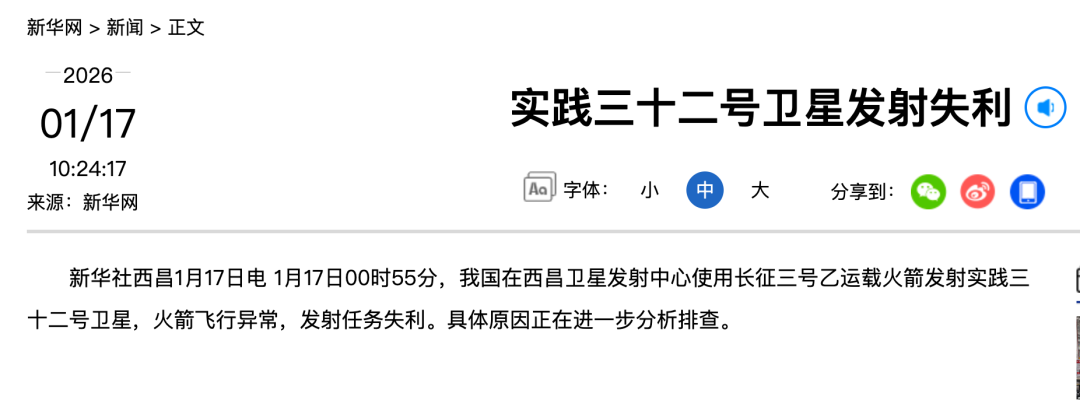
一天两枚火箭发射失利!具体原因正在分析排查
Shen Zhen Shang Bao· 2026-01-19 02:04
Core Viewpoint - The recent failures of two rocket launches in China highlight the challenges faced by both state-owned and private aerospace companies in achieving reliable launch capabilities [1][3][5]. Group 1: Long March 3B Rocket - The Long March 3B rocket, developed by China Aerospace Science and Technology Corporation, experienced an anomaly during its third stage flight on January 17, leading to the failure of the launch of the Shijian-32 satellite [1][3]. - This rocket has a historical success rate, with 115 launches conducted, of which 110 were successful, 3 failed, and 2 were partially successful [3]. Group 2: Star River Dynamics - Star River Dynamics, a private commercial rocket company established in 2018, also faced a launch failure on January 17 with its Gushenxing-2 rocket during its maiden flight [5][6]. - The company has raised over 5.3 billion yuan through multiple funding rounds, with a notable 2.4 billion yuan raised in its D round, achieving a post-investment valuation of 15 to 16 billion yuan [6]. Group 3: Industry Context - The Chinese aerospace industry is experiencing a high launch frequency, with a record 92 launches in 2022, indicating a growing demand for satellite deployment [7]. - The commercial space sector is still transitioning from technology validation to large-scale operations, facing challenges such as low rocket supply, insufficient payload capacity, and high launch costs [8]. Group 4: Future Prospects - There is an expectation for private rocket companies to complement state efforts in meeting high-frequency launch demands, with a focus on developing reusable liquid rockets to reduce costs and increase launch frequency [9]. - The commercial aerospace index has seen a significant increase of over 40% since December, although many related stocks have diverged from their fundamental valuations [10].

一天两枚火箭发射失利 中国航天科技集团、星河动力两家公司发文:具体原因正排查
Mei Ri Jing Ji Xin Wen· 2026-01-18 05:26
Group 1: Rocket Launch Failures - On January 17, two rocket launch failures were reported, including the Long March 3B rocket and the private company Star River's Gushen II rocket [1][2] - The Long March 3B rocket experienced an anomaly during its third stage, leading to mission failure, while the Gushen II rocket also faced flight anomalies during its first test flight [4][6] Group 2: Long March 3B Rocket Overview - The Long March 3B rocket is China's first rocket model to exceed 100 launches, with a total of 115 launches, 110 successful and 3 failures [6] - It is primarily used for launching heavy satellites into geosynchronous transfer orbits and is a key player in China's commercial launch services [4][5] Group 3: Star River Company Profile - Star River, established in 2018, is the first private company in China to achieve mass production and high-density launches of rockets [8] - The company has raised over 5.3 billion yuan through multiple funding rounds, with a post-investment valuation of 15-16 billion yuan after a recent 2.4 billion yuan Series D financing [8][9] Group 4: Industry Context and Challenges - The Chinese commercial space industry is transitioning from technology validation to large-scale operations, facing challenges such as low rocket supply and high launch costs [12][13] - The industry is experiencing a downturn following a surge in stock prices, with significant declines in commercial space concept stocks observed recently [14][16]
一天两发失利,火箭发射扩容并非易事
第一财经· 2026-01-17 16:31
Core Viewpoint - The article discusses the recent failures of two rocket launches in China's aerospace sector, highlighting the challenges faced by both state-owned and private companies in achieving reliable and cost-effective space missions [3][4]. Group 1: Rocket Launch Failures - On January 17, 2026, two rocket launches failed: the Long March 3B rocket carrying the Shijian-32 satellite and the private Ceres-2 rocket from Beijing Xinghe Power Aerospace Technology Co., both experiencing flight anomalies [3][4]. - The Long March 3B rocket is a key player in China's high-orbit satellite launches, known for its high success rate and numerous missions [3]. - The Ceres-2 rocket is still in the preparatory phase for public listing and has issued an apology for the failure, committing to investigate the issues and ensure future success [4]. Group 2: Industry Challenges - The aerospace sector's development is uneven, with the rocket launch segment identified as a significant bottleneck due to low supply, insufficient payload capacity, and high costs [5]. - The industry is facing a "few and expensive" launch situation, with expectations that private rocket companies can effectively supplement the national team to meet high-frequency launch demands [5]. - Achieving high-frequency launches and reducing costs is crucial for the commercialization of the aerospace sector, but it remains a challenging goal [5]. Group 3: Factors Influencing Development - Key factors affecting the development of commercial aerospace include the maturity of technology and launch success rates, particularly for reusable rocket technology [6]. - The cadence of satellite internet constellation projects, such as GW and G60, is a direct driver of rocket demand [6]. - Continuous policy support and safety regulations are essential for the industry's growth, with a focus on high-quality and safe development [6].
一天两发失利,火箭发射扩容并非易事
Di Yi Cai Jing· 2026-01-17 15:36
Group 1 - The recent failures of two rocket launch missions highlight the volatility in the aerospace sector, with the Long March 3B rocket and the private commercial rocket, Gushenxing 2, both experiencing flight anomalies on January 17 [1][2] - The Long March 3B rocket series is crucial for China's high-orbit satellite launches, known for its high success rate and significant contribution to the country's space endeavors [1] - Gushenxing 2, developed by Beijing Xinghe Power Aerospace Technology Co., is still in the preparatory phase for public listing and has expressed sincere apologies for the launch failure, committing to thorough investigations and future success [2] Group 2 - The aerospace industry faces an imbalance in the "rocket launch-satellite application-ground terminal" ecosystem, with the rocket launch segment being a significant bottleneck due to low supply, insufficient capacity, and high costs [2] - The industry anticipates that private rocket companies can effectively supplement the national team to meet the high-frequency launch demands, although achieving cost reductions and frequent launches remains challenging [2] - Key factors influencing the development of the commercial aerospace sector include the maturity of technology and launch success rates, the cadence of satellite orders, and ongoing policy support and safety regulations [3]