Optimus Gen3机器人

Search documents
大利好!资本密集涌入!这一产业正式迈入黄金发展期→
Xin Lang Cai Jing· 2026-01-05 09:28
Core Insights - The humanoid robot industry is entering a golden development period in 2026, driven by breakthroughs in technology, precision manufacturing, and favorable policies [1][2] - Major tech companies are leading the transformation of the humanoid robot industry, with clear investment themes emerging [1] Group 1: Technological Advancements - Tesla's Optimus Gen3 robot showcases advanced motion execution and AI emotional recognition, with a goal for mass production in 2026 [1] - Chinese company Yushu Technology has rapidly iterated its technology, launching the "Unitree R1 Smart Partner" humanoid robot, which supports multimodal AI integration [1][2] - The humanoid robot GR-3 by Fourier and the open-source N1 have achieved breakthroughs in warm, human-like interactions [2] Group 2: Market Growth and Financial Performance - The humanoid robot market is expected to experience significant growth, with a projected market size increase due to continuous technological breakthroughs and expanding application scenarios [2][5] - In 2025, the humanoid robot sector saw 610 financing events, nearly tripling from 2024, with total financing exceeding 57 billion yuan [3] - Companies like Zhiyuan Robotics are forecasting substantial revenue growth, with sales expected to exceed 1 billion yuan in 2025 [2] Group 3: Application Scenarios - By 2026, humanoid robots are anticipated to cover industrial manufacturing, commercial services, and household services, enhancing efficiency in repetitive tasks [4] - The market is witnessing an increase in large-scale orders, indicating confidence in the industry's future and accelerating commercialization [4] Group 4: Economic Projections - User spending on embodied intelligent robots in China is expected to surpass $1.4 billion in 2025, potentially reaching $77 billion by 2030, with a CAGR of 94% [5] - The humanoid robot sector is experiencing a dual recovery in both technical and emotional aspects, leading to significant index gains [5]


行业点评报告:技术进化的2025,走向量产的2026,人形机器人“黄金十年”启幕
KAIYUAN SECURITIES· 2025-12-29 14:45
Investment Rating - The industry investment rating is "Positive" (maintained) [1] Core Insights - The humanoid robot sector has established a phase-upward trend, with recent index stabilization and rebound, entering a phase of upward channel [5][14] - The sector is expected to transition from "0-1" to "1-10" in 2025, focusing on "technology convergence," and then cross the "1-10" inflection point to "10-100" in 2026, emphasizing "mass production and commercialization" [6][19][29] - The investment focus for 2026 includes the Tesla supply chain and domestic chains, with a strong emphasis on companies like Yushun and Xiaomi/Sailis [7][48] Summary by Sections Humanoid Robot Sector Trends - The humanoid robot index has rebounded, with a 6.23% increase in the core company index last week [5][14] - Key drivers for the rebound include sufficient prior adjustments, positive sentiment, and significant investments by companies like UBTECH [15][19] Technical Evolution and Production Outlook - In 2025, the industry is expected to move from "0-1" to "1-10," focusing on technology convergence around Tesla's robot iterations [19][28] - By 2026, the sector will likely enter a mass production phase, with major players like Tesla and Yushun planning large-scale manufacturing [29][30] Investment Recommendations - The investment strategy for 2026 includes focusing on the Tesla supply chain, emphasizing components like structural parts, bearings, and head assemblies [7][41] - Domestic chains are also highlighted, particularly companies poised for IPOs like Yushun, which will enhance their capital strength for mass production [48][49]
马斯克押注的人形机器人要量产了,特斯拉股价猛拉
2 1 Shi Ji Jing Ji Bao Dao· 2025-12-10 00:38
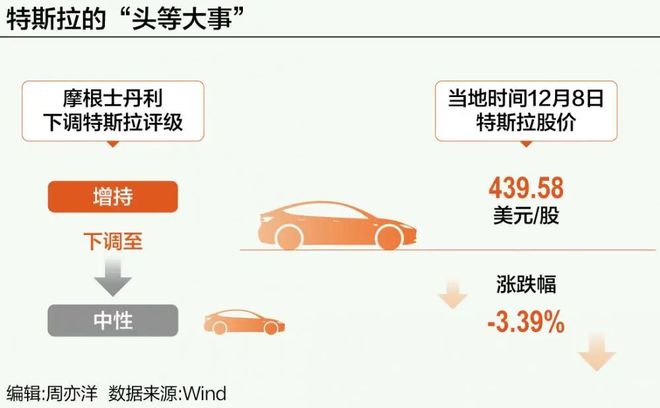
Core Viewpoint - Tesla's humanoid robot team is reportedly preparing for mass production ahead of the Optimus Gen3 robot launch in Q1 next year, indicating a significant milestone for Tesla's robotics supply chain [1][8] Group 1: Production and Market Reactions - The "factory audit" is a focal point for the market, with reports suggesting that the supply chain's backend inspection equipment has been approved, and production standards are being established [8] - Following a viral video showing a Tesla robot's interaction, the stock price dropped by 3.39%, erasing approximately $50 billion in market value, highlighting the volatility in investor sentiment [4][10] - Despite the negative impact of the video, there remains optimism in the market regarding the anticipated mass production of Tesla's robots next year [7][10] Group 2: Industry Insights and Comparisons - Industry insiders note that many of Tesla's demonstration videos utilize remote control via VR, which is a common practice in the robotics sector, contrasting with the more complex "end-to-end" AI models [7] - Other leading humanoid robot companies, such as UBTECH and Yushutech, are also employing VR/AR remote control methods to enhance robot motion capabilities, indicating a trend in the industry [7] - The market's mixed reactions stem from Tesla's history of fluctuating timelines for product launches, which has led to skepticism about the company's ability to deliver on its promises [8][12] Group 3: Future Expectations and Strategic Importance - The upcoming launch of the Optimus Gen3 robot is seen as a pivotal moment that could significantly influence the humanoid robotics industry, potentially accelerating development in the sector [10] - Tesla's ambitious plans include achieving a market capitalization increase from $1.5 trillion to $8.5 trillion, with humanoid robots being a key component of this strategy [11] - Analysts express cautious optimism, acknowledging Tesla's broader business model beyond automotive manufacturing, while also highlighting the potential for stock price volatility in the coming year [12]

马斯克押注的人形机器人要量产了,特斯拉股价猛拉
21世纪经济报道· 2025-12-10 00:38
Core Viewpoint - The article discusses the anticipation surrounding Tesla's humanoid robot, Optimus Gen3, and the implications of recent developments in its production and market perception [1][7]. Group 1: Production and Market Reactions - Tesla's humanoid robot team is reportedly undergoing factory audits in China, potentially in preparation for mass production of the Optimus Gen3 robot in Q1 of next year [1]. - Following a viral video showcasing the capabilities of a transitional model, Optimus Gen2.5, Tesla's stock experienced volatility, dropping 3.39% on December 8, erasing approximately $50 billion in market value [4]. - Despite the excitement around the upcoming robot, a video suggesting that the robot was operated via VR technology rather than autonomous interaction raised concerns about the state of Tesla's embodied intelligence development [1][6]. Group 2: Industry Insights and Expectations - Industry experts indicate that many demonstrations of Tesla's robots have utilized remote operation, which is less complex than developing fully autonomous systems [6]. - Companies like UBTECH and Yushutech are also using VR/AR remote control to enhance their humanoid robots' capabilities, suggesting that there are viable paths to commercialization even without advanced embodied intelligence [6]. - The market remains hopeful for the mass production of Tesla's robots, with recent reports indicating that the supply chain for the robot is nearing readiness, including the completion of equipment audits and the establishment of standardized technical documentation [7]. Group 3: Strategic Implications for Tesla - The success of the Optimus Gen3 launch could significantly influence the humanoid robot industry, potentially leading to rapid advancements similar to those seen in the electric vehicle sector after Tesla's entry into the market [9]. - Tesla's future valuation targets, including a goal to increase its market cap from $1.5 trillion to $8.5 trillion, may hinge on the successful commercialization of its humanoid robots, alongside its automotive and energy businesses [10]. - Analysts express skepticism regarding Tesla's ability to meet its ambitious targets, with some suggesting that the stock price already reflects the potential of its non-automotive ventures [11].

Optimus机器人量产 特斯拉的最后信仰
2 1 Shi Ji Jing Ji Bao Dao· 2025-12-09 13:54
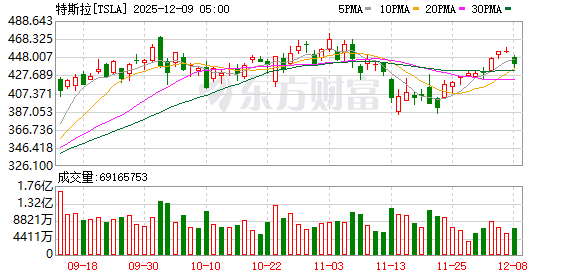
Core Insights - The production of humanoid robots is approaching a significant milestone, with Tesla's Optimus Gen3 expected to be released in Q1 2025, following extensive testing and sample submissions over the past two years [2][4] - Despite the excitement surrounding Tesla's humanoid robots, recent events, including a viral video showing the robot being remotely controlled via VR, have raised concerns about the actual capabilities of the technology, leading to a decline in Tesla's stock price [2][3] Group 1: Production and Market Expectations - Tesla's "factory audit" is a focal point for the market, indicating that the supply chain for the humanoid robots is nearing readiness for mass production, with standardized technical documentation and component configurations being established [4] - The market remains divided on the implications of the factory audit, with some believing it is a routine visit rather than a definitive step towards mass production, while others see it as a sign that the first large-scale production is imminent [4][6] Group 2: Industry Impact and Future Prospects - The confidence in the humanoid robotics sector is significantly influenced by Tesla's leadership, with industry experts noting that the resurgence of interest in humanoid robots is closely tied to Tesla and Elon Musk [5][6] - The successful launch of the third-generation Optimus could lead to rapid advancements in the industry, potentially surpassing the growth trajectory seen with Tesla's electric vehicles in China [6][7] Group 3: Financial Considerations - Tesla's ambitious plans for humanoid robots are critical for achieving its market valuation goals, as the company aims to increase its market cap from $1.5 trillion to $8.5 trillion, relying on new revenue streams beyond vehicle sales [7] - Wall Street remains skeptical about Tesla's ability to deliver on its promises, with analysts expressing concerns about the volatility of the trading environment and the company's reliance on non-automotive business catalysts [8]
Optimus机器人量产,特斯拉的最后信仰
2 1 Shi Ji Jing Ji Bao Dao· 2025-12-09 13:52
Core Viewpoint - The production of humanoid robots by Tesla is approaching, with significant developments in the supply chain and technology, but concerns remain regarding the actual capabilities and readiness of the robots for market deployment [3][5][11]. Group 1: Production and Supply Chain Developments - Tesla's humanoid robot team is reportedly undergoing factory audits in China, likely in preparation for the launch of the Optimus Gen3 robot in Q1 of next year [3]. - The supply chain for Tesla's humanoid robots is nearing readiness, with successful completion of equipment audits and the establishment of standardized technical documentation [5]. - The expectation of mass production for Tesla's humanoid robots is growing, with key suppliers on the verge of receiving official designations [5]. Group 2: Market Reactions and Concerns - Following the release of a video showing a Tesla robot's interaction, which suggested remote operation rather than autonomous functionality, Tesla's stock fell by 3.39%, erasing approximately $50 billion in market value [3][4]. - The market remains divided on the implications of the factory audits and the recent video, with some analysts suggesting that the audits may not be directly linked to the timeline for mass production [6][7]. - Despite skepticism regarding the robot's capabilities, there is still significant anticipation for the official launch of Tesla's humanoid robots in the coming year [4][6]. Group 3: Industry Impact and Future Outlook - The developments at Tesla are seen as pivotal for the global humanoid robot industry, influencing confidence among other market players [8][9]. - Analysts believe that if the Optimus Gen3 robot performs well and demonstrates new applications, it could accelerate the growth of the humanoid robot sector in China [9]. - Tesla's focus on humanoid robots is critical for achieving its ambitious market valuation goals, especially in light of its recent compensation plan for CEO Elon Musk, which ties his rewards to significant increases in company valuation [11].