OptimusGen2

Search documents
2025年全球人形机器人行业竞争分析 中国领跑硬件与集成端【组图】
Qian Zhan Wang· 2026-02-10 07:12
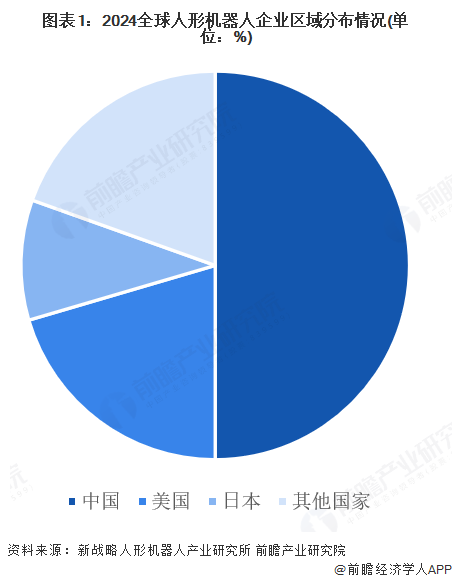
Core Insights - The global humanoid robot industry is predominantly led by China, which houses over 110 companies, accounting for more than 50% of the total 220 humanoid robot manufacturers worldwide [1] - China excels in hardware and integration segments, while the US leads in the "brain" segment, focusing on AI models and software [4][5] - China has filed approximately five times more humanoid robot patents than the US, with a total of 7,705 patents, indicating a strong emphasis on innovation and technology development [6] - The competition among China, the US, and Japan in the humanoid robot industry is characterized by distinct strategies and market focuses [9] Industry Overview - Major listed companies in China's humanoid robot sector include Huichuan Technology, Sanhua Intelligent Control, Lens Technology, Hengli Hydraulic, Top Group, Linying Intelligent Manufacturing, Zoomlion Heavy Industry, and Jinli Permanent Magnet [1] - The global humanoid robot industry is expected to reach a market size of 861 billion yuan by 2027, with China aiming for a fully controllable supply chain and over 70% localization of core components [9][11] Competitive Landscape - Chinese companies like Zhiyuan Robotics and UTree Technology are rapidly advancing in mass production and cost control, while US firms like Boston Dynamics and Tesla focus on core technology breakthroughs [11][12] - The strategic direction for Chinese firms includes low-cost strategies to expand into consumer and industrial markets, while US companies are investing heavily in AI and technology development [11] - Japan's approach is centered on precision manufacturing and specialized components, targeting healthcare and industrial applications [9][11] Patent and Innovation - China leads in humanoid robot patent applications, with 7,705 patents compared to the US's 1,561 and Japan's 1,102, showcasing its dominance in core technology areas [6] - The focus of Chinese patents includes body structure, intelligent perception, and drive control, indicating a comprehensive approach to technology development [6] Market Projections - By 2027, the humanoid robot market is projected to achieve significant growth, with China aiming for a market scale of 861 billion yuan and the US targeting over 40% of the global market share [9][11]




人形机器人产业趋势展望:趋势、技术、投资全解析(附57页PPT)
材料汇· 2026-01-11 14:59
Core Insights - The humanoid robot industry is currently in a small-scale production phase overseas, while the domestic supply chain has begun initial volume production [1][2] - Tesla's supply chain has established small-scale production lines, with plans to build a factory capable of producing 1 million units by the end of next year [1][3] - The domestic supply chain has received significant orders worth billions, driven by policy support and financing [2] Industry Outlook - The application of humanoid robots is expected to start in industrial settings and eventually expand to household use, with market size in China projected to approach 3 trillion yuan by 2040 [7][11] - By 2025, humanoid robots are anticipated to primarily serve industrial scenarios, providing simple repetitive services, while commercial applications may emerge between 2031 and 2035 [11][14] Current Development Status - The humanoid robot sector is experiencing active investment, with a doubling of financing events in the domestic market compared to the previous year [17] - Government support for the robot industry is ongoing, with various policies being implemented to foster development [27][28] Supply Chain Dynamics - The supply chain for humanoid robots is evolving, requiring deep integration of industry and capital, with a focus on collaboration with Tier 1 suppliers [4][5] - Companies in the supply chain are advised to focus on business capabilities, original technology, and cost reduction to secure a larger market share [3][4] Technological Advancements - The hardware for humanoid robots is converging, while the development of the "brain" is crucial for large-scale industrialization [31][36] - The evolution of AI models is expected to enhance the capabilities of humanoid robots significantly, with a focus on multi-modal and generalization abilities [36][41] Commercialization Prospects - By 2027, humanoid robots are expected to achieve commercial viability in certain scenarios, particularly in high-cost labor regions [16][14] - The industry is projected to see significant advancements in product iteration and cost reduction, with mass production lines expected to lower production costs substantially [14][32]