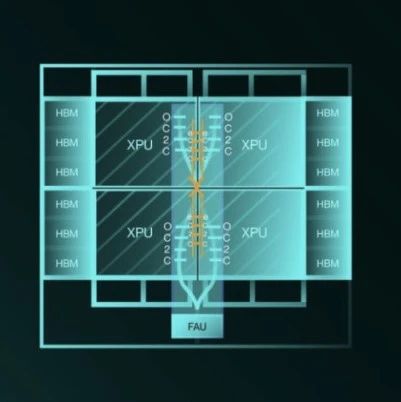
Photonic Fabric

Search documents
Marvell Technology (NasdaqGS:MRVL) Earnings Call Presentation
2026-03-05 12:00
Corporate Overview March 5, 2026 Forward-looking statements Except for statements of historical fact, this presentation contains forward-looking statements (within the meaning of the federal securities laws) including statements related to future revenue, future earnings, and the success of our product releases, and the benefits and timing of the acquisition of Celestial AI that involve risks and uncertainties. Words such as "anticipates," "expects," "intends," "plans," "projects," "believes," "seeks," "est ...

Marvell’s CEO Says the Company Didn’t Lose Any Orders. Why Was Wall Street So Worried, and How Should You Play MRVL Stock Here?
Yahoo Finance· 2025-12-15 17:18
Core Viewpoint - Microsoft is considering a partnership with Broadcom for a custom AI accelerator, which could negatively impact Marvell Technology's current collaboration with Microsoft on custom ASICs for Azure [1] Company Overview - Marvell Technology has a market cap of $71.6 billion and is a leading supplier of data-infrastructure semiconductor solutions, focusing on advanced system-on-a-chip architectures [3] - The company's product lineup includes Ethernet solutions, processors, and custom ASICs, along with interconnect solutions and storage controllers [3] Recent Stock Performance - Marvell's shares dropped over 15% following reports of potential loss of key orders from Microsoft and Amazon Web Services, leading to a year-to-date decline of 24% [2][5] - The stock's decline has raised concerns about Marvell's competitive position in the custom AI chip market [2] Management Response - CEO Matt Murphy has publicly denied reports of lost business with Microsoft and Amazon, asserting that Marvell's data center business remains strong [4][7] - Several Wall Street analysts have supported this view, with some calling the negative reports "without merit" and reaffirming buy ratings on Marvell stock [8][9] Financial Performance - Marvell reported third-quarter fiscal 2026 net revenue of $2.08 billion, a 36.8% year-over-year increase, with data center revenue accounting for 73% of total revenue [10] - The company guided for fourth-quarter revenue of approximately $2.2 billion and adjusted EPS of $0.79, aligning with Wall Street estimates [12] Future Outlook - CEO Murphy projected potential revenue growth to $10 billion in fiscal year 2027 and 40% year-over-year growth in fiscal year 2028 [13] - Marvell announced plans to acquire Celestial AI for at least $3.25 billion to enhance its AI capabilities [14] Analyst Sentiment - Despite concerns over potential order losses, the consensus among analysts remains bullish, with a "Strong Buy" rating for Marvell stock and an average price target of $114.70, indicating a 37% upside potential [15]
迈威尔科技(MRVL.US)2026财年Q3业绩会:定制ASIC业务下一财年预计增长约20%
Zhi Tong Cai Jing· 2025-12-04 03:17
Core Viewpoint - Marvell Technology (MRVL.US) anticipates revenue of approximately $10 billion for the next fiscal year, supported by an organic growth plan, with expectations for sequential growth each quarter and stronger growth in the second half of the year [1][2] Revenue Projections - The custom ASIC business is expected to grow by about 20% in the next fiscal year, with projections to double by fiscal year 2028 compared to fiscal year 2027 [1][2] - The interconnect business is projected to continue growing at a rate that exceeds capital expenditures [1][2] - Other segments of the data center business, including storage and switching, are expected to grow by 10% in fiscal year 2028, leading to an overall data center business growth rate of nearly 40% in that year [1][2] - The compound annual growth rate (CAGR) for the data center business since 2023 is approximately 50% [1][2] Long-term Growth Drivers - Assuming communication and other businesses grow at GDP rates, Marvell's total revenue growth rate for fiscal year 2028 is estimated to be around 30% [1][2] - Growth drivers such as Celestial AI are expected to start contributing from fiscal year 2028 and further accelerate in fiscal year 2029 and beyond [1][2] AI and Product Development - Marvell has secured orders for next-generation 3nm and 2nm XPU products, with a strong product pipeline and visibility [3] - Revenue targets for Celestial AI, including $500 million and $1 billion, are based on the overall business, with initial revenue expected from PF small chips [3][4] - The collaboration with a leading customer is crucial for driving initial growth, with significant interest in the photonics transition within data centers [4] Custom Business Insights - The custom business is projected to have a solid growth base of 20%, with strong order reserves and expected acceleration in the second half of the year [5] - Long-term guidance is provided due to the multi-year cycle of AI infrastructure development, enhancing confidence in achieving future revenue targets [5] Strategic Partnerships - The extension of a warrant agreement with Amazon for 1 million shares related to photonic architecture indicates a strong partnership, with significant potential for collaboration [6] - The optical business is driven by AI and AI accelerators, with growth expected to exceed capital expenditures [6] System-Level Solutions - Marvell aims to provide comprehensive rack-level solutions, integrating various optical interconnect technologies, while maintaining a vision for system-level capabilities [7] - Current forecasts do not include system-level revenue, but the strategy emphasizes a holistic approach rather than isolated solutions [7]
Earnings Beat: Marvell Technology Acquires Celestial AI
ZACKS· 2025-12-03 21:40
Core Insights - Marvell Technology reported strong earnings, with revenue of $2.075 billion, a 37% year-over-year increase, and non-GAAP EPS of $0.76, exceeding analyst expectations, leading to a nearly 6% rise in shares [1] - The company announced the acquisition of Celestial AI, a startup focused on photonics technology for AI and cloud data centers, indicating a strategic shift towards optical interconnects [2][4] - This acquisition positions Marvell alongside established players in the photonics market, enhancing its capabilities in AI infrastructure [5][10] Financial Performance - Marvell's revenue reached $2.075 billion, reflecting a 37% increase year-over-year [1] - The non-GAAP EPS of $0.76 was slightly above consensus estimates, indicating improved financial performance [1] - The company's long-term EPS growth is projected at 38.18% annually over the next three to five years, with a forward earnings multiple of 32.8x and a PEG ratio of 0.86, suggesting a discounted valuation relative to its earnings potential [9][12] Strategic Positioning - The acquisition of Celestial AI allows Marvell to enter the photonics market, which is becoming increasingly important for AI infrastructure [2][4] - Marvell is now focused on core AI connectivity, having divested its legacy automotive networking business, and aims to combine its silicon portfolio with photonic technology [3][7] - The strategic move positions Marvell to deliver an end-to-end connectivity platform, blurring the lines between semiconductor and photonics companies [7][10] Market Outlook - Marvell's focused approach in the AI infrastructure space, particularly with the addition of Celestial's technology, aligns with industry trends towards silicon photonics [11][12] - The company is expected to see a wave of upgrades in its stock ratings due to the potential contributions from the Celestial acquisition [8] - Marvell offers a targeted investment opportunity in the AI infrastructure sector, with a potentially higher growth rate compared to larger competitors like Nvidia and Broadcom [12]


Why Marvell Wants To Buy Celestial AI
Forbes· 2025-12-02 13:35
Core Viewpoint - Marvell Technology is in advanced talks to acquire Celestial AI in a cash-and-stock deal potentially valued at over $5 billion, aiming to enhance its capabilities in AI technology and reduce existing bottlenecks in AI model training and execution [1][6]. Group 1: Acquisition Rationale - The acquisition is driven by the need to address the limitations of current electrical systems in AI, which are too slow and power-consuming, thereby hindering the scalability of AI clusters [3][4]. - Celestial AI's technology utilizes photonics, which allows signaling with light instead of electricity, providing a solution to the critical bottleneck in large-scale AI model operations [3][7]. Group 2: Strategic Importance - This deal is strategically transformative for Marvell, as it aims to offer hyperscalers like Google and Microsoft a superior end-to-end solution that significantly reduces latency and power consumption [4][6]. - Marvell's acquisition of Celestial AI could enhance investor sentiment and confidence, especially following a 20% decline in stock value year-to-date due to mixed earnings and order delays [6][7]. Group 3: Competitive Advantage - By acquiring Celestial AI, Marvell gains a crucial differentiating factor in the competitive landscape against larger rivals like Broadcom in the custom AI chips and networking silicon market [7]. - The deal could provide Marvell access to a valuable talent pool of leading U.S. silicon-photonics engineers currently at Celestial AI, further strengthening its technological capabilities [7]. - Celestial AI's existing relationships with key hyperscalers could secure long-term design wins and predictable revenue streams, aligning with Marvell's aggressive target of over $2.5 billion in AI sales by 2026 [7].
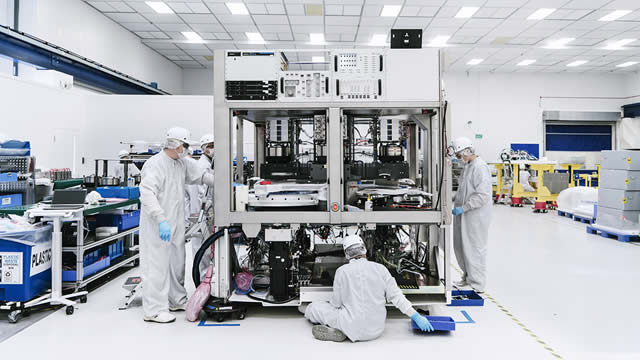
传迈威尔科技(MRVL.US)拟斥资50亿美元收购Celestial AI 押注光子互联破局“...
Xin Lang Cai Jing· 2025-12-02 06:57
Group 1 - Marvell Technology is in advanced talks to acquire Celestial AI for a deal potentially exceeding $5 billion, including cash and stock [1] - The acquisition is expected to enhance Marvell's product portfolio and highlight the strong demand for computing power in the market [1] - Celestial AI has raised a total of $515 million, with $250 million coming from a venture capital round supported by an AMD subsidiary [1][2] Group 2 - Celestial AI is focused on developing a photonic interconnect platform called Photonic Fabric to address the "memory wall" crisis in AI computing architectures [2] - The memory wall has become a significant barrier to system performance as the speed mismatch between computing units and memory leads to inefficiencies, especially with large AI models [2] - The acquisition of Celestial AI would provide Marvell with a strategic advantage in the evolving AI server market, particularly if photonic interconnect technology becomes a standard [3]
光芯片,成为关键
半导体芯闻· 2025-09-23 10:38
Core Insights - The article discusses the escalating arms race in artificial intelligence (AI) computing capabilities, highlighting a significant wave of global infrastructure investment. However, the AI industry faces a fundamental barrier in data movement between processors due to the limitations of existing copper interconnect technologies, which cannot effectively scale to meet the demands of next-generation AI requiring millions of processors. In this context, photonic chip startups Celestial AI and OpenLight are emerging to provide faster and more energy-efficient solutions to meet the needs of hyperscaler clients like Amazon, Microsoft, and Google [1]. Group 1: Celestial AI Developments - Celestial AI has secured $255 million in investments from TSMC's VentureTech Alliance and Samsung's Catalyst Fund, bringing its total funding to $520 million. The company plans to use this funding to strengthen its supply chain and deepen partnerships with foundries, including TSMC [2]. - Celestial AI expects to begin selling its first chips by mid to late 2026, focusing on server "scale-up" networks that account for 85% of data center traffic. The company anticipates that its scale-up sales will surpass copper-based Ethernet scale-out switches starting in 2025 [5]. - The core technology of Celestial AI, Photonic Fabric, offers optical interconnects from chip-to-chip and server-to-server, significantly outperforming Nvidia's NVLink in terms of power consumption. Celestial AI is positioning its Optical Memory Interface Bridge (OMIB) as an alternative to NVLink [5][7]. Group 2: OpenLight Developments - OpenLight raised $34 million in funding from investors including Juniper Networks and Lam Research. The company plans to use this capital to expand its process design kit (PDK) for active and passive photonic components, with production expected to begin for its first customers by the end of 2025 [4][11]. - OpenLight's competitive advantage lies in its use of indium phosphide technology, which allows for the integration of lasers onto chips. The company has demonstrated a 400 Gbps modulator with low power consumption of approximately 1.5 microjoules per bit [11]. - OpenLight provides a library of components (PDK) to enable customers to design their own chips, collaborating with ASE Holdings' subsidiary, Siliconware Precision Industries [14]. Group 3: Competitive Landscape - The photonic chip sector is becoming increasingly competitive, with players like Ayar Labs, Lightmatter, and Huawei entering the market. Huawei aims to challenge Nvidia's NVLink market with its new SuperPod cluster, which plans to connect up to 15,488 Ascend NPUs by 2026 [15]. - Lightmatter announced the Passage M1000 platform, which offers a total optical bandwidth of 114 Tbps, and is collaborating with GlobalFoundries and Amkor to begin production based on this platform [17][18]. - Quantum computing startup PsiQuantum is also manufacturing photonic chips using standard 45nm silicon nitride processes at GlobalFoundries [21].
CLS Outpaces Industry in the Past 3 Months: Reason to Buy the Stock?
ZACKS· 2025-06-02 14:41
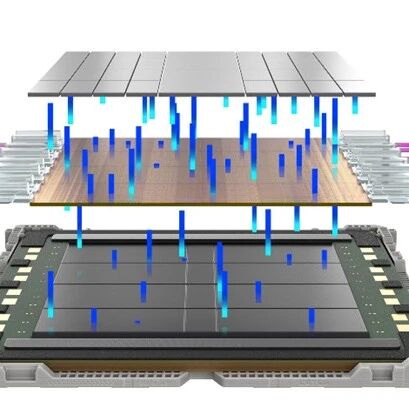
Core Insights - Celestica Inc. (CLS) has outperformed the industry and peers with a stock gain of 24.3% over the past three months, compared to the industry's 15.4% growth and Flex Ltd. (FLEX) and Jabil Inc. (JBL) gains of 17.3% and 14.7% respectively [1][7]. Company Overview - With over two decades of manufacturing experience, Celestica focuses on next-generation, cloud-optimized data storage and AI networking solutions, operating primarily as a behind-the-scenes partner for electronics businesses [2]. - The company provides a comprehensive range of services in the electronics market, including design, manufacturing, and supply chain management [2]. Growth Drivers - The ongoing generative AI (GenAI) boom has significantly benefited Celestica, driven by strong demand for AI/ML compute and networking products from hyperscale customers [5]. - Key products include the high-performance 800G family of network switches and storage solutions like the SC6100 controller and SD6200 platform, which are essential for AI applications [5][6]. - Celestica's innovative Photonic Fabric solution enhances AI infrastructure, supporting scalable and sustainable business models [5]. Financial Performance - Earnings estimates for Celestica have increased by 5.7% for 2025 to $5.05 and by 2.4% for 2026 to $6.07, indicating positive sentiment regarding the company's growth potential [8][7]. Market Environment - Despite strong demand trends, Celestica expresses skepticism about the macro environment due to trade policy uncertainties, although recent U.S. government exemptions for key IT hardware provide some near-term clarity [9]. - The company is actively collaborating with customers to navigate the evolving policy landscape [9]. Challenges - Celestica faces ongoing margin pressures due to high research and development costs associated with sophisticated products, leading to high operating expenses [10][15]. - The company competes with industry giants like Foxconn, Jabil, Flex, and Sanmina Corporation, as well as smaller regional players, in a highly cyclical semiconductor industry [11]. Future Outlook - As production volumes increase and costs decrease, the potential applications for silicon photonics are expected to expand across various industries, positioning Celestica for sustained growth [14].


CLS Stock Almost Doubles in a Year: Should You Take the Bait?
ZACKS· 2025-05-02 15:20
Core Insights - Celestica Inc. (CLS) has significantly outperformed the industry and peers, with a stock price increase of 98.8% over the past year compared to the industry's 36.4% growth [1] - The company has a strong focus on AI applications, leveraging over 25 years of manufacturing experience to provide advanced data storage and networking solutions [2] Performance and Growth - The ongoing generative AI boom has driven demand for Celestica's AI/ML compute and networking products, particularly from hyperscale customers [3] - Celestica's high-performance 800G network switches and scalable storage solutions are essential for AI applications, enhancing its market position [3] - Earnings estimates for 2025 have increased by 5.7% to $5.05, and for 2026 by 2.4% to $6.07, indicating positive growth expectations [6] Financial Guidance - The company has raised its revenue guidance for 2025 to $10.85 billion from $10.7 billion, with an expected non-GAAP operating margin of 7.2% [7] - Non-GAAP adjusted earnings are projected to be $5 per share, up from a previous estimate of $4.75 [7] Challenges and Competition - Despite strong growth, Celestica faces high operating expenses due to sophisticated product development, which has impacted margins [8] - The company competes with major players like Foxconn, Jabil, and Flex, as well as smaller regional firms, in a highly cyclical semiconductor industry [9] - Persistent weakness in the ATS segment and elevated inventory levels in industrial markets are hindering net sales growth [9] Future Outlook - Management anticipates demand stabilization in the first half of 2025, although macroeconomic challenges remain a concern [12] - As production scales and costs decrease, the potential applications for silicon photonics are expected to expand across various industries [13] - The stock has a trailing four-quarter average earnings surprise of 7.4% and a favorable Zacks Rank of 2 (Buy), suggesting potential for further appreciation [14]

陈立武,投了一家芯片公司
半导体芯闻· 2025-03-12 10:48
Core Viewpoint - Celestial AI has raised $250 million in Series C funding led by Fidelity Management and Research, bringing total capital raised to over $515 million, with participation from notable investors like BlackRock and Tiger Global Management [2][3]. Group 1: Investment and Financials - The recent funding round included new investors such as BlackRock, Maverick Silicon, and Tiger Global Management, alongside existing investors like AMD Ventures and Temasek [2]. - The total capital raised by Celestial AI has now exceeded $515 million, indicating strong investor confidence in the company's technology and market potential [2]. Group 2: Technology and Innovation - Celestial AI's Photonic Fabric technology platform is designed to meet the increasing demands of AI infrastructure, enabling seamless networking for AI computing from processor packaging to multi-rack servers [3][12]. - The technology offers high bandwidth, low latency, and energy efficiency, setting new standards for AI infrastructure [3][5]. - Photonic Fabric provides tailored solutions for interconnectivity, including chip-to-chip and processor-to-processor connections, and is compatible with industry-standard manufacturing and packaging processes [4][12]. Group 3: Market Position and Strategy - Celestial AI aims to enhance the performance of existing systems rather than compete directly with major players like Nvidia and AMD, focusing on improving interconnect bandwidth and reducing latency and power consumption [9]. - The company is positioned to address the challenges faced by traditional data center infrastructure, which is struggling to scale effectively under the demands of modern AI workloads [11][12]. Group 4: Product Offerings - Photonic Fabric includes various product forms such as PFLink™ for connectivity, PFSwitch™ for low-latency high-bandwidth switching, and OMIB™ for packaging solutions [13][14]. - The PFLink™ supports extensive communication between multiple XPU units, while PFSwitch™ is designed for high-bandwidth, low-latency communication, capable of supporting up to 14.4 Tbps [14][15]. - OMIB™ allows for the integration and interconnection of multiple chips within a single package, facilitating the expansion of AI computing while reducing thermal design power (TDP) [17].