
Pixel Buds

Search documents
AI硬件革命来了
虎嗅APP· 2026-01-25 14:11
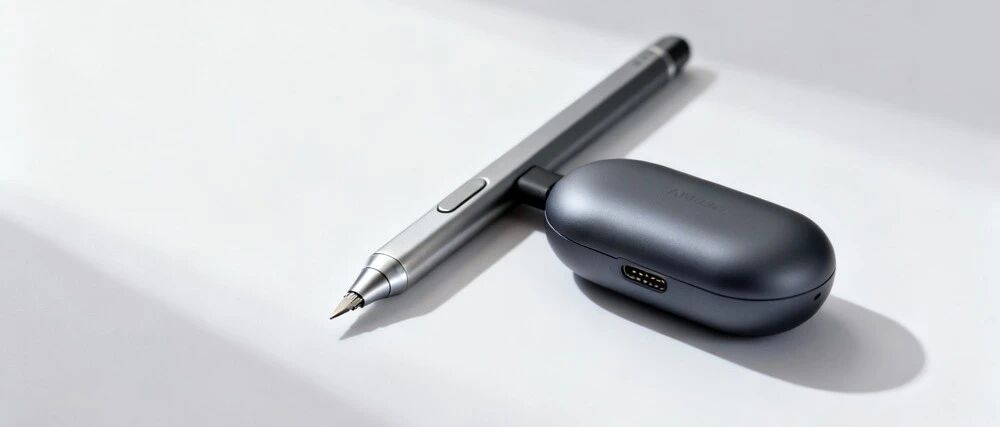
Core Viewpoint - OpenAI plans to launch its first AI device in the second half of 2026, featuring a screenless, voice-centric design weighing 10-15 grams, with an ambitious annual shipment target of 40-50 million units, potentially disrupting the smartphone market [4][27]. Group 1: Technological Innovations - The device will utilize advanced multi-modal sensors for user interaction, relying on auditory, visual, and biological feedback to enhance user experience [9][14]. - A high-sensitivity microphone array will enable 360° voice capture and AI noise reduction, allowing for precise voice recognition even in noisy environments [10]. - The integration of a muscle electrical sensor will facilitate silent voice interaction, enabling users to issue commands without vocalizing them [15][16]. - The device is expected to be powered by a custom 2nm Exynos chip from Samsung, which will provide high processing power while maintaining energy efficiency [18][19]. Group 2: Market Implications - If successful, the device could redefine human-computer interaction, moving away from screen-based engagement to voice-driven interfaces, potentially disrupting the current internet economy [40][42]. - The global market for screenless AI wearable devices is projected to exceed $50 billion by 2028, capturing 25% of the wearable device market [42]. - The introduction of this technology may lead to a significant shift in advertising strategies, as traditional SEO could be replaced by AI-driven recommendations [42]. Group 3: Development Timeline and Challenges - OpenAI has laid the groundwork for this device by acquiring a hardware company founded by Apple's former chief designer and hiring numerous hardware engineers from major tech firms [24][25]. - The development timeline includes completing concept design by Q4 2023, producing prototypes by Q2 2024, and integrating AI models by Q4 2024, with a planned release in late 2026 [26]. - However, challenges such as supply chain limitations and the need for compliance with privacy regulations could delay mass production until 2027 [27][34]. Group 4: Societal Impact - The device's capabilities could enhance productivity across various sectors, potentially saving significant time for professionals by automating tasks like note-taking and scheduling [46]. - The penetration rate of screenless AI devices among the elderly is expected to reach 20% by 2030, addressing the digital divide for older populations [48]. - Concerns about job displacement due to AI adoption are significant, with predictions of 85 million jobs being replaced by 2027, particularly in administrative roles [51][52].

AI硬件革命来了
格隆汇APP· 2026-01-24 06:36
Core Viewpoint - OpenAI plans to launch its first AI device in the second half of 2026, which is a screenless, voice-centric wearable device weighing 10-15 grams, potentially challenging the dominance of smartphones [2][3][4]. Group 1: Product Features and Technology - The device aims for an ambitious annual shipment target of 40-50 million units, indicating a significant market entry strategy [3][34]. - The device will utilize a multi-modal sensor matrix for perception, combining auditory, visual, and biological sensing to enhance user interaction [10][11]. - The auditory system will feature a high-sensitivity microphone array and xMEMS ultrasonic drivers, enabling 360-degree voice capture and AI noise reduction [12][13]. - A new end-to-end audio model will allow for real-time adjustments during conversations, creating a more natural interaction experience [14][15]. - The visual and environmental sensing will include a micro-camera for scene recognition and various sensors to assess user states, enhancing the device's contextual awareness [17][18]. - A muscle electrical sensor will enable silent voice interaction, allowing users to issue commands without vocalizing them, a technology previously limited to medical applications [19]. Group 2: Hardware and Supply Chain - The device's processing power is expected to come from a custom 2nm Exynos chip from Samsung, which is crucial for achieving the device's performance and power efficiency goals [21][22]. - The chip's advanced technology allows for high transistor density and improved performance-to-power ratios, essential for maintaining battery life [22][23]. - OpenAI has made significant investments in hardware design, including acquiring a company founded by Apple's former chief designer, indicating a focus on aesthetics and functionality [27][28]. - The production of the device is currently in the prototype testing phase, with a timeline that aligns with typical hardware development cycles [30]. Group 3: Market Impact and Future Trends - The introduction of this AI device could redefine human-computer interaction, moving away from screen-based engagement to voice-driven interfaces, potentially disrupting current internet advertising models [50][52]. - If successful, the device could lead to a significant shift in the wearable technology market, with projections indicating that the market for screenless AI wearables could exceed $50 billion by 2028 [55]. - The device's capabilities may prompt competitors like Apple and Google to accelerate their own developments in similar technologies, leading to a new wave of innovation in the sector [55]. Group 4: Societal Implications - The widespread adoption of AI devices raises concerns about job displacement, with predictions that AI could replace approximately 85 million jobs globally by 2027 [64]. - Privacy issues are a significant concern, as continuous environmental sensing could lead to surveillance-like scenarios, challenging existing privacy regulations [68][70]. - The societal acceptance of such technology will require a cultural shift, as users will need to adapt to interacting with devices that monitor their surroundings and personal data [76].

US stocks close higher for fourth session, why investors should 'take the win' in Big Tech
Youtube· 2025-11-26 21:52
Market Overview - Major markets have seen four consecutive days of gains, with the Dow up 300 points or 0.67% and the Russell 2000 up 1.37% over the same period, marking an 8.5% increase in four days, the best performance since July 2024 [1][3][9] - The bond market is experiencing a decline in yields, with the 10-year Treasury yield at 4% and the 30-year yield at 4.64%, while the VIX has dropped below 20, indicating reduced market volatility [3][4] Sector Performance - Utilities led the market today with a 1.32% increase, followed by materials and technology sectors, all showing gains of over 1% [5][6] - Healthcare, which has been a strong performer this quarter, is the only sector trading down [5][6] Company Highlights - Nvidia is recovering into positive territory, while Google saw a 1% decline. In contrast, Broadcom, ASML, and AMD reported increases of 3% to 4% [6][7] - Boeing and Goldman Sachs also showed strong performance, with Boeing up 2.5% and Goldman Sachs up 1.5% [7] Economic Indicators - The probability of interest rate cuts has increased significantly, with expectations for a December cut rising to over 80% and January nearing 90%, which supports bullish market sentiment [10][11] - Lower interest rates are expected to provide support for higher valuations, contributing to a favorable environment for capital allocation [12][11] Retail and Consumer Trends - Holiday spending is projected to rise by 3.1% year-over-year, which is below the decade average, indicating a cautious consumer sentiment [38][39] - The divide in consumer spending is evident, with wealthier consumers continuing to spend on luxury items while others focus on essentials [40][41] Tariff Impact - Tariffs are affecting prices across various sectors, particularly electronics, with significant price increases expected for smartphones (30%), laptops (34%), and video game consoles (69%) due to tariffs on imports from countries like India and China [55][56] - Retailers are balancing pricing strategies to mitigate the impact of tariffs, especially on essential goods, while also leveraging online sales to attract consumers [46][48]

Google Rolls Out New Pixel Phones, Watch, Earbuds
Bloomberg Technology· 2025-08-20 19:47
Gemini Strategy & Product Integration - Gemini is a huge part of Google's strategy, with the company claiming to have the best models and AI assistant [1] - Google is integrating Gemini into various surfaces, including phones, cars, televisions, smart speakers, smart displays, and potentially smart glasses in the future [6][7] - Gemini powers various applications, enabling users to be more productive and do things for fun [3][2] - Google is working on smart glasses powered by Gemini, expected to be released sometime in 2026 [7] AI Capabilities & Applications - Gemini will make it easier to interoperate with phones, allowing users to talk to the AI and receive assistance with tasks like home projects [4] - Magic Q allows users to quickly process information from other applications, such as calling a restaurant directly from a text message [9][10] - Google is partnering with Steph Curry to apply AI technology to personal coaching, focusing on sleep, nutrition, and fitness [4][5] Android Ecosystem & Partnerships - Google aims to showcase its software capabilities through hardware to demonstrate what is possible with Android [11] - Google works closely with Samsung on Gemini technology and is excited about their launches with fold seven and flip seven [12][13] - Android is an open ecosystem where many participants can take advantage of Gemini [13] Hardware & Technology - Google is focused on running AI on devices, showcasing what AI on devices can do for the whole Android ecosystem [8] - Processing things on the device can improve speed, privacy, and functionality when out of network coverage [15] - Google has staggered releases for its products, with the watch coming out a little later this year [16] Business Objectives & Success Metrics - The most important thing for Google is to showcase what Gemini can do for everyone and distribute it as broadly as possible [18][19]

