人工智能硬件

Search documents
OpenClaw 之后,2026 年的 AI 硬件该怎么做?
Founder Park· 2026-03-16 11:00
Core Insights - The AI hardware sector has undergone a market selection and "demystification" process by 2025 [2] - The era where financing was possible with just a screen and a microphone has ended [3] - The focus for AI hardware startups has shifted to understanding the role of hardware products in users' lives rather than merely integrating better large models [4] Group 1: OpenClaw and Its Implications - The emergence of OpenClaw has made the question of how to differentiate products through "proactive service scenarios" more urgent and interesting for AI hardware entrepreneurs [5] - A discussion event hosted by Founder Park and Baidu Smart Cloud aims to explore how AI hardware should evolve post-OpenClaw and what the 2026 window of opportunity looks like [5] Group 2: Event Details and Topics - The event will cover topics such as paradigm reconstruction from "functional devices" to "proactive intelligent agents," practical reviews of the 2025 commercialization path, and who will control the "OS" of AI hardware [12] - The event is scheduled for March 28, 2026, in Shenzhen, with specific location details to be provided upon registration approval [11][7]

叫板OpenClaw,一款主动找活干的agent原生硬件即将发售
36氪· 2026-03-12 15:24
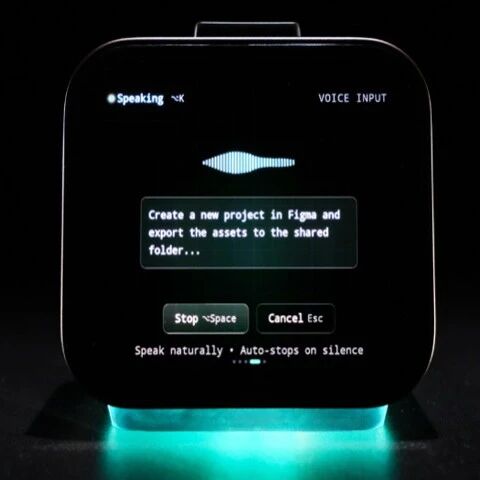
Core Viewpoint - The article discusses the emergence of Violoop, a hardware designed specifically for AI applications, which aims to transform the interaction between users and AI by making it more proactive and intuitive, thus addressing the limitations of current AI systems like OpenClaw [4][20]. Group 1: Product Overview - Violoop is described as a "black box" desktop computer designed for AI, which can be used immediately upon plugging in, distinguishing itself from OpenClaw by eliminating deployment difficulties [5]. - It features a self-developed visual model that allows it to perceive screen content in real-time, enabling proactive task suggestions and assistance [5][10]. - The device operates by connecting via HDMI, allowing it to function as a physical keyboard and mouse, thus facilitating cross-application workflows [11]. Group 2: Technical Innovations - Violoop incorporates a dual-chip architecture where the main chip runs AI tasks while a separate security chip manages sensitive information, ensuring data privacy and security [18][19]. - The design reduces the core chip cost to one-fourth of typical market prices, allowing the product to be priced around $300, making it accessible for consumers [13]. - The system is designed to monitor AI operations in real-time, providing users with visibility and control over AI actions [13]. Group 3: Market Position and Vision - Violoop aims to redefine the AI landscape by evolving AI from a passive tool to an active assistant that understands user needs without requiring explicit commands [10][21]. - The founders believe that the future of AI will involve creating a digital workforce, where AI can autonomously manage tasks and even handle financial transactions within set parameters [22]. - The company plans to establish a skill-sharing ecosystem to enhance user experience and create a high barrier to entry for competitors by locking in workflows with their hardware [23]. Group 4: Challenges and Future Outlook - Despite positive pre-crowdfunding feedback, Violoop faces challenges in maintaining its competitive edge as larger companies may quickly replicate its innovations once proven [24]. - The success of Violoop will depend on its ability to build a loyal user base and a unique software ecosystem that leverages its hardware capabilities [24].
叫板OpenClaw,一款主动找活干的agent原生硬件即将发售
暗涌Waves· 2026-03-12 00:57
Core Viewpoint - OpenClaw has ignited excitement in the tech investment community, but its hardware, Mac Mini, is seen as a temporary solution rather than the best option for AI assistants. The focus is shifting towards hardware that ensures user privacy and security, with Violoop emerging as a promising alternative [2][3][4]. Group 1: Violoop Overview - Violoop is a desktop-sized AI-specific computer designed for ease of use, allowing users to plug it in and start using it immediately without complex setup [4][6]. - It connects via HDMI to the main computer, functioning as a physical keyboard and mouse, enabling seamless interaction and task execution [4][9]. - The hardware is built from the ground up, incorporating proprietary visual models and security features to enhance user safety and control [6][15]. Group 2: Functionality and Features - Violoop aims to eliminate the need for prompts by actively observing user behavior and suggesting tasks based on learned habits, thus transforming from a passive tool to an active assistant [7][10]. - It can operate across various applications, including those without APIs, to automate tasks like messaging and expense reporting [9][10]. - The device is designed to maintain user privacy by processing visual data locally and minimizing token usage, ensuring that sensitive information is not uploaded to the cloud [11][15]. Group 3: Security Measures - Violoop employs a dual-chip architecture where the main chip runs AI tasks while a separate security chip manages sensitive data, ensuring physical isolation and local storage [15][16]. - Users must approve high-risk actions through a physical button or mobile app, providing an additional layer of security [15][16]. Group 4: Market Position and Future Vision - The founders believe that the future of AI will involve creating tools that cater to the needs of agents rather than just users, indicating a shift towards an "Agent Economy" [18][19]. - Violoop is positioned to become a foundational element in this new economy, with capabilities for autonomous financial transactions and task management [19][20]. - The company plans to build an ecosystem around skill sharing, where users can exchange data for improved automation experiences, creating high switching costs for competitors [21].
OpenAI计划2027年前推出人工智能智能音箱
Huan Qiu Wang Zi Xun· 2026-02-21 01:48
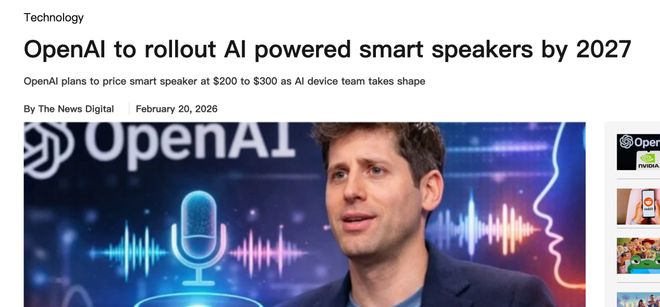
Core Viewpoint - OpenAI is accelerating its entry into the artificial intelligence hardware market, planning to launch a smart speaker with a camera by 2027, marking its first self-developed AI device [1][4]. Group 1: Product Development - A team of over 200 people is working on a range of AI hardware products, including the smart speaker, smart glasses, and smart lights [4]. - The smart speaker is expected to be available as early as February 2027, with a price range of $200 to $300, featuring a camera to capture multimodal information for enhanced user interaction [4]. - Smart glasses are anticipated to enter mass production by 2028 [4]. Group 2: Strategic Moves - To enter the hardware sector, OpenAI acquired io Products, a company founded by former Apple design chief Jony Ive, for $6.5 billion last year [4]. - This acquisition aims to align with market trends in physical AI and augmented reality technology, expanding OpenAI's ecosystem [4]. Group 3: Market Competition - The AI hardware market is becoming increasingly competitive, with Meta and Ray-Ban's smart glasses performing well due to their video recording and live streaming capabilities [4]. - Apple and Google are also reported to be developing their own AI smart glasses products [4].
大厂AI硬件竞赛:软硬一体易成,生态入口难夺
Xin Lang Cai Jing· 2026-02-10 12:40
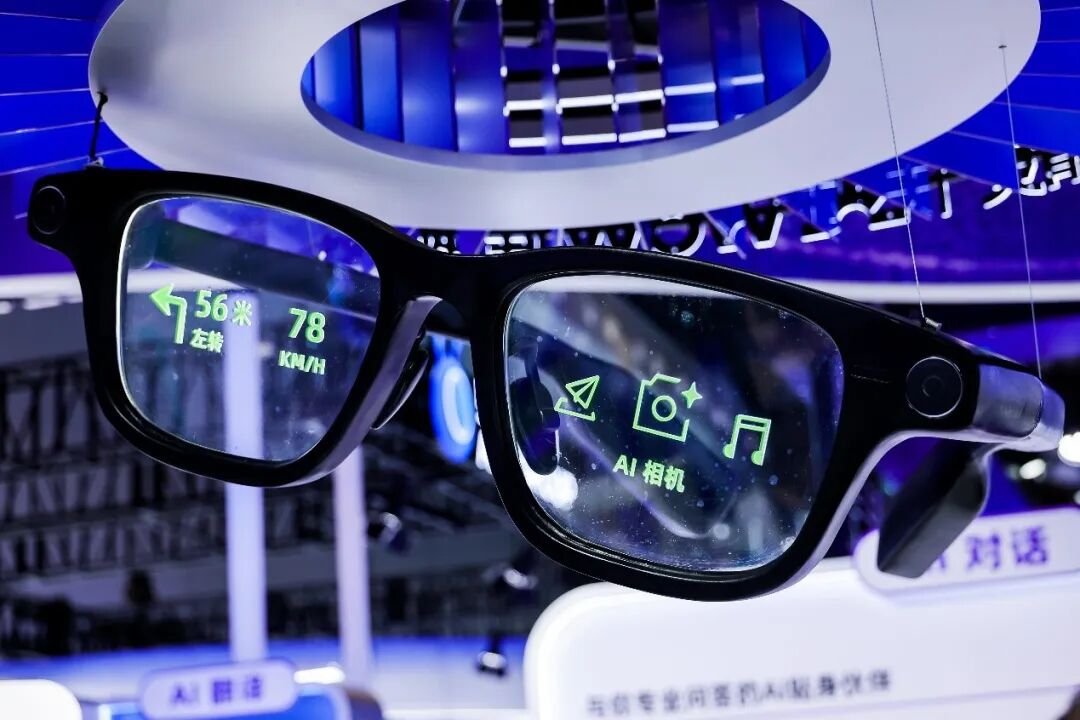
Core Insights - The next battleground for AI has shifted from the cloud to personal devices, with major tech companies exploring various forms of AI hardware, including glasses and pens [2][22] - OpenAI plans to launch a lightweight, screenless AI device in the second half of 2026, sparking speculation about its form factor [23] - The AI hardware market, particularly smart glasses, is entering a phase of scaled competition, with global shipments expected to exceed 10 million units by 2026 [3][24] Group 1: Market Dynamics - Meta has established itself as a leader in the smart glasses market, holding a 73% market share in early 2025 with its Ray-Ban collaboration [25] - Google is re-entering the smart glasses space with Project Aura, set to launch in 2026, aiming to create an open XR ecosystem [25][26] - In China, companies like Alibaba and Baidu are launching their own AI glasses, with Alibaba's Quark AI Glasses S1 topping sales charts upon release [26][27] Group 2: Product Innovations - Alibaba's Quark AI Glasses S1 features a lightweight design and advanced voice interaction capabilities, while Baidu's XiaoDu AI Glasses Pro focuses on AI voice photography [28][27] - ByteDance is preparing to launch its own AI glasses, leveraging its VR expertise from the PICO brand [27] - Other Chinese manufacturers, including XREAL and Rokid, are also developing competitive products in the global market [27] Group 3: Strategic Paths - OpenAI represents a "disruptive entry" strategy, focusing on a screenless AI pen that aims to redefine human-computer interaction [31][32] - Google is pursuing an "ecosystem platform" strategy with its Android XR operating system and Project Aura, aiming to replicate its success in the smartphone market [33] - Chinese giants like Alibaba and Baidu are adopting a "full-stack synergy" approach, integrating algorithms, chips, cloud, and terminal solutions [35][36] Group 4: Challenges Ahead - The AI hardware market faces significant challenges, including supply chain constraints and the need for robust production capabilities [39] - Privacy and ethical compliance issues are critical, as AI hardware collects extensive user data [40] - The business model may shift from selling devices to offering services, emphasizing the need for innovative revenue streams [41]



第一批爆火的AI硬件,正在悄悄退场
创业邦· 2026-02-10 10:32
Core Insights - The article discusses the challenges faced by AI hardware companies, particularly highlighting the case of Rabbit, which was once considered a leading product but ultimately failed due to high return rates and cash flow issues [4][5]. - It emphasizes that many current AI hardware products are transitional and do not meet user expectations, indicating that the market is not yet ready for a breakthrough akin to the iPhone [5][8]. Group 1: Market Challenges - Rabbit's experience illustrates that high sales do not guarantee success; instead, negative user feedback can lead to financial collapse [4]. - Many AI hardware products on the market are perceived as toys and fail to deliver on their promises, lacking real-time interaction capabilities [5][7]. - The current AI hardware landscape is characterized by products that are more about the concept of AI rather than practical applications, leading to user disappointment [8][10]. Group 2: Investment Opportunities - Despite the challenges, there is a significant investment interest in AI hardware, with some companies experiencing dramatic valuation increases, such as an AI glasses company whose valuation rose by 240% in just two hours [14]. - The article notes that the AI hardware investment trend is particularly strong in China, where there is a mature supply chain and a pool of young engineers [13][14]. - Successful AI hardware startups are often led by individuals with strong backgrounds, including those from major tech companies, which attracts substantial investment [15][16]. Group 3: Future Directions - The article suggests that the future of AI hardware is uncertain, with no clear standard for what successful products will look like, as traditional metrics for success may not apply [18][20]. - Companies that can quickly iterate and adapt their products to meet market needs are more likely to succeed, as seen with firms like玄源科技, which maintain control over their development processes [21][22]. - The potential for unique market opportunities remains, as evidenced by successful products like the AI recording pen Plaud, which found a niche in the market despite initial skepticism [20][22].

赛博朋克2077,AI超算遇见夜之城
新财富· 2026-02-10 09:19
Core Viewpoint - The DGX Spark, described as the "world's smallest AI supercomputer," aims to empower the next generation of AI development while also sparking discussions about its gaming capabilities, particularly in running the game "Cyberpunk 2077" [3][10]. Group 1: DGX Spark's Technical Features - The core of DGX Spark is the NVIDIA GB10 Grace Blackwell super chip, which integrates the Arm-based Grace CPU and Blackwell architecture GPU using NVLink-C2C technology, achieving over 900GB/s interconnect bandwidth, significantly surpassing PCIe 5.0 [4]. - DGX Spark features a unified memory of 128GB LPDDR5x, allowing both CPU and GPU to access the same memory pool efficiently, which is crucial for AI training and inference [4]. Group 2: Market Positioning and Ecosystem - NVIDIA positions DGX Spark as an out-of-the-box AI development terminal, pre-installed with optimized DGX OS and a complete NVIDIA AI software stack, enabling developers to start model prototyping immediately [8]. - The device's 1 PetaFLOP FP4 AI computing power allows for smooth local inference of 200 billion parameter models and fine-tuning of 70 billion parameter models, facilitating a direct pipeline from personal desktops to cloud computing resources [8][18]. Group 3: Gaming Performance and Misconceptions - The controversy surrounding DGX Spark's performance in "Cyberpunk 2077" highlights a misunderstanding of its specialized tensor computing capabilities, which are optimized for matrix operations rather than graphics rendering [10]. - Initial gaming performance was poor, with average frame rates around 50 FPS at 1080p, leading to discussions about its gaming viability compared to mid-range PCs [10][12]. Group 4: Business Model and Strategic Implications - The business model for DGX Spark includes hardware sales priced between $3,000 and $4,000, but the real value lies in locking users into NVIDIA's software and service ecosystem, fostering customer loyalty and recurring revenue [21]. - By providing a powerful yet accessible development tool, NVIDIA aims to cultivate the next generation of AI developers who will likely prefer NVIDIA's cloud solutions as their projects grow [21]. Group 5: Future Trends and Industry Impact - DGX Spark represents a shift in AI computing needs, making high-performance AI accessible to a broader range of users, including enterprises and individual researchers, thus lowering the barriers to AI development [18][22]. - The device signifies a trend towards the democratization of supercomputing capabilities, merging general computing, AI computing, and graphics computing into a single platform [24][25].


第一批爆火的AI硬件,正在悄悄退场
凤凰网财经· 2026-02-09 12:40
Core Insights - The article discusses the challenges faced by AI hardware companies, particularly highlighting the case of Rabbit, which was once considered a leading product but ultimately failed due to high return rates and cash flow issues. This reflects a broader trend in the AI hardware market where many products do not meet user expectations and are seen as transitional rather than revolutionary [2][3]. Group 1: Market Challenges - Rabbit's experience illustrates that the AI hardware market is currently filled with products that do not deliver on their promises, leading to high return rates and negative user feedback [3]. - Many AI hardware products are perceived as toys rather than functional tools, failing to provide real-time interaction or meaningful user experiences [3][4]. - The current AI hardware landscape is characterized by a lack of true innovation, with many products merely adopting the AI label without solving actual user problems [5][6]. Group 2: Investment Opportunities - Despite the challenges, there are significant investment opportunities in the AI hardware sector, particularly for entrepreneurs who can navigate the current landscape and identify genuine user needs [7][8]. - The article notes a surge in investment in AI hardware, with funding for this sector accounting for over 50% of all financing in May 2025 [12]. - Companies with strong backgrounds, such as those led by former executives from major tech firms, are attracting significant investment, indicating a trend towards backing experienced teams in the AI hardware space [13]. Group 3: Future Directions - The article emphasizes the need for a new generation of AI hardware that can effectively integrate AI capabilities into user-friendly products, moving beyond the current limitations of existing technologies [9][10]. - There is a belief that the next wave of innovation in AI hardware will emerge from China, leveraging its robust supply chain and engineering talent [10]. - The future of AI hardware is uncertain, with no clear standard for what successful products will look like, highlighting the need for rapid iteration and adaptation in product development [14][15].

英伟达服务器强劲需求不减,鸿海精密1月营收同比增长35.5%
智通财经网· 2026-02-05 09:07
Group 1 - The core viewpoint of the article highlights that Hong Teng Precision's revenue increased by 35.5% in January, indicating strong demand for NVIDIA servers amid the global AI development wave [1] - Hong Teng Precision reported a revenue of 730 billion New Taiwan Dollars (approximately 23 billion USD) for the last month, with the year-on-year comparison potentially affected by the timing of the Lunar New Year holiday [1] - The company is expected to see a 28% growth in sales for the three months ending in March [1] Group 2 - Hon Hai, responsible for manufacturing servers that store chips in data centers, is a key player in the AI hardware industry surrounding NVIDIA [1] - Despite warnings of overcapacity in the market due to uncertainties in the monetization path of the technology, companies in the U.S., including Meta and Amazon, continue to invest billions of dollars in deploying equipment necessary for training and running AI [1] - Hong Hai benefits from this ongoing investment trend in AI infrastructure [1]
两个95后华人,搞出硬件版Clawdbot,售价1700元
36氪· 2026-02-02 09:39
Core Viewpoint - The article discusses the rise of OpenClaw and its hardware version, Distiller Alpha, highlighting their capabilities and the unique approach to integrating hardware and software for AI agents [5][32]. Group 1: Product Overview - OpenClaw, now known as Distiller Alpha, is a compact Linux mini PC designed for running AI agents, featuring a Raspberry Pi CM5 core, 8GB RAM, and 64GB storage [12][64]. - Distiller Alpha is marketed at $250 (approximately 1700 RMB) and is designed for easy setup, allowing users to interact with an AI agent named Pamir [8][18]. - The device includes various integrated components such as an e-ink display, microphone, speaker, and camera, making it versatile for different applications [13][60]. Group 2: Unique Features - Distiller Alpha supports "Vibe coding," enabling users to write code remotely via their mobile devices, which is particularly appealing to developers [40][42]. - The device allows users to control existing hardware, such as Bluetooth devices, without needing extensive programming knowledge, thus broadening its user base [45][48]. - Users can create personalized dashboards and automate tasks, enhancing productivity and user experience [62][134]. Group 3: Market Positioning - The article contrasts Distiller Alpha with traditional computers like Mac mini, emphasizing that the latter is not optimized for running AI agents and requires significant setup [81][84]. - Distiller Alpha is positioned as a more suitable option for users needing a dedicated device for AI tasks, as it is designed specifically for agent operations [82][85]. - The founders believe that the future of computing will shift towards devices like Distiller Alpha, which automate low-value tasks and allow users to focus on higher-level thinking [197][201]. Group 4: User Experience and Adoption - The article highlights the growing acceptance of AI agents and the increasing demand for devices that can run them independently, as seen with the popularity of OpenClaw [120][198]. - Users report significant changes in their work habits, with many tasks being automated, allowing them to focus on strategic decision-making rather than execution [146][148]. - The founders emphasize the importance of creating a unique user experience that fosters emotional connections with the product, which is achieved through innovative design and functionality [115][118].