Prelude

Search documents
合资集体觉醒,唯独少了本田?
3 6 Ke· 2025-11-03 06:23
Core Insights - The Chinese automotive market is experiencing unprecedented competition, with numerous new models being launched and an accelerated shift towards electrification [1][4] - Honda's electric vehicle (EV) offerings have been notably weak in the Chinese market compared to competitors like Kia and Hyundai [3][4] - Honda's historical confidence and unique brand identity are being challenged as the company struggles to adapt to the rapidly changing market dynamics in China [5][12] Industry Dynamics - The intense competition in the Chinese automotive market has forced joint venture brands to rethink their strategies to maintain market share [1][4] - Honda's recent product launches, including the P7/S7 and GT sedan, have not garnered significant positive feedback, indicating a disconnect with consumer preferences [3][4] - The shift towards electrification is critical, with Honda needing to accelerate its product development and better understand the needs of Chinese consumers [4][12] Honda's Position - Honda has historically been a unique and confident brand, but its approach may not be sufficient in the current competitive landscape [5][16] - The company has faced significant challenges in the past few years, with a decline in sales and market presence as Chinese brands gain traction [12][14] - Honda's strategy to introduce a new electric brand "烨" and a new generation of EVs reflects an attempt to realign with market demands, but the execution remains crucial [12][16] Future Outlook - As the Chinese market continues to evolve, Honda must adapt its strategies to avoid being left behind, especially as consumer preferences shift towards more affordable and larger vehicles [16][17] - The company's reliance on traditional fuel vehicles may hinder its ability to compete effectively in the growing EV segment [9][10] - Honda's future success in China will depend on its ability to innovate and respond to the rapidly changing automotive landscape [12][14]


本田、日产、三菱扩大产品攻势,混动正成为一致方向
Guan Cha Zhe Wang· 2025-09-04 07:48
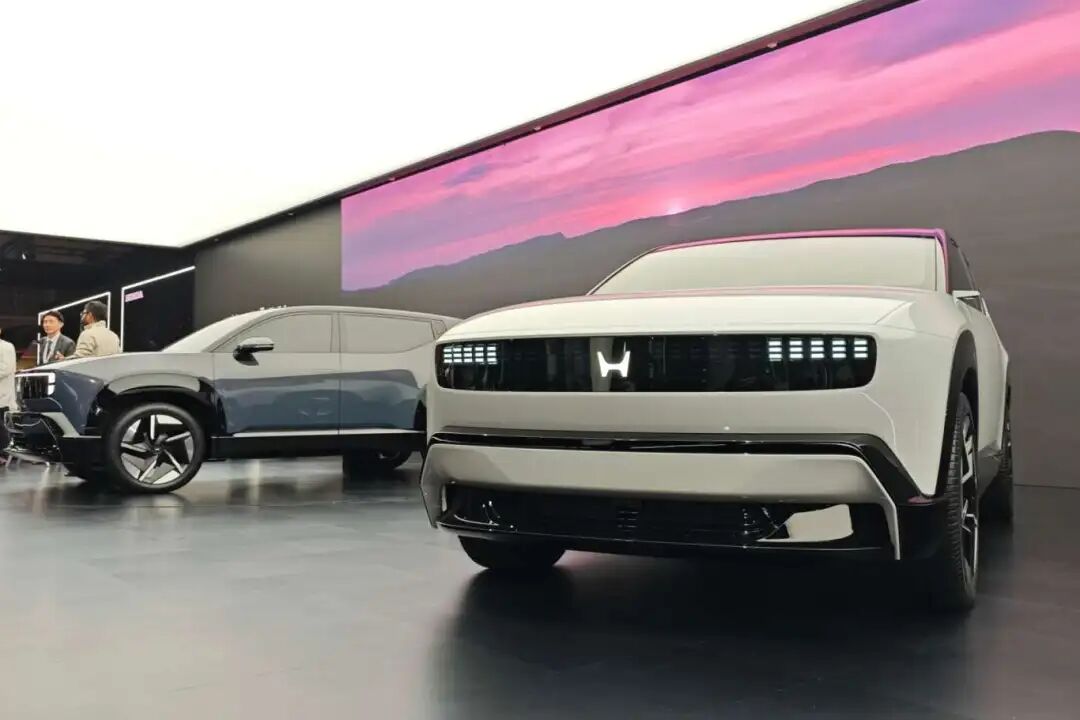
Core Viewpoint - Japanese automakers, including Honda, Nissan, and Mitsubishi, are significantly expanding their product lines, particularly focusing on hybrid and electric vehicles in response to market demands and competitive pressures [1][3][20]. Group 1: Honda's Strategy - Honda is launching the Prelude model, its first hybrid vehicle in 25 years, aiming to showcase a new interpretation of driving pleasure [3]. - The company is also introducing its 0 series electric vehicle prototypes, with plans for a crossover and sedan to debut next year [5]. - Acura, Honda's luxury brand, plans to add hybrid models, with speculation that popular models like the RDX may be among the first to feature hybrid technology [8]. Group 2: Nissan's Plans - Nissan is set to introduce multiple hybrid models, including the Rogue and Pathfinder, to counter declining sales in key markets [10][12]. - The company aims to deliver nearly 20 new and upgraded models to the U.S. and Canada by spring 2027, with 90% of these models featuring electric versions [10]. - Nissan's strategy includes offering various powertrain options for its main products, adapting to market needs [12]. Group 3: Mitsubishi's Aggressive Expansion - Mitsubishi plans to double its product lineup in the U.S. by early 2031 and will convert four existing models to include hybrid and electric options [15]. - The company will share Nissan's CMF-EV platform and introduce a compact electric crossover and a sporty passenger vehicle in the next decade [15]. - Mitsubishi's immediate plans include launching a hybrid version of the Outlander in 2026 and a new off-road hybrid model by the end of next year [17]. Group 4: Market Trends and Challenges - The global market for electric and hybrid vehicles is projected to grow significantly, with a 25% increase in new sales expected by 2025 [17]. - Japanese automakers have been slow to adapt to the electric vehicle trend, resulting in a market share of only 1.56% for Japanese electric vehicles compared to the global average [19]. - The shift towards hybrid technology is seen as a necessary step for Japanese automakers to remain competitive amid changing market dynamics and consumer preferences [20].