端到端具身大模型

Search documents
融资加速、标准体系落地,春晚之后,中国正式进入机器人时代
机器人大讲堂· 2026-03-04 09:13
Core Insights - The article highlights a significant surge in investment within the humanoid robot and embodied intelligence sector in China, with multiple companies securing substantial funding in early 2026, indicating a robust market interest and potential growth [1][3][4]. Investment Trends - Major companies like Galaxy General Robotics and Songyan Power have announced large financing rounds of 2.5 billion yuan and nearly 1 billion yuan, respectively, with a total of at least 18 financing events in the first two months of 2026, surpassing 13 billion yuan [1][3]. - Notable companies such as Qianxun Intelligent and Zhifang have joined the "billion-dollar club," reflecting the increasing valuation and market confidence in the humanoid robotics sector [3]. Cultural Impact - The 2026 Spring Festival Gala served as a significant platform for showcasing advancements in humanoid robotics, demonstrating the technology's capabilities in a high-exposure environment, which has helped build public trust and interest in AI and robotics [4][6]. - The performance of robots during the gala, including complex tasks and interactions, has led to a surge in public engagement, with search interest in robotics increasing by over 300% and order volumes rising by 150% shortly after the event [7]. Policy and Standardization - The Chinese government has established clear goals for the humanoid robotics industry, emphasizing its potential to revolutionize production and living standards, as outlined in the Ministry of Industry and Information Technology's guidelines [10][12]. - A new standardization framework for humanoid robots and embodied intelligence has been introduced, aiming to unify industry practices and enhance compatibility among different manufacturers, which is expected to lower costs and improve efficiency [14][15]. Market Potential - The global humanoid robot market is projected to exceed $1 trillion by 2050, with an estimated 70 million units sold, driven by decreasing costs of core components and the establishment of a comprehensive supply chain in China [21][22]. - The article discusses the transformative potential of humanoid robots in various sectors, including manufacturing, elder care, and national security, highlighting their ability to perform tasks traditionally done by humans [28][30]. Competitive Landscape - Companies like Galaxy General Robotics and Songyan Power represent different strategic approaches within the humanoid robotics market, with Galaxy focusing on end-to-end embodied models and Songyan targeting consumer market penetration with affordable products [23][27]. - The article warns of a competitive landscape where only a few companies may survive, as capital increasingly flows toward established players with proven business models and scalable production capabilities [32][36].

不跳舞的人形机器人,正尝试真正“干活”
3 6 Ke· 2026-02-05 01:20
Core Insights - The humanoid robot industry is focusing on practical applications beyond entertainment, with companies like Yushutech and Magic Atom announcing their participation in the Spring Festival Gala, while also facing criticism about the need for numerous dancing robots [1] - Companies are advancing humanoid robots into real-world scenarios, achieving significant milestones, such as Zivariable Robotics completing a 1 billion yuan financing and demonstrating autonomous food delivery using their self-developed VLA end-to-end model [1] - The end-to-end embodied large model technology aims to enable robots to make continuous decisions in real environments, but it is not a lightweight or highly certain technical path, requiring substantial funding and resources [2] Company Strategies - Zivariable Robotics is one of the early adopters of the end-to-end embodied large model technology, focusing on continuous decision-making from perception to action execution [1][2] - Sooteng Juchuang showcases a different approach with its VTLA-3D model, which integrates laser radar 3D point clouds and tactile feedback to enhance spatial understanding, reducing reliance on large-scale data during training [2] - The industry is divided into two main paths: one emphasizes immediate usability through multi-modal sensing, while the other focuses on long-term general intelligence through pure visual models [3] Engineering Approaches - A more engineering and delivery-oriented route is emerging, focusing on structured tasks and modular capabilities, allowing robots to perform reliably within defined task boundaries [3][4] - This engineering-focused approach offers high controllability and stability, making it suitable for semi-structured environments like industrial applications, but it struggles with adaptability to significant changes in tasks or environments [4] Industry Outlook - The humanoid robot industry is attempting to overcome several practical barriers to large-scale deployment, including safety coexistence, continuous operation, dexterous manipulation, and cost control [4] - Industry experts believe that while there is potential for breakthroughs in core capabilities within the next five years, achieving truly generalized humanoid robots will require time and accumulation of experience [5]

量产元年之后,中国人形机器人走向“价值战”
Bei Ke Cai Jing· 2026-01-23 14:07
Core Insights - The humanoid robot industry in China is experiencing significant growth, with expectations of over 140 domestic manufacturers and more than 330 humanoid robot products by 2025, marking it as the "year of mass production" [1][2] - The focus is shifting from mere technological showcases to practical applications in various sectors, including industrial manufacturing, commercial services, and home companionship [2] - Key challenges remain, including the need for breakthroughs in core technologies, stability in mass production, and issues related to cost control and scene adaptation [2] Industry Developments - The price of consumer-grade humanoid robots has dropped to the ten-thousand yuan range, with products like "Xiao Bu Mi" priced at 9,998 yuan, aimed at entertainment and education [3] - Industrial flagship models, such as UBTECH's Walker S2, are showcasing advanced capabilities and are being deployed in sectors like automotive manufacturing and smart logistics [4] - The competition is increasingly centered around AI capabilities, with a focus on integrating large models for visual, language, and action processing [5][6] Market Dynamics - The humanoid robot market is projected to see significant production increases, with companies like Zhiyuan Robotics and UBTECH planning to ramp up their output to tens of thousands of units by 2026 [8][9] - Industrial applications are becoming the primary battleground, with major players securing substantial orders, such as UBTECH's nearly 1.4 billion yuan in orders for 2025 [9] - The industry is expected to undergo consolidation, with only a fraction of the current companies likely to survive the competitive landscape by 2026 [10][12] Technological Challenges - Despite advancements, the industry faces bottlenecks related to data and model capabilities, which are critical for the development of humanoid robots [7][8] - The integration of world models into robotic systems is seen as a key area for enhancing decision-making and task execution capabilities [6] Future Outlook - The Chinese government is committed to promoting technological innovation in humanoid robotics, focusing on enhancing core technologies and ensuring product safety [11] - The market is anticipated to shift towards value-driven investments, with a focus on revenue structures and commercial viability as companies prepare for potential IPOs [12]
融资超3亿美元,估值超30亿美元!“北大系”人形机器人公司银河通用刷新具身智能单轮融资纪录
硬AI· 2025-12-19 14:02
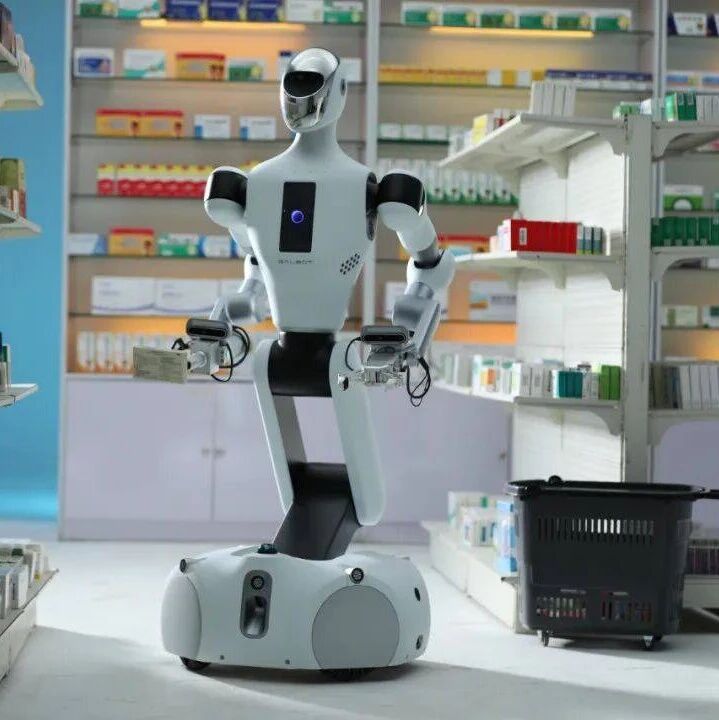
Core Viewpoint - Galaxy General, a startup affiliated with Peking University, has completed over $300 million in financing, setting a record for single-round funding in the field of embodied intelligence, with a post-investment valuation of approximately $3 billion [2][3]. Group 1: Financing and Valuation - The recent financing round was led by China Mobile Chain Long Fund, with participation from various industry capital and international investors, highlighting the ongoing interest in the embodied intelligence sector [3][5]. - Following this round, Galaxy General's valuation has tripled in just six months, increasing from approximately $1 billion to $3 billion [3][9]. - The total funding raised by the company has reached around $800 million, with plans to use the new capital for core technology investment and global partnership expansion [3][6]. Group 2: Market Position and Strategy - The investment structure indicates strong backing from national teams and industry capital, with notable investors including CICC, the Chinese Academy of Sciences, and CCTV Media Fund [5]. - Galaxy General is the only embodied intelligence model company to receive investment from CATL, a major player in the battery industry, which is expected to enhance its industrial development [5]. Group 3: Technological Development and Applications - The company employs a unique training paradigm using synthetic action data for pre-training and real data for post-training, achieving a full-stack self-research model from data sets to robots [7][8]. - Galaxy General has made significant progress in industrial manufacturing, securing partnerships with major companies like CATL, Bosch, and Toyota, and has received thousands of orders for its robots [8]. - In the commercial sector, the company has launched solutions like the "Galaxy Space Capsule" and is collaborating with medical institutions to implement robots in healthcare settings [8]. Group 4: IPO Plans - Following recent financing activities, Galaxy General is preparing for an IPO in Hong Kong, with the earliest application expected in early next year, targeting a valuation between $3 billion and $4 billion [3][9]. - The company’s rapid valuation increase and the trend of startups in the sector moving towards public offerings reflect the competitive landscape and the need for capital to sustain high R&D and operational costs [9].

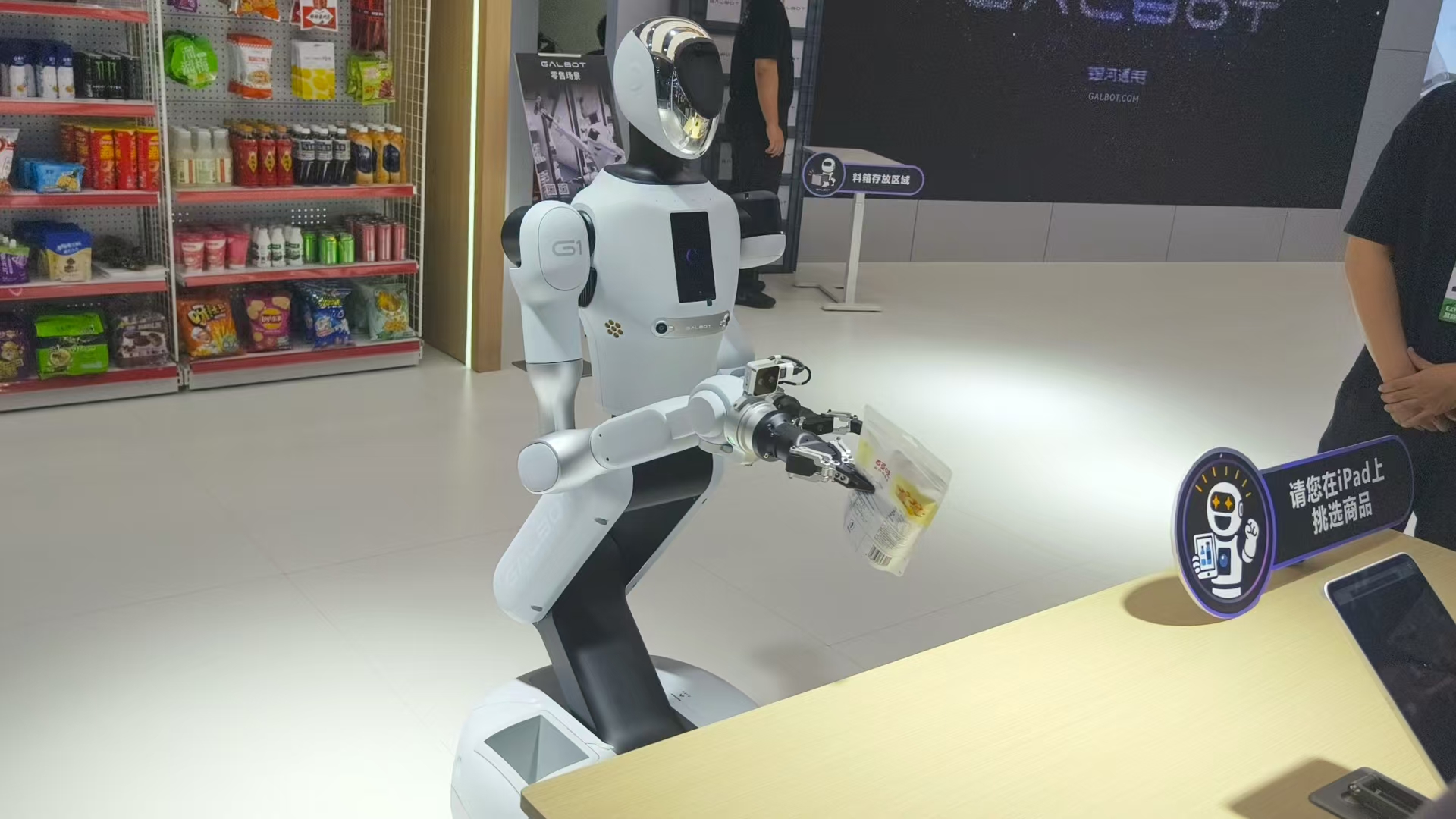
银河通用机器人展示商超值守机器人 已获得100家门店订单
Zheng Quan Shi Bao Wang· 2025-07-27 13:58
Core Insights - The 2025 World Artificial Intelligence Conference and Global Governance High-Level Meeting on AI will be held in Shanghai from July 26 to July 28, showcasing advancements in AI technology [1] Group 1: Company Developments - Galaxy General Robotics has developed a 1:1 replica of a real supermarket scene at the conference, featuring the Galbot robot for continuous operation and demonstration [1] - The Galbot robot operates using an end-to-end embodied large model called GroceryVLA, which allows it to autonomously identify and grasp products in complex environments without the need for path planning [3] - The company has launched the world's first humanoid robot smart retail solution, enabling Galbot to perform inventory management, restocking, product delivery, and packaging, achieving efficient 24/7 operations [3] - Galaxy General Robotics has received orders from 100 stores and plans to implement its solution nationwide by the end of the year, with several stores in Beijing already operational [4] Group 2: Financial and Investment Aspects - Since its establishment in 2023, Galaxy General Robotics has completed three rounds of financing, raising over 2.4 billion yuan in total, with significant investments from companies like CATL and Puxuan Capital [4] - The company has formed a joint venture with Bosch Group's Boryan Capital to explore the commercialization of embodied intelligent robots in industrial manufacturing settings [5]