QBot智能体

Search documents
当年带你上网冲浪的头号老玩家,这回是真AI上头了
量子位· 2025-12-19 07:20
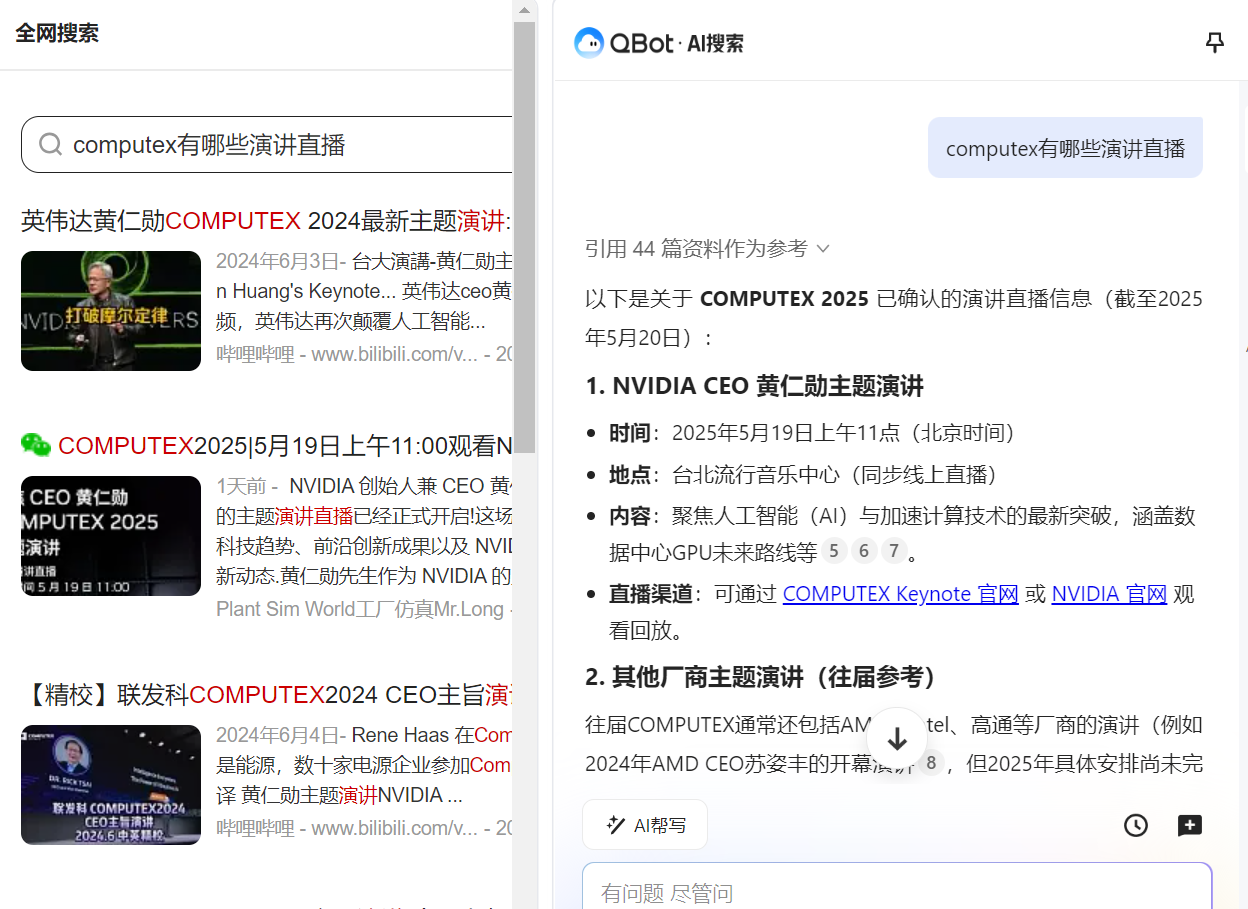
Core Viewpoint - QQ Browser has successfully transformed into an AI browser, leveraging Tencent's self-developed large model capabilities to enhance user experience across various scenarios, including AI search, browsing, learning, and office tasks [2][57]. Group 1: Transformation and Features - QQ Browser has shifted its product direction towards AI, introducing the QBot intelligent agent and achieving comprehensive AI integration [2][3]. - The browser has ranked highly in multiple authoritative lists in the AI Agent sector, indicating its strong performance in the industry [3]. - The evolution of QQ Browser over the past fifteen years reflects a consistent logic of simplifying complex capabilities and returning control to users [8][57]. Group 2: User Experience and AI Integration - The upgraded QQ Browser interface prioritizes AI functionality, allowing users to seamlessly switch between traditional search engines and AI dialogue [14][15]. - The AI+Mini Window feature integrates over ten AI capabilities, enhancing user efficiency without disrupting browsing flow [18][20]. - Key functionalities like webpage summarization, mind mapping, and translation are designed to assist users in managing lengthy content and improving reading efficiency [23][25][29]. Group 3: Agent Capabilities - The QBot Agent Center consolidates various agents capable of completing tasks, addressing traditional browser limitations [34]. - The AI Video Assistant offers features such as multi-language subtitle generation and content summarization, enhancing the video viewing experience [36][38]. - The AI Subscription Assistant efficiently aggregates and tracks relevant information, significantly reducing the time spent on manual searches [41][42]. Group 4: Mobile Expansion and Ecosystem - QQ Browser's AI capabilities have expanded to mobile platforms, providing comprehensive document handling and educational tools tailored for students [51][53]. - The integration with Tencent's ecosystem allows users to access various services without switching applications, streamlining the user experience [55]. - The shift towards AI in browsers reflects a broader industry trend of moving from simple information retrieval to task completion [56].



AI周报 | OpenAI超460亿押注AI硬件;“全球最强编程模型”Claude 4发布
Di Yi Cai Jing· 2025-05-25 00:41
Group 1 - OpenAI announced the acquisition of AI hardware startup io, founded by former Apple chief designer Jony Ive, for $6.5 billion, with plans to launch AI devices by 2026 [2] - This acquisition is expected to be OpenAI's largest and highlights the importance of hardware in its strategy to compete in the AI market [2] - OpenAI's recent activities indicate a shift towards owning user-facing hardware to enhance its competitive edge in the AI landscape [2] Group 2 - Anthropic launched Claude 4, which includes two versions, Claude Opus 4 and Claude Sonnet 4, emphasizing its programming capabilities [3] - The new model is designed to automate daily tasks rather than replace jobs, positioning Anthropic as a significant competitor to OpenAI [3] - The introduction of Claude 4 may narrow the gap between Anthropic and OpenAI in terms of programming capabilities [3] Group 3 - Google introduced the "AI Ultra" package, priced at $249.99 per month, which includes advanced AI models and 30TB of cloud storage, making it the most expensive AI subscription service [4][5] - This package targets high-end users willing to pay for premium AI services, differentiating itself from competitors like OpenAI and Anthropic [5] - Google aims to cater to both consumer and professional markets through this high-priced offering, focusing on specialized applications [5] Group 4 - Apple plans to launch its first AI smart glasses by the end of 2026, with prototypes being tested this year [6] - The glasses will utilize Siri as the main interaction method and are expected to compete with existing products from Meta and Google [6] - Apple's entry into the smart glasses market could accelerate industry development and reduce hardware costs through increased competition [6] Group 5 - Alibaba signed a $250 million convertible bond agreement with Meitu, focusing on strategic cooperation in e-commerce and AI technology [9] - The partnership aims to enhance Alibaba's e-commerce platform with Meitu's AI tools, improving marketing and operational efficiency [9] - Following the announcement, Meitu's stock surged nearly 19%, indicating positive market sentiment towards the collaboration [9] Group 6 - Tencent reported that 85% of its programmers are using its cloud code assistant, CodeBuddy, which has reduced coding time by 40% [10] - The introduction of intelligent agent technology in CodeBuddy marks a significant advancement in AI programming tools [10] - The rise of AI coding tools necessitates companies to consider how to enhance overall organizational efficiency beyond individual productivity [10] Group 7 - Shanghai AI Lab upgraded its model, Intern Thinker, to enhance its reasoning capabilities in Go, making it the first model to explain its thought process [11] - This advancement in AI transparency could set a new standard for AI's ability to articulate reasoning in complex tasks [11] - The model's performance in various professional tasks indicates its potential for further development and application [11] Group 8 - QQ Browser upgraded to an AI browser with the introduction of the QBot intelligent agent, featuring both traditional and AI search capabilities [13] - This upgrade reflects a broader trend among search engine companies to integrate AI functionalities into their platforms [13] - The ongoing evolution of AI search tools highlights the need for traditional search engines to adapt and enhance their services [13] Group 9 - Mianbi Intelligent completed a new round of financing worth hundreds of millions, aimed at accelerating the commercialization of large models [14] - The funding will help strengthen Mianbi's market position and support its contributions to the development of AGI [14] - Mianbi has successfully raised multiple rounds of financing since its establishment, indicating strong investor interest in its technology [14]


传统搜索与AI搜索“互搏”,谁能获益?
Di Yi Cai Jing· 2025-05-20 12:06
Core Viewpoint - The transition from traditional search engines to AI search is ongoing, with various companies exploring how to adapt their advertising models in response to this technological shift [1][9]. Group 1: AI Integration in Browsers - Apple plans to introduce AI features in its Safari browser, while Baidu has launched its AI search, DeepSearch [1]. - QQ Browser has upgraded to an AI browser with the introduction of QBot, utilizing Tencent's mixed model and DeepSeek [1]. - The upcoming Google I/O developer conference is expected to address advancements in AI search [1]. Group 2: User Engagement and Market Dynamics - Eddie Cue from Apple noted a decline in Safari's search volume, attributed to increased AI usage, while QQ Browser reported a rise in daily active users (DAU) during AI feature testing [3]. - Google’s market share in global search engines has fluctuated between 89% and 91%, indicating that it has not been significantly impacted by AI [3]. - The current consensus is that AI search and traditional search engines are complementary, with traditional search engines effectively addressing user needs [4]. Group 3: Commercial Viability and Advertising Models - AI search has not yet replaced traditional search engines due to immature business models, as many AI search products do not currently generate advertising revenue [9]. - Google reported that over 70% of its revenue comes from advertising, with search ads growing by 9.8% year-over-year in Q1 of FY2025 [9]. - Tencent's Q1 report highlighted that AI capabilities have positively impacted its advertising business, enhancing user-advertiser matching efficiency [10].