
QQ浏览器

Search documents
腾讯公布!资本开支、研发投入创历史新高,AI全面提速!
证券时报· 2026-03-18 10:36
Core Insights - Tencent's financial report indicates a significant acceleration in AI integration across its core businesses, with a projected revenue of 751.77 billion yuan for 2025, marking a 14% year-on-year growth [1] - The company emphasizes that AI has generated substantial gains in its main operations, leading to core business growth outpacing industry averages [1] Financial Performance - Tencent achieved a total revenue of 751.77 billion yuan in 2025, with a non-IFRS operating profit of 280.66 billion yuan, reflecting an 18% increase [1] - The revenue from value-added services grew by 14% to 89.92 billion yuan, marketing services increased by 17% to 41.12 billion yuan, and financial technology and enterprise services rose by 8% to 60.82 billion yuan [1] AI Development and Product Launches - Tencent is intensifying its AI investments, with plans to release the Mix Yuan 3.0 model in April, alongside various AI applications like WorkBuddy and QClaw [2][3] - The Mix Yuan model has shown significant improvements, with the Mix Yuan 2.0 model launched last December enhancing reasoning capabilities and efficiency [3] AI Product Ecosystem - Tencent's AI products have seen rapid upgrades, with the Yuanbao application surpassing 100 updates in the past year and achieving over 100 million monthly active users [4] - The AI workbench, ima, has expanded its knowledge base, reaching over 13 million monthly active users and housing over 420 million knowledge files [4] AI Integration in Core Businesses - Tencent is embedding AI into its gaming sector, enhancing user experience and content production efficiency, with games like "Peace Elite" achieving significant user engagement [8][9] - The advertising business has also benefited from AI, improving recommendation relevance and conversion rates, with marketing service revenue growing by 17% [10] International Expansion - Tencent's international gaming revenue reached over 21.1 billion yuan in Q4 2025, a 32% year-on-year increase, contributing to a total annual revenue exceeding 10 billion USD [13] - The company is accelerating its cloud services expansion, with significant growth in international markets and plans to enhance infrastructure in Europe [14]



浏览器已死?“美团 Tabbit”们能否为它续命
Cai Jing Wang· 2026-03-04 03:56
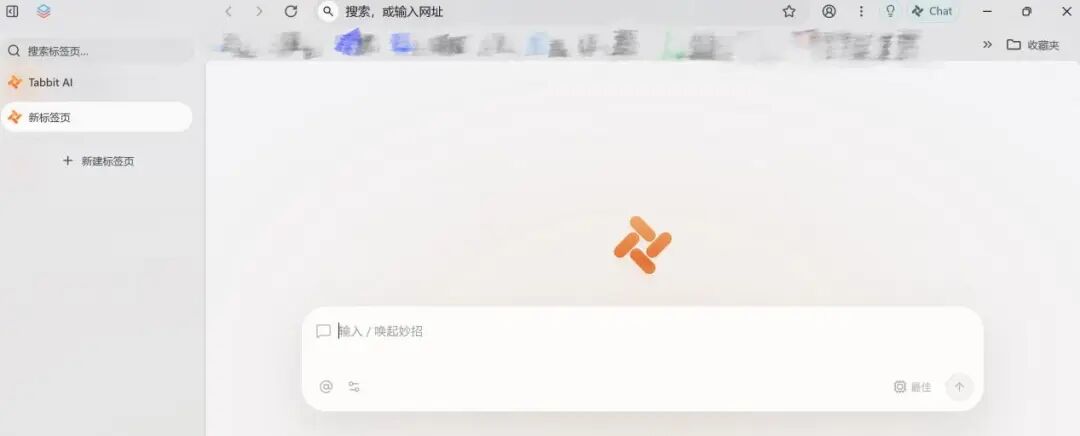
Core Viewpoint - The launch of the Tabbit AI browser by Meituan represents a significant shift in the browser industry, responding to the competition for AI-driven user interfaces and redefining how users interact with the web [1][2][3]. Group 1: Product Features and Innovations - Tabbit AI browser integrates web browsing, comprehensive search, AI dialogue, and complex task execution into a single platform, targeting office workers, students, and content creators [3][4]. - The browser utilizes intelligent agents that allow users to describe their needs in natural language, enabling automated completion of complex tasks such as data analysis and report generation [4]. - Tabbit's interface includes a "universal input box" for direct AI queries, web searches, and complex commands, enhancing user interaction and efficiency [4][5]. Group 2: Market Position and Competitive Landscape - The AI browser market is currently characterized by a mix of traditional and emerging players, with existing browsers facing challenges such as feature homogeneity and limited monetization strategies [7][9]. - Meituan's entry into the AI browser space is seen as a strategic move to capture a new traffic entry point and leverage its existing ecosystem for data accumulation and model training [5][10]. - The competition is shifting from single-function capabilities to a comprehensive integration of technology and application scenarios, with a focus on creating value rather than merely competing for traffic [5][7]. Group 3: Industry Implications and Future Outlook - The introduction of AI browsers like Tabbit is expected to accelerate the integration of large models with traditional internet interfaces, expanding the application of AI across various scenarios [5][12]. - The evolution of AI from mere conversational capabilities to actionable intelligence is highlighted, with browsers becoming key platforms for this transition [5][8]. - The future of AI browsers may involve a multi-faceted approach, combining various forms of interaction, including AI dialogue models and browser functionalities, to create a seamless user experience [12].

美团发布AI浏览器
3 6 Ke· 2026-03-02 11:07
Core Viewpoint - Meituan's Tabbit AI browser has entered public beta, aiming to redefine the browsing experience by integrating AI capabilities deeply into its functionality, targeting office workers, students, and content creators [1][2]. Group 1: Product Overview - Tabbit AI browser supports both macOS and Windows platforms and is currently available for free without an invitation code [1]. - The browser is designed to automate tasks such as opening web pages, extracting information, filling forms, and integrating data across platforms, enhancing user efficiency [1][2]. - Unlike traditional browsers that primarily serve as web browsing tools, Tabbit aims to achieve "human-machine collaboration" through features like "smart agents," "tips," and "scripts" [1]. Group 2: Market Context - The browser market is dominated by Microsoft IE/Edge and Google Chrome, but the rise of generative AI presents an opportunity for tech companies to innovate traditional browsers [1]. - Many existing AI browsers in the market add AI functionalities on top of traditional browser architectures, maintaining the core browsing logic [1][3]. Group 3: Competitive Landscape - Other players in the AI browser space include Alibaba's Quark AI browser and a Silicon Valley startup, The Browser Company, which is developing an AI-native browser that eliminates traditional tabs [3]. - Meituan's Tabbit is part of a broader trend where companies are integrating AI deeply into browser functionalities to enhance user experience [3]. Group 4: Company Strategy - Meituan's "Light Year Beyond" team, which developed Tabbit, was founded by Meituan's co-founder Wang Huiwen and has received significant investment, with a valuation exceeding $600 million [3]. - Meituan's CEO Wang Xing has expressed a strong interest in AI, outlining a three-tier AI strategy focusing on workplace efficiency, product enhancement, and building internal language models [4]. Group 5: Challenges and Opportunities - Despite the potential of AI browsers, Meituan has faced challenges in gaining market presence, especially in the C-end AI application space, where competitors have been more aggressive [6][7]. - The launch of Tabbit may not immediately change Meituan's position in the AI landscape, but it signals the company's commitment to C-end AI applications [7].
年终对谈腾讯云副总裁吴永坚:从ADP看腾讯云2026年AI智能体布局
雷峰网· 2026-02-11 00:43
Core Insights - The article emphasizes the importance of ecological leadership in AI development, suggesting that while technical and product leadership may be short-lived, ecological advantages can provide long-term competitive edges [2][23]. Group 1: Technological Advancements - The Tencent Cloud AI Development Platform (ADP) has upgraded its capabilities, focusing on complex task orchestration and multi-agent collaboration, with the introduction of GraphRAG for enhanced knowledge retrieval and reasoning [3][10]. - New features like "node rollback" in workflows allow for efficient corrections during interactions, significantly improving operational efficiency [3][11]. - The Multi-Agent capability has matured, enabling flexible collaboration and task execution across various scenarios [3][12]. Group 2: Deployment Models - ADP has introduced a "private cloud" deployment model, providing a middle ground between SaaS and pure privatization, appealing to enterprises that prioritize data isolation while retaining cloud resource flexibility [4][25]. - This model allows ADP to integrate seamlessly with existing IaaS resources, enhancing its market penetration among current Tencent Cloud customers [4][24]. Group 3: Business Strategy and Market Outlook - The strategy of "CB linkage" aims to leverage capabilities from consumer-facing platforms to enhance the B2B ADP offerings, creating a feedback loop that improves product quality [5][6][13]. - The company anticipates intensified competition in the industry, prompting a shift towards sustainable subscription revenue models rather than reliance on token-based billing [7][29]. - The focus on building a robust content ecosystem is seen as essential for long-term commercial success, with plans to increase the proportion of subscription revenue [26][27]. Group 4: Product Development and Ecosystem - ADP has expanded its plugin offerings to nearly 160, facilitating the development of high-value agents across various industries [14][15]. - The platform's ability to create interactive components has been enhanced, allowing users to generate widgets easily, thus lowering development barriers [12][14]. - The company aims to establish a comprehensive ecosystem by collaborating with partners to develop specialized agents and industry solutions [22][23].

全面AI化,腾讯C端超级入口争夺战大反击
2 1 Shi Ji Jing Ji Bao Dao· 2026-02-05 13:18
Core Insights - Tencent is launching a significant initiative in AI, emphasizing its strategic importance within the company [1][3] - The company is actively promoting its AI application "Yuanbao" through a large-scale marketing campaign, including a cash red envelope initiative during the Spring Festival [2][4] Group 1: AI Strategy and Initiatives - Tencent's AI strategy is gaining momentum, with "Yuanbao" becoming a central focus for consumer-facing AI applications [2][4] - The Spring Festival campaign aims to replicate the success of the WeChat red envelope phenomenon, leveraging social media to drive user engagement [4] - "Yuanbao" has quickly risen to the top of the App Store rankings, indicating effective market penetration [4] Group 2: Competitive Landscape - Tencent faces stiff competition from ByteDance's "Doubao" and other emerging AI applications, which are rapidly gaining user traction [9] - As of September 2025, "Doubao" has reached approximately 172 million monthly active users, surpassing Tencent's offerings [9] Group 3: Product Development and Features - The "Yuanbao" application has introduced new features like "Yuanbao Pai," which enhances group interactions using AI capabilities [4] - Another AI application, "ima," targets knowledge-intensive scenarios and has been integrated with DeepSeek technology, showcasing Tencent's commitment to diverse AI applications [5][6] Group 4: Infrastructure and Investment - Tencent is investing heavily in AI infrastructure, with capital expenditures reaching a historical high of 76.7 billion yuan in 2024, accounting for 12% of total revenue [12] - The company is also focusing on building partnerships and investing in AI chip startups to enhance its technological capabilities [13] Group 5: Future Outlook and Challenges - Tencent is exploring the integration of AI into its flagship WeChat application, aiming to create a unique AI agent that enhances user experience [14] - Despite the potential, challenges remain, including privacy concerns and the need for significant investment in AI capabilities [14][15]
元宝撒10亿红包拉新,部分微信群主自发禁止分享链接
Jing Ji Guan Cha Wang· 2026-02-02 09:11
Group 1 - The core event revolves around Tencent's AI application "Yuanbao" launching a "10 billion" Spring Festival campaign, which led to a surge in user participation and significant sharing of red envelope links in WeChat groups [3][4] - A WeChat group leader reported that the excessive number of small Yuanbao red envelopes negatively impacted the quality of group chats, prompting the decision to prohibit sharing of these links [3] - Yuanbao achieved the top position in the Apple App Store in China on February 1, following a social media viral effect and cash rewards, surpassing competitors like ByteDance's Doubao and Alibaba's Qianwen [3][4] Group 2 - Yuanbao allocated 1 billion yuan for this campaign, aiming to replicate the success of WeChat's 2015 red envelope initiative, which significantly increased user engagement and card binding for WeChat Pay [4] - The campaign's design encourages users to share red envelopes, providing additional lottery chances for each successful claim, indicating a clear goal of user acquisition [4] - Yuanbao introduced a new feature called Yuanbao Party, which allows users to engage in shared activities like listening to music and watching movies, differentiating itself from other AI applications [4]

年度AI产品十大赛道TOP 3|量子位智库AI 100
量子位· 2026-01-31 07:30
Core Insights - The article discusses the significant evolution of AI products in 2025, highlighting a shift from merely "talking" to "doing" [3][4] - The focus is on the transformation of interaction paradigms and the integration of AI into both digital and physical realms [5][6] - The article introduces the "AI 100" product list, categorizing AI products into flagship and innovative segments, along with five major application categories [6][9] Group 1: AI Product Development - AI products have shown differentiated growth across various sectors, with strong demand in general scenarios and AI efficiency, while AI life products are exploring better user experiences [14] - The common goal across all sectors is moving towards end-to-end delivery of productivity, shifting the value measurement from "how well it answers" to "how completely it delivers" [14][15] Group 2: Flagship AI Products - The "Flagship AI 100" and "Innovative AI 100" categories represent the strongest and most promising AI products, respectively [7][13] - The article outlines ten core tracks for AI applications, including AI smart assistants, AI agents, AI browsers, AI workstations, Vibe Coding, AI education, AI entertainment, AI health, multimodal creation, and AI consumer hardware [9][10] Group 3: AI Smart Assistants - AI smart assistants are the most traffic-intensive and revenue-near segment, evolving from answering questions to solving problems [16] - Top products in this category include: - Doubao from ByteDance, with over 57 million daily active users [18] - DeepSeek, known for its innovative interaction method that showcases AI reasoning [20] - Tencent Yuanbao, integrating various social networks for enhanced user experience [22] Group 4: AI Agents - AI agents have transitioned from mere conversational tools to executing tasks [23] - Notable products include: - Nano AI from 360 Group, which integrates over 80 large models for task execution [24] - Kouzi, a one-stop AI office space from ByteDance, automating complex workflows [26] - Xingliu, a new generation AI creation tool from Singularity Star, facilitating end-to-end creative processes [30] Group 5: AI Browsers - AI browsers are evolving from passive information displays to active task executors [32] - Key products include: - QQ Browser from Tencent, which integrates AI capabilities to understand user intent [33] - Quark from Alibaba, combining search, reading, and creation functionalities [36] - Fellou, focusing on a unified search and task experience [40] Group 6: AI Workstations - The competition in AI workstations has shifted from the number of features to complete workflow integration [41] - Leading products include: - Baidu Wenku, transforming from a document tool to a knowledge productivity platform [42] - Feishu, integrating AI capabilities into team workflows [46] - Tiangong, focusing on enhancing office and creative efficiency [50] Group 7: AI Education - AI education products are evolving to provide personalized tutoring and enhance learning experiences [61] - Top products include: - KuaiDui AI from Zuoyebang, focusing on personalized tutoring [62] - XiaoYuan AI from Yuanfudao, assisting parents and teachers in managing homework [65] - CapWords, an innovative language learning tool [69] Group 8: AI Entertainment - AI entertainment products are exploring how to provide unique value beyond traditional non-AI products [70] - Notable products include: - Kapi Camera, which enhances user photography experiences [73] - Xingye, a platform for emotional companionship and content creation [76] - DouDou Game Partner, focusing on gaming companionship [79] Group 9: AI Health - The AI health sector is cautiously exploring compliance and user experience [80] - Key products include: - Antifufu, a health management assistant from Ant Group [81] - XiaoHe AI Doctor, providing health consultations based on authoritative medical data [85] - OtterLife, a gamified health management product [88] Group 10: Multimodal Creation - AI creation tools are becoming integral to daily workflows for content creators [90] - Leading products include: - Jidream AI, focusing on video creation processes [91] - Liblib AI, a comprehensive AI creation platform [95] - Keling AI, a creative productivity platform leveraging short video and advertising [97] Group 11: AI Consumer Hardware - The AI consumer hardware sector is characterized by rapid innovation and high turnover [98] - Notable products include: - Plaud Note, an AI note-taking tool [99] - Thunderbird V3 AI glasses, integrating various functionalities [102] - CocoMate, an emotional companion toy [107]

腾讯云实现规模化盈利,AI下半场继续发力AI与SaaS产品融合
Cai Jing Wang· 2026-01-30 09:58
Core Insights - Tencent Cloud has achieved scalable profitability over the past year, with a strong focus on AI and SaaS integration as key drivers for growth [1] - The company emphasizes a sustainable ecosystem approach rather than merely pursuing revenue, believing that a healthy ecosystem leads to better business outcomes [3] Group 1: Financial Performance and Growth - Tencent Cloud partnered with over 11,000 collaborators, maintaining double-digit growth in public cloud revenue, with AI and SaaS product orders doubling [1] - The AI model products have seen over a 50-fold increase in two years, indicating significant growth in both revenue scale and quality [1] - The overseas business has grown by 30% year-on-year, showcasing the expansion of Tencent Cloud's market reach [1] Group 2: Strategic Focus and Market Positioning - The company is shifting its focus towards the integration of AI and SaaS products to create differentiated competition in the market [2] - Tencent Cloud's strategy is to prioritize ecosystem health and sustainability, moving away from unhealthy business practices and focusing on stable policies [3] - The company aims to leverage its computational resources and model capabilities to support partners in various industries [3] Group 3: AI and SaaS Initiatives - Tencent Cloud is advancing its "AI for SaaS" strategy, exemplified by the AI programming tool CodeBuddy, which has significantly reduced coding time for internal engineers [4] - CodeBuddy has generated over 90% of its code autonomously, enhancing software development efficiency for over 50 well-known enterprises [4] - The company is committed to assisting partners in international expansion by providing access to 3,200 acceleration nodes and sharing insights on local markets and compliance [4][5]
老牌输入法20周年宣布“归零”,成为腾讯AI落地“排头兵”
2 1 Shi Ji Jing Ji Bao Dao· 2026-01-28 10:04
Core Insights - Sogou Input Method is undergoing a "comprehensive AI transformation," reflecting the broader changes in the tech industry as traditional internet platforms adapt to the AI revolution [1][2] Group 1: Product Development and AI Integration - Tencent announced that Sogou Input Method has surpassed 100 million AI users, with daily voice usage approaching 2 billion times, showcasing significant growth in AI capabilities [1] - The latest version 20.0 integrates Tencent's mixed Yuan translation model, enabling real-time translation across over 30 languages, and enhances both voice and typing input accuracy and speed [1][2] - The team emphasizes that the current AI features are just the beginning, with plans to further explore the potential of large models and expand services to niche markets [2][3] Group 2: Market Position and Future Strategy - The shift from keyboard and mouse to natural language interaction is noted, with new voice-based input products emerging, yet typing remains essential for the foreseeable future [3] - Tencent aims to capture the AI market by restructuring existing products like Sogou Input Method and QQ Browser while promoting native AI applications [3] - Tencent's CEO highlighted a cautious approach to AI strategy, focusing on long-term competitiveness and user experience, with AI being the primary area for investment [4][5]
马化腾年会透露,已退出“外卖大战”
Guan Cha Zhe Wang· 2026-01-27 09:21
Core Insights - Tencent's CEO Ma Huateng emphasized the company's focus on artificial intelligence (AI) as the only area worth investing in currently, following a recovery from a challenging period in the industry from 2021 to 2023 [2] - The company has made significant changes in its AI strategy, including talent acquisition and restructuring of research teams to enhance its competitive edge in AI products [2] - Tencent has exited investments in JD.com and Meituan, marking a strategic shift in its investment approach [5] Group 1: AI Strategy - Tencent's core strategy involves a steady approach to AI, focusing on long-term product competitiveness and user experience [2] - The company is integrating AI across various business units, with TEG and CSIG identified as key drivers of AI initiatives [2][6] - Tencent's AI products will be developed using a collaborative design approach, emphasizing cross-functional integration [2] Group 2: Business Performance and Investments - The competitive landscape in China's internet sector is intensifying, particularly in the food delivery and community group buying markets, with major players like Alibaba, JD.com, and Meituan engaged in a costly "burning money" war [4] - Tencent has withdrawn from its strategic investments in JD.com and Meituan, previously holding approximately 17% of shares in both companies [5] - The company reported significant financial impacts from the competitive dynamics in the market, with an estimated combined expenditure of around 80 billion yuan by the three major players in Q3 2025 alone [4] Group 3: Business Unit Summaries - In the CSIG sector, Tencent has achieved a milestone in cloud business profitability and is integrating AI capabilities into products like QQ Browser and Tencent Meeting [6] - The WXG sector, particularly WeChat, is viewed as a cornerstone of Tencent's business, with ongoing developments in video and e-commerce [6][7] - The IEG sector has seen success in expanding its gaming portfolio and innovating within existing platforms, while the PCG sector is exploring AI integration for content creation [7]