
R1手术机器人

Search documents
脑机接口量产信号:马斯克820万美元扩建Neuralink,2026或成“造脑”元年
机器人大讲堂· 2026-03-03 13:08
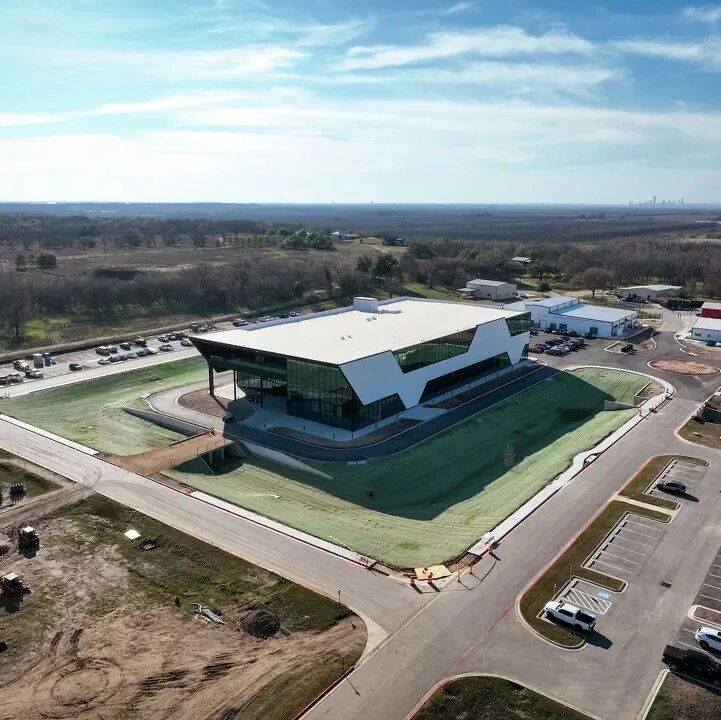
Core Viewpoint - Neuralink is accelerating its overall strategy with a new $8.2 million expansion project in Texas, signaling a shift from "custom lab" to "standardized mass production" of brain-machine interfaces (BMIs) [3][4]. Group 1: Expansion and Investment - The expansion project, codenamed "ATX1," will upgrade approximately 37,607 square feet for manufacturing and office use [1]. - Neuralink has raised over $1.3 billion in total funding, with a current valuation exceeding $9 billion [3]. Group 2: Vertical Integration and Cost Reduction - The expansion site is strategically located near Tesla's Gigafactory, allowing for industrial synergies and shared supply chains [4]. - Neuralink is adopting a vertical integration approach, having developed proprietary manufacturing processes that have reduced the cost of core components by 95% [5]. Group 3: Talent Acquisition - The company is actively hiring for various positions, focusing on mechanical engineering, software engineering, and design control, to prepare for high-volume production [6]. Group 4: Technological Advancements - The new R1 surgical robot has significantly reduced the time required to implant a single flexible electrode from 17 seconds to just 1.5 seconds, with the potential to shorten the total surgery time for a 128-electrode implant to under 20 minutes [9]. - This reduction in surgery time is expected to decrease the probability of complications from craniotomy by 60% [9]. Group 5: Competitive Landscape - The BCI industry is witnessing a multi-path competition, with other companies like Science Corp making significant advancements in non-invasive solutions [13]. - Chinese companies are also rapidly developing in the invasive BCI sector, with BrainCo completing over 50 human implants and aiming for mass production [14][15]. Group 6: Future Outlook - The expansion is expected to increase the number of Neuralink's trial participants from 21 to hundreds by the end of the year, transforming BMIs from specialized medical devices to general infrastructure [18].

马斯克领衔,脑机接口商业化元年来了?
Tai Mei Ti A P P· 2026-01-16 08:14
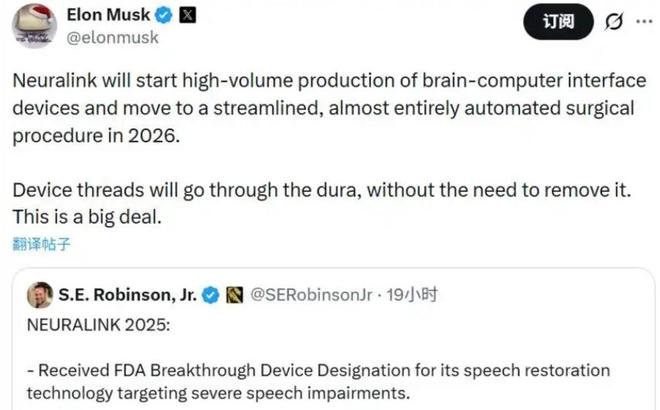
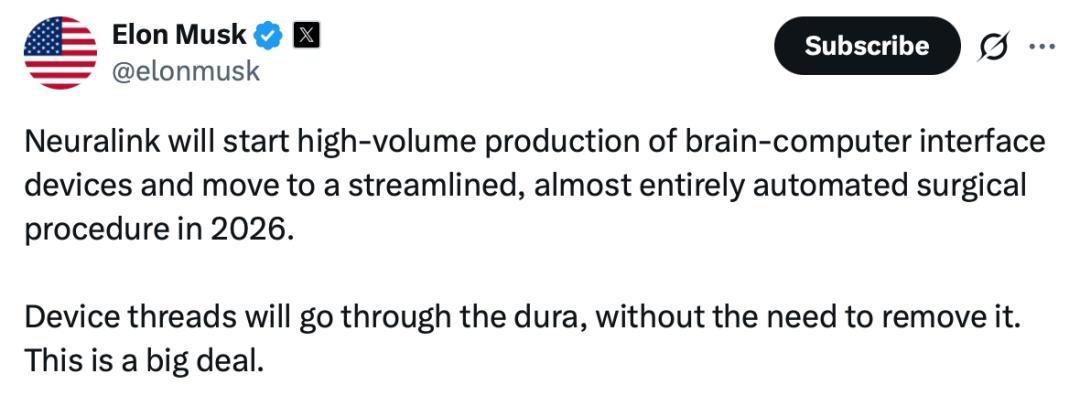
Core Insights - The announcement by Elon Musk regarding Neuralink's plans for large-scale production and fully automated surgeries in 2026 marks a significant step towards the commercialization of brain-machine interfaces (BMIs) [1][2] - The excitement in global capital markets is evident, with related stocks in the A-share market experiencing significant gains, indicating a strong investor interest in the BMI sector [2] Group 1: Technological Advancements - Neuralink is leading the invasive BMI sector by integrating AI into the entire process, significantly reducing surgery time from 6-8 hours to approximately 30 minutes, which is described as a "production line" approach [3][4] - The R1 surgical robot developed by Neuralink utilizes AI for real-time navigation, achieving micro-level precision in electrode placement, thus minimizing surgical trauma [3] - Neuralink's devices can decode neural signals with over 95% accuracy, allowing paralyzed individuals to perform tasks like gaming and social media interaction using only their thoughts [4] Group 2: Competitive Landscape - Chinese companies are exploring different technical routes in the BMI space, with firms like Boryeong and BrainTiger focusing on semi-invasive and flexible electrode technologies to balance signal quality and safety [5][6] - Boryeong's NEO system has successfully completed surgeries on 36 spinal injury patients, demonstrating the potential for restoring motor functions [5] - BrainTiger has made strides in real-time Chinese language decoding, achieving a 71.5% accuracy rate in clinical trials, showcasing advanced capabilities in high-level brain function decoding [6] Group 3: Market Challenges - Despite the technological advancements, the BMI industry faces significant hurdles in transitioning from innovative technology to a mature business model, with current clinical trials being limited in scope [7][8] - The market for BMIs is highly specialized, targeting severe neurological conditions, which may limit its immediate commercial viability [8] - The long-term reliability of implanted devices is a concern, as immune responses can lead to signal degradation, posing challenges for sustained use [9] Group 4: Ethical and Regulatory Considerations - The collection and use of neural data raise ethical questions regarding privacy and data security, with a lack of established regulations in place [10][11] - The potential for misuse of technology and risks associated with hacking highlight the need for a robust ethical framework to guide the commercialization of BMIs [10][11] - The balance between investor enthusiasm and the practical realities of the BMI market will be crucial for the industry's future [11]
脑机接口大盘点:从科幻到现实,谁在引领这场“读心术”的革命?
3 6 Ke· 2026-01-15 02:29
Core Insights - Neuralink's brain-computer interface (BCI) devices are set for mass production in 2024, with 13 patients already implanted, enabling them to control devices using their thoughts [1][5] - The global BCI market is projected to reach $400 billion, indicating explosive growth in this sector [2] - Various companies are competing in the BCI space, with different approaches to technology, safety, and performance [2][8] Group 1: BCI Technology Overview - BCI establishes a direct communication channel between the brain and external devices, bypassing traditional neural pathways [2][3] - The BCI process involves four steps: signal acquisition, signal decoding, outputting commands, and feedback [5][6] - There are three main technological routes for BCI: non-invasive, semi-invasive, and invasive, each with its own trade-offs in safety and performance [8][10] Group 2: Non-Invasive and Invasive Approaches - Non-invasive BCIs are safe but have weak signals, making them suitable for consumer applications [10][12] - Semi-invasive BCIs require surgery but offer better signal quality than non-invasive options [16][19] - Invasive BCIs provide high signal strength and precision but come with significant risks, including potential immune responses and long-term degradation of electrodes [19][21] Group 3: Material Innovations - New flexible materials are being developed to reduce damage to brain tissue during electrode implantation [22][26] - The focus is on creating soft, durable materials that can withstand the brain's environment while maintaining high performance [26][29] Group 4: AI's Role in BCI - AI is crucial for processing the vast amounts of data generated by BCIs, enabling real-time translation of brain signals into actions [33][35] - AI enhances the decoding of complex neural signals, making it possible for users to control devices with their thoughts [39][40] - The integration of AI is essential for both reading and writing brain signals, facilitating advanced neural modulation [40][42] Group 5: Key Players in the BCI Market - Neuralink, founded by Elon Musk, aims to create a comprehensive BCI system with high channel density and wireless capabilities [43][45] - Synchron offers a less invasive approach by implanting devices through blood vessels, focusing on practical applications for patients [69][71] - Paradromics targets high-performance BCIs with the ability to record a vast number of neural signals simultaneously [77][79] - Blackrock Neurotech is a long-established player known for its reliable Utah Array technology, widely used in BCI research [82][84] Group 6: Future Prospects and Challenges - Neuralink plans to expand its technology to enhance human capabilities, including speech and vision restoration [63][66] - The BCI industry faces ethical challenges regarding privacy, autonomy, and the implications of enhanced human capabilities [96] - The competition among BCI companies is intensifying, with various strategies being employed to capture market share and advance technology [96]
彻底沸腾!马斯克,突然宣布!
券商中国· 2025-06-29 05:24
Core Viewpoint - Neuralink, led by Elon Musk, is making significant advancements in the brain-computer interface (BCI) field, with plans to enhance its technology and expand its applications in the coming years [2][3][20]. Company Developments - As of June 27, Neuralink has seven participants in its trials, including four with spinal cord injuries and three with amyotrophic lateral sclerosis (ALS), who are using the devices for an average of 50 hours per week, with peaks exceeding 100 hours [5][10]. - The company aims to implant devices in the speech cortex by Q4 2025 to decode silent "intent speech" and plans to increase the number of electrodes in implants to 3,000 by 2026 [12][13]. - By 2027, the number of electrodes is expected to reach 10,000, allowing for multiple device implants across different brain areas [14]. - The ultimate goal is to create a "full brain interface" that connects biological brains with external machines, potentially revolutionizing the treatment of neurological diseases and enhancing human capabilities [16][17]. Industry Insights - The global BCI market is projected to grow at a compound annual growth rate (CAGR) of 25.22%, reaching $7.63 billion from 2025 to 2029 [3][22]. - The market size increased from $1.2 billion in 2019 to $1.98 billion in 2023, with expectations to reach $2.48 billion in 2024, reflecting a growth rate of 25.25% [21]. - The medical health sector is currently the most developed area for BCI applications, with potential market sizes ranging from $15 billion to $85 billion for serious medical applications and $25 billion to $60 billion for consumer medical applications [22]. - In China, over 2,000 patents related to BCI have been filed, indicating a growing interest and investment in this technology [23].

拟再融资47亿!脑机接口头部玩家火力全开
思宇MedTech· 2025-06-16 09:06
Core Insights - Neuralink is advancing its brain-computer interface (BCI) technology with significant funding and clinical trials, aiming for commercialization and product validation [1][3][25] Funding and Valuation - Neuralink plans to raise $649 million through equity issuance, following a $600 million Series E funding round, bringing its total capital raised in 2023 to over $1.2 billion [1][3] - The company's valuation has increased to approximately $9 billion, doubling from $5 billion in 2023 and surpassing $8 billion in secondary market trading [3][6] Technology Platform - The core product consists of two components: the N1 implant and the R1 surgical robot, designed to create a closed-loop neural control system [4][11] - The N1 implant features flexible microelectrodes and wireless communication, designed for long-term implantation and stable signal acquisition [5][9] Clinical Pathways - Neuralink is conducting human trials for two main products: the Telepathy system for paralyzed patients and the Blindsight system for the visually impaired [14][20] - The Telepathy system aims to enable paralyzed patients to control external devices through thought, while the Blindsight system stimulates the visual cortex to restore basic visual perception [20][21] Competitive Landscape - Neuralink's invasive high-density implantation method offers advantages in sampling rate and signal stability but faces challenges related to complexity and ethical concerns [22][23] - Competitors include Synchron, Precision Neuroscience, and Blackrock Neurotech, each with different approaches to BCI technology [26] Regulatory Challenges - Neuralink has faced regulatory scrutiny regarding animal testing and ethical considerations, which may impact its market entry and approval processes [23][24] - The company must address data transparency, ethical validation, and long-term tracking to meet regulatory requirements for FDA approval [24] Future Outlook - Neuralink is positioned to influence the BCI industry significantly, focusing on building a standardized, automated surgical platform and ensuring device stability and compatibility with healthcare systems [25][27] - The company's success will depend on its ability to provide long-term stable signals, user interaction interfaces, and navigate ethical and regulatory hurdles [28]

融资43亿!脑机接口独角兽估值飙至650亿!
思宇MedTech· 2025-05-30 09:12
Core Insights - Neuralink has recently completed a new funding round of $600 million, with a pre-money valuation of $9 billion, significantly exceeding previous market expectations of $500 million [2][5][26] - The company is leading the global brain-computer interface (BCI) sector, with its valuation nearly doubling within a year [5][26] - Neuralink's technology consists of two main components: the N1 implant and the R1 surgical robot, forming a closed-loop neural interface platform aimed at enabling "thought control" interactions [7][26] Funding and Valuation - Neuralink's recent funding round raised $600 million, bringing its total valuation to $9 billion [2][5] - The company has accelerated its fundraising efforts since 2023, with previous rounds including $280 million in August and an additional $43 million shortly after [5] Technology Overview - The N1 implant is a miniaturized device measuring 23mm x 8mm, featuring 1024 electrodes and wireless charging capabilities, designed for long-term implantation without immune rejection [8][10] - The R1 surgical robot is equipped with advanced imaging systems to ensure precise implantation of the N1 threads into the brain [13][15] - Neuralink's system utilizes low-power processing chips and AI algorithms to decode neural signals into actionable commands for external devices [11][19] Clinical Progress - As of early 2025, Neuralink has conducted successful human implant surgeries, with patients demonstrating the ability to control computer cursors through thought [20][22] - The company is focusing on high-level paraplegics and ALS patients while exploring broader applications such as silent communication and smart home control [19][22] Market Potential - The BCI market is projected to reach $400 billion, with significant opportunities in treating neurological disorders and enhancing cognitive functions [23] - In China, the introduction of pricing guidelines for invasive BCI procedures marks a critical step towards large-scale clinical application [25] Conclusion - Neuralink represents a significant player in the BCI field, with its comprehensive closed-loop neural system platform setting a new standard for competition [26][27] - The future of BCI is envisioned as a collaborative effort across research, engineering, clinical practice, market dynamics, and policy [27]

拟融资36亿!脑机接口明星公司估值冲上620亿大关
思宇MedTech· 2025-04-25 06:34
N1 植入设备只有硬币大小,外科医生在R1机器人的引导下,将包含毛发状电极的微型线插入大脑目标区域,以记录活动。当N1植入大脑(例如控制手臂的 部分)并且该区域的神经元放电时,信号可以传输到计算机。 报名:首届全球心血管大会 | 重磅亮点 合作伙伴征集:2025全球手术机器人大会 2025年4月24日,根据彭博新闻社报道,知情人士表示脑机接口公司Neuralink计划以 85亿美元(约合620.13亿人民币) 的投前估值筹集约 5亿美元(约 合36.48亿人民币) 资金。公司已开始与潜在投资者进行初步讨论,但融资条款尚未最终敲定。 # 核 心 技术 Neuralink 是埃隆·马斯克在2016年成立的一家高科技公司,总部位于美国, 专注于开发侵入式脑机接口(BCI)技术 。该公司的目标是通过制造微米级别 的设备,将人脑与机器接口连接起来, 以实现人脑与机器的交互 。 N1植入设备 由于 N1 植入设备的线程非常细小,无法通过人工手动植入,因此 Neuralink 开发了专门的手术机器人。该机器人能够可靠且高效地将线程准确插入预定位 置。 高密度电极设计: N1 植入设备包含1024个电极,分布在64根线程上, ...