SKULLPANDA不眠剧场系列盲盒

Search documents
泡泡玛特新品遇冷,15个交易日市值蒸发超千亿
凤凰网财经· 2025-09-15 14:22
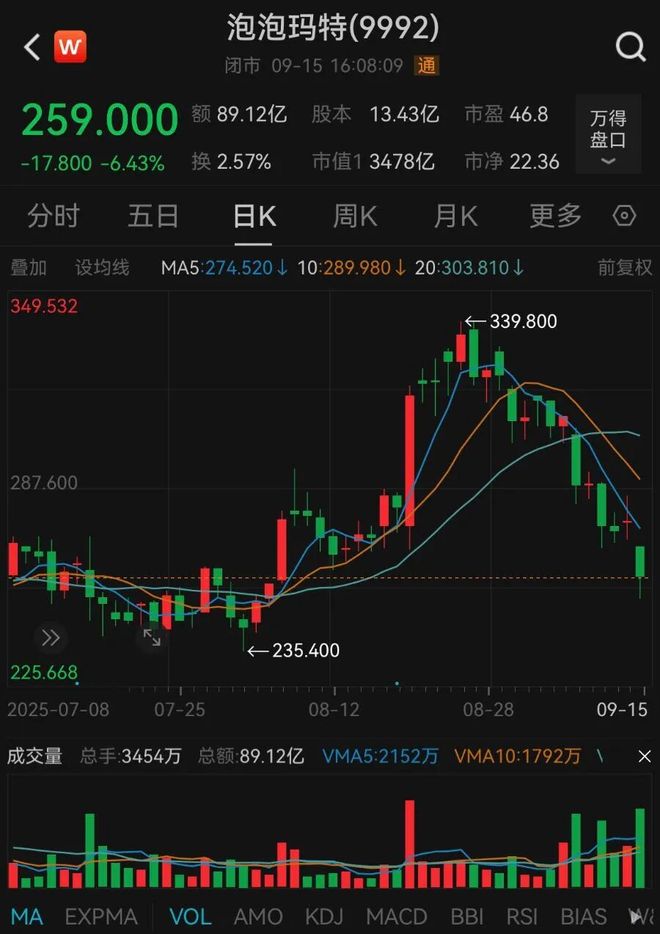
Core Viewpoint - The stock price of Pop Mart (09992.HK) has experienced a significant decline, dropping 23.78% from its historical high of 339.8 HKD per share, resulting in a market capitalization loss exceeding 100 billion HKD [4]. Group 1: Stock Performance - On September 15, Pop Mart's stock price fell by 6.43% to close at 259 HKD per share, with an intraday drop of 8.96%, leading to a total market value of 347.8 billion HKD [2]. - Since reaching its peak, the stock has underperformed compared to the Hang Seng Index, which increased by 2.16% during the same period [4]. Group 2: Analyst Ratings and Market Sentiment - Morgan Stanley downgraded Pop Mart's stock rating to "neutral," citing a lack of clear growth catalysts and unattractive current valuation levels [4]. - The recent product launches, including the SKULLPANDA series, have not generated the expected consumer interest, as evidenced by low queue numbers during the release [4]. Group 3: Sales Performance and Consumer Demand - The online sales of the new SKULLPANDA blind boxes showed volatility, with initial sales of 93,000 units dropping to only 809 units shortly after, indicating potential high return rates [5]. - The launch of the gold jewelry series "popop" also failed to attract significant consumer interest, with no queues reported at retail locations [5]. Group 4: Secondary Market Trends - Data from second-hand trading platforms indicate a decline in the popularity of Pop Mart's IPs, with the average transaction price for Labubu's fourth generation dropping from 1916 RMB to 1422 RMB [6]. - On the Xianyu platform, the average transaction price fell to 104 RMB, with 68% of users expecting further price declines [6]. Group 5: Market Dynamics and Future Outlook - An economist noted that the stock price of collectible toy companies is correlated with product market demand, suggesting that the current decline in prices may continue if new IPs are not consistently produced [8]. - The sustainability of the collectible toy market's value relies on diversifying offerings and continuously generating new IPs to meet varying consumer preferences [8].



泡泡玛特新品遇冷,15个交易日市值蒸发超千亿
2 1 Shi Ji Jing Ji Bao Dao· 2025-09-15 11:54
Core Viewpoint - The stock price of Pop Mart (09992.HK) has experienced a significant decline, dropping 23.78% from its historical high of 339.8 HKD per share, resulting in a market capitalization loss exceeding 100 billion HKD [3]. Group 1: Stock Performance - On September 15, Pop Mart's stock price fell by 6.43% to close at 259 HKD per share, with an intraday drop of 8.96%, leading to a total market value of 347.8 billion HKD [1]. - Since reaching its peak, the stock has been on a downward trend, while the Hang Seng Index has increased by 2.16% during the same period [3]. Group 2: Analyst Ratings - Morgan Stanley downgraded Pop Mart's stock rating to "neutral," citing a lack of clear growth catalysts and unattractive current valuation levels [3]. Group 3: Product Demand and Sales - Recent product launches, such as the SKULLPANDA series, have not generated the expected consumer demand, with sales figures showing a significant drop compared to previous releases [4]. - The online sales of the new blind box experienced fluctuations, with initial sales of 93,000 units dropping to only 809 units shortly after, indicating potential high return rates [5]. - The launch of the popop gold jewelry series also failed to attract significant consumer interest, with no queues reported at retail locations [5]. Group 4: Market Trends and Consumer Sentiment - Data from second-hand trading platforms indicate a decline in the popularity of Pop Mart's IPs, with the average transaction price for Labubu series dropping from 1916 RMB to 1422 RMB [5]. - A significant portion of users on trading platforms believe prices will continue to decline, leading some resellers to pause their purchasing strategies [5]. - An economist noted that the stock price of collectible toy companies is closely tied to product market demand, emphasizing the importance of continuously producing new IPs to sustain market value [7].
泡泡玛特新品遇冷,15个交易日市值蒸发超千亿
21世纪经济报道· 2025-09-15 10:40
Core Viewpoint - The stock price of Pop Mart has experienced a significant decline, dropping 23.78% from its historical high of 339.8 HKD per share, leading to a market capitalization loss exceeding 100 billion HKD, while the Hang Seng Index has risen by 2.16% during the same period [2][3]. Group 1: Stock Performance - On September 15, Pop Mart's stock price fell by 6.43%, closing at 259 HKD per share, with an intraday drop of 8.96%, resulting in a total market value of 347.8 billion HKD [1]. - Since reaching its peak, the stock has seen a continuous decline, indicating a lack of investor confidence [2][4]. Group 2: Market Sentiment and Product Demand - Morgan Stanley downgraded Pop Mart's stock rating to "neutral," citing a lack of clear growth catalysts and unattractive current valuation levels [4]. - Recent product launches, such as the SKULLPANDA series, have not generated the expected consumer interest, with reports of minimal queues for new releases, contrasting sharply with previous sales events [4][5]. - The online sales performance of new products has been volatile, with significant fluctuations in sales numbers, suggesting potential issues with high return rates [5]. Group 3: Secondary Market Trends - Data from second-hand trading platforms indicate a decline in the popularity of Pop Mart's IPs, with average transaction prices for Labubu products dropping significantly [5]. - A notable percentage of users on trading platforms believe prices will continue to decline, prompting some resellers to pause their purchasing strategies [5]. Group 4: Industry Insights - An economist highlighted the correlation between toy companies' stock prices and market demand, warning that the current situation reflects an irrational bubble that could lead to prolonged price declines [7]. - The sustainability of IPs is crucial, and companies must continuously innovate and diversify their offerings to meet varying consumer preferences [7].